A small, smart renovation doesn’t have to mean tearing out cabinets or redoing your floors. One of the most effective ways to change how a room feels—without a full remodel—is to add a well-designed accent wall. Done right, it makes everything else in the room look more intentional and upgraded. This guide walks you through planning, prepping, and building a standout accent wall that looks pro-level, using tools most DIYers already own.
Step 1: Choose the Right Wall and Design Strategy
Before you buy a single can of paint or piece of trim, decide why you want an accent wall and what it should do for the room.
Look at the room from the main entry point. The wall your eye hits first is usually the best candidate. In bedrooms, that’s often the wall behind the headboard; in living rooms, it might be behind the sofa or TV. Avoid walls chopped up with doors, large windows, or vents—clean, uninterrupted surfaces give you the best result.
Next, pick a design approach that matches your skill level and time:
- Pure paint accent (fastest, lowest cost): Just a bold color on one wall.
- Color block or two-tone: Horizontal or vertical break with two colors.
- Simple trim grid: A board-and-batten or box grid using basic MDF trim.
- Textured paneling: Shiplap-style, beadboard, or slat wall panels.
Make sure your accent supports what’s in the room: if your furniture is already very busy, lean toward a simpler design and calmer color. Take test photos of the room and use painter’s tape on the wall to sketch rough shapes or grids. This helps you see if the proportions feel balanced before committing.
Step 2: Plan Materials, Colors, and Measurements
Once you know your wall and design, move into planning mode. This is where you save yourself from extra trips to the store and awkward mistakes.
Measure the wall’s width and height in inches. Write them down. For paint-only projects, use an online paint calculator to estimate how many gallons you need and then add a bit of extra coverage if you’re using a dark or bold color over a light one.
For trim or panel designs:
- Sketch your wall on paper to scale (e.g., 1 square = 6 inches).
- Decide how many vertical and horizontal sections you want.
- Account for the width of each trim board when calculating spacing.
- Try to keep sections as close to equal size as possible to avoid odd skinny panels at the edges.
Material planning checklist:
- Paint: One color for the accent; optional second color if doing two-tone.
- Primer: Especially important if going darker or covering patched areas.
- Trim or boards (if using): MDF or pine, commonly 1x2 or 1x3 sizes.
- Fasteners: Finish nails (with nail gun or hammer), and construction adhesive if attaching to tricky surfaces.
- Prep supplies: Spackle, sandpaper (120–220 grit), painter’s tape, drop cloths, caulk, and a stud finder if you’re adding heavier materials.
Bring fabric swatches or photos of your existing furniture and flooring to the store. Compare paint chips in natural daylight when possible; the same color looks very different at night under warm bulbs. When in doubt, buy sample cans and test large swatches on the actual wall before committing.
Step 3: Prep the Wall Like a Pro
The difference between “DIY-ish” and “that looks professionally done” is usually wall prep. Don’t rush this step.
Start by clearing the area:
- Move furniture away from the wall and cover it.
- Remove art, TV mounts (if possible), outlet covers, and switch plates.
- Lay down a drop cloth to protect floors.
Inspect the wall closely under good lighting:
- Fill nail holes and small dings with lightweight spackle.
- For hairline cracks, widen them slightly with a putty knife so filler can bond, then patch.
- Let everything dry fully, then sand smooth with 120–220 grit sandpaper.
If you’re adding trim or panels, run a straightedge or long level across the wall to spot bows or uneven areas. Slight waves are normal; just know that thin trim will follow those curves. Mark any high or low spots so you can adjust board placement or use a bit more caulk later.
Clean the wall with a lightly damp cloth or degreaser in kitchens. Dust and oils can cause paint or adhesive to fail. Once dry, tape off adjacent walls, ceilings, and baseboards with painter’s tape.
Prime the wall if:
- You have lots of patched areas.
- You’re going darker or switching from a very bold existing color.
- You’re using bare MDF boards that can soak up paint.
A well-primed, smooth wall makes the final accent color look richer and more even.
Step 4: Install Trim or Panels (Optional but High-Impact)
If you’re doing a paint-only accent, you can skip to the next step. If you’re adding trim, panels, or a pattern, this is where your wall starts to transform.
Mark your layout first:
- Use a level and pencil to draw your grid or pattern directly on the wall.
- Double-check your measurements against your sketch to keep spacing even.
- Mark stud locations with light pencil lines or painter’s tape if you’ll be nailing into them.
Cut and fit your material:
- Use a miter saw or circular saw with a fine-tooth blade for cleaner cuts.
- For grids or battens, install horizontal boards first, then verticals.
- Dry-fit a few pieces before gluing or nailing to make sure your spacing and proportions still look right in real life.
Attach to the wall:
- Run a thin bead of construction adhesive on the back of each board, especially if you aren’t hitting studs.
- Press the board into place, then secure with finish nails at an angle so they hold tight.
- Wipe away any adhesive squeeze-out immediately with a damp cloth.
Finish the joints and edges:
- Fill nail holes with wood filler or spackle; let dry and sand smooth.
- Use paintable caulk along all edges where trim meets the wall to eliminate gaps.
- Lightly sand any rough spots one more time before painting.
Take your time here. A clean, tight install means your accent wall will look built-in rather than tacked on.
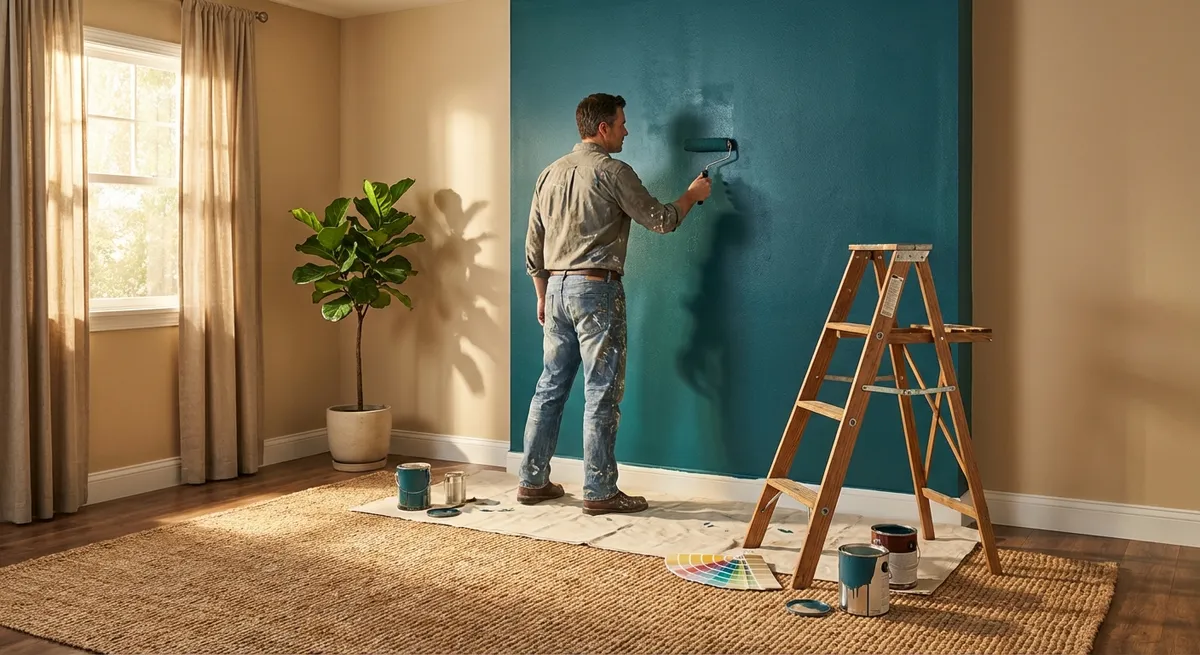
Step 5: Paint, Reassemble, and Style the Space
Now you bring everything together visually. Careful painting and thoughtful styling will make your accent wall feel like part of a bigger renovation.
Cut in first:
- Use a good angled brush to paint along ceilings, corners, and trim edges.
- Keep your brush loaded but not dripping, and work in manageable sections.
Roll the main areas:
- Use a quality roller with the right nap for your wall texture (shorter nap for smooth walls, longer for rough).
- Roll in a “W” or “M” pattern, then smooth out in long, even passes.
- Maintain a wet edge to avoid lap marks and visible roller lines.
Plan on at least two coats for full coverage, allowing proper drying time between coats per the paint can instructions. Dark or rich colors may need three light coats instead of two heavy ones to avoid drips and uneven sheen.
Once the paint is dry:
- Carefully remove painter’s tape by pulling it back on itself at a 45-degree angle.
- Reinstall outlet covers, switch plates, wall-mounted TVs, and decor hardware.
- Touch up any small imperfections with a fine brush.
Finally, style the wall with intention:
- In living rooms: center the sofa or TV on the accent wall and keep art simple.
- In bedrooms: anchor the bed to the accent wall and use matching nightstands or lamps for balance.
- In dining areas or home offices: consider one strong focal piece (a mirror, large artwork, or shelving) instead of multiple small items.
Step back and view the room from different angles and at different times of day. Adjust lighting (lamps, bulbs, or dimmers) so the accent wall looks good in both daytime and evening. Often, updating to slightly warmer or higher-CRI bulbs makes your new color or texture feel more expensive and intentional.
Conclusion
An accent wall is a focused renovation project that can completely change the feel of a room without touching your floors, cabinets, or layout. By choosing the right wall, planning your design and materials carefully, prepping like a pro, and finishing with clean paint and simple styling, you get a high-impact upgrade in a weekend or two. It’s a manageable way for DIY enthusiasts to practice layout, finish carpentry, and paint skills—while making the whole space look more “finished” and welcoming.
Sources
- [Benjamin Moore – How to Create an Accent Wall With Paint](https://www.benjaminmoore.com/en-us/interior-exterior-paints-stains/how-to-advice/interior/how-to-paint-an-accent-wall) - Practical guidance on choosing walls, colors, and basic painting tips
- [Sherwin-Williams – Painting an Accent Wall](https://www.sherwin-williams.com/en-us/homeowners/how-to/painting-an-accent-wall) - Covers color selection, placement, and technical painting recommendations
- [This Old House – How to Install Board-and-Batten Wainscoting](https://www.thisoldhouse.com/walls/21016471/how-to-install-board-and-batten-wainscoting) - Step-by-step trim and layout techniques useful for grid or batten accent walls
- [The Family Handyman – How to Paint a Room](https://www.familyhandyman.com/project/how-to-paint-a-room/) - Detailed prep, priming, and painting practices that apply directly to accent walls
- [US EPA – Renovation, Repair and Painting Program (Lead Safety)](https://www.epa.gov/lead/renovation-repair-and-painting-program) - Important safety information if your home was built before 1978 and may contain lead-based paint
Key Takeaway
The most important thing to remember from this article is that this information can change how you think about Renovation.