A cluttered or awkward entryway makes every arrival stressful—shoes everywhere, no place to drop bags, coats draped over chairs. Instead of living with the chaos, you can turn even a plain wall near your front door into a functional, good‑looking entry zone with a few smart upgrades. This guide walks you through a practical, DIY‑friendly mini‑renovation that doesn’t require moving walls or hiring a contractor.
You’ll create a hard‑working “landing spot” for daily life: hooks, seating, storage, and better lighting. It’s the kind of project that makes your whole home feel more put‑together.
Step 1: Map Out Your Entryway Zone and Measure Everything
Before you buy a single hook, define the space and the problem you’re solving.
Start by picking the exact wall or corner you’ll convert into your entry zone. It doesn’t have to be right at the front door—often a nearby hallway wall, the space by the garage door, or a bare stretch near the kitchen works better.
Stand in the area and walk through what you do when you come home: where you drop keys, kick off shoes, hang a bag, or toss mail. This helps you decide what your setup actually needs: seating, hooks, a shelf, a shoe rack, or all of the above.
Now grab a tape measure and note:
- Total wall width and height
- Distance from the floor to any electrical outlets, light switches, or vents
- Clearance for doors swinging open (front door, closet door, nearby room doors)
- Floor space depth available for a bench or shoe cabinet (especially in narrow halls)
Sketch a quick layout on paper. Mark where you want:
- Hooks or a coat rack (ideally 66–70 inches from the floor)
- A bench or small cabinet
- A mirror or shelf above eye level
- Shoe storage down low
This rough plan keeps you from buying pieces that don’t fit, and it helps you avoid drilling into wiring or blocking switches.
Practical tips:
- In tight hallways, look for narrow furniture (10–14 inches deep) to keep walking space clear.
- If you have kids, plan a lower row of hooks around 40–48 inches high so they can reach them.
- Note any studs you can find with a stud finder now—these will anchor heavier items later.
Step 2: Prep the Wall and Floor So Your Upgrade Lasts
A little surface prep makes everything you install look intentional, not slapped on.
Start by clearing the area: move rugs, small furniture, and anything on the wall. If you’re repainting, take down old hooks or shelves and remove nails or anchors.
Inspect the wall for:
- Nail holes or small dings
- Scuff marks near light switches or at bag height
- Cracked caulk at trim or baseboards
Patch nail holes and small defects with lightweight spackle, let it dry, then sand smooth with fine‑grit sandpaper (220‑grit works well). Wipe down the wall with a damp cloth to remove dust and grime—paint and adhesive hooks stick better to clean surfaces.
If the wall looks tired or patchy, repainting now is worth it. Choose:
- Durable finish: An eggshell or satin paint is easier to wipe clean than flat paint.
- Color: Light neutrals (off‑white, soft gray, greige) brighten small entryways. A deeper color can frame the space if the rest of the room is light.
On the floor, clean thoroughly and assess:
- Do shoes track in dirt or water?
- Is there existing damage you can protect with a rug or boot tray?
- Is the floor slippery when wet?
Add a durable, low‑pile rug with a non‑slip backing or separate rug pad. For wet climates, include a waterproof tray or mat near the door specifically for boots.
Practical tips:
- If you repaint, cut in carefully around trim and switches; a clean paint line instantly makes the space look more “renovated.”
- Use painter’s tape to protect baseboards while you patch and paint.
- In very tight spaces, a custom‑cut runner or mat can give you protection without bulk.
Step 3: Install a Sturdy Wall Hook and Storage System
This is the backbone of your entryway: places to hang and stash daily gear so it doesn’t end up on chairs and counters.
You have two main options:
- Option A: Individual hooks + a separate shelf
- Option B: A combined rack or wall‑mounted rail system
Finding studs and marking layout
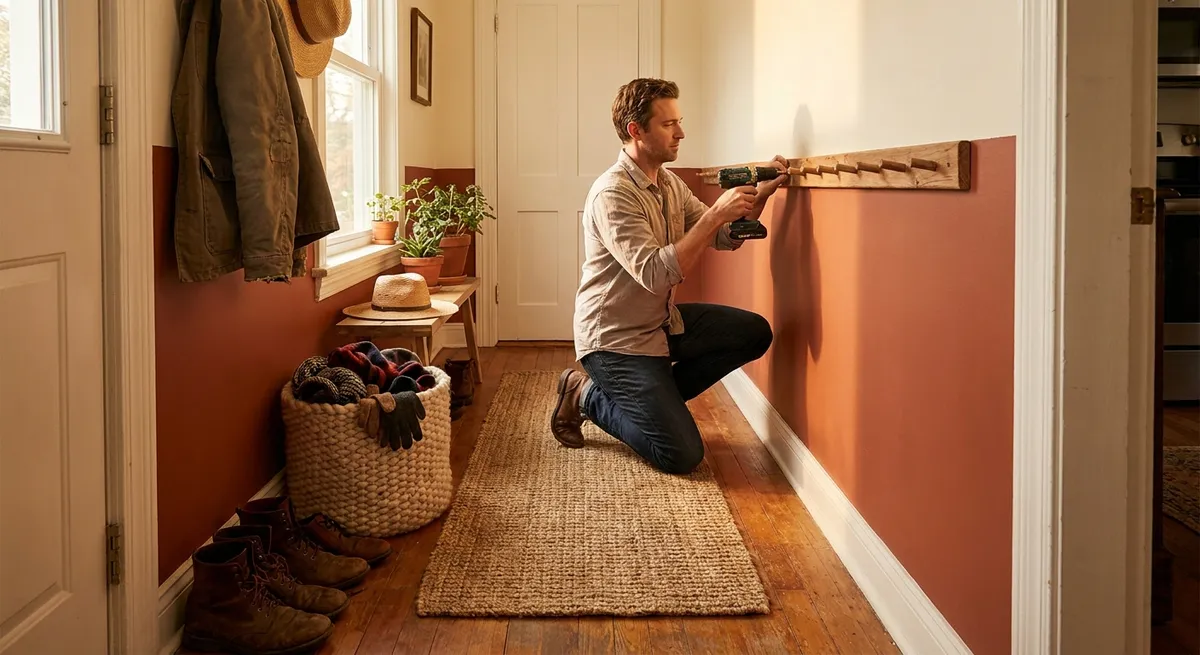
Use a stud finder to locate studs in the wall—mark them lightly with painter’s tape or pencil. Heavy items like solid wood coat racks or shelves should be anchored to at least one stud.
Use a level and a pencil to draw a light horizontal line where your hooks will go (typically 66–70 inches off the floor for adults). Mark equal spacing between hooks (6–8 inches apart for coats, 4–6 inches for keys or lighter items).
Mounting hooks or a rail
- Hold your hook board or rail against the wall following your level line.
- Mark screw hole locations on the wall.
- For holes not landing on studs, plan to use appropriate wall anchors (toggle or heavy‑duty plastic anchors rated for the weight you need).
- Pre‑drill pilot holes where the screws will go.
- Insert anchors where needed, then screw the hook board or rail into place, checking with a level as you go.
If you’re installing individual hooks:
- Install a narrow backing board (a painted 1x4 or 1x6) first, securely attached to studs. Then fasten hooks to the board. This spreads the load and makes it easier to reposition hooks later.
Add compact storage
Above the hooks, consider a narrow shelf for baskets or hats. Below, plan for:
- A low shoe rack
- Baskets for gloves, scarves, or pet gear
- A small wall‑mounted mail organizer to keep paper from piling up
Practical tips:
- Always check the weight rating on wall anchors and hooks—wet coats are heavier than they look.
- For renters or fragile walls, use removable adhesive hooks rated for higher weight and avoid heavy shelving.
- Stay at least a couple of inches away from light switches and outlets when placing hooks, so they’re easy to use.
Step 4: Add a Bench or Seat You’ll Actually Use
Somewhere to sit while you put on shoes transforms the entry from “just a wall” into a real, usable zone.
You can:
- Buy a ready‑made bench (easy and quick), or
- Convert a basic piece, like a simple shoe cabinet or small dresser, into a bench with a cushion on top.
Choosing the right bench
Measure your space again and check:
- Width: Leave a few inches on each side so it doesn’t look crammed.
- Depth: In narrow hallways, 12–15 inches deep is usually the max before it feels crowded.
- Height: Typical bench height is 17–19 inches, similar to a chair.
Look for a bench with:
- Open lower shelves for shoes, or
- Closed storage if you want a cleaner look
If you’re mounting the bench to the wall (common with floating or built‑in styles), use heavy‑duty brackets secured into studs and follow the manufacturer’s instructions.
DIY bench upgrade (optional)
If you’re converting an existing piece:
- Verify it’s strong and stable enough to sit on.
- If needed, add an internal brace or angle brackets inside for extra support.
- Cut a piece of foam to the top size, wrap with durable fabric, and staple it underneath to create a custom cushion.
- Use non‑slip pads or Velcro strips under the cushion to keep it from sliding.
Practical tips:
- In small spaces, consider a bench with lift‑up storage inside for seasonal items.
- Use felt pads on the feet to protect floors and reduce noise.
- If your door swings close to the bench, test the full swing range before final placement.
Step 5: Finish with Lighting, Mirrors, and Small Essentials
The final layer makes the entryway feel intentional and polished—this is where the space starts feeling like a mini‑renovation instead of just “some hooks on a wall.”
Improve the lighting
Good lighting helps with keys, bags, and quick mirror checks.
Options include:
- Wall sconce: If you already have a junction box nearby, replacing a tired fixture with a simple, modern sconce can dramatically improve the look.
- Plug‑in sconce or lamp: For no‑hardwiring solutions, use a plug‑in wall sconce with a cord cover, or a small table lamp on a narrow shelf.
- Battery‑powered lights: Motion‑sensor puck lights or LED strips inside cubbies or near the floor help in dark entryways.
Make sure light shines where you need it: on the bench area, hooks, and a mirror if you have one.
Add a mirror and daily essentials
Install a mirror above the bench or hooks. It:
- Makes small entryways feel larger
- Reflects light
- Gives you a spot for quick checks before heading out
Mount it securely with appropriate anchors or directly into studs if possible.
Then add small, high‑impact essentials:
- A wall‑mounted tray or small shelf for keys and sunglasses
- A dedicated hook for the most‑used bag or backpack
- A small dish or box for loose change and earbuds
- A labeled basket for each family member, if space allows
Finally, add one or two decorative touches—just enough to feel inviting without adding clutter:
- A small framed print or photo
- A plant that tolerates low light (real or faux)
- A simple, washable throw pillow on the bench
Practical tips:
- Keep decor above waist height; reserve lower areas for functional storage to avoid trip hazards.
- Choose washable fabrics and rugs—entryways see more dirt and wear than most rooms.
- Do a one‑week test: if something stays messy, adjust hook height, basket placement, or shoe storage until it works for how you actually live.
Conclusion
Turning a blank wall or messy corner into a functional entryway is a small‑scale renovation that pays off every single day. By planning the layout, prepping your surfaces, installing sturdy hooks, adding a real seat, and finishing with smart lighting and organization, you create a landing spot that makes coming and going calmer and more efficient.
You don’t need major construction or a big budget—just careful measuring, basic tools, and a focus on how your home really works. Once your entryway is set up, you’ll spend less time hunting for keys and stepping over shoes, and more time simply walking in the door and feeling like your home is ready for you.
Sources
- U.S. Department of Energy – Lighting Choices to Save You Money - Guidance on efficient lighting types and placement, useful when upgrading entryway lighting
- Consumer Reports – How to Choose the Best Interior Paint - Explains paint finishes and durability, helpful for selecting entryway wall paint
- Family Handyman – How to Use Wall Anchors - Step‑by‑step instructions and safety tips for securely hanging hooks, shelves, and mirrors
- This Old House – Finding Wall Studs - Demonstrates reliable methods for locating studs before mounting heavy entryway components
- IKEA – Guide to Small Space Living - Design ideas and examples for making compact spaces, including entryways, more functional
Key Takeaway
The most important thing to remember from this article is that this information can change how you think about Renovation.