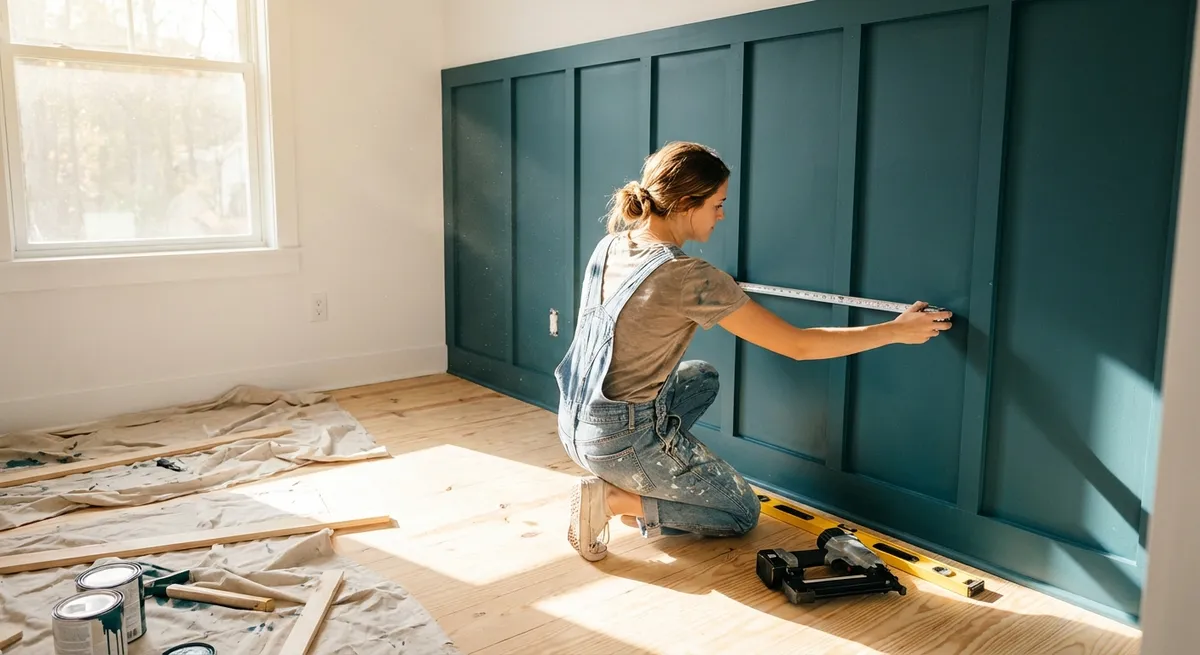
A well-done accent wall can make a room feel finished, modern, and custom—without needing a full remodel. Instead of another overwhelming “big project,” this is a focused DIY that adds real impact in a weekend, even if you’re not a pro.
This guide walks you through planning, building, and finishing a DIY accent wall with simple tools and materials. You’ll get five clear step‑by‑step sections you can follow from idea to clean‑up.
Step 1: Choose the Right Wall and Style
Before you buy anything, decide where and what you’re building. Good choices here make everything else easier.
A strong accent wall usually has:
- No or minimal windows and doors
- A clear “focal point” (behind a bed, sofa, TV, or dining table)
- A visible spot from the main room entrance
- Walls with a lot of vents, switches, or doors (more cuts, more patching)
- Tiny or chopped-up walls that can’t show the full design
- Rooms that already feel busy (too many colors, patterns, or furniture)
- Board-and-batten: Vertical or square grid of trim; simple, classic, works in most rooms
- Slat/wood strip wall: Thin vertical or angled wood strips; modern, clean lines
- Geometric trim wall: Angled trim in a pattern; bold visual interest
- Single-color paint accent: Easiest option; just one bold color on one wall
Avoid:
Common DIY accent wall styles:
Once you pick a style, take a photo of the wall and sketch your idea over it (even roughly). This helps you see spacing and where outlets, switches, and furniture will sit.
Step 2: Plan Layout, Materials, and Tools
Now turn the idea into a simple plan and cut list so you’re not making random trips to the hardware store.
Measure your wall:
- Measure width in inches
- Measure height in inches
- Note locations of outlets, switches, and vents
- For board-and-batten/grid: Decide how many vertical and horizontal sections you want. Aim for panels that are roughly 18–30 inches wide for a balanced look.
- For slat walls: Decide spacing between slats (commonly 1/2"–1" apart).
- For geometric: Mark major lines with painter’s tape first to test the look.
- Trim/boards:
- MDF boards or primed pine (1x2, 1x3, or 1x4 nominal size)
- For slats: 1/2"–3/4" thick strips, 1–2" wide
- Fasteners & supplies:
- Construction adhesive (for extra hold)
- 1.5"–2" brad nails (or finish nails)
- Wood filler or spackle
- Caulk (paintable)
- Painter’s tape
- Paint & prep:
- Primer (especially for bare wood or MDF)
- Interior wall paint (eggshell or satin for walls; semi‑gloss optional for trim)
- Tape measure, pencil, and level (2–4 ft level is ideal)
- Stud finder (helpful but not mandatory for light trim)
- Miter saw or miter box with hand saw
- Brad nailer (pneumatic or battery) or hammer and finish nails
- Caulk gun
- Sanding block or sandpaper (120–220 grit)
- Paint roller, tray, and angled brush
Decide your pattern:
Common material options:
Tools you’ll need:
Make a simple cut list on paper so you know exactly how many boards and what lengths you’ll need before you buy.
Step 3: Prep the Wall and Mark Your Design
Good prep is what separates a clean, pro‑looking wall from a sloppy one.
1. Clear and clean the area
- Move furniture away from the wall.
- Remove outlet covers, switch plates, hooks, and art.
- Wipe the wall with a damp cloth to remove dust and grease.
- Patch nail holes or small dents with spackle.
- Let dry, then sand smooth.
- If you have glossy paint, scuff sand lightly or use a bonding primer later.
- Use painter’s tape to mark major lines and spacing on the wall.
- For vertical/batten walls:
- Mark the center of the wall.
- Space boards evenly out from center so the end gaps are similar in size.
- For grid patterns:
- Decide your top and bottom rails (horizontal boards) and mark their height.
- Divide the remaining wall height by the number of rows you want to find even spacing.
- Use your level to turn tape/pencil marks into straight lines:
- Vertical lines: check with level so they don’t tilt.
- Horizontal lines: mark all at the same height and level across the whole wall.
2. Fix wall issues first
3. Mark your layout
4. Level everything
Don’t skip the tape layout. It lets you adjust spacing and pattern before you start cutting boards.
Step 4: Cut, Install, and Fill the Trim
This is where your wall starts to take shape.
1. Cut your boards
- Start with the longest runs: top/bottom horizontals or full‑height verticals.
- Measure each piece directly on the wall if your house isn’t perfectly square (most aren’t).
- Mark each cut on your board and label pieces (e.g., “Top Left,” “Center Vertical”).
2. Install in the right order
A good sequence for board-and-batten or grid styles:
- Install the bottom board (if you’re adding one).
- Install top board or top of the pattern.
- Add vertical boards.
- Add horizontal boards inside the grid.
For slat walls:
- Start at one side.
- Use a spacer (like a scrap of wood cut to 1/2" or 3/4") to keep gaps consistent.
- Apply a thin zigzag of construction adhesive to the back of each board.
- Press into place along your pencil/level lines.
- Use the brad nailer to nail into studs where possible:
- Typically one nail near each end and every 12–16" along the board.
- If you can’t hit a stud, adhesive plus a few nails into drywall is usually enough for light decorative trim.
- Temporarily remove covers.
- If a board crosses an outlet, measure and cut out a notch with a jigsaw or hand saw.
- Make sure the electrical box is still accessible and not buried.
- Fill all nail holes and gaps between board seams with wood filler or spackle.
- Once dry, sand flush with a sanding block.
- Vacuum or wipe dust from boards and wall.
3. Attach boards securely
4. Work around outlets and switches
5. Fill and sand
This step is tedious but critical—smooth, filled joints are what make the wall look built‑in instead of DIY.
Step 5: Caulk, Paint, and Finish Cleanly
This is the final polish that makes your accent wall look intentional and finished.
1. Caulk the gaps
- Use paintable caulk where:
- Boards meet the wall (edges).
- Boards meet the ceiling, baseboard, or adjoining walls.
- Run a thin bead, then smooth with a damp finger or caulk tool.
- Wipe excess with a damp rag before it dries.
Tip: Don’t caulk gaps you might want to move later (like around removable panels). Focus on permanent joints.
2. Prime (if needed)
- Prime if:
- You used bare MDF or raw wood.
- You’re going from a dark to a light color.
- The wall was glossy.
- Spot-prime patched areas at minimum so they don’t flash through paint.
- For a single-color accent wall (trim + wall same color):
- Cut in along edges with an angled brush.
- Roll paint on open wall areas.
- Use a small roller for boards for a smoother finish.
- For contrast (trim one color, wall another):
- Paint the wall color first, let it fully dry.
- Tape along the trim edge, then paint trim color.
- Remove tape while paint is still slightly wet to avoid peeling.
3. Paint strategy
Use at least two coats for even coverage, letting each coat dry per the can’s instructions.
4. Reassemble the room
- Reinstall outlet and switch covers.
- Touch up any small dings with a brush.
- Move furniture back, but consider adjusting layout to feature the new wall:
- Center the bed or sofa on the wall pattern.
- Keep tall furniture from blocking your design.
- Are lines clean?
- Any missed nail holes?
- Any caulk gaps to touch up?
Step back and check:
A quick 15–20 minute final pass often makes the difference between “that’s nice” and “wait, who did that for you?”
Conclusion
A DIY accent wall is one of the most efficient home projects for the impact it delivers. With basic tools, clear measurements, and some patience with filling and caulking, you can turn a plain wall into a feature that looks custom-built.
Use this process once, then adapt it:
- Change trim patterns for different rooms.
- Try a slat wall in an entryway or office.
- Use a bold, dark color in a small powder room for drama.
The steps stay the same—you just change the design.
Sources
- The Spruce – How to Create a Board and Batten Wall – Step-by-step overview of materials, spacing, and installation tips for board-and-batten accent walls.
- Lowe’s – How to Install a Wood Accent Wall – Retailer guide covering planning, cutting, and attaching wood for various accent wall styles.
- Home Depot – How to Paint an Accent Wall – Practical instructions for choosing colors and painting accent walls cleanly.
- Sherwin-Williams – Interior Painting Tips – Professional advice on primers, paint types, and finishing techniques for interior walls.
- US Consumer Product Safety Commission – Ladder Safety – Important safety guidance if you’re using ladders or step stools while working on higher walls.
Key Takeaway
The most important thing to remember from this article is that this information can change how you think about DIY Projects.