A crowded tool aisle and endless “must-have” lists can make it hard to know what you really need for home projects. Instead of buying random gadgets you’ll rarely touch, it’s smarter to build a lean, reliable tool kit tailored to how you actually work. This guide walks you through choosing core tools, avoiding common mistakes, and setting up a system so your gear is always ready when a project pops up.
Start With the Projects, Not the Tools
Before spending money, get clear on what you’ll actually do in the next 6–12 months. Your projects should decide your tools—not the other way around.
Think about what’s realistic for your skill level and time: hanging shelves, assembling furniture, basic plumbing fixes, light electrical work, or small carpentry projects. Write down three to five specific tasks you know you’ll tackle, such as “replace a bathroom faucet,” “install curtain rods,” or “patch drywall holes.” This list becomes your filter for every purchase: if a tool doesn’t help with at least one upcoming project, it can probably wait.
This project-first mindset also helps you avoid buying “pro” tools you don’t need yet. For example, if you mostly plan on hanging pictures and doing small repairs, a quality cordless drill, stud finder, and basic hand tools will serve you far better than a whole set of specialty saws. As your projects grow in complexity, you can upgrade and expand your kit in a way that actually makes sense.
Step 1: Build a Solid Hand Tool Core
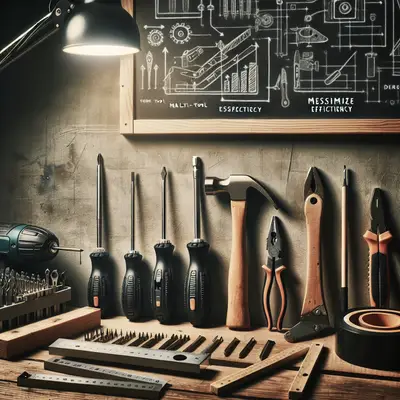
Every DIYer needs a dependable set of hand tools. These don’t need to be top-of-the-line, but they should feel solid, safe, and comfortable in your hands.
Aim to include:
- Adjustable wrench and a small set of combination wrenches
- Screwdrivers: at least two sizes each of Phillips and flathead, plus a stubby driver
- A 16–20 oz claw hammer
- Tape measure (25 ft is a good all-around length)
- Utility knife with replaceable blades
- Pliers: slip-joint, needle-nose, and locking pliers
- Torpedo level (9"–12") for quick checks
- Stud finder rated for wall studs and live wires
When you shop, pick up each tool and check the grip, weight, and balance. If it feels flimsy or awkward, skip it. Look for screwdrivers with magnetized tips, a tape measure with a sturdy standout (how far it extends before bending), and a hammer with a comfortable, non-slip handle. For pliers and wrenches, smooth movement and firm locking are more important than flashy finishes.
Finally, buy a small, durable tool bag or open-top caddy. Keeping your hand tools together means you’re not wasting time hunting for a screwdriver every time something needs tightening.
Step 2: Choose a Cordless Platform and Stick With It
Power tools can either streamline your projects or turn into a pile of dead batteries and mismatched chargers. The easiest way to avoid that is to pick one cordless battery platform and commit to it.
Here’s a simple way to choose:
- Identify your first tool. Most DIYers start with a cordless drill/driver. If you plan to do heavier work like building decks or framing, a drill plus impact driver combo is worth it.
- Compare “bare tool” options. Once you buy into a platform (e.g., 18V or 20V from one brand), you can add more tools—like circular saws, oscillating tools, or nailers—without buying new batteries every time.
- Check battery availability. Choose a brand with widely available batteries and chargers at big-box stores near you. This matters when you want a backup battery or need a fast replacement.
- Look at real-world reviews. Focus on reliability, battery life, and how the tools hold up for homeowners, not just professionals.
Avoid bargain combos that include a bunch of tools you’ll rarely use. A better approach is to buy one quality drill/driver kit with two batteries and then add individual tools as your projects demand them. This keeps your setup simpler and usually saves money in the long run.
Step 3: Add Measuring, Marking, and Cutting Tools That Prevent Mistakes
Many DIY frustrations come from poor measurements, crooked cuts, or misaligned holes. A small set of precise measuring and cutting tools can save you hours of frustration and rework.
Start with:
- Speed square for marking straight and angled cuts
- Combination square for checking 90° and 45° angles and setting depths
- Pencil and fine-tip marker for clear, visible markings
- Handsaw with a comfortable grip for quick cuts in wood or trim
- Small pull saw or flush-cut saw for awkward spots and finish work
- Digital or analog caliper if you work with hardware and need precise measurements
When using these tools, follow a consistent process: measure, mark, then verify before cutting or drilling. For example, when hanging a shelf, mark your screw locations, check with a level, then check once more before drilling into the wall. For cutting boards or trim, use the speed square as a guide for the saw to keep cuts straight.
Using the right measuring and marking tools doesn’t just improve results—it also builds confidence. When you know your markings are accurate, you can focus on cutting and assembly instead of constantly second-guessing your layout.
Step 4: Set Up a Simple Safety Kit So You Actually Use It
Safety gear only works if it’s close at hand and easy to put on. Instead of scattering items around the house, create a compact safety kit that lives right next to your tools.
At a minimum, include:
- Safety glasses or goggles that fit snugly and comfortably
- Hearing protection: either earmuffs or reusable earplugs
- Dust mask or disposable respirators (N95 or better for dusty work)
- Light work gloves for general tasks, plus cut-resistant gloves if you use sharp blades often
- Small first-aid kit with bandages, antiseptic wipes, and adhesive tape
Keep this safety kit in the same bag, box, or shelf as your most-used tools, and make it a rule: no power tools or cutting without eye protection on first. If you work in a small indoor space, consider adding a small box fan or portable air purifier to help clear dust and fumes.
Over time, you can expand your safety gear based on what you do most—knee pads for flooring work, a better respirator for painting or sanding, or higher-grade gloves for metalwork. The important part is having a basic kit ready so you don’t “skip it just this once.”
Step 5: Create a Simple System to Keep Tools Ready to Use
A well-chosen tool kit isn’t much use if it’s always half-lost, with dead batteries and missing bits. A basic organization and maintenance routine keeps your tools ready to work when you are.
Use this straightforward system:
- Designate one main storage spot. A shelf, cabinet, or corner of the garage is enough. Keep hand tools, power tools, and safety gear together so you can grab everything in one trip.
- Group tools by task. For example, keep your drill, bits, screws, anchors, and stud finder in one bin or tote labeled “hanging & mounting.” Keep plumbing tools and supplies together in another.
- Set a “reset” habit. After each project (even a quick one), take five minutes to put tools back, recharge batteries, and throw away dull blades or worn-out sandpaper.
- Do a quarterly check. Every few months, look over your tools for rust, loose parts, or damage. Tighten screws, clean tool surfaces, and lightly oil moving parts as needed.
This small effort pays off fast. When your tools live in one place, sorted by common tasks, you’ll start projects faster and finish with less frustration. You’ll also spot gaps in your kit based on real use instead of impulse buys.
Conclusion
You don’t need a workshop full of specialized gear to handle most home projects—you need a focused, reliable tool kit built around how you actually work. Start with a strong core of hand tools, choose a single cordless platform, add precise measuring and cutting tools, keep a basic safety kit within reach, and maintain a simple organization system. This approach keeps your gear manageable, your projects less stressful, and your results more consistent. As your skills grow, your tool kit can grow with you, one well-chosen upgrade at a time.
Sources
- [U.S. Consumer Product Safety Commission – Power Tool Safety Tips](https://www.cpsc.gov/s3fs-public/204.pdf) - Official guidance on safe selection and use of power tools and protective gear
- [Occupational Safety and Health Administration (OSHA) – Hand and Power Tools](https://www.osha.gov/hand-power-tools) - Detailed information on proper tool use, maintenance, and common hazards
- [Family Handyman – Essential Tools for the Homeowner](https://www.familyhandyman.com/list/must-have-tools-for-homeowners/) - Practical overview of core tools most homeowners actually use
- [This Old House – Choosing a Cordless Drill](https://www.thisoldhouse.com/tools/21018243/how-to-choose-a-cordless-drill) - In-depth tips for selecting a cordless drill and understanding battery platforms
- [Lowe’s – How to Use a Tape Measure and Other Measuring Tools](https://www.lowes.com/n/how-to/use-a-tape-measure-and-other-measuring-tools) - Guides on accurate measuring and marking techniques for DIY projects
Key Takeaway
The most important thing to remember from this article is that this information can change how you think about Tools & Equipment.