A good project can be ruined by bad tool setup. If you’ve ever wasted half an afternoon hunting for your drill bits or untangling extension cords, you already know: how you store, maintain, and use your tools matters as much as the tools themselves. This guide walks you through building a simple, reliable tool station at home—something that keeps your gear ready, safe, and easy to grab when it’s time to fix or build.
Step 1: Map Out Your Tool Station Before You Buy Anything
Before you start hanging pegboard or ordering organizers, take 15–20 minutes to plan where your tools will live and how you’ll use the space.
- Start with location. Aim for a dry, well‑ventilated area with a nearby outlet: a garage wall, basement corner, or even a closet with a sturdy shelf can work. Avoid damp or unconditioned spaces if possible, especially for power tools and anything with a steel edge.
- Think about “work zones.” Visualize where you’ll cut, sand, paint, and assemble. Your most‑used tools should be closest to your main work surface; rarely used tools can live higher up or further away.
- Take inventory. Lay your tools out on a table or floor: hand tools (hammers, screwdrivers), measuring tools (tape, square, level), fasteners (screws, nails, anchors), and power tools. Group them roughly by category.
- Note what’s missing. As you sort, write down what you reach for but don’t have: a second tape measure, better drill bits, a stud finder, more clamps. This becomes your “upgrade” list later.
- Consider safety and access. Keep heavy tools waist‑to‑knee height so you’re not lifting weight off high shelves. Items kids shouldn’t touch (blades, chemicals, nail guns) should be up high or locked.
- Measure the wall and floor space. Jot down dimensions where you plan to hang storage or add shelving. These numbers will guide what storage solutions fit without crowding walkways.
Planning on paper first helps you avoid overbuying storage pieces and lets you design a station that supports how you actually work—not how a showroom looks.
Step 2: Build a Simple, Flexible Storage Backbone
Once you know where your tool station will go, build a basic “backbone” that can adapt as your tool collection grows.
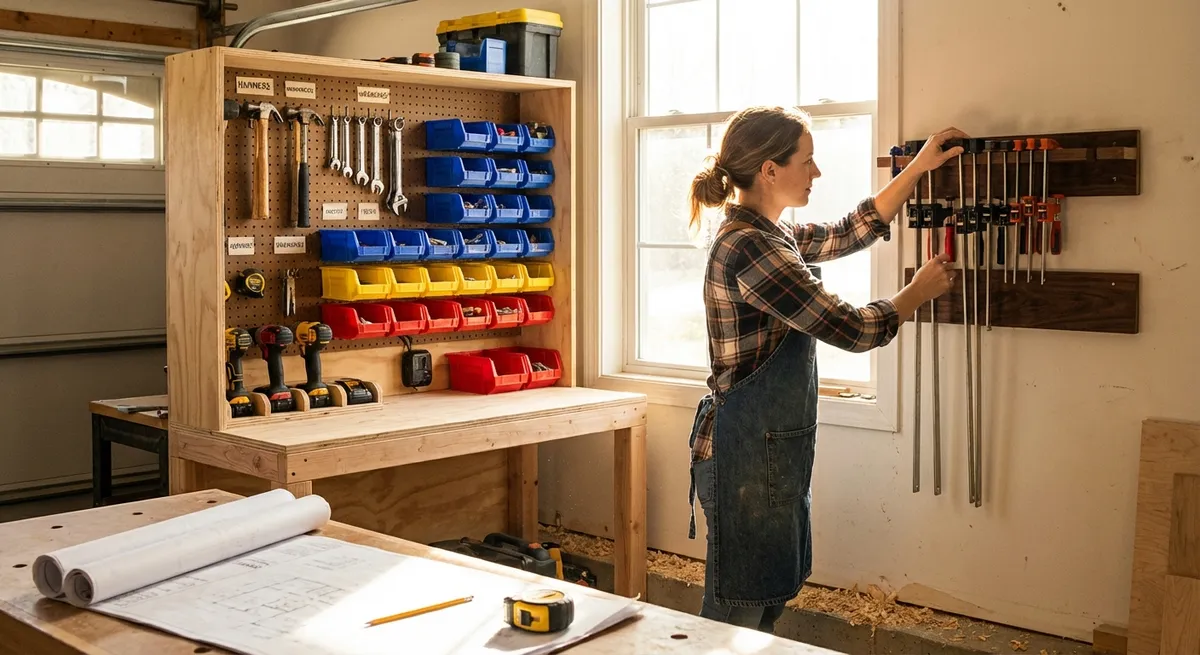
- Choose your main system: pegboard, slatwall, or shelves.
- Pegboard (wood or metal) is affordable, easy to rearrange, and great for hand tools.
- Slatwall is sturdier and more flexible for heavier items, but more expensive.
- Shelves plus labeled bins work well if wall mounting is limited (in rentals, for example).
- Install a solid base:
- Locate studs with a stud finder and mark them. For drywall, anchor pegboard or cleats into studs whenever possible.
- If using French cleats (angled wooden strips), you can hang cabinets, tool racks, or small boxes that are easy to move later.
- Dedicate zones on the wall:
- Eye‑level: high‑use tools (stud finder, tape measures, screwdrivers, pliers, utility knife).
- Below eye‑level: heavier tools (drills, circular saw, sander) on sturdy hooks or shelves.
- Above eye‑level: infrequently used tools and accessories (specialty wrenches, spare clamps, extra storage bins).
- Use clear containers where possible. Clear boxes or jars for screws, anchors, and small hardware make it easy to see what you’re low on at a glance.
- Label aggressively. Label drawers, bins, and even pegboard outlines (“pliers,” “measuring,” “drivers”) so tools naturally find their way back to the same place every time.
- Leave some empty space. Don’t pack every inch with stuff. Leaving 10–20% free space makes it easier to add new tools and keeps the wall from becoming visual noise.
Think of this as infrastructure: a solid, flexible storage backbone now means you’re not rebuilding your tool station every time you pick up a new saw or drill.
Step 3: Set Up a Safe, Plug‑and‑Play Power Tool Area
Power tools are where most DIY injuries happen—and where a little setup can dramatically improve safety and efficiency.
- Start with power and cords:
- Use a heavy‑duty, grounded power strip with overload protection, mounted above your workbench rather than on the floor.
- Avoid daisy‑chaining multiple power strips or extension cords. If you’re constantly short on outlets, that’s a sign you should add a dedicated circuit—time to call an electrician.
- Organize cords and batteries:
- Mount a simple shelf or charging station for tool batteries near an outlet. Keep chargers plugged in and labeled (driver, drill, multi‑tool).
- Use cord wraps or Velcro ties on extension cords; hang them on large hooks to prevent kinks and tripping hazards.
- Define a “no clutter” tool use zone:
- The area where you cut, grind, or drill should be cleared after each session. Sawdust, screws, and scraps create slip hazards and can hide power cords.
- Keep a dedicated shop vacuum or broom and dustpan within reach. Clean as part of your shutdown routine.
- Position power tools smartly:
- Store frequently used tools (cordless drill, impact driver, sander) at chest or counter height.
- Heavier saws (miter saw, table saw) should live on sturdy stands; if space is tight, consider folding stands that store against a wall.
- Keep safety gear right there:
- Mount a small hook or shelf for safety glasses, hearing protection, a dust mask or respirator, and work gloves near your power tool area.
- If you have kids or pets, add a simple lockable cabinet or lockable box for the most dangerous tools (saws, nailers).
The goal is a power tool area where you can plug in, work, and put everything back without stepping over tangled cords or hunting for safety glasses.
Step 4: Build a “Ready‑to‑Grab” Hand Tool Kit
A wall of tools looks impressive, but you still need a portable setup for quick fixes anywhere in the house. That’s where a well‑built hand tool kit comes in.
- Choose the right container:
- A medium‑size tool bag, open‑top tote, or small toolbox works well. If it’s too big, it becomes a junk bin; if it’s too small, you’ll constantly be swapping things out.
- Look for sturdy handles, internal pockets, and a solid base.
- Stock it with practical essentials:
- Measuring and marking: 16–25 ft tape measure, pencil, fine‑tip marker.
- Fastening: a small screwdriver set (Phillips and flat in multiple sizes), a multi‑bit driver, and an adjustable wrench.
- Cutting and prying: utility knife with extra blades, small pry bar.
- Gripping: basic pliers, needle‑nose pliers, and a pair of locking pliers if possible.
- Striking: a 16–20 oz hammer that feels comfortable in your hand.
- Finding and checking: stud finder, small level, outlet tester if you do any basic electrical work.
- Add a mini hardware kit:
- A small organizer box with assorted screws, wall anchors, picture hangers, and a few wood and masonry drill bits covers most small jobs.
- Make it truly “ready to go”:
- Restock blades and bits when they’re dull, not when you’re halfway through a job.
- Put the bag or box in a consistent, easy‑to‑grab spot near the entrance to your tool station.
- Use a simple rule: if you reach for a tool during a basic home repair more than a couple of times a year, it probably belongs in this portable kit.
This “ready‑to‑grab” kit saves you from constant trips back and forth to the garage and keeps minor fixes from turning into all‑day scavenger hunts.
Step 5: Create a Quick, Repeatable Tool Care Routine
Tools last longer and work better with a little basic care. You don’t need a complicated maintenance program—just a consistent, simple routine.
- After each project:
- Wipe down tools with a rag to remove dust, paint, or adhesive. Pay special attention to moving parts and vents on power tools.
- Check cords for nicks or fraying; if you see copper or damage near the plug, tag the tool and stop using it until repaired.
- Return everything to its assigned spot. If a tool doesn’t have a spot, give it one now or decide if it truly belongs in your collection.
- Once a month (or after heavy use):
- Lightly oil metal hand tools (pliers, wrenches, chisels) with a few drops of multipurpose or machine oil on a cloth to prevent rust.
- Inspect drill bits and driver bits; replace ones that are rounded over or chipped.
- Check battery contacts for corrosion and ensure batteries are not swollen or cracked.
- Seasonally:
- In humid or unheated spaces, check for rust on stored tools. Consider adding a small dehumidifier or moisture‑absorbing packs in tool cabinets.
- Review rarely used tools. If something has sat untouched for a year and doesn’t fit your projects, consider selling, donating, or storing it elsewhere to reduce clutter.
- Safety checks:
- Confirm fire extinguisher access if you do any cutting, grinding, or finishing work in your tool area.
- Make sure safety glasses and hearing protection are in good shape and still stored where you expect them to be.
A short, repeatable care routine keeps your tool station from drifting back into chaos and saves you money by avoiding premature tool replacement.
Conclusion
A useful tool station isn’t about having every gadget—it’s about having the right tools, in the right place, ready to work. By planning your space, building a flexible storage backbone, setting up a safe power tool area, creating a grab‑and‑go hand tool kit, and following a simple care routine, you turn your tools into a system instead of a pile. The next time something breaks or you’re ready to start a new project, you’ll spend less time searching and more time actually fixing and building.
Sources
- [U.S. Consumer Product Safety Commission – Power Tool Safety](https://www.cpsc.gov/s3fs-public/611.pdf) - Safety guidance and best practices for using power tools at home
- [Occupational Safety and Health Administration (OSHA) – Hand and Power Tools](https://www.osha.gov/hand-power-tools) - Official safety standards and recommendations for tool use and maintenance
- [Lowe’s – How to Use and Maintain Hand Tools](https://www.lowes.com/n/buying-guide/hand-tools) - Practical tips on selecting, organizing, and caring for common hand tools
- [Home Depot – Garage Organization Ideas](https://www.homedepot.com/c/ai/garage-organization-ideas/9ba683603be9fa5395fab9038a0e5a7) - Ideas for setting up wall storage, shelving, and tool organization in a home garage
- [Family Handyman – Tool Storage Ideas](https://www.familyhandyman.com/list/tool-storage-ideas/) - Real‑world examples of DIY tool storage and organization solutions
Key Takeaway
The most important thing to remember from this article is that this information can change how you think about Tools & Equipment.