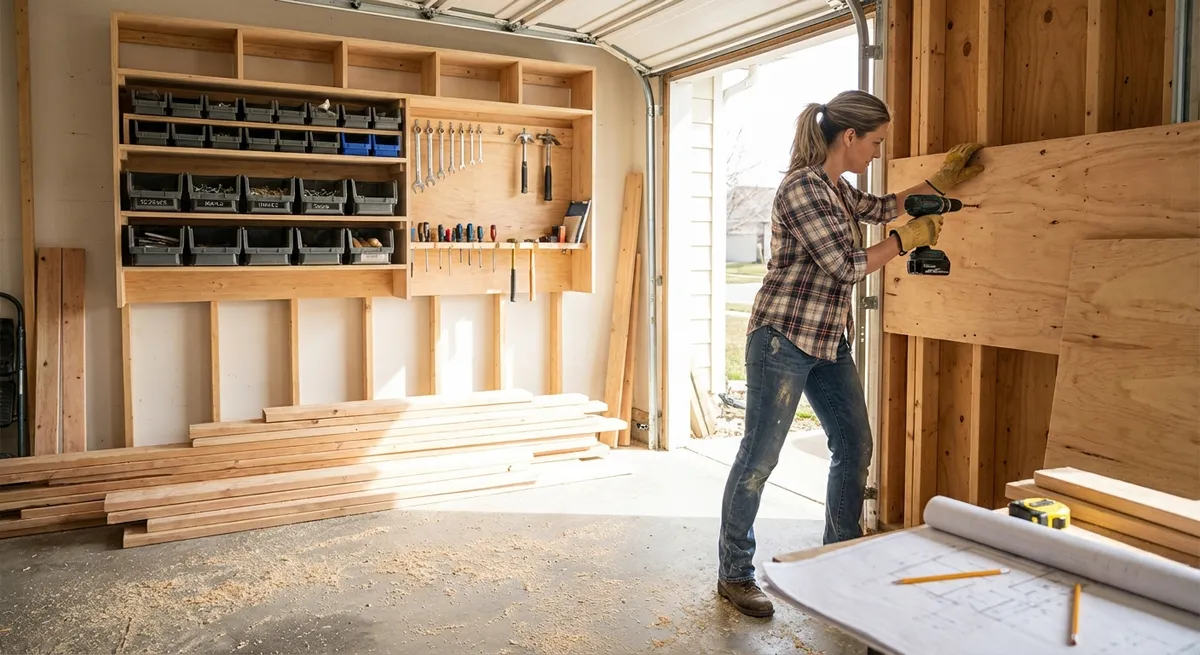
A cluttered garage makes every DIY project harder. You waste time hunting for tools, trip over paint cans, and end up working in half the space you actually have. A simple wall-mounted organizer changes that—no remodel, no custom cabinetry, and no specialty equipment required. This guide walks you through a practical, wood-based storage system you can build in a weekend with basic tools and easily findable materials.
Plan Your Layout So the System Actually Gets Used
Before you buy anything, you need a plan that fits your space and the way you work.
Start by clearing one wall or section of wall in your garage—sweep the floor, remove random hooks, and take a quick photo for reference. Measure the width and height of the open wall area and sketch it on paper, noting obstructions like outlets, light switches, and windows. Group what you need to store into categories: hand tools, power tools, long items (brooms, shovels, levels), small hardware, and seasonal gear. Decide which items you reach for most often and plan to keep those between hip and eye level. Reserve higher areas for lighter or rarely used items (holiday decor, spare tarps) and lower areas for heavy things (paint cans, compressors, shop vac). Mark rough locations for a shelf zone, hanging tool zone, and a flexible “rail” zone you can expand over time.
Gather Materials and Basic Tools
You don’t need a full workshop to build a sturdy organizer—just a few common tools and off-the-shelf materials.
For most single-wall systems, plan to use standard 2x4 lumber for a mounting frame, 3/4" plywood or 1x boards for shelves, and either simple hooks, screw-in tool hangers, or inexpensive track/rail hardware. You’ll also need 3" wood screws for attaching the frame to wall studs, 1 1/4"–2" screws for shelves and accessories, and wall anchors if you must attach lighter components where no stud is available. Basic tools include a tape measure, stud finder, level, drill/driver with wood bits and screwdriver bits, a hand saw or circular saw, and safety gear (glasses, dust mask, and hearing protection if you’re using power saws). Buy lumber a little longer than you think you need so you have room for mistakes and offcuts that can become brackets or cleats later. If you don’t own a saw, most home centers will make a few straight cuts for you—have your cut list ready.
Step 1: Secure a Strong Mounting Frame to the Wall
A solid frame is what keeps everything on the wall instead of on the floor.
Start by finding the wall studs with your stud finder and marking their centers with painter’s tape or a light pencil line; confirm by driving a small test screw and checking for solid resistance. Cut two horizontal 2x4s the full width (or nearly full width) of your planned organizer area—one will sit about 6–8 inches above the floor, and the other roughly at shoulder height. Level the bottom board first and screw it into each stud using 3" wood screws, at least two screws per stud. Repeat with the upper 2x4, checking for level again and aligning it vertically with the lower board where possible. For taller systems or heavier storage, add a third 2x4 near the top of the wall area to tie everything together. This frame spreads weight across multiple studs so shelves, hooks, and rails have a secure base.
Step 2: Add Shelves for Bulky and Boxed Items
Shelves handle the awkward stuff: paint cans, tool cases, bins, and random project leftovers.
Measure the distance between your mounted 2x4s and decide how deep you want your shelves—12" to 16" is usually enough for bins and paint cans without jutting too far into the walkway. Cut plywood or 1x boards to your chosen depth and width. For each shelf, cut simple 2x4 blocks or 1x2 strips to act as supports underneath at each stud location. Screw these supports into the studs or the horizontal 2x4 frame first, making sure they’re level and aligned with each other. Lay the shelf boards on top and fasten them down with wood screws every 8–12 inches along the supports. Put the heaviest items on the lowest shelf and test each shelf by gently loading it and watching for sag or movement; if you see flexing, add a center support or reduce the span.
Step 3: Create a Hand Tool Board You Can Reconfigure
A dedicated hand tool zone saves you from digging through drawers or random bins.
You can use pegboard, plywood, or a strip system. Pegboard is simple: cut it to size, mount 1x2 spacers to your 2x4 frame, and then screw the pegboard into the spacers so hooks can pass behind it. If you choose plywood, mount it directly to the 2x4 frame and use a combination of screw-in hooks, magnetic strips (for things like screwdrivers and pliers), and small shelf brackets or cleats. Lay tools out on the floor first in the arrangement you want—group by type (cutting, measuring, fasteners) so they’re easy to find quickly. Attach hooks and holders with screws long enough to bite firmly into the backing, not just the surface. Leave some open space for future tools and resist the urge to cram every inch; a bit of breathing room makes tools easier to grab and put away.
Step 4: Install a Simple Rail System for Long and Awkward Items
Long-handled tools and odd-shaped items are what usually pile up in corners; a rail system gets them off the floor.
You can build a basic DIY rail from a horizontal 2x4 or buy a pre-made track system designed for garage storage. For a DIY version, mount an additional 2x4 across your frame at a convenient height (usually around chest level for shovels and brooms), securing it to every stud or to the existing frame. Add heavy-duty screw-in hooks or metal tool hangers along the 2x4, spacing them to fit rakes, shovels, extension cords, and small ladders. Keep the end of the rail clear for the longest items so they’re easier to slide in and out. If you use a commercial track system, follow the manufacturer’s installation instructions carefully and always tie the main track into studs, not just drywall, especially for heavier loads like ladders or large tools.
Step 5: Label, Adjust, and Build In Expansion
The setup phase isn’t finished when the last screw goes in—small tweaks make the system work long-term.
Once everything is mounted, load your shelves and hang your tools, then stand back and pay attention to what feels awkward. Move frequently used items to easier reach and demote rarely used tools to higher spots or farther edges. Use painter’s tape and a marker to label shelves, bins, and key hook zones so you and anyone else in the house can quickly see where things go. Leave at least one small shelf and a few blank spots on your tool board or rail for upcoming purchases and future projects. After a week or two of use, walk the wall with a screwdriver and re-tighten any screws that have loosened slightly under load. Make a short written inventory of what’s stored on the wall and tape it inside a cabinet or near the door; this helps you notice if something’s missing and plan future upgrades without re-measuring everything.
Conclusion
A well-planned wall-mounted garage organizer doesn’t require custom cabinetry or advanced carpentry—just a solid frame, basic shelves, a flexible tool zone, and a place for long-handled gear. By anchoring into studs, grouping tools by how you actually work, and leaving room for future expansion, you turn a frustrating pile of stuff into a functional workspace. The next time you start a DIY project, you’ll know where everything is, have more open floor space, and spend less time searching and more time actually building and fixing.
Sources
- [U.S. Consumer Product Safety Commission – Garage Storage and Organization Safety Tips](https://www.cpsc.gov/Safety-Education/Safety-Education-Centers/garage-safety) - Guidance on safely storing items, anchoring, and preventing tip-overs
- [Family Handyman – Garage Storage Solutions](https://www.familyhandyman.com/project/simple-garage-storage/) - Practical examples of wall-mounted garage storage systems and construction details
- [This Old House – How to Install Shelves](https://www.thisoldhouse.com/storage-organization/21016509/how-to-build-shelving) - Step-by-step advice for building and anchoring sturdy wall shelves
- [Lowe’s – How to Find Wall Studs](https://www.lowes.com/n/how-to/find-a-stud) - Instructions and tips for reliably locating studs in drywall and plaster walls
- [OSHA – Safe Use of Ladders and Storage Considerations](https://www.osha.gov/publications/ladders) - Safety guidance relevant to storing and accessing ladders in a garage or workshop
Key Takeaway
The most important thing to remember from this article is that this information can change how you think about DIY Projects.