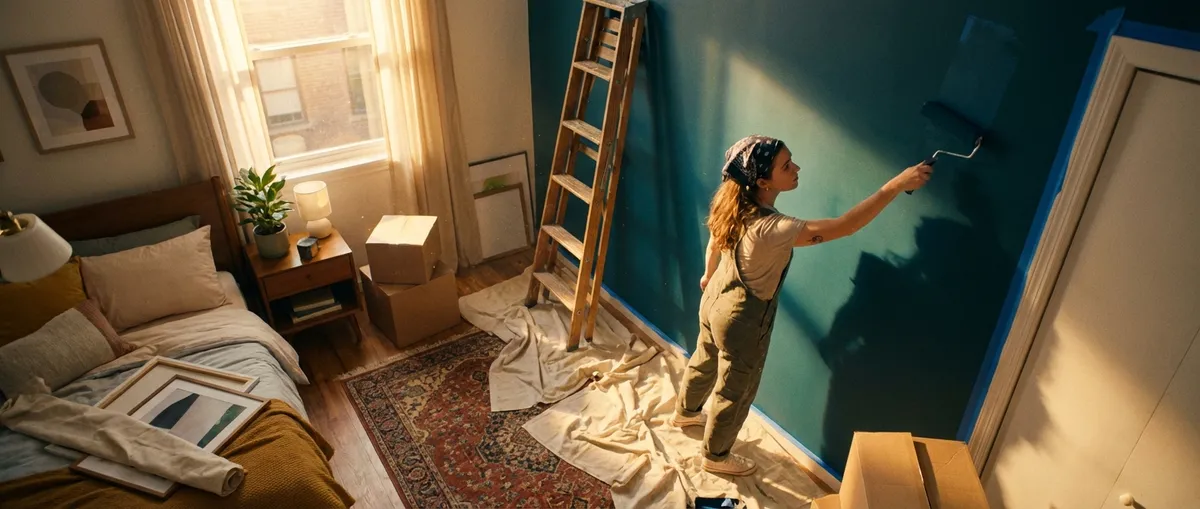
A single wall upgrade can change how an entire room feels—without a full remodel or expensive tools. A DIY accent wall is beginner-friendly, budget-conscious, and totally doable in a weekend. This guide walks you through a straightforward, modern accent wall project you can adapt to your space and style.
You’ll learn how to plan, prep, install, finish, and style an accent wall with clear, practical steps and tips that actually matter once you start cutting, nailing, and painting.
Step 1: Plan Your Accent Wall Like a Small Project
Before you buy anything, treat the wall like its own mini project. This avoids wasted materials and half-finished ideas.
- Choose the right wall. Pick the natural focal point of the room: behind a bed, behind a sofa, the dining room wall you see from the entry, or the TV wall. Avoid walls with lots of doors or big windows if you want a clean, bold look.
- Decide on the style. Three beginner-friendly options:
- Paint-only feature wall (bold color, easiest)
- Board-and-batten style trim (adds dimension and interest)
- Simple wood slats (vertical or horizontal, modern look)
- Measure carefully. Measure wall width and height in inches. Sketch your wall on paper and note:
- Outlet locations
- Switches and vents
- Existing trim (baseboards, crown, window/door casings)
- Set a realistic budget. Factor in:
- Wood or MDF trim boards
- Paint + primer
- Caulk, wood filler, sandpaper
- Painter’s tape, rollers, and brushes
- Match the project to your skill level. If you’re new to DIY:
- Choose simple vertical slats or a basic grid pattern
- Avoid very intricate geometric patterns for your first try
- Check for wall issues first. Look for cracks, major nail pops, or moisture spots. Fix those before adding trim or paint.
- Confirm you have the right tools. Essential basics:
- Tape measure, pencil, level (2–4 ft)
- Stud finder (for heavier trim or thick slats)
- Miter saw or hand saw with miter box
- Drill or nail gun, or hammer and finish nails
Planning on paper and making a quick cost list will save you from mid-project frustration and extra hardware store trips.
Step 2: Prep the Wall So Your Finish Actually Looks Good
An accent wall only looks “professional” if the surface underneath is clean and smooth. Skipping prep is the fastest route to sloppy results.
- Clear the area. Move furniture away from the wall. Remove wall art, shelves, and outlet/switch plates.
- Clean the wall. Wipe it down with a mild cleaner or a mix of water and a small amount of dish soap. Grease, dust, and fingerprints can ruin paint adhesion.
- Repair obvious damage.
- Fill small nail holes and dents with lightweight spackle
- For larger dings, use a joint compound and a putty knife
- Let it dry, then sand smooth with 120–220 grit sandpaper
- Deal with glossy paint. If your wall is shiny or semi-gloss:
- Lightly sand to scuff the surface
- Or use a bonding primer according to the label
- Protect surrounding areas.
- Lay down a drop cloth
- Mask baseboards, adjacent walls, and ceiling edges with painter’s tape
- Prime if needed.
- Required: stained areas, patched spots, raw drywall, or big color changes
- Strongly recommended if you’re using a dark or very deep accent color
Thorough prep makes painting easier, helps trim adhere better, and makes your final finish look straighter and cleaner—even if your cuts or caulk aren’t perfect.
Step 3: Install Simple Trim or Wood Slats for Dimension
This step turns your wall from “just a different color” into a real feature. The approach below works for a basic board-and-batten style or vertical slat wall.
- Choose your material.
- MDF trim boards (1x2, 1x3): smooth, paint-grade, affordable
- Pine or poplar boards: paint or stain; look more “real wood”
- Pre-cut decorative trim: if you want a more traditional look
- Plan the layout.
- Mark the center of the wall with a pencil
- Decide on spacing (for vertical slats, 8–16 inches between pieces is common)
- Lightly draw vertical guidelines so you can visualize the pattern
- Cut your boards.
- Measure each section individually—walls and ceilings are rarely perfectly straight
- Cut boards slightly long, then “test fit” and trim as needed
- Find studs where it matters.
- Use a stud finder to mark stud locations
- Heavier or thicker boards should land on studs where possible
- For thin trim, you can often use construction adhesive plus finish nails into drywall
- Attach the boards.
- Apply a thin bead of construction adhesive on the back (optional but strong)
- Set the board in place, check with a level, then secure with:
- 16 or 18-gauge finish nails (nail gun)
- Or 1.5–2 in. finish nails and a hammer
- Start with the perimeter (top, bottom, sides), then install the verticals or pattern inside
- Keep gaps consistent.
- Use a scrap piece of wood as a spacer between slats
- Check each piece with a level before nailing it off
Take your time on this step. What feels slow and fussy now will make the finished wall look like a custom install instead of a rushed DIY.
Step 4: Fill, Caulk, and Sand for a Clean, Seamless Look
This is the “invisible work” that makes your accent wall look polished instead of patchy. Don’t skip it.
- Fill nail holes and joints.
- Use wood filler on trim boards and nail holes
- Press filler in slightly proud (a bit overfilled), let dry, then sand flush
- Caulk where trim meets wall.
- Use paintable latex caulk along the edges where wood meets drywall
- Cut the caulk tube tip small; a thin bead is easier to control
- Smooth the bead with your finger or a caulk tool, wiping excess on a damp rag
- Avoid caulking expansion gaps.
- Don’t fill gaps at floor-level expansion joints if you’re butting into floating floors
- Don’t over-caulk joints that are supposed to show as distinct lines
- Sand everything lightly.
- After filler dries, sand trim and patched areas with 180–220 grit
- Focus on:
- Nail holes
- Seams between boards
- Spots where filler or caulk left ridges
- Clean dust thoroughly.
- Vacuum or wipe down the wall and trim with a damp microfiber cloth
- Dust left on the surface can ruin paint adhesion and finish
Once everything is smooth to the touch and seams look tight, your wall is ready for paint. This step alone can be the difference between “looks DIY” and “looks custom.”
Step 5: Paint and Style the Wall for Maximum Impact
Here’s where everything comes together. A smart paint choice and intentional styling will make your accent wall do real work in the room.
- Choose the right paint finish.
- Eggshell or matte: forgiving and modern; great for most accent walls
- Satin: more durable, slightly more reflective; good for high-traffic areas
- Prime if you added bare wood or MDF.
- MDF and bare wood absorb paint unevenly—primer gives you a uniform base
- A tinted primer can help dark colors cover better
- Cut in carefully.
- Use a brush to “cut in” along edges:
- Ceiling line
- Baseboards
- Inside trim details
- Roll the flat areas.
- Use a 3/8" to 1/2" nap roller, depending on wall texture
- Roll in overlapping “W” or “M” patterns for even coverage
- Apply 2 coats, letting the first dry fully as directed on the can
- Paint the trim and wall the same color (optional but effective).
- Painting trim and wall one unified color adds a modern, high-end look
- Darker colors (deep blue, charcoal, forest green) emphasize the 3D effect
- Let it cure before heavy use.
- Paint may be dry to the touch in a few hours but can take days to fully cure
- Avoid taping or leaning furniture directly on the wall immediately
- Style the wall intentionally.
- Behind a bed: centered headboard, simple artwork, sconces or lamps
- Behind a sofa: large art or a simple gallery, minimal clutter
- TV wall: low console, hidden or managed cables, simple decor
- Use lighting to your advantage.
- Floor lamps, table lamps, or wall sconces closer to the accent wall will:
- Highlight texture and trim
- Deepen color and shadows for a more dramatic effect
When you’re done, step back and look at the whole room, not just the wall. A good accent wall should anchor the space and make it feel more intentional—not just more colorful.
Conclusion
A well-executed accent wall is one of the most impactful DIY projects you can take on without opening walls, moving plumbing, or buying specialty tools. By planning your layout, prepping the surface, installing simple trim or slats, and taking your time with filling, caulking, and paint, you can completely change the feel of a room over a weekend.
Start with one wall, keep the design simple, and focus on clean lines and careful prep. Once you see how much difference a single wall can make, you’ll have the confidence to tackle more ambitious projects around your home.
Sources
- [U.S. Department of Energy – Energy Saver: Lighting Choices to Save You Money](https://www.energy.gov/energysaver/lighting-choices-save-you-money) – Helpful for understanding how lighting can influence how your accent wall color appears in different rooms
- [Sherwin-Williams – How to Paint an Accent Wall](https://www.sherwin-williams.com/en-us/ideas/inspiration/paint-a-room/paint-an-accent-wall) – Paint manufacturer guidance on choosing colors, prepping, and painting feature walls
- [Benjamin Moore – How to Paint Interior Walls](https://www.benjaminmoore.com/en-us/interior-exterior-paints-stains/how-to-advice/interior-painting-ideas/how-to-paint-interior-walls) – Step-by-step fundamentals for wall prep, priming, and painting techniques
- [Lowe’s – How to Install Board and Batten](https://www.lowes.com/n/how-to/install-board-and-batten) – Practical instructions and diagrams for a common accent wall style using trim
- [This Old House – How to Caulk Like a Pro](https://www.thisoldhouse.com/painting/21015109/how-to-caulk) – Detailed tips on choosing and applying caulk for clean, long-lasting results
Key Takeaway
The most important thing to remember from this article is that this information can change how you think about DIY Projects.