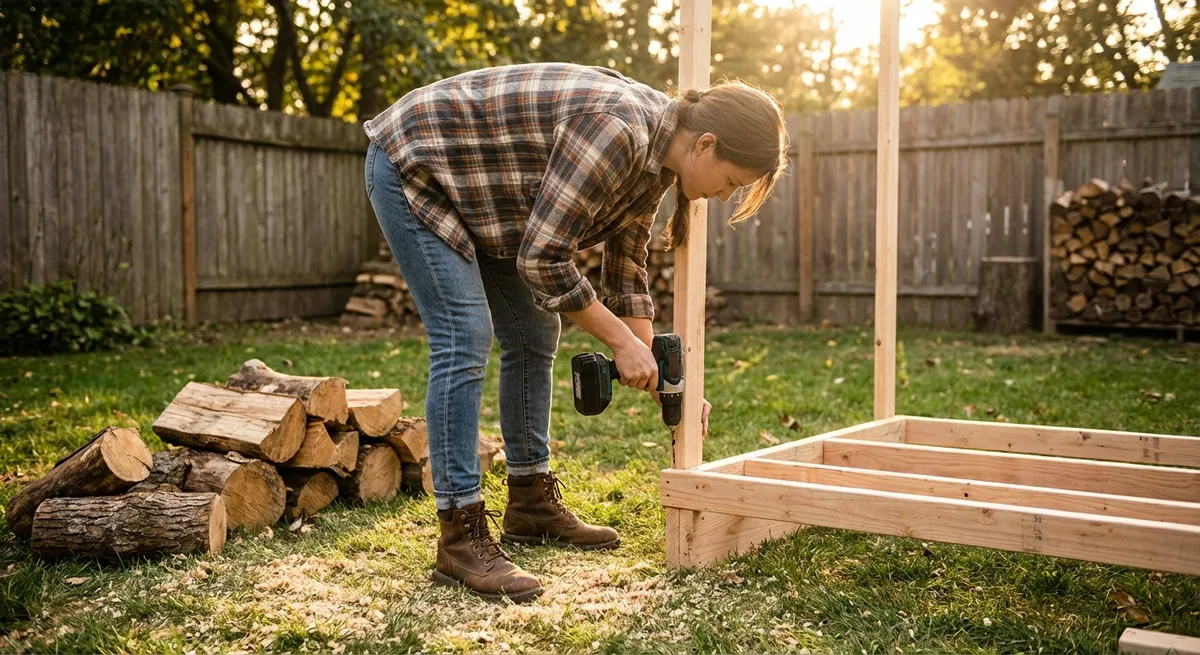
A wobbly stack of firewood on the ground rots fast, attracts pests, and turns into a muddy mess by winter. A solid firewood rack keeps your logs dry, off the ground, and easy to grab when you need them. The good news: you don’t need welding skills, fancy tools, or a big budget to build one. This DIY project is beginner-friendly, weekend-sized, and easy to customize to your space.
Below is a clear, step-by-step guide to building a sturdy wood rack from basic lumber and hardware-store parts—plus practical tips along the way so you don’t have to build it twice.
Step 1: Plan the Size and Pick a Safe Location
Before you touch a saw, decide where the rack will live and how much wood you want it to hold.
Pick a spot that:
- Is at least 3–5 feet away from your house or any structure (helps reduce pest and fire risk).
- Sits on fairly level ground so the rack doesn’t lean or twist.
- Has decent airflow and some sun exposure to help wood dry faster.
- Has a stable base (soil, gravel, pavers, or concrete).
- Typical “face cord” of wood is about 4 ft high x 8 ft long x 16 in deep.
- For most backyards, a rack that’s about 4 ft wide, 4 ft high, and 16–18 in deep is manageable.
- Adjust length to match how much wood you regularly keep on hand—longer rack = more wood, but make sure you can still walk around it.
- Sketch a simple rectangle with dimensions.
- Account for 3–4 inches of air gap under the wood (your base height).
- Check HOA or local rules if you live in a community with exterior restrictions.
Think through size:
Quick planning tips:
Step 2: Gather Materials and Tools
You can build a strong rack from standard construction lumber and deck screws. Here’s a simple materials list for a roughly 4 ft long rack (adjust quantities if you go longer):
Lumber (pressure-treated is best for outdoors):
- (2) 2x4 boards, 8 ft long – for the base rails
- (4) 2x4 boards, 4 ft long – for the uprights (vertical ends)
- (4) 2x4 boards, ~16–18 in long – for cross pieces that set the depth
- Optional: (2–3) extra 2x4s for center supports if you build a longer rack
- 3" exterior deck screws (1–2 lb box)
- 2.5" exterior deck screws for cross braces
- Exterior wood sealant or stain (for non-treated lumber)
- Concrete pavers or bricks (4–6 pieces) if you’re building on soil or grass
- Optional: metal L-brackets or angle brackets for extra reinforcement at joints
- Circular saw or miter saw
- Drill/driver with bits
- Tape measure and pencil
- Carpenter’s square or speed square
- Level (2–4 ft level is ideal)
- Safety glasses and hearing protection
- Work gloves
- If you don’t own a saw, most big box stores will cut boards to length for you—bring your cut list.
- Use pressure-treated lumber or naturally rot-resistant wood (like cedar) for anything touching the ground.
- Lay everything out before you start so you’re not hunting for parts mid-build.
Hardware and supplies:
Tools:
Practical prep tips:
Step 3: Build a Level, Raised Base
The base keeps your firewood off the damp ground and supports the weight of the stacked logs.
Prepare the ground:
- Remove grass or debris where the rack will sit. - If the ground is soft or uneven, lay 4–6 concrete pavers or bricks in two rows about 12–16 inches apart (this will support your two base rails). - Use a level and add or remove soil as needed so the pavers are reasonably flat.
Cut your base rails:
- Take your (2) 8 ft 2x4s and cut them to your planned rack length (e.g., 4 ft). - These will run parallel, front and back, supporting the wood pile.
Attach cross pieces to form a rectangle:
- Cut (2) 2x4s to your desired depth (16–18 in is standard for split logs). - Lay the two base rails on edge, parallel to each other at that depth. - Use a square to keep corners at 90 degrees, then screw one cross piece at each end with 3" screws—2 screws per joint. - You now have a rectangular frame.
Add a center support (strongly recommended):
- Cut one more cross piece to the same depth and attach it midway along the rails. - This helps prevent sagging under the weight of the wood.
Level the base on the pavers:
- Set the frame on your pavers or bricks. - Check both lengthwise and front-to-back with a level. - Shim with small pieces of wood or adjust pavers until it’s stable and mostly level.
Tip: Don’t obsess over perfect—“close to level” is fine—but avoid obvious tilts that can cause the stack to lean.
Step 4: Install Uprights and Bracing for Strength
Now you’ll build the vertical supports that keep logs contained and prevent them from tumbling off the ends.
Cut the uprights:
- Cut (4) 2x4s to about 4 ft long (typical rack height). - If you plan to stack very high or store irregular logs, you can go taller (5–6 ft), but taller posts need more bracing.
Attach uprights to the base corners:
- Stand one 4 ft 2x4 upright at each inside corner of the base, on end. - Make sure the 3.5" face of the upright aligns with the inside face of the base rail. - Pre-drill through the base rail into the end of the upright to avoid splitting. - Use 2–3 of the 3" screws per connection.
Check for plumb (vertical):
- Use a level on the side of each upright. - Adjust by nudging slightly before tightening screws fully.
Add top cross pieces for stability:
- Cut (2) more 2x4s to your rack depth (same as the base cross pieces). - Connect the tops of each pair of uprights with these pieces, front and back. - Use 2.5–3" screws to secure. This creates a rigid “end frame” on each side.
Optional: Add diagonal bracing:
- For added stiffness, cut 45° angle braces from scrap 2x4 and screw them from the uprights down to the base on each end. - This helps resist racking (sideways wobble), especially on longer racks.
Practical tip: If you’re building a long rack (8 ft+), add a third pair of uprights in the middle and connect them with cross pieces at the top—this keeps long piles from bowing out.
Step 5: Weatherproof, Load the Rack, and Store Wood the Smart Way
With the structure built, protect it and use it in a way that keeps wood dry, safe, and ready to burn.
Seal or stain (if needed):
- If your lumber is not pressure-treated, apply an exterior wood sealer, stain, or paint to all exposed surfaces. - Focus extra attention on end grains and joints, where moisture enters most easily. - Let it dry according to product instructions before loading wood.
Create airflow under and around the stack:
- Make sure your firewood doesn’t sit directly on the base boards in continuous contact. - You can lay small scrap strips or old 2x2s on the base as “runners” and stack wood across them to keep air space. - Leave a few inches gap between the stack and a fence or wall for ventilation.
Stack wood with stability in mind:
- Place the largest and straightest pieces on the bottom row for a solid foundation. - Stagger joints like bricks (avoid lining up the ends of logs in a straight vertical line). - Keep the stack slightly tilted back toward the uprights, not forward.
Top-cover only:
- Use a tarp, metal roofing scrap, or purpose-made firewood cover that protects the top but leaves the sides open. - Secure the cover so wind doesn’t peel it off (bungees or rope work well). - Avoid wrapping the whole stack tightly—trapped moisture slows drying and can cause mold.
Rotate and maintain:
- Burn the oldest, driest wood first—work from one end of the rack instead of pulling pieces randomly. - Do a quick check a couple of times per season: confirm the rack is still level, screws are tight, and wood isn’t pushing the uprights outward. - If you see leaning, stop loading and re-stack from the bottom rows to fix the foundation.
Conclusion
A simple backyard firewood rack doesn’t need complicated joinery or expensive hardware. With a few 2x4s, some deck screws, and basic tools, you can build a solid structure that keeps your wood dry, organized, and easy to grab whenever you’re ready for a fire.
The key is planning your size, building a level base, supporting the uprights properly, and stacking the wood with airflow and stability in mind. Once it’s in place, it quietly does its job season after season—and you’ll wonder why you ever lived with a messy wood pile on the ground.
Sources
- U.S. Forest Service – Firewood: Heating with Wood - General guidance on heating with wood and considerations for safe, dry firewood.
- University of Missouri Extension – Storing Firewood - Explains best practices for stacking, drying, and storing firewood to reduce pests and rot.
- Oregon State University Extension – Selecting, Cutting and Storing Firewood - Detailed info on how firewood should be handled and stored for efficient burning.
- Lowe’s – Lumber Buying Guide - Covers types of lumber, pressure-treated options, and outdoor use considerations.
- Home Depot – Types of Screws for Wood - Overview of exterior deck screws and why they’re appropriate for outdoor wood projects.
Key Takeaway
The most important thing to remember from this article is that this information can change how you think about DIY Projects.