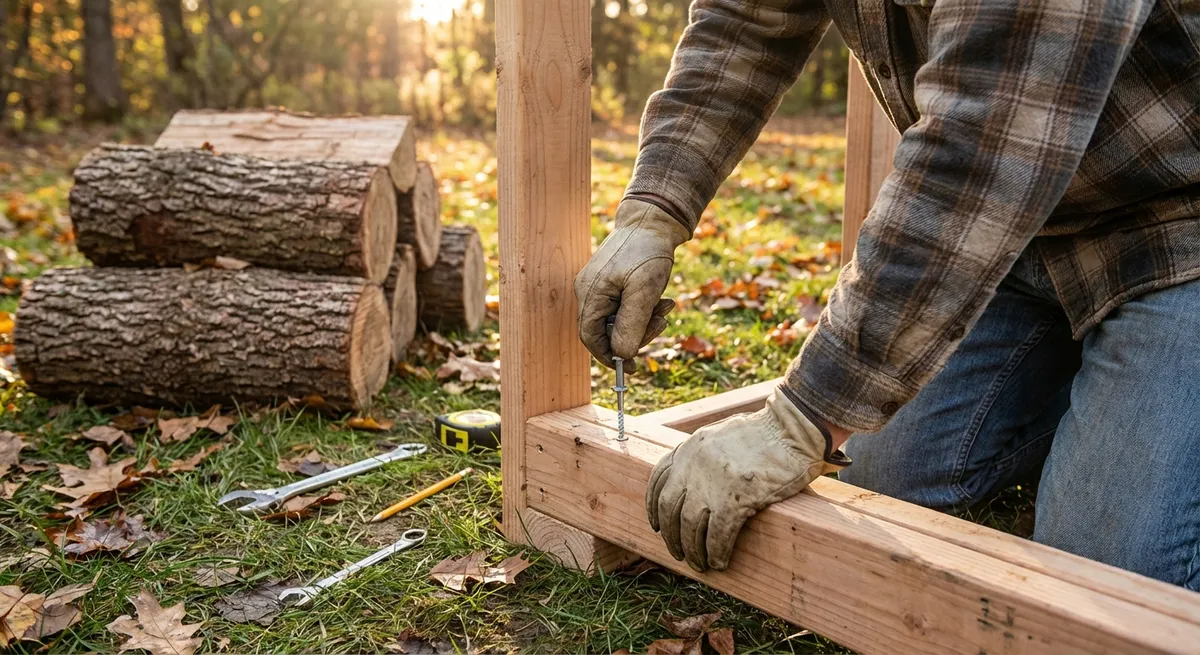
A messy pile of firewood against the fence isn’t just ugly—it traps moisture, attracts pests, and ruins good wood. A basic firewood rack is one of those DIY projects that can transform your outdoor space in an afternoon. No complicated cuts, no specialty tools, and no guessing. This guide walks you through building a sturdy, weather-resistant rack using materials you can grab at any home center.
Plan a Rack That Fits Your Space (and Your Wood)
Before you buy anything, decide what you’re actually building for.
First, think about how you use firewood. If you burn occasionally on weekends, you don’t need a rack that holds half a forest. If you rely on wood as a main heat source, plan for more capacity and possibly multiple racks.
Measure the area where you want the rack to sit. Aim for:
- At least 6–12 inches from any wall or fence for airflow
- A few feet from your house to reduce pest and fire risk
- A spot that drains well and doesn’t collect standing water
Standard firewood is usually cut to about 16 inches long. A practical rack length is 6–8 feet and about 12–16 inches wide. That gives you enough width for one or two neat rows of wood without it toppling over.
Sketch your rack on paper with rough dimensions. A simple, proven design: two vertical posts at each end, with horizontal boards or rails between them, and the wood stacked on those rails off the ground.
Gather Tools and Materials That Keep It Simple
For this project, you don’t need a full workshop. Here’s a straightforward list that balances cost and durability.
Tools:
- Tape measure
- Carpenter’s pencil
- Speed square (for marking straight cuts)
- Drill/driver with bits
- Circular saw or handsaw
- Safety glasses and hearing protection
- Work gloves
Materials (for a basic 8' rack):
- Four 4x4 posts, 4 feet long (pressure-treated) – vertical supports
- Two 2x4s, 8 feet long (pressure-treated) – bottom rails
- Two 2x4s, 8 feet long – top braces (optional but adds stability)
- Exterior wood screws (3" and 2½")
- Concrete pavers or blocks (4–6) to keep wood off bare soil
Pressure-treated lumber is recommended outdoors because it resists rot and insects better than untreated wood. If you want extra protection, you can finish the rack later with an exterior stain or sealant once the lumber has dried out a bit.
Lay everything out before you start. Group your screws, tools, and boards where you can reach them easily. This reduces mistakes and rework once you begin assembly.
Build a Solid Base So Your Wood Stays Dry
The base is the most important part of the rack. If it fails, everything on top will follow. A properly built base keeps your wood off the ground, lets air flow underneath, and spreads the weight evenly.
Prepare the ground
Clear grass, debris, and rocks from the area where the rack will sit. If the soil is soft or uneven, scrape it flat with a shovel and tamp it down. You don’t need it perfectly level yet, but closer is better.
Set your pavers or blocks
Place your concrete pavers where the 2x4 rails will rest. For an 8-foot rack, use one at each end and one in the middle for each rail (total of 6). Space them so the rails will be around 12–16 inches apart. Use your tape measure to keep everything aligned.
Level the supports
Place your 2x4 rails on the pavers and check for level along their length and across the width. Adjust by adding or removing a bit of soil or sand under the pavers until the two rails are roughly level with each other. This stops your wood from drifting to one side and collapsing.
Secure the rails (optional but helpful)
Once you’re satisfied with the layout, you can toe-screw (angling screws) the rails lightly into the pavers or into short treated stakes driven into the ground beside them. This keeps the base from shifting over time but isn’t strictly required if the rack isn’t huge.
A good base looks simple but solves three big problems at once: ground moisture, shifting, and uneven stacking.
Add Uprights and Bracing for a Strong Frame
Now you’ll create the vertical posts that hold the wood stack in place and stop it from rolling off the rack.
Position the 4x4 uprights
At each end of the rack, stand two 4x4 posts on top of the base rails so they form a pair—one on each rail. Each end pair will act like “bookends” for the wood. Space them so the gap between the inside faces of the posts is just wider than your intended wood stack (around 12–16 inches).
Attach uprights to the base rails
Pre-drill two holes through the 2x4 rail into the bottom of each 4x4 (to reduce splitting). Fasten each post with 3" exterior screws—two per connection. This ties the vertical posts directly to the rails so the whole frame acts as one unit.
Install a top brace for stability
Take a 2x4 and run it horizontally between the two uprights at one end, near the top (about 3.5 feet up). Pre-drill and screw it into the 4x4s using 3" screws. Repeat at the other end. These top braces keep the posts from leaning outward when the rack is full.
Add diagonal bracing (if needed)
If your rack feels a bit wobbly, cut a short diagonal brace from scrap 2x4 and screw it between a post and the base rail at each end. Angled bracing is a simple way to stiffen the frame against side-to-side movement, especially in windy areas.
Check for square and plumb
Use your speed square and tape measure to confirm that uprights are roughly vertical (plumb) and your rack ends are square. Perfection isn’t necessary, but the closer you get, the better your wood will stack and the less likely it will tip.
At this point, you should have something that looks like a shallow open box with tall ends and open sides. That’s your basic firewood rack frame.
Stack, Protect, and Maintain the Rack for Longer Life
A good rack is only half the job. How you use it determines how long your wood and your rack will last.
Stack for airflow, not just for looks
Place your largest, straightest logs at the bottom layer, perpendicular across the rails. Stack tightly but avoid forcing pieces. Each new row should be stable before moving on. For maximum airflow, don’t pack wood so tight that no air can move between pieces.
Keep wood off nearby walls and fences
Maintain a gap (6–12 inches) between your wood stack and any solid surface. This prevents trapped moisture and reduces the chance of insects and rodents migrating into structures.
Top-cover only
If you want to protect your wood from rain and snow, cover just the top of the stack, not the sides. Use a tarp or piece of scrap roofing, secured with bungee cords or weights. Keeping sides open allows wind and sun to keep your wood dry and seasoned.
Rotate and season your wood
Freshly cut wood (green wood) can take 6–18 months to season properly depending on species and climate. Mark your stacks with the date you filled them, or stack newer wood on one side and burn from the opposite side so the oldest wood gets used first.
Inspect and maintain the rack
A few times a year, especially after storms, check screw connections, posts, and rails. Tighten loose fasteners and look for signs of rot or insect damage, especially near the base. Replace any soft or split components before loading the rack fully again.
Used correctly, a simple rack like this can give you several years of service, keep your firewood ready to burn, and make your outdoor area look a lot more intentional.
Conclusion
A well-built backyard firewood rack is one of those straightforward DIY projects that makes everyday life easier. You clear up clutter, protect your wood investment, and reduce headaches when it’s time to build a fire. With basic tools, pressure-treated lumber, and a couple of hours, you can go from random wood pile to a stable, weather-ready storage system that actually lasts.
Sources
- [U.S. Department of Energy – Wood and Pellet Heating](https://www.energy.gov/energysaver/wood-and-pellet-heating) - Overview of using wood for home heating, including considerations for fuel quality and storage
- [University of Missouri Extension – Drying Firewood](https://extension.missouri.edu/publications/g5450) - Guidance on seasoning firewood, ideal moisture levels, and proper stacking methods
- [Oregon State University Extension – Choosing and Storing Firewood](https://extension.oregonstate.edu/ask-expert/featured/choosing-storing-firewood) - Practical advice on firewood storage to reduce pests and moisture problems
- [Centers for Disease Control and Prevention (CDC) – Firewood and Insects](https://www.cdc.gov/mosquitoes/about/firewood.html) - Information on how firewood can spread pests and why storage location matters
- [Southern Pine Inspection Bureau – Pressure-Treated Wood FAQ](https://www.spib.org/pressure-treated-wood-faqs/) - Details on pressure-treated lumber, durability, and safe use in outdoor projects
Key Takeaway
The most important thing to remember from this article is that this information can change how you think about DIY Projects.