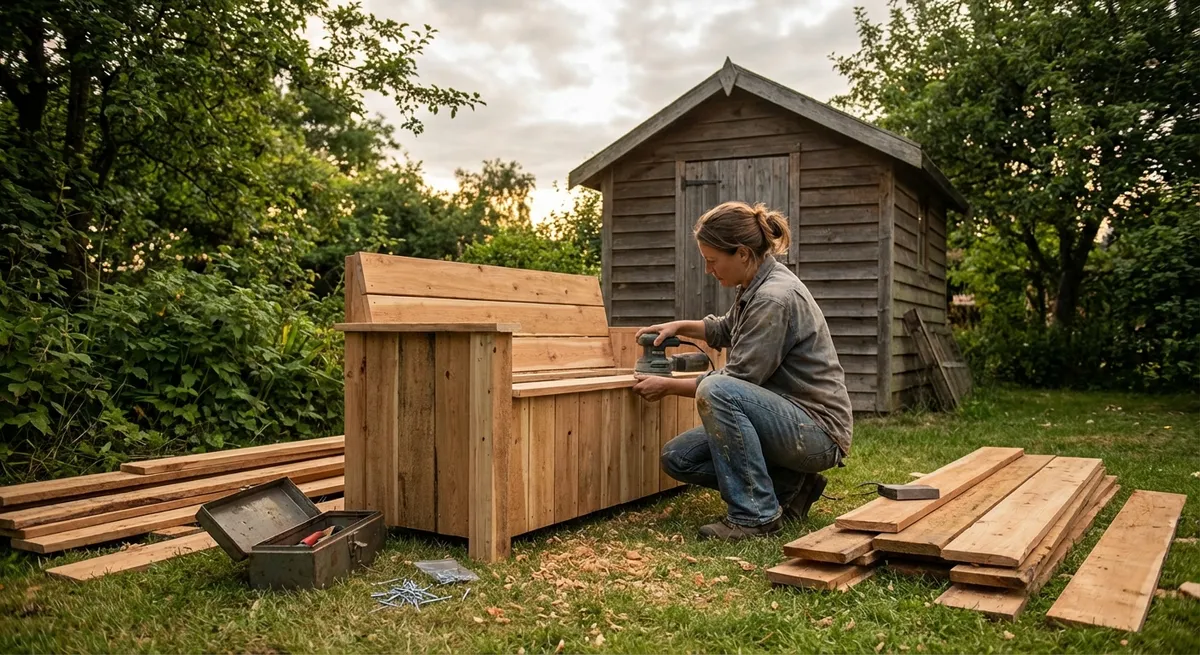
A storage bench is one of those DIY projects that pays off every single day. It gives you a place to sit, hides clutter, and can live on a patio, balcony, porch, or even in a mudroom. This guide walks you through building a sturdy wooden storage bench with a hinged lid using basic tools and materials you can get at any home center. No fancy joinery, no specialty equipment—just a solid, practical project that upgrades your space.
Plan Your Bench and Gather Materials
Before you touch a saw, decide exactly what you need this bench to do. Is it mainly for seating, or for hiding toys, cushions, or garden tools? That answer determines the size, materials, and whether you’ll add extras like casters or a weatherproof finish.
- Choose your location and size. Measure the spot where your bench will live. A common comfortable size is about 48" wide, 18" deep, and 18–20" high, but adjust to fit your space and storage needs. Make sure there’s room to fully open the lid without hitting a wall or railing.
- Select your wood. For outdoors, pressure-treated lumber or naturally rot-resistant species like cedar are good options. For covered porches or indoors, standard pine or plywood will work if you seal it properly. Plan on:
- 2x4 boards for the frame
- 1x4 or 1x6 boards (or exterior-rated plywood) for the sides and bottom
- 1x4, 1x6, or deck boards for the top
- Gather hardware and supplies. You’ll need exterior-rated wood screws, two to three hinges for the lid, a handle or pull (optional), and soft-close torsion hinges or lid supports if you want safer, slower closing. Add exterior wood glue, sandpaper (80–220 grit), and an exterior paint, stain, or clear sealer.
- Check your tools. A circular saw or miter saw, drill/driver, measuring tape, carpenter’s square, pencil, clamps, and a sander will cover the basics. If you don’t own a saw, most big-box stores will cut boards to length for you—just bring your cut list.
- Finalize a simple sketch. Draw your bench in a quick side and front view. Mark overall dimensions, board thickness, and where the frame and panels will go. This doesn’t have to be perfect, but it will reduce mistakes and wasted material once you start cutting.
Build a Strong Box Frame
The frame is what makes your bench feel solid instead of wobbly. Take your time here—square, tight joints will make everything else easier and safer.
- Cut the frame pieces. For a typical 48" bench:
- 4 legs from 2x4 at your target height minus the top thickness (usually around 16–17")
- 4 long rails (front and back, top and bottom) at 48"
- 4 short rails (sides, top and bottom) at about 15" (adjust to account for board thickness and target depth)
- Lay out one long side. Place two legs on a flat surface, then position a long top rail and long bottom rail between them. Use a carpenter’s square to keep everything at 90 degrees. Check that the distance between legs at the top and bottom matches.
- Pre-drill and assemble. Pre-drill screw holes to prevent splitting, especially near board ends. Apply wood glue where the rails meet the legs, then drive two screws per joint. Repeat for the other long side assembly.
- Attach the short rails. Stand both long sides upright, then connect them with short rails at the top and bottom, forming a rectangle. Use clamps if you have them—this keeps the assembly from shifting while you drive screws and helps keep it square.
- Check for square and adjust. Measure diagonals from corner to opposite corner. If the measurements match, your frame is square. If one is longer, gently push or pull the frame into shape and re-check. Fixing this now avoids headaches when adding panels and the lid.
Add Sides, Bottom, and Internal Supports
With the frame ready, you’ll close in the box to create actual storage space. This part is where the bench starts to look like something you can use.
- Install bottom supports. If your bottom will use thinner boards or plywood, add a few cross supports inside the frame (2x2 or scrap 2x4) spaced evenly along the length. This spreads the weight of anything you store inside and keeps the floor from sagging.
- Cut and attach the bottom. Measure the inside dimensions of the frame. Cut bottom panels from plywood or boards to fit snugly on top of the supports. Pre-drill and screw the bottom down to the supports and the lower rails. Leave a slight gap between individual boards if you want drainage for an outdoor bench.
- Panel the front and sides. You can run boards vertically or horizontally, or use a sheet of exterior plywood for each face. Cut panels to fit between the legs and from the bottom rail up to where the lid will sit. Attach with screws, hitting the frame behind the panel edges. Keep screw spacing consistent for a clean look.
- Decide on a back design. If the bench will sit against a wall or railing, a simple flat back panel is fine. If it’s free-standing, consider adding a decorative backrest or leaving a slight overhang on the lid. Just make sure the back panel is firmly secured to the frame—this adds rigidity.
- Sand and prep the surfaces. Knock down rough edges with 80–120 grit sandpaper, then follow up with 150–220 grit on surfaces you’ll touch often. Don’t worry about final finishing yet; you’ll do that after the lid is installed and everything fits correctly.
Build and Mount the Hinged Lid
The lid has to be strong enough to sit on and smooth enough that you’re not catching clothes or skin on splinters. A simple, solid design is usually best.
- Measure for the lid size. Top dimensions should slightly overhang the box—about 1/2" on the front and sides is typical. Subtract a bit from the back edge so the lid can swing open without scraping a wall. Mark your final lid width and depth on your boards or plywood.
- Assemble the lid panel. For a board-style top, line up your boards side-by-side on a flat surface. Use two or three cleats (short cross pieces) screwed from below to keep them together and prevent warping. For a plywood lid, simply cut to size and consider adding a border of 1x2 around the edges for a finished look and extra strength.
- Reinforce for sitting. If your lid spans more than about 18–20", add a stiffener underneath: a 2x2 or 1x3 running front-to-back, centered, attached with glue and screws. This helps handle the weight of people sitting on the bench.
- Attach hinges carefully. Position the lid on the bench, centered with the planned overhang. Mark hinge locations along the back—typically one near each end and one in the middle for a longer bench. Pre-drill pilot holes, then attach hinges to the lid first, then to the back rail. Test the movement and adjust before fully tightening screws.
- Consider safety hardware. A heavy lid can slam shut. Install a soft-close hinge, torsion hinge, or simple lid support arm on at least one side to slow closing and reduce the chance of pinched fingers. Follow the hardware manufacturer’s placement and installation instructions closely for best results.
Finish, Protect, and Keep It Looking Good
The last stage turns your rough build into something that looks intentional and lasts through seasons of use. Proper finishing makes a huge difference in durability and appearance.
- Fill holes and final-sand. Use exterior wood filler on visible screw holes and joints if you want a smoother look. Once dry, sand again lightly to blend filled spots with the surrounding wood.
- Choose your finish.
- For outdoors: Use an exterior-grade paint, solid or semi-transparent stain, or clear outdoor sealer rated for UV and moisture resistance.
- For indoors or covered spaces: Interior paint or clear polyurethane works, though an exterior product will still add extra durability.
- Seal all surfaces, including edges. Pay attention to exposed end grain (the cut ends of boards); that’s where moisture enters most easily. Brush or roll finish onto all sides, undersides, and the inside of the box. Apply multiple thin coats as recommended on the can, allowing proper drying time between coats.
- Add hardware and extras. Install a handle or pull on the front of the lid if you like, or side handles for moving the bench. You can also add rubber feet, casters for mobility on smooth surfaces, or a weatherproof cushion for comfort.
- Maintain it periodically. Outdoor benches especially need periodic inspection. Once a year, check for loose screws, flaking finish, or early signs of rot. Lightly sand and recoat exposed or worn areas to extend the bench’s life. Clean dirt and debris off surfaces so water doesn’t sit and soak into the wood.
Conclusion
A storage bench is a straightforward DIY build that upgrades your home in several ways at once: seating, storage, and a cleaner-looking space. By planning your size, building a strong frame, adding panels and a reinforced lid, and taking finishing seriously, you end up with a piece that feels solid and looks intentional—not like a rough weekend experiment. Once you’ve built one, it’s easy to adjust the design for a shorter balcony version, a taller mudroom bench, or a rolling garage unit that matches how you actually live and store things.
Sources
- [U.S. Forest Products Laboratory – Wood Handbook](https://www.fpl.fs.usda.gov/documnts/fplgtr/fplgtr190/fpl_gtr190.pdf) – Detailed information on wood properties, durability, and outdoor use
- [U.S. Consumer Product Safety Commission – Furniture and TV Tip-Over Information](https://www.cpsc.gov/Safety-Education/Safety-Education-Centers/Tipover-Information-Center) – Guidance on safe furniture construction and stability considerations
- [The Home Depot – How to Use a Drill](https://www.homedepot.com/c/ah/how-to-use-a-drill/9ba683603be9fa5395fab907f10a3f2) – Practical overview of drilling, pilot holes, and screw driving for DIY projects
- [Sherwin-Williams – Exterior Wood Finishing Guide](https://www.sherwin-williams.com/en-us/homeowners/how-to/painting-wood-exteriors) – Best practices for sealing and protecting exterior wood projects
- [Fine Woodworking – Understanding Wood Movement](https://www.finewoodworking.com/2007/02/01/wood-movement-101) – Explains how and why wood expands and contracts, useful for planning durable outdoor projects
Key Takeaway
The most important thing to remember from this article is that this information can change how you think about DIY Projects.