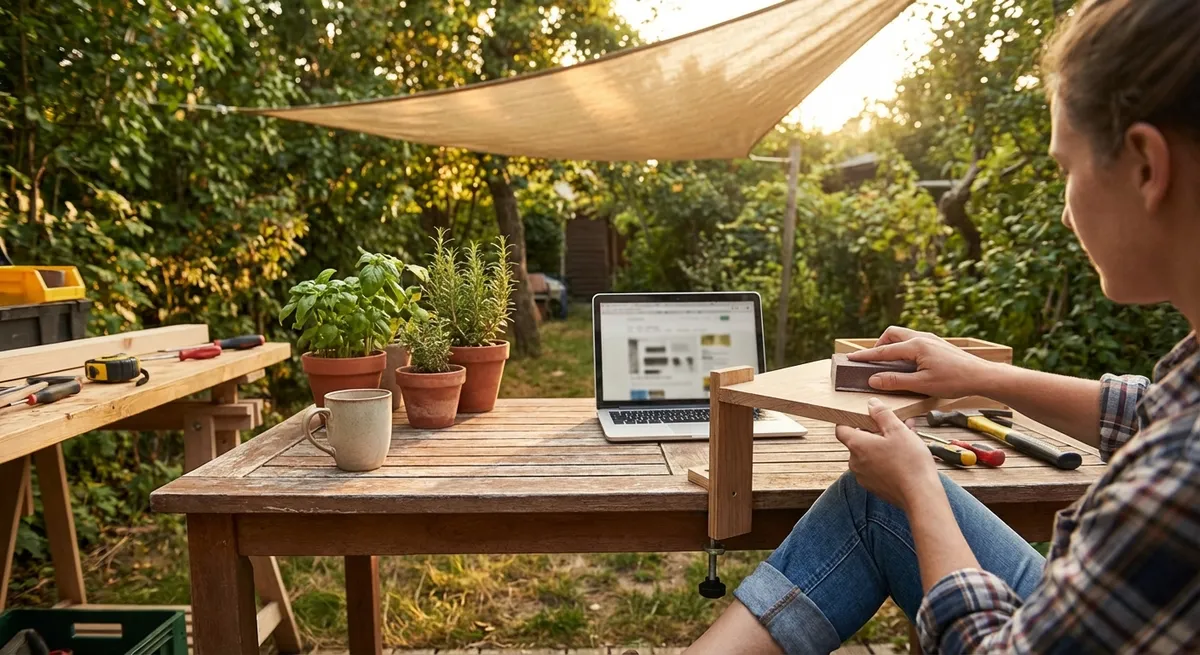
If you like DIY projects but end up working on the ground, balancing tools on random chairs, or hauling everything back and forth from the garage, a basic outdoor workstation can change how you work. This project doesn’t require advanced carpentry skills or expensive materials, and you can adapt it to almost any yard, balcony, or driveway. Below is a step‑by‑step approach to planning, building, and setting up a sturdy, weather-aware workstation that helps you finish more projects with less frustration.
Plan the Right Spot and Size for Your Space
Before you touch a tool, decide where this workstation should live and how you’ll use it. Walk your yard or outdoor area and think about shade, access to power, and how close you are to doors or storage. A spot near an exterior outlet and not far from where you store your tools will make set-up and clean-up much easier.
Measure the available area and sketch a rough rectangle on the ground using painter’s tape, chalk, or a garden hose. Stand inside that outline and mimic what you’d do at a workbench: cutting, sanding, assembling. If you feel cramped, widen it; if it feels too big, bring it in. A good starting size for most homes is a bench top around 2 feet deep by 4–6 feet wide, with enough space around it to walk and move materials.
Check for slopes and trip hazards. A slightly sloped patio is fine if you plan to shim the legs for level, but avoid spots where water pools after rain. If you’re in a windy area, plan to position the workstation along a fence or wall so you can secure it. Lastly, check any local rules if you live in a community with HOA or building restrictions—especially if you’re adding anything semi-permanent or attaching to a structure.
Choose Simple, Durable Materials and Basic Tools
You don’t need specialty lumber or advanced joinery for a solid outdoor workstation. Pressure-treated or exterior-rated lumber, exterior screws, and a weather-resistant top are enough for most climates. If you want a smoother surface for detailed work, you can always add a replaceable sheet of plywood or MDF on top of a sturdier base.
Gather your core materials and tools before you start so you’re not running back to the store mid-build. A typical setup might include:
- 2x4 lumber for the frame and legs
- Exterior-grade plywood or deck boards for the work surface
- Exterior or deck screws (star or square drive are easier to work with)
- A circular saw or miter saw for cutting lumber
- A drill/driver with wood bits and driver bits
- A level, tape measure, and carpenter’s square
- Sandpaper or a sanding block
- Outdoor wood sealer, stain, or paint (optional but recommended)
Choose fasteners and finishes rated for exterior use to avoid premature rust and rot. If you’re in a very wet or coastal environment, consider upgrading to galvanized or stainless screws. For the work surface, think about what you actually do: if you’re mostly potting plants and basic repairs, a sturdy, rougher top is fine. If you’ll be cutting, gluing, and assembling small parts, aim for flatter and smoother.
Build a Stable Workbench Frame and Top
With a plan and materials ready, you can build a basic workbench frame that’s strong, stable, and surprisingly forgiving for new DIYers. Work through these steps in order:
- Cut your pieces. Mark and cut your 2x4s for the top frame (two long pieces, two short pieces), four legs, and optional lower shelf supports. Standard bench height is 34–36 inches, but adjust for your comfort; test by standing at a countertop or table and mimicking work motions.
- Assemble the rectangular top frame. Lay out the long and short pieces in a rectangle on a flat surface. Use a carpenter’s square to keep corners at 90 degrees and predrill screw holes near each corner to prevent splitting. Fasten with two exterior screws per joint.
- Attach the legs. Stand the frame on its side and clamp or hold a leg flush with the inside corners. Predrill through the frame into the leg and attach with two or three screws per side. Repeat for all four legs. When you stand the frame upright, it should feel rigid, not wobbly; if it does wobble, re-tighten screws or add corner braces.
- Add a lower shelf frame (optional but useful). Connect the legs with 2x4s about 8–12 inches above the ground. This creates a platform for a lower shelf and adds stability. Check that these supports are level and square before fastening.
- Install the top surface and shelf. Cut your plywood or deck boards to fit the frame. If using plywood, dry-fit it first, then predrill and screw it down every 8–12 inches along the edges and where it crosses supports. Sand any rough edges. For the lower shelf, use leftover plywood or boards in the same way.
Work on level ground as much as possible so the bench doesn’t inherit a twist from an uneven surface. Use a level across the length and width of the top; if it’s slightly off when fully assembled, you can shim under one or more legs once the bench is in its final location.
Add Smart Storage and Power-Friendly Features
Once the basic bench is up, a few simple add-ons can turn it from “table” into an efficient workstation. Focus on what slows you down most during projects: hunting for tools, dealing with cords, or not having clamps or storage within reach.
Here are practical upgrades to consider:
- Tool and clamp rails. Screw a 1x3 or scrap 2x4 along the front or sides and add hooks or holes for hanging commonly used tools (hammer, tape measure, speed square, clamps). Keeping these at hand saves constant trips inside.
- Magnetic strip or small parts tray. A magnetic bar mounted at eye or hand level keeps drill bits, drivers, screws, and small metal parts from wandering. Alternatively, screw down an old baking tray or shallow bin to hold fasteners while you work.
- Power strip and cord management. Mount a heavy-duty outdoor-rated power strip under the front edge of the bench and route its cord neatly toward your outlet using cable clips or straps. This keeps plug-in tools off the ground and reduces tripping hazards from loose cords.
- Pegboard or slat panel (if against a wall or fence). If your workstation backs up to a solid surface, add a vertical tool board. Pegboard with weather-resistant hooks or a simple slat wall lets you organize hand tools, safety gear, and small containers.
- Project protection surface. For messy or sharp work (painting, glue-ups, cutting), keep a scrap sheet of plywood, hardboard, or a rubber mat you can lay on top. This sacrificial layer protects your main bench and makes cleanup easier—just replace it when it’s too beat up.
Prioritize the upgrades you’ll actually use. If you mainly do quick repairs, a power strip and a few hooks may be enough. If you’re tackling bigger builds, clamp storage, vertical tool organization, and parts trays can make a bigger difference.
Protect It From Weather and Set a Simple Maintenance Routine
Outdoor workstations take more abuse than indoor benches, so a bit of weather planning upfront will extend their life and keep them safe to use. You don’t have to fully waterproof the setup, but you should protect exposed wood and hardware as much as your climate demands.
Follow these steps to keep your station in good shape:
- Seal or paint the wood. Once everything is assembled and lightly sanded, apply an exterior wood sealer, stain, or paint according to the product directions. Pay attention to end-grain (the cut ends of boards), joints, and any places water might sit. Allow proper drying time before using the bench.
- Plan basic cover or shade. If possible, position the workstation under an overhang, pergola, or shade structure to reduce direct rain and UV exposure. If that’s not an option, keep a dedicated, properly sized outdoor cover or tarp you can secure when the bench isn’t in use. Make sure the cover allows some airflow to avoid trapping moisture.
- Check hardware regularly. Every few months, or after heavy storms, inspect screws, brackets, and the power strip mount. Tighten any loose fasteners and replace rusty ones with exterior-rated alternatives. Confirm the bench is still stable and not racking (twisting) when you push on it.
- Clean surfaces after messy work. Wipe up glue, paint, or chemical spills soon after use. Dried puddles of finishes or adhesives can create lumps that interfere with future projects or trap moisture against the wood.
- Re-seal when needed. Depending on your climate and the product used, you may need to reapply sealer or paint every 1–3 years. Watch for fading, peeling, or water soaking into the surface instead of beading up—those are signs it’s time to refresh the finish.
A little attention after each project and a quick seasonal check-in will keep your outdoor workstation safe, stable, and ready whenever your next DIY idea hits.
Conclusion
A simple backyard workstation doesn’t need to be fancy to make a big difference in how you tackle DIY projects. By choosing the right spot, building a solid frame, adding smart storage, and protecting it from the elements, you create a dedicated space that saves time and frustration every time you pick up a tool. Start with the basic bench, add features as you learn what you really use, and let this setup grow alongside your skills and projects.
Sources
- [Home Depot – How to Build a Workbench](https://www.homedepot.com/c/ah/how-to-build-a-workbench/9ba683603be9fa5395fab907f9a63b0) - Step-by-step guidance and visual references for basic workbench construction
- [Family Handyman – Outdoor Workbench Ideas](https://www.familyhandyman.com/list/outdoor-workbench-ideas/) - Examples and tips for designing and outfitting outdoor-friendly workstations
- [Lowe’s – Choosing the Right Lumber for Your Project](https://www.lowes.com/n/buying-guide/lumber-buying-guide) - Explanation of lumber types, pressure treatment, and exterior suitability
- [U.S. Department of Energy – Outdoor Lighting and Electric Safety](https://www.energy.gov/energysaver/outdoor-lighting) - Safety considerations for outdoor electrical use and equipment
- [University of Kentucky Cooperative Extension – Wood Finishes for Exterior Use](https://uknowledge.uky.edu/cgi/viewcontent.cgi?article=1062&context=anr_reports) - Detailed overview of exterior wood finishes, durability, and maintenance recommendations
Key Takeaway
The most important thing to remember from this article is that this information can change how you think about DIY Projects.