A messy entryway can make your whole home feel disorganized. Shoes pile up, keys disappear, mail gets scattered, and everyone ends up dumping their stuff on the nearest surface. You don’t need a full renovation to fix it—just a simple, well‑planned “drop zone” where everything has a place the moment you walk in the door.
This project walks you through building a compact, wall‑mounted entryway drop zone with hooks, a shoe shelf, and a small organizer board. It’s designed so DIYers with basic tools can tackle it in a weekend, and you can adjust the dimensions to fit apartments, narrow hallways, or larger mudrooms.
Plan Your Drop Zone Layout and Location
Before buying materials or cutting wood, you need a clear plan for where your drop zone will go and what it needs to hold.
Think about the spot you naturally walk past when entering: near the front door, garage entry, or a hallway just inside. Stand there and imagine your daily routine—where would you want to hang a bag, drop your keys, and kick off your shoes?
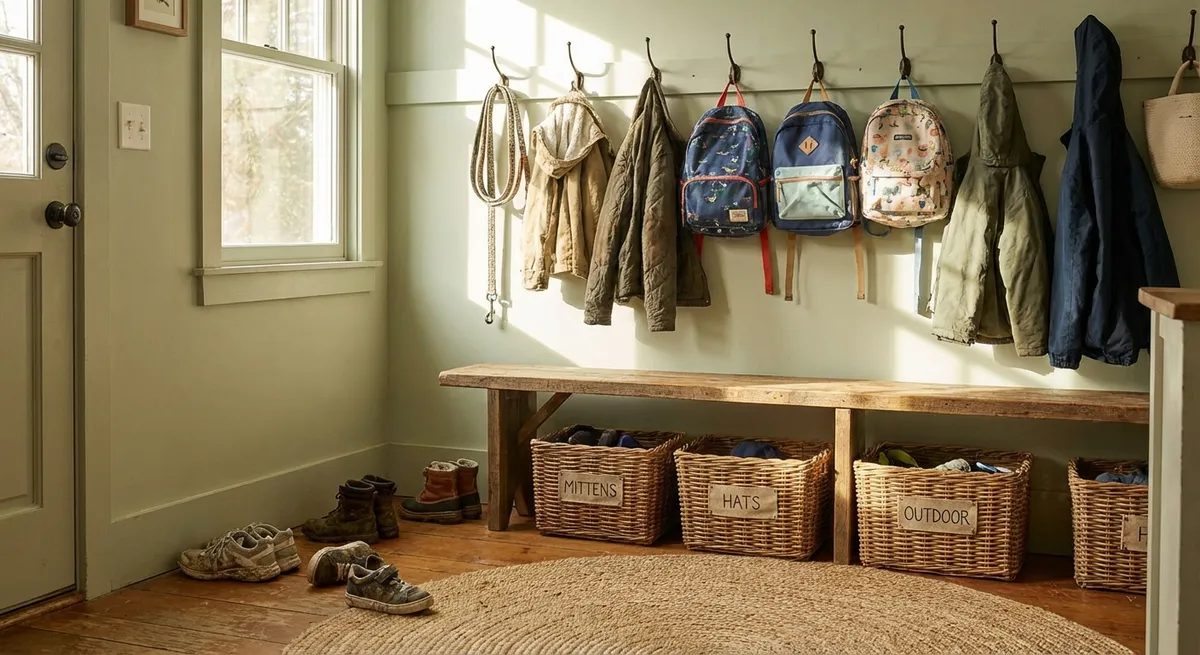
Measure the width of the wall and note any obstacles: light switches, outlets, baseboards, vents, or door swings. Aim for a setup that’s at least 24 inches wide for a single-person household; 36–48 inches works better for families. Mark a target height for coat hooks (typically 60–66 inches from the floor for adults; 42–48 inches if you want a lower kids’ row). Decide what you must store: coats, backpacks, purses, keys, mail, dog leashes, or hats. From that list, you can choose the components that make sense: a shoe bench or shelf, wall hooks, a narrow shelf, and a small board for notes and mail.
At this stage, sketch a quick front view on paper with rough dimensions. This doesn’t have to be perfect or to scale—it just needs to show how everything lines up so you don’t discover spacing issues after you’ve started building.
Gather Materials, Tools, and Hardware
Once you know your general layout and size, gather materials that match your budget and skill level. You can keep this very simple with off‑the‑shelf boards and basic tools.
Common materials for a small drop zone include:
- One or two 1x10 or 1x12 boards (for a shallow shoe shelf or bench top)
- 1x4 or 1x3 boards (for trim, a top shelf, or a mounting rail)
- A piece of 1/4" or 1/2" plywood or hardboard (for a backing panel or organizer board)
- 3–6 wall hooks (choose sturdy, metal hooks rated for coats/bags)
- A small key rail or separate small hooks
- A couple of shallow baskets or bins for gloves, hats, or mail (optional)
- Wood screws (1 1/4" to 2 1/2", depending on your design)
- Wall anchors rated for the weight if you can’t hit studs everywhere
- Sandpaper (120–220 grit), paint or stain, and primer if using bare wood
Basic tools: a measuring tape, pencil, stud finder, level, drill/driver, screwdriver bits, a saw (miter saw, circular saw, or even a hand saw for simple cuts), and a sander or sanding block. If you don’t own power tools, most home centers will make straight cuts for you when you buy the boards—just bring your measurements.
Before cutting, double‑check your sketch and each measurement. Label each board on your plan (for example, “top shelf,” “shoe shelf,” “backing panel”) so you know exactly what each cut piece will become and in what order it will be assembled.
Step 1: Build a Sturdy Shoe Shelf or Bench Base
Start from the bottom up: a simple shoe shelf or low bench keeps clutter off the floor and anchors the whole drop zone visually.
- Decide on style and size. For tight spaces, a 10–12 inch deep shoe shelf is usually enough. Typical bench height is 17–19 inches; a simple shoe shelf can be lower (around 10–12 inches high) if you’re not planning to sit on it.
- Cut the top and sides. Cut one board to your desired width for the top (for example, 36 inches wide). Then cut two side pieces from the same board or from scraps—these become the “legs” or end supports. A simple box shape (top with two vertical sides) is easy to build and strong when screwed together.
- Add a lower shelf (optional). If you want two levels for shoes, cut a second board to match the width of the top. Determine how high you want the lower shelf (often 4–6 inches above the floor), mark that on the inside of the side pieces, and attach with screws.
- Pre‑drill and assemble. To prevent splitting, pre‑drill screw holes in the top and sides. Use wood screws to attach the top to the sides, checking with a square or by measuring diagonals to keep everything even. Attach the lower shelf between the sides the same way, making sure it’s level.
- Sand and finish. Once assembled, sand all surfaces smooth, especially edges and corners. Apply paint, stain, or a clear protective finish. Let it dry fully before placing it against the wall. If you’re worried about stability or kids climbing on it, plan to anchor the bench to the wall through a back cleat or directly through the top into studs in a later step.
This base creates a defined “parking spot” for shoes and bags so they stop spreading across the entryway. It also sets the width of the rest of your drop zone.
Step 2: Install a Backing Panel and Coat Hook Rail
The wall area above the shoe shelf is where you’ll catch most clutter. A backing panel gives you a clean, finished look and makes it easier to align hooks and accessories.
- Locate studs and mark height. Use a stud finder to locate studs in the wall where your drop zone will go. Mark these lightly with a pencil. Then mark the top height of your backing panel—often around 72–78 inches from the floor for a full, tall look.
- Cut the backing panel. Cut your plywood or hardboard to the width of your bench and to the height you want (for example, 48 inches tall, sitting directly on the bench or a bit above it). For a more custom look, you can leave a small gap (1–2 inches) above the bench and cover it with trim later.
- Paint or prime before mounting. It’s easier to prime and paint the backing panel on a flat surface before you attach it to the wall. Let it dry completely. If you want a board‑and‑batten look, you can add vertical 1x3 strips on top later.
- Mount the panel to the wall. Position the panel where you want it, resting on the shoe shelf or temporary blocks if needed. Use a level to ensure it’s straight. Drive screws through the panel into studs along the top and sides. If studs don’t align perfectly, use wall anchors rated for sufficient weight between studs to keep the panel snug.
- Add a horizontal hook rail. Cut a 1x4 board the same width as your panel. This will hold your coat hooks. Position it at your pre‑marked hook height (often about 60–66 inches from the floor), check it with a level, and secure it with screws into studs where possible. Countersink screws slightly so you can fill and paint over them.
At this point, you have a clean, sturdy surface ready for hooks and any decorative trim you want to add. The backing panel also helps protect the wall from scuffs and bumps from bags and coats.
Step 3: Add Hooks, Key Storage, and a Top Shelf
Now you’ll turn the basic structure into a functional drop zone with well‑placed storage for daily essentials.
- Lay out coat hooks. Place your hooks on the 1x4 rail before attaching them. Space them evenly—8 to 12 inches apart is typical, depending on how many hooks you want and the width of your setup. Mark each location with a pencil, and pre‑drill pilot holes for the hook screws.
- Install the hooks securely. Attach each hook using the hardware provided, ensuring they’re tight and straight. If a hook doesn’t line up with a stud, that’s okay as long as your rail is securely fastened into studs. Check the weight rating on the hooks and avoid hanging overly heavy items if they’re only anchored in the board.
- Add a key rail or small hooks. Near the top corner or along the side, install a small key rail or a row of tiny hooks dedicated to keys and small items. Keep this at an easy reach height so you’re more likely to use it every day.
- Install a top shelf for baskets or decor. Cut another 1x8 or 1x10 board to match the width of your backing panel. Mount it above the hook rail using sturdy metal brackets or wood supports (small 1x2 cleats under the shelf). Ensure the brackets are secured into studs where possible. This shelf is ideal for baskets holding hats, gloves, or seasonal items you don’t need every day.
- Test spacing with real items. Hang a few coats, bags, and hats. Place shoes under or on the bench and set baskets on the top shelf. If anything feels cramped or too high, this is the time to adjust before filling holes and painting touch‑ups.
Smart placement here reduces visual clutter. Keys get their own dedicated spot, coats don’t overlap excessively, and less‑used items move to the higher shelf so the main area stays easy to navigate.
Step 4: Create a Simple Organizer Board for Mail and Reminders
The last functional piece is a small organizer board so mail and notes don’t land on the nearest flat surface and stay there.
- Choose your style. You can use a small corkboard, a magnetic dry‑erase board, or a simple wood panel with clips. Keep it compact—about 12x18 inches or smaller—so it doesn’t overwhelm the space.
- Mount at eye level. Decide whether to place it beside the hook area or above the key rail. Mounting it at or slightly below eye level (around 58–62 inches from the floor for most adults) makes it easy to see and use. Use screws or anchors appropriate to the board’s weight.
- Add simple mail slots or clips. For a very basic system, screw two or three strong binder clips or bulldog clips to a small board and mount the board. Label clips for “To Sort,” “To Pay,” or “School” to keep categories clear. Alternatively, mount one or two slim wall‑mounted file pockets for incoming mail and important papers.
- Include a pen and notepad. Attach a small adhesive pen holder or screw on a small cup or hook to hold a pen and notepad next to the organizer. This makes it easy to jot down quick reminders without hunting for supplies elsewhere.
- Set rules for what belongs there. Decide in advance what the organizer is for—like today’s mail, current permission slips, or items that must leave the house tomorrow. Limit what lives there permanently so it doesn’t become a mini junk pile.
This small addition keeps paper clutter from spreading to your kitchen counters and gives everyone a clear visual cue for what needs attention.
Step 5: Anchor, Label, and Fine‑Tune for Daily Use
With the structure built and components installed, you’ll finish by making sure it’s all safe, stable, and easy to maintain.
- Anchor everything for safety. If you built a bench or tall backing panel, add at least one anchor point into a wall stud near the top. Use an L‑bracket or screw through a hidden cleat on the back. This prevents tipping if someone leans or kids climb.
- Fill holes and touch up paint. Fill any exposed screw holes on the face of boards with wood filler, let dry, sand, and repaint or touch up as needed. This gives your project a more polished, built‑in look.
- Label baskets or hooks if helpful. Especially for families, consider small labels on baskets (“Hats/Gloves,” “Mail,” “Dog Gear”) or even assigning hooks by person. You can use clip‑on tags, adhesive labels, or small chalkboard tags for flexibility.
- Add non‑slip protection. Stick felt pads or non‑slip rubber pads under the bench legs to protect floors and keep the unit from sliding. For tile or hardwood, this also reduces noise when people sit or stand.
- Test a full day’s use. Use the drop zone for a day or two and notice what still ends up elsewhere. If backpacks always land on the floor, add a lower, kid‑height hook. If sunglasses keep wandering, add a small tray or shallow bowl to the bench or a corner of the shelf.
Small tweaks make a big difference in whether this space actually gets used consistently. Your goal is to make the “right” behavior (hanging up a coat, dropping keys in one place) the easiest option every time someone walks through the door.
Conclusion
A functional entryway drop zone doesn’t require a big budget or advanced carpentry—just a clear plan and a few focused steps. By building from the ground up with a shoe shelf or bench, anchoring a backing panel, adding hooks and a top shelf, and including a simple organizer board, you create a space that naturally catches the daily clutter before it spreads through your home.
Once it’s in place, the real value comes from using it every day and adjusting it to fit your routine. Over time, you’ll spend less time hunting for keys, tripping over shoes, or clearing mail piles—and more time just walking in the door and feeling like your home is ready for you.
Sources
- [U.S. Consumer Product Safety Commission – Anchor It!](https://www.cpsc.gov/Safety-Education/Safety-Education-Centers/Anchor-It) - Guidance on safely anchoring furniture and wall units to prevent tip‑overs
- [Family Handyman – How to Install Wall Cabinets](https://www.familyhandyman.com/project/how-to-install-wall-cabinets/) - Practical tips on finding studs, leveling, and securely fastening items to walls (methods also apply to shelves and panels)
- [This Old House – How to Build a Mudroom Bench](https://www.thisoldhouse.com/entryways-mudrooms/21015055/how-to-build-a-mudroom-bench) - Step‑by‑step example of constructing a simple bench and integrating entry storage
- [Lowe’s – How to Use a Stud Finder](https://www.lowes.com/n/how-to/use-a-stud-finder) - Explains proper stud‑finding techniques to ensure safe, secure mounting
- [Home Depot – Types of Wall Anchors](https://www.homedepot.com/c/ab/types-of-wall-anchors/9ba683603be9fa5395fab9010f0e636e) - Overview of wall anchor options and weight ratings for safely supporting hooks and shelving
Key Takeaway
The most important thing to remember from this article is that this information can change how you think about DIY Projects.