An organized entryway makes the whole house feel calmer. Instead of shoes piled by the door, keys lost under mail, and bags dumped on chairs, a basic “drop zone” gives everything a home. You don’t need custom cabinetry or a major remodel—just a wall, a few basic tools, and a weekend. This DIY project is beginner‑friendly, budget‑conscious, and easy to adapt to apartments or larger homes.
Below is a straightforward plan with five clear steps to create a practical, good‑looking entryway drop zone that actually gets used.
Plan Your Drop Zone (So You Only Build What You Need)
Before buying anything, get specific about what this area needs to handle every day. Planning avoids wasted money and features you never use.
- Pick your spot.
Choose the area where people naturally enter and drop things now: by the front door, the door from the garage, or a short hallway. You want to work with existing habits, not fight them.
- Measure your wall space.
Use a tape measure to note:
- Total wall width
- Height from floor to ceiling
- Any obstacles (outlets, switches, vents, baseboard heaters)
Write these down—you’ll use them for sizing shelves, hooks, and benches.
- Decide the “must-hold” items.
Focus on 4–6 categories per person:
- Coats / jackets
- Shoes
- Bags / backpacks
- Keys / wallet / sunglasses
- Mail / small packages
- Pet leashes / gear
This list will guide the layout (hooks vs. cubbies vs. trays).
- Rough in your layout.
On a piece of paper, sketch a simple front view of the wall. Aim for:
- Top: shelf or cubbies for baskets and rarely used items
- Middle: hooks for coats and bags (at reachable height)
- Bottom: bench or shoe storage
Note approximate measurements instead of guessing.
- Set a simple style and budget.
Decide on:
- Wood tone (light, medium, dark) or paint color
- Hardware finish (black, brass, chrome, etc.)
- Budget range (e.g., $75, $150, $250)
This keeps your shopping focused and avoids mixed, mismatched parts that look unplanned.
Gather Materials and Tools (With Easy Substitutions)
You don’t need a workshop to pull this off. Most of this project works with very basic tools and off‑the‑shelf parts from a home center or hardware store.
Common materials:
- 1–2 pre‑made wall shelves or a simple shelf kit (with brackets and hardware)
- 4–8 sturdy wall hooks (individual hooks or a hook rack)
- 1 ready‑made bench, or a simple shoe rack that can double as seating
- 2–4 baskets or bins (for hats, scarves, gloves, or kid gear)
- 1 shallow tray or small bowl (for keys and wallet)
- Wall anchors rated for the weight of shelves/hooks (if you can’t hit a stud)
- Painter’s tape and wall-safe adhesive hooks (if you’re renting and must avoid drilling)
Basic tools:
- Tape measure and pencil
- Level
- Stud finder (optional but very helpful)
- Drill/driver with bits and screwdriver bits
- Wall anchors (toggle or plastic, depending on wall type)
- Step ladder or sturdy stool
- Safety glasses
Helpful extras (optional):
- Touch‑up paint and small brush
- Sanding sponge for smoothing scuffs before painting
- Cordless vacuum or broom for cleanup
If you’re renting and can’t make holes, plan to lean a narrow shelving unit against the wall, use over‑the‑door hooks, and attach peel‑and‑stick hooks instead of hardware that requires drilling.
Install the Top Storage: Shelves and Baskets
Start at the top and work downward. This keeps everything aligned and reduces mistakes.
- Mark the shelf height.
For most spaces, set the bottom of your shelf around 72–78 inches from the floor so adults can reach it but it still clears coats and bags. Mark this height with a light pencil line.
- Find studs (if possible).
Use a stud finder to locate studs along your marked line. Mark their centers. When you can, mount shelf brackets into studs for strength. If studs don’t line up where you need them, use high‑quality wall anchors matched to your wall type (drywall vs. plaster).
- Level and mark bracket positions.
Hold one bracket at your planned height and light-pencil around the screw holes. Use a level to align the second bracket so the shelf will sit level. Triple‑check spacing to match your shelf length.
- Drill and mount brackets.
- Drill pilot holes at your marks (or install anchors where there is no stud).
- Drive screws firmly, but don’t over‑tighten. Brackets should feel solid with no wobble.
- Set the shelf and load test.
Place the shelf on the brackets and lightly press down. Add a few heavy books or items to simulate weight. If nothing shifts or sags, you’re good. Remove test items, then add your baskets and label them (e.g., “Hats,” “Gloves,” “Pet Gear”).
Practical tip: Keep heavy items (extra shoes, canned dog food, bulky sports gear) lower. Use the top shelf for lighter, seasonal things like scarves, umbrellas, or small bags.
Add Hooks and a Bench for Everyday Flow
This is the “work zone” of your drop area—the part people will use daily without thinking about it.
- Set hook height and spacing.
As a rule of thumb:
- Adult hooks: 60–66 inches from the floor
- Kid‑friendly hooks: 42–48 inches from the floor
Space hooks about 6–8 inches apart. Mark hook positions with pencil dots.
- Decide on a hook board or individual hooks.
- Hook board (hooks pre‑mounted to a board): Easier to level and mount with fewer holes. Ideal for beginners.
- Individual hooks: More flexible layout. Good if you’re working around switches or a narrow space.
- Mount hooks securely.
- If you have a hook board, locate at least one stud and screw through the board into it. Use anchors for the other screw points.
- For individual hooks, repeat the shelf method: pilot holes, then screws into studs or anchors.
Give each hook a firm tug; they should feel solid enough to hold a full backpack.
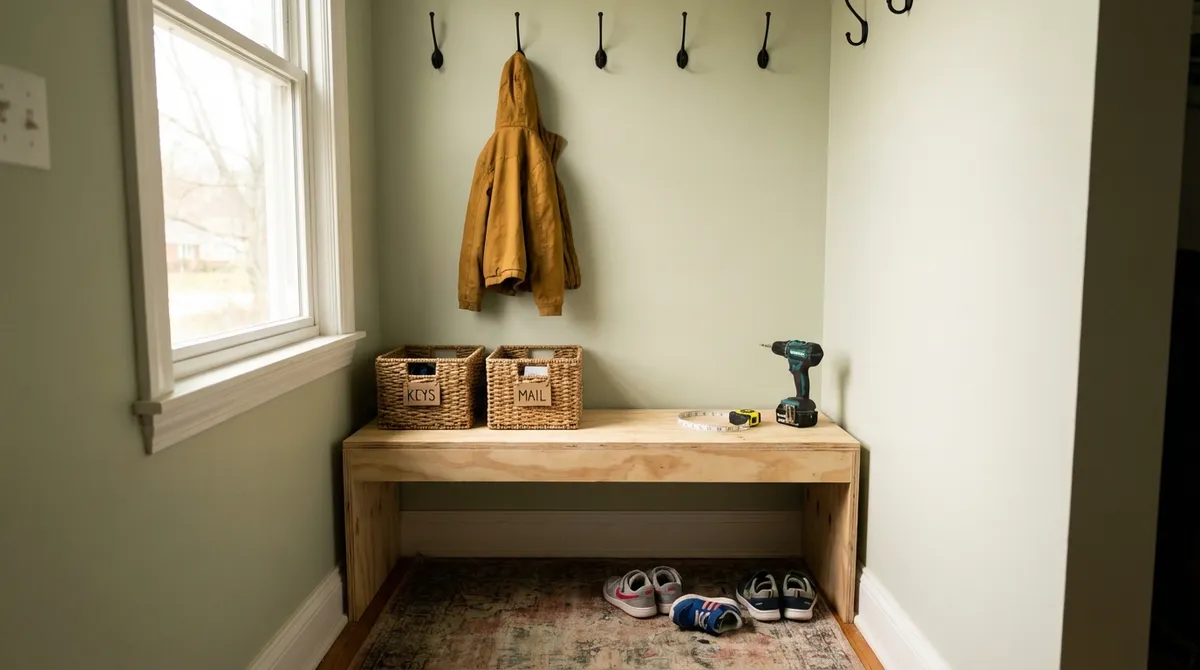
- Place the bench or shoe rack.
Position the bench directly under the hooks, leaving enough room so long coats hang freely. Common bench height is about 17–19 inches. Make sure:
- It doesn’t block a door swing
- You can sit comfortably to put on shoes
- There’s enough clearance under or beside it for shoe storage
- Plan simple shoe storage.
- Under‑bench shoe rack (best use of space)
- Low tray for wet shoes/boots near the door
- One pair “per person” rule near the door, with overflow stored in closets elsewhere
Practical tip: If you expect wet coats or backpacks, use hooks with a little extra depth and rounded ends so they don’t damage straps or fabric.
Finish the Details: Small Storage, Labels, and Lighting
The small decisions make the drop zone feel finished and easy to keep tidy.
- Create a “landing pad” for small items.
On a narrow wall shelf, console, or the bench edge, place:
- A shallow tray or small dish for keys and loose change
- A small box or holder for mail
- Optional: A small hook or bowl for sunglasses
- Add labels where it helps.
- Label baskets by item type or by person
- Label lower hooks with kids’ names
Use adhesive labels, hang tags, or simple masking tape:
Clear labeling reduces daily “Where does this go?” confusion and helps kids help themselves.
- Improve lighting if it’s dim.
- Add a plug‑in wall sconce or table lamp (if there’s a surface)
- Use battery‑powered stick‑on lights if there’s no outlet
Brighter light makes it easier to find keys, read mail, and keeps the entry from feeling cramped.
- Protect walls and floors.
- Add adhesive bumper pads where door handles might hit the wall
- Use a washable rug or mat near the door to catch dirt and water
- Consider a small, durable mat directly under wet shoes or boots
- Add one personal touch.
Keep it simple to avoid visual clutter:
Practical tip: A mirror by the door does double duty: quick appearance check and extra light bounce to make a small entry feel bigger.
Keep It Working: Simple Maintenance Routine
The drop zone will only stay useful if it’s easy to maintain. Build a tiny routine around it.
- Set clear “capacity limits.”
Decide:
- Max 1–2 coats per person at the drop zone; extras go to bedroom closets
- Only current‑season shoes live by the door
- One small basket per person for hats/gloves or daily essentials
- Do a 2‑minute daily reset.
- Hang any stray coats
- Return shoes to the rack
- Move lingering mail to its next step (to‑do pile, trash, shred)
- Schedule a quick seasonal swap.
- Rotate out‑of‑season items to a closet or storage bin
- Wipe hooks, bench, and shelf with a damp cloth
- Vacuum or shake out the entry rug and mop if needed
- Adjust based on actual use.
- What’s always on the floor? Maybe it needs its own hook or bin.
- What never gets used? Remove or relocate it.
- Where do kids naturally drop things? Move hooks/baskets closer to that area.
- Make rules visible and simple.
- “Hang coats; 1 pair of shoes per person here.”
- “Mail in tray; keys in dish.”
Once a day (evening works best):
Every 3–4 months:
After a few weeks, notice:
For families or shared homes, post a short note nearby:
The clearer the system, the less nagging and the more the space carries itself.
Conclusion
A functional entryway drop zone doesn’t require built‑ins, advanced carpentry, or a huge budget. With a bit of planning, a couple of shelves, solid hooks, and a basic bench, you can turn a pile‑up area into a clean, predictable “home base” for everyday items. Start with how you actually live—what you carry, where you walk—and build around that. Once everything has a clear spot and a simple routine backs it up, you’ll spend less time hunting for keys, shoes, and bags, and more time just getting out the door on schedule.
Sources
- U.S. Department of Energy – Home Entryway Tips - Discusses practical considerations for entryways, including durability and layout ideas
- Family Handyman – How to Install Shelves - Step-by-step guidance on planning and securely installing basic wall shelving
- This Old House – How to Hang Anything on the Wall - Explains fasteners, wall anchors, and best practices for safe, secure mounting
- Consumer Product Safety Commission – Furniture and TV Tip-Over Safety - Covers safe anchoring practices and weight considerations for wall-mounted items
- IKEA – Small Space Entryway Ideas - Real-world examples of compact entry organization solutions and layouts
Key Takeaway
The most important thing to remember from this article is that this information can change how you think about DIY Projects.