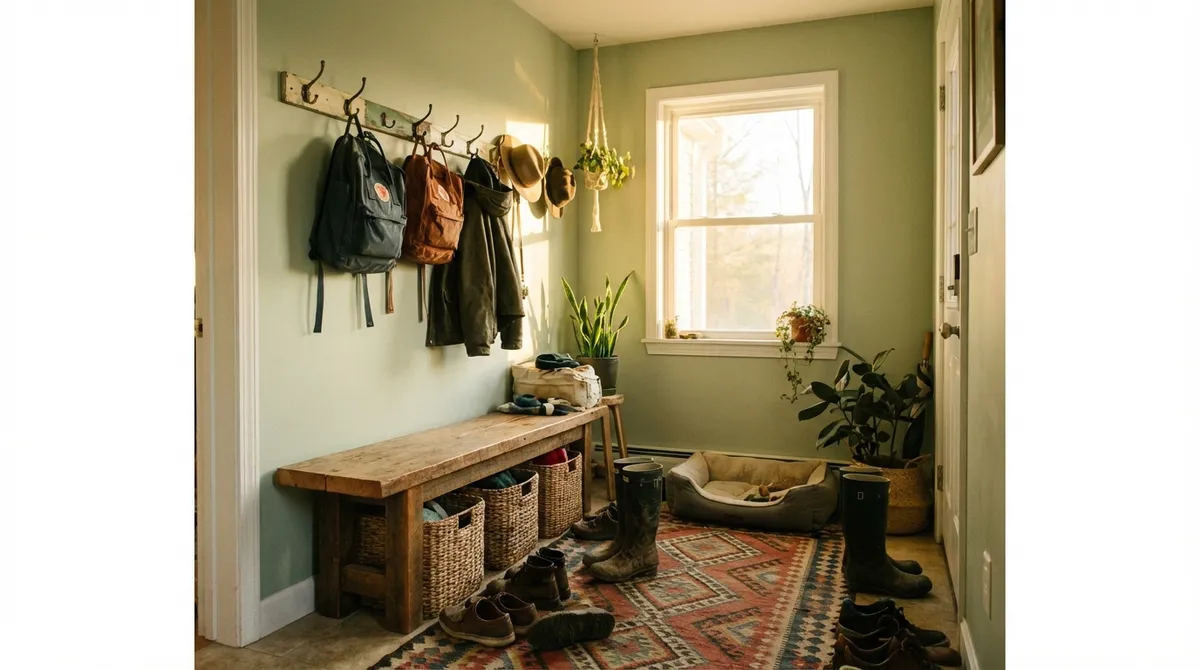
A crowded, chaotic entryway makes every day feel a little more stressful. Shoes pile up, keys go missing, bags get dumped on the floor, and mail spreads across the nearest flat surface. You don’t need a full renovation to fix it—just a simple, well-planned “drop zone” that gives everything a place to land the moment you walk in. This DIY project is manageable for most homeowners and renters, and you can customize it to fit a narrow hallway, a small apartment, or a busy family home.
Below is a straightforward, step‑by‑step guide to designing, building, and installing a practical entryway drop zone, with five clear instruction phases you can follow at your own pace.
Step 1: Plan Your Space and Make a Simple Layout
Before you touch a tool, spend time figuring out what your entryway actually needs to handle.
- Measure your space. Use a tape measure to note the width of the wall, available height (especially if there’s a thermostat or light switch), and how far the area can project into the walking path without becoming a tripping hazard. Aim to keep anything projecting from the wall under 12–14 inches in narrow hallways.
- List what you need to store. Common items:
- Everyday shoes
- Coats and jackets
- Bags or backpacks
- Keys, wallets, sunglasses
- Mail or packages
- Pet leashes
- Decide on the main components. A basic drop zone usually includes:
- Wall hooks or a rack for coats and bags
- Bench or small shelf for sitting and shoe storage
- Shallow upper shelf or wall organizer for keys and mail
- Optional: baskets or bins for extra gear
- Sketch a simple front view. Draw the wall, then roughly place:
- Hooks at about 66–70 inches from the floor (for adults)
- Bench at about 17–19 inches high, 11–16 inches deep
- Upper shelf roughly 72–78 inches high, depending on ceiling
- Check for obstructions. Make sure your layout doesn’t block:
- Door swings
- Light switches
- Vents or baseboard heaters
This planning step prevents buying materials you don’t need and helps you avoid building something that feels too big or awkward for the space.
Step 2: Gather Materials and Tools with Durability in Mind
Once you have a layout, choose materials that balance cost, looks, and strength.
Common materials for a simple drop zone:
- For the bench top or shelf:
- 3/4" plywood (birch or sanded plywood is a good value)
- Solid wood boards (like pine or poplar) for a more finished look
- For support and structure:
- 1x3 or 1x4 boards for wall cleats (to support the bench and shelf)
- Sturdy L‑brackets or shelf brackets if you prefer not to build wood supports
- For storage and organization:
- Wall hooks or a coat rack strip (metal or wood with hooks attached)
- Baskets or bins that fit under the bench or on a shelf
- A small tray or shallow bowl for keys
- Fasteners and hardware:
- 2–3" wood screws for attaching supports to studs
- 1–1¼" wood screws for attaching boards to supports
- Wall anchors rated for the weight you expect, if you can’t hit a stud
- Sandpaper (120–220 grit), wood filler, and painter’s caulk (optional)
- Finishes:
- Primer and interior paint, or
- Stain and clear polyurethane for wood
Basic tools you’ll want:
- Tape measure and pencil
- Stud finder (helps you securely mount into studs)
- Drill/driver with drill bits and screwdriver bits
- Level (24" or longer is easiest)
- Hand saw or circular saw (a home center can cut boards to length if needed)
- Safety glasses and dust mask when cutting or sanding
Laying everything out before you start reduces mid‑project store runs and keeps the build moving smoothly.
Step 3: Build a Sturdy, Wall‑Mounted Bench
A simple wall‑mounted bench makes the biggest impact in an entryway: it gives you a place to sit, and it clearly defines where shoes and bags should go.
- Mark the bench height.
- Standard seat height is 17–19 inches.
- Use your tape measure and level to draw a straight line on the wall at your chosen height for the top of the support cleats (not the top of the bench yet—account for board thickness).
- Locate and mark studs.
- Use a stud finder along the wall where the bench will go.
- Mark each stud center with a light vertical pencil line.
- Plan to attach your support cleats into as many studs as possible.
- Cut and install the back wall cleat.
- Cut a 1x3 or 1x4 board to span most of the bench width.
- Hold it along your marked line and pre‑drill holes where it meets studs.
- Drive 2–3" wood screws into each stud. Check that the board is level as you go.
- Add side supports (if your bench has ends).
- If the bench runs between two walls, cut two shorter boards as side cleats.
- Attach them at the same height, making an “U” support for the bench top.
- If it’s an open end, you can add a vertical leg at the front corner for extra support.
- Cut and attach the bench top.
- Measure the distance between walls (or planned bench width) and depth.
- Cut your plywood or board to size.
- Sand the edges smooth.
- Place it on the cleats, check for overhang (1–1.5" looks clean), then screw down from above into the cleats using 1–1¼" screws.
- Test the strength.
- Gently sit in the center, then closer to the edges.
- If there’s noticeable flex, add an extra bracket or a front leg where needed.
A wall‑mounted bench keeps the floor clear, makes cleaning easier, and looks built‑in, even in a small space.
Step 4: Install Hooks, Shelves, and Small Item Storage
With the bench set, you can build up the vertical space to handle coats, bags, keys, and mail.
- Add coat and bag hooks.
- Mark a horizontal line about 66–70 inches from the floor (adjust for your household’s height).
- If using individual hooks, space them 6–8 inches apart so bulky coats don’t overlap too much.
- For heavier loads (backpacks, winter coats), mount each hook into a stud or into a horizontal board that’s attached to studs.
- Install an upper shelf (optional but useful).
- Decide on the height (often 72–78 inches from floor).
- Use a level to draw a line where the shelf cleat or brackets will sit.
- If using a cleat, follow a similar method as the bench:
- Attach a 1x3 or 1x4 cleat to studs, then screw the shelf board on top.
- If using brackets, install them into studs or strong wall anchors, then place and screw the shelf board down.
- Create a small “landing zone” for essentials.
- Place a small tray, shallow basket, or dish on the upper shelf or mount a narrow wall shelf just above the bench for keys and wallets.
- Keep it intentionally small so it doesn’t become a dumping zone for random clutter.
- Plan a spot for mail and papers.
- Install a wall‑mounted mail holder or magazine rack next to the door or above the bench.
- Keep the slots limited (1–2 sections) to force regular sorting.
- Label baskets or bins.
- Use adhesive labels or small tags on baskets (e.g., “Hats & Gloves,” “Kids’ Shoes,” “Dog Gear”).
- Labels make it easier for everyone in the household to put things back where they belong.
Building vertical storage keeps daily items within reach and preserves floor space so the entry doesn’t feel cramped.
Step 5: Finish, Organize, and Maintain Your Drop Zone
The final step turns a functional build into something that looks intentional, fits your style, and stays useful over time.
- Sand and fill as needed.
- Use 120–220 grit sandpaper to smooth sharp edges on the bench and shelf.
- Fill screw holes or gaps with wood filler if you want a cleaner look, then sand smooth after it dries.
- Paint or stain for durability.
- For paint:
- Apply a primer to bare wood, then two coats of durable interior paint (semi‑gloss or satin is easier to wipe clean in high‑traffic areas).
- For stain:
- Apply wood stain according to the product instructions, then seal with two coats of clear polyurethane for protection against scuffs and moisture.
- Add floor protection.
- Place a washable rug or boot tray in front of the bench to catch dirt and water.
- Choose something low‑profile so doors still open and close freely.
- Set “rules” for how the space is used.
- Decide what lives there: daily‑use shoes only, current season outerwear, one bag per person, etc.
- Encourage everyone to empty pockets and bags into the proper spots (keys in tray, mail in holder, shoes under bench).
- Do a quick reset habit.
- Once a week, spend 5 minutes:
- Tossing junk mail
- Returning stray items to other rooms
- Wiping the bench and hooks
- This small habit keeps the drop zone from turning into another clutter magnet.
Finishing and maintaining your entryway drop zone turns it into a long‑lasting, low‑stress part of your daily routine instead of just another DIY project that slowly falls apart.
Conclusion
A well‑designed entryway drop zone doesn’t require custom cabinetry or a full remodel. By planning your wall space, building a simple bench, using sturdy hooks and shelves, and setting up small, defined landing spots for keys, mail, and shoes, you can dramatically reduce everyday clutter and stress. This project is approachable for most DIYers with basic tools, and you can scale it up or down to fit almost any home.
Once it’s in place, you’ll feel the difference every time you walk through the door: less searching, less tripping over shoes, and a space that feels ready for whatever the day brings.
Sources
- [U.S. Consumer Product Safety Commission – Anchor It!](https://www.cpsc.gov/anchorit) - Guidance on safely securing furniture and wall‑mounted items to prevent tip‑overs and injuries
- [This Old House – How to Build a Mudroom Bench](https://www.thisoldhouse.com/entryways-mudrooms/21015164/how-to-build-a-mudroom-bench) - Practical example of constructing a simple, sturdy entry bench with storage
- [Lowe’s – How to Install Wall Cabinets](https://www.lowes.com/n/how-to/install-wall-cabinets) - Covers finding studs, using cleats, and safely mounting heavy items to walls, concepts that also apply to shelves and benches
- [Family Handyman – How to Locate Studs in a Wall](https://www.familyhandyman.com/project/how-to-find-a-stud/) - Detailed methods for accurately finding wall studs for secure mounting
- [Sherwin-Williams – How to Paint Interior Wood Surfaces](https://www.sherwin-williams.com/en-us/homeowners/how-to/painting-interior-wood-surfaces) - Best practices for priming, painting, and finishing wood for durability in high‑traffic areas
Key Takeaway
The most important thing to remember from this article is that this information can change how you think about DIY Projects.