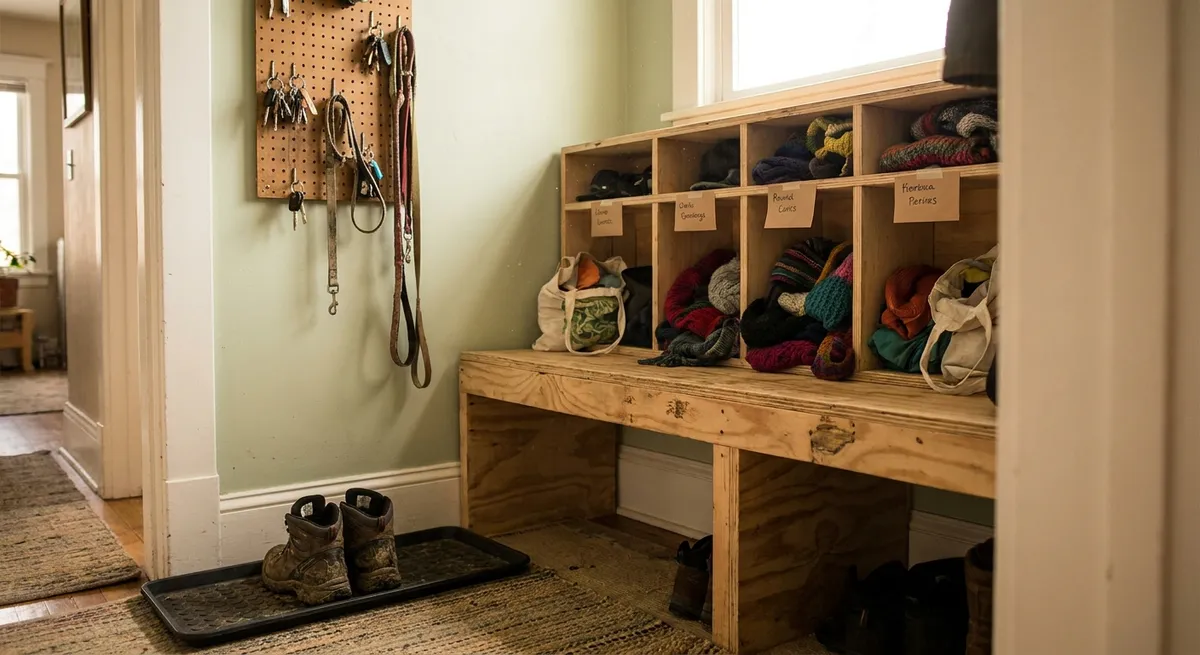
A cluttered entryway makes every day feel a little more chaotic. Shoes pile up, keys disappear, and bags end up wherever they land. This DIY project walks you through building a clean, functional entry zone with wall hooks, a shoe bench, and smart storage—even if you’re working with a small space and a basic tool kit. You’ll get step‑by‑step instructions you can finish over a weekend and reuse in other parts of your home.
Plan Your Entryway Layout Before You Touch a Tool
Before buying anything, take 10–15 minutes to plan. This will save you from wrong-size furniture, unnecessary holes in the wall, and wasted money.
Start by measuring the width of the wall where you want your setup. Note any outlets, light switches, or baseboard heaters you’ll need to work around. Measure from floor to ceiling as well—this will help you decide how tall hooks and shelves should be. Take a quick photo of the wall and sketch a rough layout on paper or your phone: a low bench for shoes, wall hooks above for coats and bags, maybe a small shelf or basket for keys and mail.
Think about your daily routine. Where do you drop your keys? How many pairs of shoes do you want accessible? Do kids need lower hooks they can reach? Decide the must‑haves: usually a place to sit, shoe storage, and at least 3–5 sturdy hooks. Finally, check your wall type (drywall over studs, plaster, or masonry). This will determine what kind of anchors and screws you need so your setup doesn’t rip out of the wall.
Step 1: Gather the Right Materials and Tools
Having everything ready before you start keeps this project moving and cuts down on frustration.
For a basic entryway upgrade, you’ll need:
- Wall hooks or a hook rack (metal or wood, rated for at least 15–25 lbs each)
- A simple storage bench (pre‑made or a flat‑pack unit you assemble)
- A small shelf or key rack (optional but useful)
- Wall anchors and screws suitable for your wall type
- Painter’s tape and a pencil for marking
- Level and measuring tape
- Stud finder (for drywall) or masonry bit (for brick/concrete)
- Drill with appropriate bits
- Screwdriver (manual or drill driver bit)
If you’re building your own bench from scratch, you’ll also need a saw, wood boards, wood screws, and sandpaper, but many DIYers prefer to start with a ready‑to‑assemble bench to keep this project manageable. Choose finishes (hooks, bench, and shelf) that roughly match: black hardware with natural wood, or brushed nickel with painted white furniture, for example. A cohesive look will make the space feel “finished” without any extra decorating work.
Step 2: Install Sturdy Wall Hooks at the Right Height
Wall hooks do most of the daily work in an entryway, so installing them securely matters.
Start by deciding how high you want the hooks. For most adults, 66–70 inches from the floor to the top of the hook works well. If you’re installing a multi‑hook rack, measure from the floor to the center of the rack. For kids, consider a lower row around 42–48 inches so they can hang their own coats and backpacks.
Use painter’s tape to mark an approximate line where the hooks will go. With your stud finder, identify any studs in that area and mark them lightly with pencil. Whenever possible, anchor at least one screw per hook or rack into a stud for maximum strength. If a stud isn’t where you need it, use wall anchors rated for the weight you expect (coats, bags, etc.). Hold the hook or rack against the wall, level it, and mark the screw hole locations. Pre‑drill holes, insert anchors if needed, then screw the hooks in place. Test each by giving it a firm tug—better to discover a weak anchor now than after it’s loaded.
Step 3: Set Up a Functional Shoe Bench (Not Just a Pretty One)
A shoe bench gives you a place to sit and a controlled spot for footwear so it doesn’t spread across the floor.
If you’re assembling a store‑bought unit, lay out all the parts, check the hardware count, and follow the instructions step by step. Tighten screws firmly but avoid over‑tightening, which can strip holes in particleboard or MDF. If you’re reusing an old bench, check that it feels solid—tighten any wobbly joints and consider adding felt pads or rubber feet to protect your floor and keep it from sliding.
Position the bench directly under your new hooks if space allows. You want enough room above it so longer coats can hang freely without bunching up. Leave at least 12–16 inches between the top of the bench and the bottom of the hooks. For better organization, use baskets or low bins under an open bench to separate everyday shoes from occasional pairs. Reserve the most accessible spots for what you actually grab daily—everything else can live in a closet or secondary storage.
Step 4: Add Small Storage for Keys, Mail, and Pocket Items
The little items—keys, wallets, sunglasses, mail—are what usually create that “dump zone” chaos. Give them a dedicated home right by the door.
You can install a small floating shelf, a shelf with hooks, or a key rack with a small tray. Decide whether you want this above the bench or offset to one side; just make sure it’s easy to reach as you walk in. A good height for a small shelf is around 48–54 inches from the floor, depending on your height and whether there’s a bench beneath it.
Mark the shelf location with painter’s tape, then use your level to ensure it’s straight. As with the hooks, use your stud finder and choose appropriate anchors. Pre‑drill, insert anchors where needed, then mount the shelf or rack firmly. Place a small tray or shallow basket on top for keys and small items, and consider a vertical mail sorter to separate “needs action” items from recycling. Keep the surface rule simple: everything on that shelf must be small and used regularly—no stacking of random things.
Step 5: Finish with Simple, Durable Touches You’ll Actually Maintain
Once the main pieces are installed, a few finishing touches can turn this from “functional enough” to a space you enjoy using and can keep tidy with minimal effort.
Add a durable, easy‑to‑clean rug or mat right at the door to catch dirt and moisture. Look for one with a non‑slip backing and a low pile that won’t trip you or catch the door. Place a secondary mat or boot tray near the bench if you deal with heavy mud or snow. If you have pets, choose darker colors or patterns that won’t show every speck of fur.
Hang a mirror above or beside the bench if space allows—it makes the area feel larger and gives you a quick check spot before you head out. Keep décor simple: one or two framed prints or a small plant is enough. Finally, test the flow: walk in as you normally do, hang your bag, remove shoes, stash keys. If any step feels awkward (hooks too far, bench too tight to the door swing, no spot for a wet umbrella), adjust now. The goal is a setup that naturally guides you to put things where they belong without extra effort.
Conclusion
Transforming a messy entryway into a organized landing zone doesn’t require a full remodel—just a few well‑planned pieces and careful placement. By installing sturdy hooks, adding a functional bench, and giving small items a defined home, you make it easier to keep clutter under control every single day. Use these steps as a template: once you see how well a simple, intentional setup works in the entry, you can repeat the same approach in mudrooms, back doors, or even bedroom corners to keep your home feeling more put‑together with less work.
Sources
- U.S. Consumer Product Safety Commission – Anchoring and Mounting Safety – Guidance on safely anchoring items to walls to prevent tip‑overs and failures
- Family Handyman – How to Use Wall Anchors – Practical explanation of different wall anchors and when to use them
- Lowe’s – How to Install Wall Hooks – Step‑by‑step instructions for securely installing hooks in various wall types
- This Old House – Entryway Storage Ideas – Examples of functional entryway layouts and storage solutions
- HouseLogic (National Association of Realtors) – Shoe Storage Solutions – Ideas and best practices for organizing and storing shoes in small spaces
Key Takeaway
The most important thing to remember from this article is that this information can change how you think about DIY Projects.