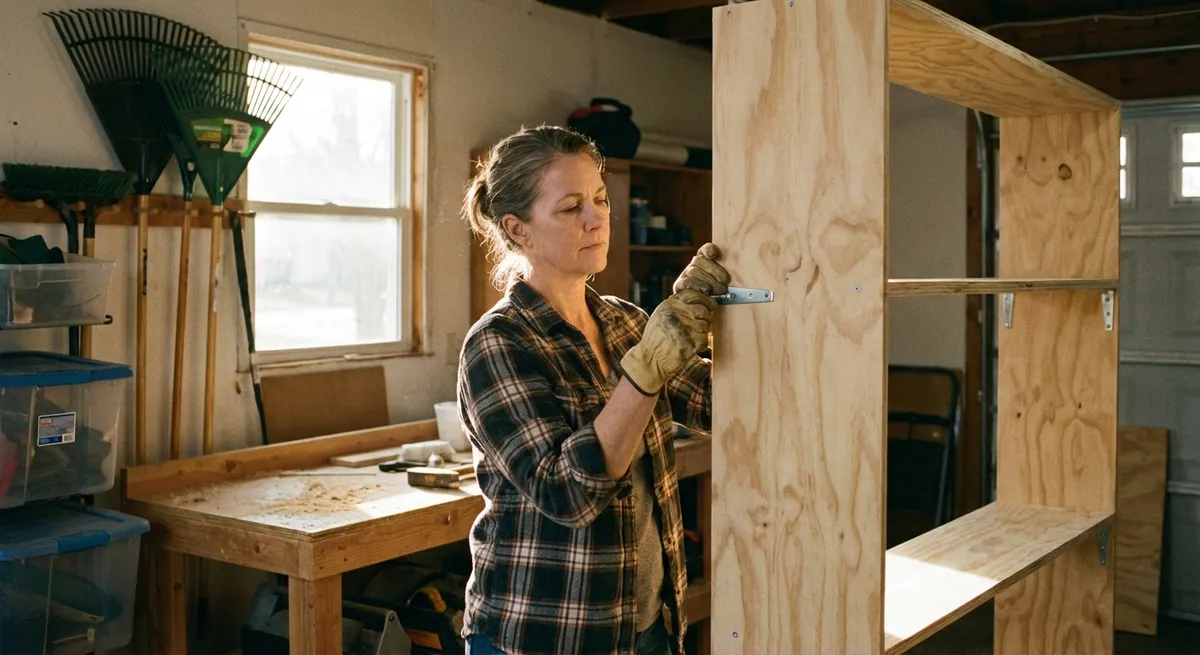
A cluttered garage makes every DIY project harder. You can’t find tools, you trip over boxes, and that “weekend project” turns into an hour of searching for a tape measure. A basic storage wall fixes that. This guide walks you through building a sturdy, flexible storage system using common materials and simple tools—no advanced carpentry required.
You’ll end up with a wall that holds tools, bins, lawn gear, and project materials, and can be adjusted as your needs change.
Step 1: Plan Your Storage Wall (So You Don’t Rebuild It Later)
Before you buy anything, figure out what you need this wall to hold and where it should go.
- Pick the wall. Choose a section with:
- At least 6–8 feet of width
- Minimal obstructions (no windows/doors in the middle)
- Easy access from the garage entry
- Decide what will live there. Group items by category:
- Frequently used tools (drill, driver, tape measure, hand tools)
- Seasonal gear (sports, holiday bins)
- Lawn and garden tools
- Paint and chemicals (stored off the floor and away from kids/pets)
- Measure everything.
- Measure wall width and height
- Note outlet locations and any switches
- Measure your tallest storage bins and longest tools (like rakes)
- Sketch a quick layout.
- Top zone: lighter/rarely used items (bins, seasonal stuff)
- Middle zone: daily-use tools within arm’s reach
- Bottom zone: heavier items, larger totes, or a small work surface
- Check wall type.
- If it’s framed with drywall: you’ll be anchoring to studs
- If it’s concrete/block: you’ll need masonry anchors and a hammer drill
Spending 20 minutes planning saves you from moving shelves and re-drilling later.
Step 2: Gather Materials and Tools That Actually Work Together
You don’t need a truckload of specialty hardware—just a simple, strong system that’s easy to expand.
Recommended system: 2×4 horizontal rails + plywood panels + hooks/shelves
This combo is strong, affordable, and simple for beginners.
Materials (adjust quantities based on your wall size):
- 2×4 studs (for wall rails and optional small shelf frame)
- 3/4" plywood (for tool panels and/or shallow shelves)
- 3" wood screws (for securing 2×4s into studs)
- 1 5/8" wood screws (for attaching plywood to 2×4s)
- Heavy-duty hooks and brackets (rated for the loads you need)
- Plastic storage bins with lids (stackable, labeled)
- Construction adhesive (optional, for extra hold on concrete walls)
- Masonry anchors and screws if mounting to concrete/block
Tools:
- Stud finder (for framed walls)
- Tape measure and pencil
- Level (2' or 4' works best)
- Drill/driver with bits
- Circular saw or handsaw (for cutting 2×4s and plywood)
- Safety glasses and hearing protection
- Dust mask when cutting or sanding
Buy hardware that clearly lists weight ratings and don’t cut corners there—your storage is only as safe as the weakest hook or anchor.
Step 3: Build and Mount the Support Rails
The 2×4 rails are the backbone of your storage wall. They distribute weight across multiple studs so you’re not relying on a single screw or stud.
- Find and mark studs.
- Use a stud finder to locate studs across the wall.
- Mark a vertical line over each stud with a pencil.
- Decide rail height.
A simple, effective layout:
- Cut 2×4 rails.
- Cut boards to span the width of your planned storage area.
- If you need multiple boards to cover the width, stagger their seams over different studs for strength.
- Level and pre-drill.
- Hold each rail on the wall at your chosen height.
- Use a level to ensure it’s straight.
- Mark screw locations where the rail crosses studs.
- Pre-drill through the rail at those marks.
- Secure rails to the wall.
- Use 3" wood screws into each stud you cross.
- Aim for at least 2 screws per stud per rail.
- Re-check level as you go.
For concrete or block walls:
Once the rails are up, you have a strong, flat surface to mount panels, shelves, and hooks.
Step 4: Install Plywood Panels and Shelves for Flexible Storage
This step turns bare rails into a functional storage system you can reconfigure over time.
4.1 Add plywood tool panels
- Cut panels.
- Common sizes: 24"×48" or 16"×48", depending on your wall.
- Sand any rough edges with medium-grit sandpaper.
- Prime or seal (optional but helpful).
- A quick coat of primer or light paint makes it easier to see tools and wipe off dust.
- Mount to rails.
- Position a panel so it spans at least two horizontal rails.
- Use a level to keep edges straight.
- Fasten with 1 5/8" wood screws into the 2×4 rails every 8–12".
- Add basic storage hardware.
- Screw-in hooks for hand tools and extension cords.
- Utility hooks for hoses, cords, or smaller power tools.
- Simple metal brackets if you want a small shelf for drill batteries or cans.
This gives you a large, solid surface you can change without punching dozens of holes in your drywall.
4.2 Build simple fixed shelves
- Plan shelf depth.
- 12" deep: good for small boxes and paint cans.
- 16–18" deep: better for storage bins (don’t go too deep or things get lost).
- Cut the parts.
- Shelf tops: from 3/4" plywood.
- Supports: short 2×4 blocks, ~10–14" long, depending on shelf depth.
- Install supports.
- Screw 2×4 blocks vertically to the rails at both ends of your planned shelf and every 16–24" in between.
- Keep them level and aligned so the shelf sits flat.
- Attach the shelves.
- Lay plywood on top of the supports.
- Screw down into each support with 1 5/8" screws.
Keep heavier items on the lowest shelf, lighter bins higher up.
Step 5: Organize Tools and Gear So You Can Actually Find Them
Now comes the part that makes the wall work day-to-day: smart organization and labeling.
- Create zones.
- Tool zone: on the plywood panels, roughly between waist and shoulder height.
- Yard zone: hooks along one side for shovels, rakes, brooms.
- Bin zone: shelves for labeled storage totes (seasonal decor, camping gear, kids’ sports).
- Hang tools by function.
- Group by task: measuring, cutting, drilling, plumbing, electrical.
- Keep your most-used tools at chest/eye level near the center.
- Use outlines or labels.
- For frequently used tools, mark an outline with a marker or painter’s tape so each has a “home.”
- Label shelf edges and bin fronts with simple, clear names.
- Park long items safely.
- Use heavy-duty hooks or tool hangers rated for the load.
- Hang ladders horizontally on two or three hooks.
- Keep long-handled tools with heads up or down consistently to avoid falling hazards.
- Do a quick safety check.
- Keep chemicals high and out of children’s reach.
- Don’t overload any single hook or bracket—check weight ratings.
- Make sure nothing blocks doors, vehicles, or walkways.
Spend 10 minutes each month putting items back in their zones—this keeps the system working instead of slowly reverting to a pile.
Conclusion
A simple storage wall turns your garage from a catch-all into a workspace that actually supports your DIY projects. With a few 2×4s, plywood, and smart hooks, you gain clear floors, visible tools, and faster project setup and cleanup. Once this wall is in place, every future Fix Ready project gets easier—because you can find what you need, when you need it, without digging through the chaos.
Sources
- U.S. Consumer Product Safety Commission – Furniture and TV Tip-Over Info - Guidance on safe anchoring and load considerations to prevent tip-overs and accidents
- Family Handyman – Garage Storage Ideas - Practical examples of garage storage walls, hooks, and shelving layouts
- This Old House – Garage Storage Solutions - Ideas for zoning and organizing tools, bins, and seasonal items in garages
- Lowe’s – How to Install Shelves - Step-by-step instructions for building and mounting shelves safely
- OSHA – Storage and Handling Materials - Safety considerations and basic principles for stacking and storing materials securely
Key Takeaway
The most important thing to remember from this article is that this information can change how you think about DIY Projects.