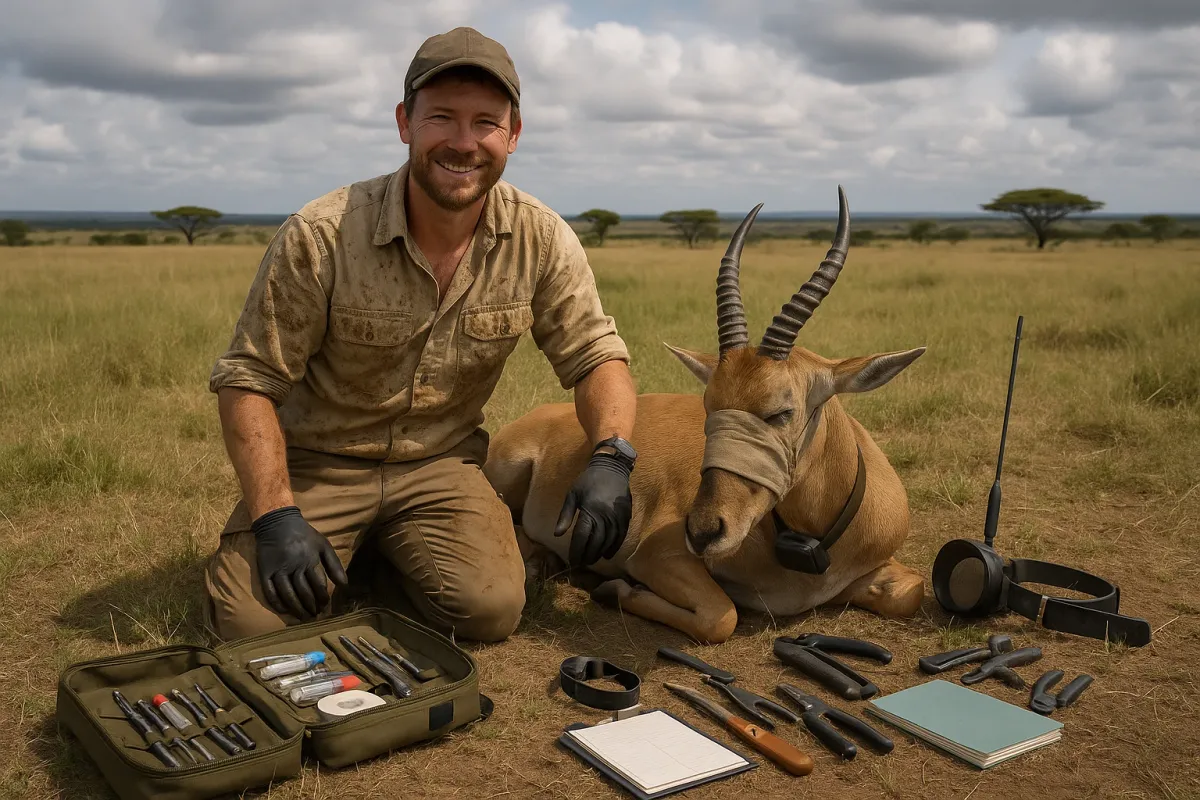
When a wildlife vet can fix a rhino in the middle of the bush with a backpack of gear, you can definitely get more done around your house with the right tools. A recent Bored Panda feature on a wildlife veterinarian “airlifting rhinos” and “fixing butterfly wings with tweezers and glue” is a good reminder: when the job is unpredictable, your tools and prep matter more than anything else.
You may not be darting leopards from a helicopter, but every DIYer knows the feeling of scrambling for the right tool mid‑project. In the field, that kind of delay can cost an animal its life. At home, it usually “only” costs you time, money, and a big mess. Let’s borrow a few ideas from real wildlife work and turn them into a practical, wildlife‑inspired tool and equipment setup for your home.
Below are five clear, step‑by‑step setups to make your DIY gear more capable, more portable, and ready for almost anything.
Step 1: Build a “Field Kit” Tool Bag You Can Grab in Seconds
Wildlife vets don’t drag a whole workshop into the bush—they carry lean, well‑chosen field kits. Do the same at home.
- Choose the right bag or box.
Pick a heavy‑duty tool backpack or soft tote with multiple pockets, not just a basic plastic box. You want:
- Padded straps (for carrying across the house or yard)
- A rigid base (so it stands open like a bucket)
- Light interior color (so tools are visible, not lost in a black cave)
- Define the “mission.”
- General home repairs (most people should start here)
- Electrical and low‑voltage work
- Outdoor/yard repairs and maintenance
- Stock core hand tools first (no fluff).
- 16–20 oz claw hammer
- 5‑in‑1 screwdriver (flat, Phillips, interchangeable bits)
- Adjustable wrench and small set of combination wrenches
- Utility knife with spare blades
- Pliers: needle‑nose, linesman, and slip‑joint/channel‑lock
- Tape measure (at least 25 ft)
- Small torpedo level
- Add a “fine work” micro‑kit.
- Tweezers (yes, really—great for splinters, pulling debris from small mechanisms)
- Small precision screwdrivers (glasses, electronics, tiny hardware)
- Super glue and wood glue in small tubes
- Painter’s tape for quick, non‑damaging holds
- Finish with safety and troubleshooting gear.
- Safety glasses
- Work gloves
- Compact LED headlamp (hands‑free = huge upgrade)
- Non‑contact voltage tester (for basic electrical safety)
- Keep it “mission‑ready.”
- Put every tool back in the same pocket
- Toss dull blades, replace batteries in the headlamp
- Keep a short checklist inside the bag so you can do a 30‑second “ready check” before you start anything big
Treat this like a vet assembling a kit for “large mammals” vs. “birds.” Decide what this bag is for:
Before specialty tools, lock in these essentials:
That wildlife vet fixing butterfly wings with tweezers and glue? That’s your reminder you need precision tools:
No field kit is complete without:
After every project, restock and reset the bag just like a field team:
Step 2: Create a Portable Power Station That Actually Follows You
Out in the wild, a vet can’t always rely on outlets—they lean on portable power, batteries, and efficient tools. Most DIY frustration at home comes from the same issue: dead batteries, short cords, not enough outlets.
- Standardize your cordless platform.
If you’re juggling three brands of cordless tools, you’re doing the equivalent of carrying three dart‑gun types into the bush. Pick one major brand (DeWalt, Milwaukee, Makita, Ryobi, etc.) and stick to it for:
- Drill/driver
- Impact driver
- Reciprocating saw or circular saw
- Work light
- Build a simple charging dock.
- Mount or place chargers together on one power strip
- Label each charger and battery with painter’s tape and a marker
- Add a small basket or bin for “dead/needs charging” batteries so you never mix them up
- Adopt a battery rotation rule.
- Always keep one battery per key tool on the charger or fully topped off
- Mark battery purchase dates so you can spot old ones losing capacity
- Once a month, test each battery in a tool to confirm it’s holding charge
- Add a portable “cord and power” crate.
- 1–2 heavy‑duty outdoor‑rated extension cords (12–14 gauge)
- A small power strip
- Cord reel or Velcro straps to prevent tangles
- Extra USB‑C/Lightning cables for phones and small devices
Dedicate one small shelf, cart, or wall panel as your “charging base”:
Field teams rotate supplies; you should rotate batteries:
Use a milk crate or small bin just for:
Label this crate clearly and keep it next to your charging dock.
- Include emergency backup power.
For storm prep or outdoor work, copy the field‑medicine mindset:
- A small portable power station or inverter (enough to run a drill, charger, and work light)
- At least one battery‑powered lantern/work light separate from your tool system
This turns your tools into a real asset during outages, not dead weight.
Step 3: Upgrade to Field‑Proof Lighting So You Can Actually See Your Work
Wildlife vets work at dusk, in forests, and sometimes under a helicopter rotor wash. Lighting is non‑negotiable. Most DIYers try to fix plumbing under a sink with a phone flashlight and then wonder why it takes an hour.
- Get a proper headlamp, then a work light.
Start with:
- LED headlamp (tilting head, multiple brightness levels, preferably rechargeable)
- Compact LED work light with a magnetic base and a hook
These two lights will solve 90% of “I can’t see what I’m doing” problems.
- Use “layered lighting” just like a field team.
For any job more complex than hanging a picture:
- Overhead room light (if available)
- Work light focused on the task area
- Headlamp for detailed close‑in work
This reduces shadows and eye strain, and makes mistakes less likely.
- Mount lights to tools and surfaces, not your hands.
Copy how pros mount lights to helmets and gear:
- Use magnetic‑base lights on electrical panels, appliances, or metal frames
- Clip a small pen light to your shirt pocket for quick checks
- Use flexible “gooseneck” lights when you need to light the inside of a cabinet or junction box
- Standardize your batteries where possible.
- Favor rechargeable AA/AAA systems for headlamps and small lights
- Keep a marked “charged” and “used” battery case
- If possible, choose a work light that runs on your main tool battery platform
- Practice a fast “night setup.”
- Turn off the main light in a room
- Time how long it takes you to set up your headlamp and work light to comfortably see under a sink or behind a washer
- Adjust where you store lights so you can get full lighting in under 60 seconds
Just like your power tools:
Wildlife responders rehearse. You can do a simple version:
Step 4: Organize Tiny Parts Like a Vet Manages Sedatives and Syringes
That wildlife vet uses carefully labeled vials, darts, and syringes. You have screws, anchors, nails, and weird bracket hardware that you dump into a coffee can and never find again. Same problem, different stakes.
- Pick one main system for small parts.
Choose either:
- Stackable clear organizers with removable bins, or
- A portable parts case with latching compartments
Avoid mixing five different systems—it’s like having five medicine cabinets in the field.
- Start with “everyday fasteners,” not everything.
Prioritize the stuff you actually use:
- Wood screws in common sizes (1 ¼", 1 ⅝", 2", 3")
- Drywall screws
- Wall anchors (light and heavy duty)
- Common nails (finish and framing)
- Picture‑hanging hardware
- Label like it matters.
- Label each bin with: size, type, and typical use (e.g., “#8 x 1 ⅝” – drywall to stud”)
- Use large, legible handwriting or printed labels
- Keep a simple “legend” taped inside the lid if your bins are small
- Create a “field fasteners” mini‑kit.
- Use a small, slim parts organizer or even a divided plastic tackle box
- Load it with a tiny selection of your most‑used screws, anchors, and nails
- Store it in your main tool bag so when you grab the bag, you’ve also grabbed backup hardware
- Lock in a reset routine.
- Spend 5 minutes re‑sorting anything that got mixed
- Top off any section that’s running low
- Add a note to a “resupply list” (keep this on your phone or in your workshop)
Field vets don’t guess what’s in a vial. You shouldn’t guess what’s in a bin:
Borrow directly from the wildlife field kit idea:
After projects where you open multiple fastener types:
This is the home‑DIY version of restocking a field kit after every mission.
Step 5: Build a Rapid‑Response “Fix It Now” Kit for Everyday Emergencies
In the wildlife story, the vet talked about dodging “revenge plots” from darted chimps and handling crises quickly. At home, your crises look more like sudden leaks, broken hinges, or a tripped breaker at 9 p.m.—but the principle is the same: you need a small, always‑ready emergency kit.
- Dedicate a separate, small bag or box.
This is not your main tool bag. It’s your emergency only kit:
- Compact, easy to carry with one hand
- Bright color if possible (easy to spot in a closet)
- Stock it for leaks, breaks, and basic power issues.
- Adjustable wrench (for shut‑off valves)
- Channel‑lock pliers
- Roll of plumber’s tape (Teflon)
- Self‑fusing silicone tape (for temporary leak control)
- Duct tape and painter’s tape
- Small assortment of hose clamps
- Non‑contact voltage tester
- Basic outlet tester
- Flashlight or small headlamp
- Add fast, no‑thinking repair materials.
- Two‑part epoxy putty (works on many surfaces, including some plumbing fixes)
- Super glue gel
- Zip ties in various sizes
- A small piece of fine and medium sandpaper
- Store it where you’d actually need it.
- Ideal spots: under a central sink, in a hall closet, near the electrical panel, or in the mudroom
- Make sure every adult in the house knows exactly where it is and what’s inside
Include:
Think of these as “bandages” until you can do a full repair:
Don’t bury this kit in a back shed:
Practice two core drills:
Just like a field team rehearses emergencies, run through: - Water leak drill: - Time how long it takes you to: grab the kit, find the main shut‑off, turn it off, and apply temporary tape/clamp to a simulated “leak” (even if it’s just a dry pipe). - Power issue drill: - Practice: kill the right breaker, test a suspect outlet with the tester, and verify it’s dead with the non‑contact tester before touching anything. Doing this once or twice builds calm and confidence when something really does go wrong.
Conclusion
Wildlife vets don’t get second chances, and that pressure is why their tools, organization, and habits are so sharp. Borrowing that mindset for your home projects can transform how effective your tools feel—without buying a truckload of new gear.
By building a grab‑and‑go field tool bag, standardizing your power setup, improving your lighting, organizing small parts, and keeping a real emergency kit ready, you’re doing what the best field pros do: planning for the job before it happens.
You may never airlift a rhino, but the next time a pipe leaks at midnight or a shelf pulls out of the wall, you’ll be ready to respond like a pro—calm, equipped, and in control.
Key Takeaway
The most important thing to remember from this article is that this information can change how you think about Tools & Equipment.