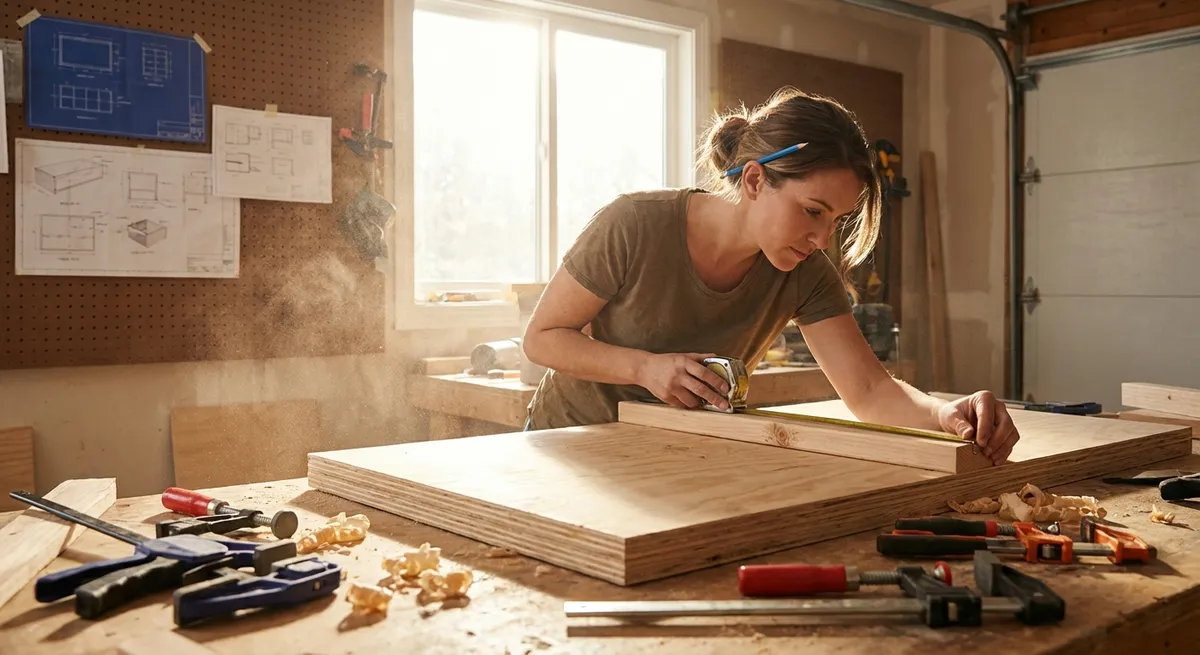
Taking on DIY projects can be the difference between a house that constantly needs attention and a home that actually works for you. The secret isn’t fancy tools—it’s knowing the right methods, using them in the right order, and avoiding the shortcuts that come back to haunt you. This guide walks through five core DIY skills, each with step-by-step instructions you can actually follow and reuse across dozens of projects.
Step 1: Plan Your Project Like a Pro (Before You Touch a Tool)
Most DIY headaches come from jumping in too fast. A few extra minutes planning can save you hours of rework and wasted materials.
- Define the real problem and goal.
Don’t start with, “I want shelves.” Start with, “I need a place to store 40 lbs of books in a 36-inch-wide space.” This helps you choose the right materials, anchors, and layout.
- Measure everything twice, write it down once.
Measure the space, including height, width, depth, and any obstacles (outlets, trim, windows). Sketch a quick drawing with your measurements. Keep this in front of you while you work.
- Check what’s behind the surfaces.
Use a stud finder and, if possible, an inexpensive inspection camera or access panel to check for pipes, wires, and ducts. Focus on walls where you’ll drill, cut, or mount anything.
- List materials and tools in order of use.
Instead of a random shopping list, write what you’ll need step-by-step:
- Step 1: Remove old hardware – screwdriver, utility knife
- Step 2: Patch holes – spackle, putty knife, sanding block
This helps you spot missing items before you start.
- Check building rules and safety.
For bigger projects (anything electrical, structural, or affecting plumbing), look up your local building codes and permit requirements on your city or county website. If a code requirement looks unclear or risky, that’s a strong sign to call a pro.
- Create a cleanup and storage plan.
Clear a work zone, decide where cutoffs and dust will go, and set up a bin or tarp for debris. Knowing where everything goes keeps the rest of your home livable while you work.
Step 2: Safely Turn Off Power and Water (So You Don’t Learn the Hard Way)
Many DIY tasks involve outlets, lights, or plumbing fixtures. Learning how to correctly shut things off is one of the most important skills you can have.
- Locate your electrical panel and main shutoff.
Find your circuit breaker panel (basement, garage, or closet are common locations). Inside, look for labels like “Kitchen lights” or “Bath GFCI.” If nothing is labeled, plan to label as you go for future projects.
- Turn off the correct circuit—then verify.
Flip the breaker that should control your work area. Don’t trust labels alone. Use a non-contact voltage tester on outlets, switches, and light fixtures you’ll touch. The tester should show no voltage before you proceed.
- Use lockout or visual reminders.
If you live with others, put tape over the breaker or a note on the panel: “Do NOT turn on – working on kitchen outlet.” This prevents surprise re-energizing while you work.
- Find and test water shutoff valves.
For plumbing work, locate:
- The main shutoff (usually near where water enters the house)
- Fixture shutoffs under sinks and behind toilets
Turn the valve clockwise to close, then open the faucet to check that water stops.
- Relieve pressure and drain where needed.
For any project involving water lines, open a nearby faucet after shutting off water to relieve pressure. For toilets, flush after shutting off water to empty most of the tank before removing or working on parts.
- When not to DIY.
If you see aluminum wiring, knob-and-tube wiring, corroded electrical panels, or main water lines that look severely rusted or cracked, stop and call a licensed professional. Trying to “figure it out” on these systems can be dangerous.
Step 3: Make Strong, Clean Fastenings in Walls (Drywall, Studs, and Anchors)
Whether you’re hanging cabinets, shelves, or heavy décor, understanding how to fasten things properly is essential for safety and durability.
- Find the studs accurately.
Use a stud finder and confirm by measuring: most studs are spaced 16 inches on center in many homes. Once you find one, check 16 inches to the left or right for the next. Tap lightly; solid, less hollow sounds often indicate a stud.
- Mark your layout at eye level first.
Use painter’s tape or light pencil marks to outline where your item will go. Step back and check the height and position before drilling any holes. Adjust now; it’s much easier than patching later.
- Choose the right anchor for the load.
- Into studs: use wood screws sized for the weight
- In drywall, light loads (small frames): plastic expansion anchors
- In drywall, medium loads (towel bars, small shelves): self-drilling anchors
- In drywall, heavy loads (large shelves, cabinets): toggle bolts or, better, fasten into studs
Check the weight rating on the package and respect it.
- Drill pilot holes instead of forcing screws.
For wood and studs, drill a pilot hole slightly smaller than the screw shaft. This reduces splitting, keeps screws straight, and makes your fastenings stronger and cleaner.
- Level before you commit.
Hold your bracket or mounting hardware in place, use a level, and mark the screw locations while it’s level. Don’t rely on “it looks straight” by eye—floors, ceilings, and walls are often not perfectly square.
- Test the fastening with controlled force.
Once installed, gently pull or push on the mounted item with about the amount of force it’ll see in normal use. If you feel movement, stop and rethink: you may need different anchors, additional screws, or a stud location.
Step 4: Prep, Patch, and Finish Surfaces for Paint That Actually Lasts
Quick paint jobs look good for a week, then start to chip, peel, or show every flaw. Proper surface prep makes your work look professional and last much longer.
- Clean the surface thoroughly.
Grease, dust, and soap residue ruin paint adhesion. Wash walls with a mild detergent and water (or a degreaser in kitchens), then let everything dry completely. For bathrooms, remove any visible mildew with a cleaner rated for mold/mildew.
- Fix holes, cracks, and uneven areas.
- Small nail holes: use lightweight spackle with a putty knife, let dry, sand lightly
- Larger holes or damaged corners: use patch kits or mesh tape plus joint compound
- Cracks along trim: fill with paintable caulk, then smooth with a damp finger or caulk tool
- Sand for a smooth, paint-ready finish.
Use a sanding sponge or fine-grit sandpaper to smooth patched areas and gloss paint. Don’t skip this—even “paint and primer in one” performs better on a slightly scuffed surface.
- Prime when needed.
Prime if:
- You’re painting over very dark colors
- You’ve patched multiple areas
- You’re going from glossy to matte
- You’re painting bare drywall or raw wood
Use a stain-blocking primer over water stains, smoke marks, or heavy discoloration.
- Cut in edges, then roll.
Start by “cutting in” around trim, ceilings, and corners with a brush. Then use a roller for the large areas while the cut-in is still wet for a more uniform finish. Work in small, manageable sections.
- Respect drying and recoat times.
Follow the paint manufacturer’s recommended drying times between coats. Rushing a second coat can cause peeling, dragging, or uneven sheen. Good ventilation and moderate temperatures help the paint cure properly.
Step 5: Build a Simple, Sturdy Storage Shelf (A Core Reusable Skill)
A basic shelf build teaches you measuring, cutting, fastening, and leveling—all core DIY skills. You can adapt the same method for closets, garages, pantries, or utility rooms.
- Decide on size, material, and load.
- Measure your available width, depth, and height
- Decide what you’ll store (paint cans, storage bins, tools, etc.)
- Choose materials: 2x4s for legs and supports, plywood or 1x boards for shelf surfaces
Aim for practical dimensions; for example, 16–18 inches deep is enough for most storage.
- Cut all pieces before assembly.
For a simple freestanding shelf:
- Four legs (same height)
- Shelf supports (front and back) for each shelf
- Shelf surfaces (plywood or boards cut to width/length)
Label each cut piece with pencil to keep track (e.g., “leg,” “top front support”).
- Build the shelf frames.
Lay out two supports parallel on the floor, then screw shorter crosspieces between them to form a rectangle. Use a square to keep corners at 90 degrees. Repeat for each shelf level you plan.
- Attach frames to the legs.
- Mark shelf heights on all four legs
- Clamp or hold the frame at the marks, then screw through the frame into the legs
- Double-check with a level as you go so each frame is horizontal and all legs stand straight
- Add shelf surfaces and reinforce.
Place plywood or boards on top of each frame and screw them down. For heavy loads, add diagonal braces at the back corners or mount the unit to the wall studs using appropriate screws for extra stability.
- Sand, seal, or paint as needed.
Lightly sand sharp edges, then apply a sealer or paint suitable for your space (exterior-grade or moisture-resistant for basements and garages). Let it cure fully before loading it up.
Conclusion
DIY projects go a lot smoother when you focus less on “What can I build this weekend?” and more on “What core skills can I reuse over and over?” Planning properly, safely controlling power and water, fastening to walls the right way, prepping surfaces for long-lasting finishes, and building simple but solid structures are all foundation skills. Once you have these down, you can confidently tackle bigger upgrades, knowing your work will hold up and actually make your home easier to live in.
Sources
- U.S. Consumer Product Safety Commission – Home Electrical Safety Checklist – Guidance on safe practices around residential electrical systems
- U.S. Department of Energy – Building Codes and Standards – Overview of building code considerations and why they matter for home projects
- Family Handyman – How to Hang Heavy Items on Drywall – Detailed anchor and fastening techniques for walls
- Lowe’s – How to Prepare Walls for Painting – Step-by-step wall prep and priming instructions
- Home Depot – How to Build Shelves – Visual guide to planning and building basic shelving units
Key Takeaway
The most important thing to remember from this article is that this information can change how you think about DIY Projects.