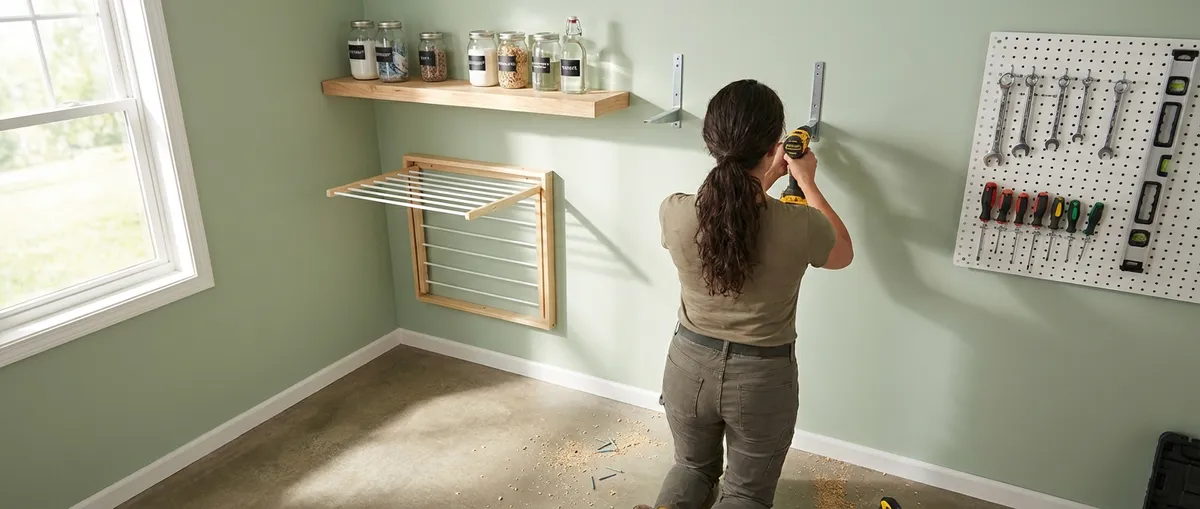
A cramped, messy laundry area slows everything down. Detergent bottles sprawl across the washer, mismatched baskets pile up, and there’s never anywhere to hang clothes that need to air-dry. A simple wall-mounted laundry station solves all of that in a single weekend. This DIY project adds storage, hanging space, and a working surface without taking up precious floor space—perfect for small laundry rooms, hallway closets, or basement corners.
Below is a step-by-step guide that walks you through planning, building, and safely installing a sturdy wall-mounted laundry station that looks clean and feels custom.
Plan Your Laundry Station Layout
Before you touch a tool, plan the layout so the station actually works for your daily routine.
Think about how you currently use your laundry space. Do you need more shelf storage for detergents and cleaners, or is hanging space for air-drying clothes more urgent? Decide what matters most, then sketch a simple front-view of the wall where the station will go. Mark the width of your washer and dryer and leave at least a couple of inches of clearance on either side so the machines can vibrate without hitting your new station.
Measure the overall wall space, then map out three core elements: a shallow upper shelf for detergents and small items, a hanging rod or rail below that for hangers, and a sturdy lower shelf or folding surface if space allows. Keep the top shelf reachable; for most people, 66–72 inches from the floor to the top shelf is comfortable. Check for obstacles like electrical outlets, water hookups, vents, and wall cabinets. Note those on your sketch so your design doesn’t cover anything important or block access to shutoff valves.
Gather Materials and Tools Before You Start
Having everything on hand keeps the project moving and reduces mistakes.
For materials, select a straight, stable board for the shelf—common choices include 1x10 or 1x12 pine or plywood with edge banding. You’ll also need heavy-duty shelf brackets (rated for at least 50–75 pounds apiece), a closet rod or metal pipe for hanging clothes, matching rod sockets or flanges, and appropriate wall anchors or screws for your wall type. If the station will sit above a front-load washer, consider a deeper top shelf to catch stray items; just make sure you can still reach the controls.
For tools, gather a tape measure, pencil, stud finder, level, drill/driver, drill bits, screwdriver bits, sandpaper, a saw (or have boards cut to length at the store), and safety gear (eye protection and dust mask). If you plan to paint or stain, you’ll also want brushes or rollers, primer, paint or stain, and a drop cloth. Double-check that your screws are long enough to penetrate wall studs by at least 1–1¼ inches for a secure hold, especially if you’ll be loading the shelf with liquids and heavy baskets.
Prepare and Finish the Shelves and Components
Prepping components on a work surface is easier and cleaner than painting over machines.
Cut your shelf boards to the desired width of the station, ensuring they don’t extend past the edges of your washer and dryer. Lightly sand all edges and faces with medium-grit sandpaper to remove splinters and round off sharp corners; this makes the piece safer and more comfortable to use. Wipe away dust with a damp cloth so finishes adhere evenly. If you’re using a wooden closet rod, sand it as well so hangers slide smoothly.
Prime any bare wood if you’ll be painting, especially in a humid laundry room. Use a quality all-purpose primer, then apply at least two coats of paint or a durable polyurethane finish, allowing proper drying time between coats. Semi-gloss or satin finishes clean easier and resist moisture better than flat paint. If you prefer a natural wood look, choose a water-resistant clear coat and apply according to the manufacturer’s instructions. Let all components cure fully so they’re not tacky when you install them.
Locate Studs and Mount the Shelf Brackets
The strength of your laundry station depends on how well it’s anchored to the wall.
Use a stud finder to locate framing studs in the wall and mark their positions lightly with a pencil at shelf height. Verify by driving a small test screw where the stud finder indicates; you should feel solid resistance, not hollow drywall. Aim to anchor each bracket into a stud whenever possible. For shelves spanning a washer and dryer, three brackets (one centered and two near the ends) typically provide better support than two, especially for heavier loads.
Hold the first bracket against the wall at your desired height and use a level to ensure it’s perfectly vertical. Mark the screw hole locations, then pre-drill pilot holes to reduce the chance of splitting and to make driving screws easier. Fasten the bracket with appropriate screws, tightening until snug but not overtightened. Repeat with the remaining brackets, using a long level or straight board laid across bracket tops to keep them aligned. If you must mount a bracket where there is no stud, use heavy-duty, manufacturer-rated wall anchors suitable for your wall type, and reduce how much weight you plan to store on that section.
Install the Shelf, Hanging Rod, and Final Touches
Once the brackets are secure, bring the station together and tailor it to your workflow.
Place the finished shelf on top of the brackets, making sure it’s centered with equal overhang on each bracket. From underneath, pre-drill small pilot holes through the bracket’s top screw holes into the underside of the shelf, then secure with short wood screws that won’t poke through the top surface. Check again with the level; small adjustments now will save frustration later when items want to roll or slide. Give the shelf a gentle push to verify it feels solid and doesn’t wobble.
Next, install the hanging rod. Mark the desired rod height—often 8–12 inches below the bottom of the shelf, depending on hanger size and the height of the tallest garments you plan to hang. Attach rod sockets or pipe flanges to the underside of the shelf or the wall per the manufacturer’s instructions, then cut the rod or pipe to length and snap or screw it into place. Test with several hangers and a few garments to ensure there’s enough clearance above the washer and below the shelf.
Finish by adding small hooks under the shelf for lint rollers, mesh bags, and small tools, or use labeled bins on the shelf for sorting supplies. Wipe everything down, then load your station gradually, keeping the heaviest items closest to the wall and over bracket locations. Step back, snap some before-and-after photos, and share your upgraded laundry setup—you’ve created a practical, wall-mounted station that makes laundry day smoother and your utility space feel intentional instead of improvised.
Conclusion
A wall-mounted laundry station transforms an underperforming corner into a functional, organized work zone without a full remodel. By carefully planning the layout, anchoring components into studs, and finishing surfaces to handle moisture and daily use, you end up with a setup that actually makes laundry easier—more storage where you need it, a place to hang clothes, and a clear surface that isn’t the top of your washer. It’s a manageable DIY project that delivers an outsized impact and is easy to customize for small apartments, busy family homes, or anything in between.
Sources
- U.S. Department of Energy – Laundry Tips - Guidance on efficient laundry practices and considerations for laundry spaces
- Family Handyman – How to Install Shelves - Practical advice on shelf brackets, fasteners, and weight support
- Lowe’s – How to Find a Wall Stud - Step-by-step instructions for accurately locating studs in walls
- This Old House – How to Paint Wood - Detailed tips on prepping and finishing wood surfaces for durability
- Occupational Safety and Health Administration (OSHA) – Hand and Power Tools - Safety best practices when using basic tools during DIY projects
Key Takeaway
The most important thing to remember from this article is that this information can change how you think about DIY Projects.