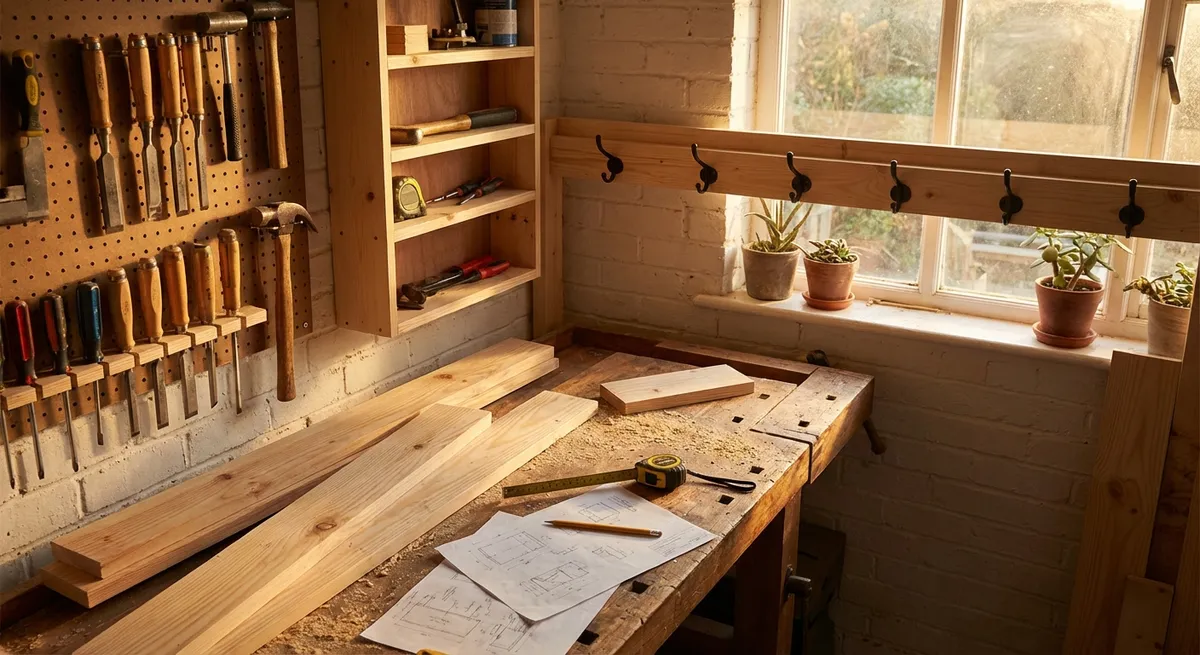
If your home feels cluttered but you don’t have space for bulky furniture, a wall-mounted storage rail is a simple DIY project that delivers big impact. It works in kitchens, garages, laundry rooms, offices, even kids’ rooms—anywhere you need flexible, off-the-floor storage. This guide walks you through building a strong, clean-looking rail system you can customize with hooks, baskets, and shelves.
Plan Your Rail System (Location, Load, and Layout)
Before you buy anything, get clear on what you want this rail to do and where it will live.
Start by choosing a wall that’s easy to access and not packed with utilities (plumbing, electrical). Hallways, behind doors, and above workbenches are prime spots. Think about what you’ll hang: heavier items (tools, pots, sports gear) need stronger anchors and more studs; lighter items (keys, hats, cleaning tools) are more forgiving.
Measure the width of your available wall space and mark a rough “working area” with painter’s tape. Aim for the rail to sit between 48–60 inches from the floor in most rooms so most adults can reach it comfortably. In kids’ rooms, lower it to match their height.
Decide how many rails you want: a single rail is clean and minimal; two or three stacked rails create a full storage zone. Sketch a quick layout with approximate spacing between rails (10–12 inches is typical) and rough positions for hooks or baskets. This doesn’t have to be perfect; it just guides your cut list and shopping.
Finally, consider style: a painted wood rail suits most interiors, while a clear-coated board or metal track feels more modern or industrial. Choosing a look that matches your existing trim and hardware will make the project feel built-in rather than tacked on.
Gather Materials and Tools (Buy Once, Use Often)
With your plan in place, you can build a simple, durable rail with common materials and tools many DIYers already own.
For a basic system, you’ll need:
- 1x4 or 1x3 solid wood boards (pine, poplar, or oak) for the rail(s)
- Heavy-duty hooks, peg-style hooks, or S-hooks rated for the weight you expect
- Wood screws (2–3 inches) for fastening into studs
- Wall anchors (if you must mount in areas without studs; use rated, heavy-duty anchors)
- Sandpaper (120–220 grit) or sanding block
- Paint or clear finish (plus primer if using paint)
- Painter’s tape, pencil, measuring tape, and level
Tools you’ll want:
- Stud finder
- Drill and drill bits
- Driver bits or screwdriver
- Saw (miter saw, circular saw, or even a handsaw for a simple build)
- Safety glasses and hearing protection (if using power tools)
When buying wood, look down the length of each board at the store to avoid pieces that are twisted, cupped, or badly warped. Choose straighter boards with minimal knots in the areas where screws will go.
If you’re planning to hang very heavy items (like full tool sets or cast iron pans), check manufacturer weight ratings for both your hooks and your wall anchors. Your system is only as strong as its weakest part, so don’t guess on weight capacity.
Step-by-Step Build: From Bare Wall to Strong Rail
Below are five core steps to take you from blank wall to finished, ready-to-use storage rail.
Step 1: Mark Studs and Rail Height
Use a stud finder to locate studs across the section of wall you marked with painter’s tape. Move slowly and mark each stud center with a light vertical pencil line. Confirm by driving a small test nail where you find a stud if you’re unsure—just patch the tiny hole later if needed.
Next, measure the height where you want the top edge of your rail. Mark that height at each end of the wall area and use a level to draw a light horizontal line connecting them. This line will guide your rail placement.
If you plan multiple rails, mark their heights now, maintaining consistent spacing. Verify the heights by standing back and visually checking that they align with furniture, windowsills, or other nearby elements so the system doesn’t look “off.”
Finally, lightly mark where the studs intersect your rail line. These intersection points will show you where to drive your main mounting screws for maximum strength.
Step 2: Cut, Sand, and Pre-Finish the Rails
Measure the width of your wall area and cut your rail board(s) to length. If you need more than one board to span a long wall, plan a joint over a stud so both boards can be firmly secured at the seam.
After cutting, lightly round over any sharp edges with sandpaper. Sand all faces with 120–150 grit, then finish with 180–220 grit for a smooth, splinter-free surface. Dust off thoroughly with a clean cloth or tack cloth.
Apply primer if you’re painting, then your paint or clear finish, following the product’s instructions for drying time and number of coats. It’s much easier to paint or finish the boards before they’re on the wall, especially the top and bottom edges. Let them fully cure to avoid smudges and fingerprints while mounting.
If you want a more built-in look, you can slightly bevel or ease the front edges or add a small piece of molding underneath later. For a minimalist look, keep edges clean and simple.
Step 3: Pre-Drill Mounting Holes in the Rails
Lay each finished rail board face-down on a work surface. Transfer your stud locations from the wall measurements onto the back of the board. You want at least two screws per stud for a long board—one near the top edge and one near the bottom—spaced evenly along the rail.
Mark these screw locations and pre-drill clearance holes slightly larger than the shank of your screws but smaller than the head. This reduces the risk of splitting the wood and makes driving screws easier and cleaner.
For a cleaner front face, you can countersink the holes slightly so the screw heads sit just below the surface. If you plan to plug or fill the holes for a seamless look, make the countersink a bit deeper to allow room for wood filler or dowel plugs.
Label the back of each rail (e.g., “Top Rail,” “Middle Rail”) and mark which end is “Left” so your pre-drilled holes align with your wall layout when you install them.
Step 4: Mount Rails Securely to the Wall
Hold your first rail against the wall, aligning its top edge with your level guideline. It helps to have a second person hold one end, but you can also use temporary support: drive a couple of small screws or brads at the height line to “rest” the rail on while you secure it.
Double-check with a level that the rail is perfectly straight. Start by driving a screw through a pre-drilled hole into a stud at one end. Then move to the opposite end and secure another stud. Check level again before driving the remaining screws.
If parts of your rail fall between studs and you still need support there, use properly rated wall anchors. Drill holes for the anchors at your marked positions, insert them as directed, and then drive screws through your rail into those anchors. Keep in mind: stud-mounted screws handle the serious load; anchors are supplemental.
Repeat the process for additional rails, using your height marks and level to keep everything aligned. Step back after mounting to visually confirm all rails look straight and evenly spaced before moving on.
Step 5: Add Hooks, Baskets, and Test the System
Once the rails are firmly in place, you’re ready to add hardware and test the setup.
Start with your hooks. Many heavy-duty hooks attach with screws through the rail face; follow the manufacturer’s instructions for spacing and number of screws per hook. For lighter items, simple peg hooks or cup hooks can screw directly into the wood.
Hang items gradually while watching for any movement in the rail or wall. Test with medium-weight objects first, then progress to heavier ones. If you see the rail flexing, screws shifting, or anchor areas stressing, stop and reassess: you may need additional studs, stronger anchors, or fewer heavy items in that section.
Add baskets or small shelves by using brackets that fasten into the rail and, when possible, into studs behind. Wire baskets are ideal for gloves, cords, and small tools; shallow shelves work well for jars, labels, and decor in living spaces.
Finish by organizing intentionally: group items by task (cleaning, gardening, bike gear) or by user (kids’ zone vs. adult zone). Label baskets or hooks if you share the space with others—this makes the system easier to maintain and prevents clutter from creeping back.
Practical Tips to Customize and Keep It Safe
You can adapt this basic rail design to fit almost any room and style while keeping safety and durability front and center.
In a kitchen, use sealed or painted wood and corrosion-resistant hardware, especially near cooking or sinks. Mount the rail away from open flames and follow local codes for clearances around ranges and gas lines. Hanging heavy pots? Ensure every pot hook is backed by a stud screw.
In a garage or workshop, prioritize strength over looks. Use thicker boards (like 1x6) and lag screws for very heavy loads. Label specific hooks for ladders, power tools, or extension cords to avoid overloading one area and to keep tripping hazards off the floor.
In kids’ rooms or entryways, round over edges more aggressively and avoid sharp metal hooks at eye level. Opt for blunt-ended or flexible hooks for safety. Securely anchor anything a child might pull down, and keep heavier items higher or in adult-only zones.
If you ever move or rearrange, your rail system is reusable. Remove the rails, patch and touch up the wall holes with spackle and paint, and reinstall the rails in a new spot. The upfront effort gives you a modular storage solution you can grow and adapt with your home.
Conclusion
A wall-mounted storage rail is a straightforward DIY project that dramatically improves organization without eating up floor space. By planning your layout, fastening securely into studs, and choosing hooks and hardware that match your real-world loads, you’ll end up with a system that feels built-in and works hard every day. Once you see how much cleaner and more efficient one wall can be, you may find yourself adding rails in more rooms—and enjoying a home that’s easier to live and work in.
Sources
- [U.S. Consumer Product Safety Commission – Anchoring Furniture and TVs](https://www.cpsc.gov/safety-education/safety-guides/furniture-and-tv-tip-overs) - Guidance on secure wall anchoring and preventing tip-overs and pull-down accidents
- [Family Handyman – How to Use a Stud Finder](https://www.familyhandyman.com/project/how-to-use-a-stud-finder/) - Practical overview of finding studs safely and accurately in walls
- [This Old House – Hanging Heavy Objects Securely](https://www.thisoldhouse.com/walls/21015188/how-to-hang-anything-on-anything) - Techniques and hardware options for safely hanging items on different wall types
- [Fine Woodworking – Basics of Sanding and Surface Preparation](https://www.finewoodworking.com/2004/04/01/sanding-basics) - Explains grit progression and method for smooth, durable finishes on wood projects
- [Benjamin Moore – How to Paint Bare Wood](https://www.benjaminmoore.com/en-us/paint-and-stain-tips/how-to-paint-bare-wood) - Step-by-step instructions for priming and painting wood for long-lasting results
Key Takeaway
The most important thing to remember from this article is that this information can change how you think about DIY Projects.