Well-maintained tools don’t just work better—they’re safer, more accurate, and last longer. Whether you’re new to DIY or you’ve been tackling projects for years, building a basic tool care routine will save you time, money, and frustration on every job.
This guide walks you through five practical, step-by-step habits that keep your tools ready when you are. No advanced skills, no fancy equipment—just straightforward routines you can fit into a weekend.
Step 1: Set Up a Simple Cleaning Routine After Every Project
Dirty tools wear out faster, slip in your hands, and can even damage the materials you’re working on. A basic cleaning routine after each project keeps everything working smoothly.
- Start with a quick dry wipe-down.
Use a clean rag or old T‑shirt to remove sawdust, drywall dust, and loose debris from handles, metal parts, and moving joints. Focus on hinges, blades, vents, and any sliding surfaces.
- Use the right cleaner for the material.
- For hand tools and metal parts: Lightly dampen a rag with soapy water to remove grime, then dry immediately.
- For power tool housings (plastic): Use a slightly damp cloth only—avoid soaking or spraying directly into vents or openings.
- For rust-prone metal: Skip water if possible; use a dedicated cleaner or mineral spirits in a well-ventilated area.
- Clear dust from vents and tight spots.
On power tools, clogged vents can cause overheating. Use a small brush, an old toothbrush, or compressed air to clear dust from vents, switch areas, and chuck housings.
- Check for buildup on blades and bits.
Resin, dried adhesive, or paint can cause blades and bits to burn or chatter. Use a blade/bit cleaner or mineral spirits on a rag to gently remove buildup, then dry thoroughly.
- Let everything fully dry before storage.
Even a thin film of moisture can start corrosion. Lay tools out on a towel, give them 10–20 minutes to air dry, then return them to their proper places.
Tip: Keep a small “clean-up kit” (rags, mild cleaner, small brush, and compressed air) in your workspace so post-project cleaning becomes automatic, not a chore you avoid.
Step 2: Protect Metal Tools From Rust the Smart, Easy Way
Rust quietly ruins tools by pitting surfaces, seizing moving parts, and dulling edges. You don’t need a workshop full of specialty products to stop it—just a few simple habits.
- Inspect metal surfaces regularly.
Once a month (or after any heavy project), quickly check plier jaws, screwdriver shafts, wrenches, clamp bars, plane soles, and hand saws for orange discoloration or rough patches.
- Remove light rust right away.
For small spots, use:
- Fine steel wool (0000 grade) or a non-scratch scouring pad
- A bit of light oil (like 3‑in‑One or machine oil) as a lubricant
Rub gently until the surface feels smooth, then wipe off any residue.
- Apply a thin protective coat.
On clean metal, add a very light film of corrosion protection:
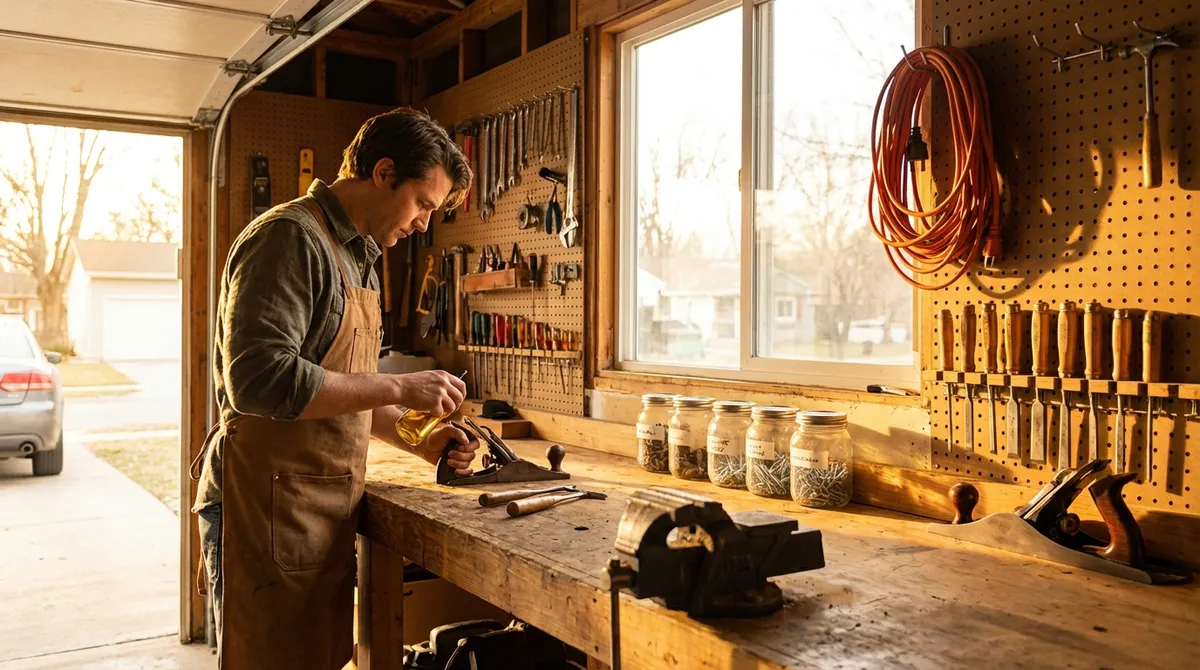
- Light machine oil on wrenches, pliers, chisels, and hand saws
- Paste wax or specialized tool wax on plane soles and cast iron tool bases (like table saws or drill press tables)
Wipe until the surface feels dry to the touch, not greasy.
- Control moisture where you store tools.
- Keep tools off concrete floors; use shelves or racks.
- Add silica gel packs, a small dehumidifier, or a moisture absorber in enclosed tool cabinets or storage boxes.
- Avoid storing tools against exterior basement walls where condensation forms.
- Store blades and bits properly.
Keep drill bits, router bits, and saw blades in cases, sleeves, or racks instead of loose in drawers where they rub and scratch off protective coatings.
Tip: If you live in a humid area, make rust prevention part of your seasonal home maintenance—check and recoat vulnerable tools a few times a year.
Step 3: Maintain Power Tool Cords, Batteries, and Plugs
A tool is only as reliable as how it gets power. Damaged cords and abused batteries are safety risks and one of the most common reasons tools fail early.
- Inspect cords and batteries before use.
Check cords for cuts, exposed wire, cracked insulation, and loose plugs. Look at battery packs for cracks, swelling, leaking, or damaged contacts.
- Retire unsafe cords immediately.
If you see exposed wire, melted areas, or a loose plug head, stop using the tool until the cord is professionally repaired or replaced. Taping over serious damage is not a safe fix.
- Use extension cords rated for your tools.
Match the gauge and length to your most demanding tool. Undersized extension cords overheat and strain motors. Follow the tool manufacturer’s cord recommendations for outdoor and indoor use.
- Charge batteries the right way.
- Use the charger that came with the tool, or one approved by the manufacturer.
- Avoid running batteries to absolute zero; recharge when performance drops.
- Let cold or hot batteries come back to room temperature before charging.
- Store batteries and corded tools properly.
- Keep batteries in a cool, dry spot—avoid leaving them in vehicles or direct sun.
- Unplug corded tools before storing, and avoid tightly wrapping cords around tools; use loose loops or built-in cord wraps to reduce strain.
Tip: Label your batteries with the purchase date using a marker. It makes it easier to track which packs are aging out and plan replacements before a project grinds to a halt.
Step 4: Keep Measuring and Marking Tools Accurate
If your measuring tools are off, every cut and layout is off. A few quick checks and storage habits help keep your layouts true and your finished work fitting the way you planned.
- Check your tape measure for accuracy.
Hook the tape over a known straight edge and compare it to a reliable ruler or square at several points (e.g., 12", 24", 48"). If the numbers don’t line up consistently, replace the tape.
- Inspect the tape hook.
The end hook is designed to move slightly to account for its thickness. If it’s bent, overly loose, or stuck, your measurements will be wrong. Gently bend it back or replace the tape if it can’t be corrected.
- Protect squares and levels from drops.
- Store framing squares flat or hung, not wedged between heavy tools.
- Don’t toss levels into tool piles; the vials can get knocked out of alignment or broken.
- If a level gets dropped hard, check it against a known level surface in both directions to confirm it still reads true.
- Keep marking tools sharp and consistent.
- Use a dedicated carpenter’s pencil or mechanical pencil for consistent line width.
- Sharpen pencils regularly so your marks stay precise and easy to see.
- Store layout tools (pencils, markers, marking knives) in a small pouch or toolbox section so they’re not crushed or lost.
- Maintain a “layout kit” ready to grab.
Put your tape measure, square, level, pencil, and a simple notepad together in one place. When they always live together, you’re less likely to grab a damaged or inaccurate tool on your way into a project.
Tip: Once or twice a year, compare all your measuring tools to one “trusted standard” (a good quality steel rule or reliable tape). Replace anything that doesn’t match.
Step 5: Store Your Tools So You Can Actually Find and Use Them
Good storage isn’t just about neatness—it keeps tools from being damaged, misplaced, or accidentally exposed to moisture and dirt. Aim for a simple system you’ll actually maintain.
- Group tools by how you use them.
Instead of organizing by brand or size, group by task:
- Cutting tools (saws, utility knives, snips)
- Fastening tools (hammers, screwdrivers, impact drivers)
- Layout tools (tape, square, level, pencil)
This makes it faster to grab the “kit” you need for a specific project.
- Give every tool a consistent home.
Use pegboards, drawer organizers, bins, or wall racks—whatever suits your space. The key is that every tool has a clear spot so you notice quickly when something is missing or out of place.
- Protect sharp edges and delicate parts.
- Use blade guards, sheaths, or simple homemade covers (e.g., taped cardboard over saw teeth or chisel edges).
- Store drill bits in labeled cases, not loose in drawers.
- Keep delicate tools like levels and measuring tapes off the floor and away from heavy items.
- Keep frequently used tools within easy reach.
Reserve prime space (front of shelves, eye-level pegboard, top drawers) for what you use weekly. Rarely used or seasonal tools can go higher, lower, or deeper in storage.
- Do a quick reset at the end of each project.
Before you call the job done, take five minutes to return tools to their homes, empty tool belts, and re-pack toolboxes. This small habit prevents cluttered, chaotic workspaces that slow down your next project.
Tip: If you share tools with family or roommates, label shelves, bins, or pegboard outlines so everyone knows where each tool goes—and can put it back correctly.
Conclusion
You don’t need a giant workshop or expensive equipment to keep your tools in top shape. A quick clean after projects, basic rust prevention, safe power management, accurate measuring checks, and thoughtful storage go a long way.
Treat these five steps as part of the project—not extra work. Over time, you’ll spend less time hunting for tools, less money replacing damaged gear, and more time actually building and fixing things around your home.
Sources
- [Occupational Safety and Health Administration (OSHA) – Hand and Power Tools](https://www.osha.gov/hand-power-tools) - Covers safety fundamentals and proper handling of hand and power tools
- [The Family Handyman – Tool Care and Tool Storage Tips](https://www.familyhandyman.com/list/essential-tool-care-and-tool-storage-tips/) - Practical advice on cleaning, storing, and extending the life of common tools
- [Fine Woodworking – Preventing Rust on Tools](https://www.finewoodworking.com/2006/07/01/preventing-rust) - Detailed overview of rust prevention methods and protective coatings for metal tools
- [ENERGY STAR – Proper Battery Charging and Maintenance](https://www.energystar.gov/products/appliances/battery_chargers) - Guidance on safe and efficient battery charging practices
- [Lowe’s – How to Store and Organize Tools](https://www.lowes.com/n/how-to/store-and-organize-tools) - Step-by-step ideas for practical, space-conscious tool organization and storage
Key Takeaway
The most important thing to remember from this article is that this information can change how you think about Tools & Equipment.