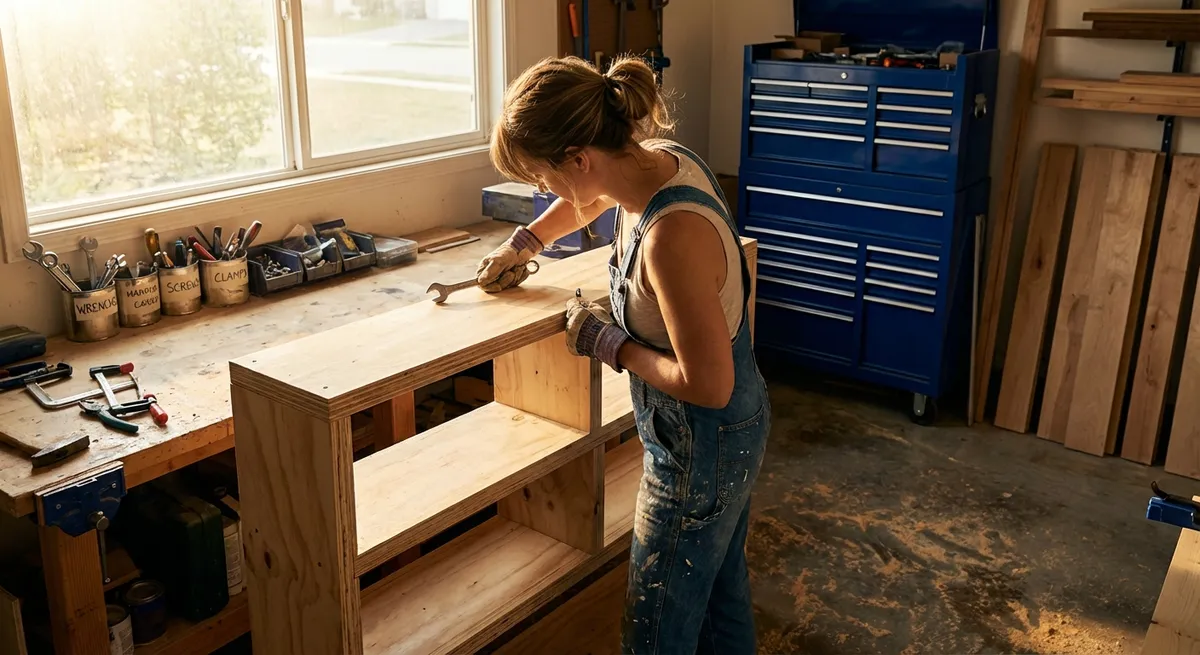
Working on your home shouldn’t feel like guessing with a hammer. With the right steps and a clear plan, you can pull off DIY projects that look good, last longer, and won’t need redoing in six months. This guide walks you through five practical, high-impact projects with step‑by‑step instructions that DIYers can actually follow.
Each project is designed to be doable with basic tools, clear logic, and materials you can find at any home center.
Project 1: Install a Sturdy, Level Wall Shelf
A good shelf is more than décor—it’s storage, organization, and a chance to get things off the floor. The key is anchoring it safely and ensuring it’s level.
Step 1: Plan the placement and load
Decide what you’ll put on the shelf: books, tools, décor, or pantry items. This matters because:
- Heavy items = use wall studs or heavy-duty anchors
- Light décor = standard wall anchors may be fine
Measure the wall space and mark the approximate width and height with painter’s tape so you can visually confirm it feels right in the room.
Step 2: Find studs and mark your layout
Use a stud finder to locate vertical studs behind the drywall. Mark stud locations lightly with a pencil. Then:
- Use a level to draw a light horizontal line where the bottom of the shelf will sit
- Mark where brackets will go—ideally over studs or close to them
Keep bracket spacing even and at least a few inches from the shelf ends to prevent sagging.
Step 3: Pre‑drill and set anchors or screws
For studs:
- Pre‑drill pilot holes slightly smaller than your screw diameter
- Use wood screws long enough to go at least 1–1.5 inches into the stud
For drywall without studs:
- Choose appropriate wall anchors rated for more weight than you think you’ll need
- Tap anchors in gently with a hammer and drive them flush without crushing the wall
Avoid reusing old holes unless they’re structurally solid and still in the right position.
Step 4: Attach brackets and shelf
Hold each bracket to the wall, line it up with your marks, and screw it in. Check level from bracket to bracket before fully tightening.
Place the shelf on top:
- Center it left to right
- Check level again
- Secure the shelf to the brackets using short screws recommended by the bracket manufacturer
If the shelf is warped or not flat, flip it—often one side is straighter.
Step 5: Load smart and double‑check stability
Before loading heavy items, push down gently on the shelf and wiggle it to test for play. Then:
- Place heavier items near bracket locations
- Keep extremely heavy objects (like large speakers or toolboxes) on lower shelves or the floor
If anything shifts or creaks, unload, tighten screws, and confirm anchors are holding properly.
Project 2: Replace a Wobbly Faucet With a Solid New One
A new faucet can make a bathroom or kitchen feel upgraded instantly, but leaks and loose mounts are common DIY problems. Going slowly and sealing properly makes the difference.
Step 1: Shut off water and clear the space
Under the sink, close the hot and cold shutoff valves by turning them clockwise. Test by opening the faucet and making sure water stops.
Clear out everything from the cabinet so you can move freely. Set a towel and a shallow bucket or bowl under the pipes to catch any drips.
Step 2: Disconnect the old faucet
Unplug any garbage disposal or electrical under the sink if present for safety.
Then:
- Use an adjustable wrench or basin wrench to loosen the nuts on the faucet supply lines
- Disconnect the drain rod or pull‑out sprayer hose if your faucet has one
- Loosen and remove the mounting nuts holding the faucet to the sink
Lift the old faucet out from above. Scrape off any old putty or caulk from the mounting area with a plastic scraper, and clean the surface.
Step 3: Prep the new faucet and gasket
Most modern faucets include a rubber or foam gasket that seals between the faucet and sink:
- Follow the manufacturer’s instructions for your model
- If a gasket isn’t included, use a thin bead of plumber’s putty around the base of the faucet (not on porous stone unless rated for it)
Feed the faucet hoses through the sink holes and position the faucet straight. Lightly press down so the gasket/putty starts sealing.
Step 4: Secure and connect water lines
Under the sink:
- Install the mounting plate and nuts that came with the faucet
- Tighten them evenly, alternating sides so the faucet stays centered and straight
- Avoid overtightening; snug and stable is enough
Connect hot and cold supply lines to the shutoff valves. Use two wrenches—one to hold the valve, one to tighten the nut—so you don’t twist the pipes. If you’re using threaded connections, wrap threads with plumber’s tape in the direction of the tightening turn.
Step 5: Turn on water and check for leaks
Open the shutoff valves slowly and watch for drips where:
- Hoses meet shutoff valves
- Hoses meet faucet
- Around the faucet base on top of the sink
Run water for a minute with both hot and cold. If you see tiny leaks, gently tighten the fittings a bit more. Wipe everything dry, then check again in an hour and after a day of use.
Project 3: Refresh a Room With a Clean, Durable Paint Job
Painting is one of the highest-impact, lowest-cost DIY upgrades—but only if you prep properly and avoid rushed shortcuts.
Step 1: Choose the right paint and finish
Match paint type to room use:
- Kitchen/bath: moisture‑resistant, washable (satin, semi‑gloss, or specific bath/kitchen formulas)
- Living/bedroom: eggshell or matte for softer look and easier touch‑ups
- High‑traffic areas: durable, scrubbable finishes
Stick to known brands and look for low‑ or no‑VOC if ventilation is limited.
Step 2: Prep the surfaces like it matters (because it does)
Move furniture away from walls and cover it. Remove switch plates and outlet covers.
Then:
- Wash dirty or greasy areas with mild soap and water; rinse and let dry
- Fill nail holes and small dents with spackle; let dry and sand smooth
- Lightly sand glossy areas so new paint can grip
Vacuum or wipe dust from walls and baseboards so it doesn’t end up in your fresh paint.
Step 3: Protect edges and cut in
Use painter’s tape along trim, window frames, and around fixtures you can’t remove. Press the tape edge firmly to avoid bleed‑through.
Start by “cutting in”:
- Use a quality angled brush
- Paint a 2–3 inch border along ceilings, corners, and trim edges
- Work in manageable sections so cut‑in areas stay wet when you roll
This border gives your roller room to work without hitting trim or ceilings.
Step 4: Roll on smooth coats
Pour paint into a tray and load your roller evenly—avoid dunking it completely.
Roll in a W or M pattern, then fill in without pressing too hard:
- Keep a wet edge to avoid lap marks
- Don’t overwork drying areas—just leave them and hit them again next coat
- Apply two thin coats instead of one thick one for better coverage and durability
Allow the first coat to dry fully per the manufacturer’s label before the second coat.
Step 5: Remove tape and clean up at the right time
When the final coat is dry to the touch but not fully cured, carefully pull painter’s tape back on itself at a 45‑degree angle for a cleaner line.
Clean brushes and rollers immediately (or wrap them tightly in plastic if doing a second coat soon). Reinstall outlet covers and switch plates once the paint is dry, not tacky. Let the paint cure for several days before scrubbing or hanging heavier décor.
Project 4: Install a Closet Organization Rail That Won’t Rip Out
Closet rods and shelves are notorious for pulling out of walls when overloaded. A simple support rail or cleat system spreads out the load and makes your closet actually usable.
Step 1: Measure and plan your rail height
Decide what you’re storing:
- Standard hanging clothes: rod ~66–68 inches from the floor
- Double hanging (shirts over pants): top rod ~80 inches, bottom rod ~40 inches
Mark a level line on the back wall where your rail or cleat will go. If you’re installing side supports, mark matching heights on the side walls.
Step 2: Find studs and mark screw locations
Use a stud finder on the back wall and side walls where the rail will mount. Mark stud centers.
If your rail is a wood 1x4 or similar:
- Plan at least two screws into each available stud along the run
- For spans without studs, use high‑load drywall anchors, but keep heavy loads near studs
Mark screw locations on the rail and pre‑drill to prevent splitting.
Step 3: Cut and prep the support rail
Cut your rail to length. Lightly sand edges and, if desired, paint or prime before installation.
Hold the rail on your level line and have someone help hold, or temporarily tack it with a couple of brad nails or a screw in the center stud. Confirm it’s level end to end.
Step 4: Fasten rail securely and add rod supports
Drive your screws into the rail and into each stud mark. For non‑stud positions, install anchors in the wall first, then run screws into them.
Install rod brackets or shelf supports on the rail as instructed by the manufacturer. For long spans, add a center support to prevent sagging.
Step 5: Load test before filling the closet
Hook the rod into place and push down firmly in the middle and near supports. You’re looking for:
- No visible rail movement
- No wall flexing or cracking sounds
- Rod staying straight under load
If you notice movement, add more fasteners into studs or shorten unsupported spans. Better to adjust now than when the closet is full.
Project 5: Seal Drafty Windows With Interior Caulk and Weatherstripping
Drafty windows waste energy and make rooms uncomfortable. You don’t need to replace the whole window to see real improvement—sealing gaps often makes a noticeable difference.
Step 1: Identify the actual draft points
On a breezy day or with your HVAC running:
- Hold a lit incense stick, thin tissue, or your hand near window edges and watch for movement or feel cool air
- Check where trim meets the wall, where the sash meets the frame, and any visible gaps
Mark problem areas with painter’s tape or a pencil so you know where to focus.
Step 2: Choose the right materials
For interior gaps around trim and frame:
- Use paintable latex caulk for most interior joints
- Use silicone only where flexibility and water resistance are critical (and where you won’t need to paint)
For moving parts and sashes:
- Use adhesive foam weatherstripping or V‑strip weatherseal designed for windows
Avoid sealing any necessary drainage or weep holes on the exterior of windows.
Step 3: Clean and prep surfaces
Vacuum dust and debris from gaps. Scrape out any loose, cracked old caulk with a caulk removal tool or utility knife.
Wipe surfaces with a damp cloth and let dry completely—caulk and adhesive won’t stick to dirt, dust, or moisture.
Step 4: Apply caulk smoothly and consistently
Cut the caulk tube tip at a small angle—start with a small opening; you can always cut more if needed. Load the tube into the caulk gun.
Run a steady bead along gap lines:
- Keep even pressure and move at a consistent speed
- Immediately smooth the bead with a wet finger or a caulk-smoothing tool to press it into the gap and clean the edges
Wipe away excess with a damp cloth before it skins over. Allow proper drying time per the label before painting or exposing to heavy use.
Step 5: Add weatherstripping to moving parts
Open the window and apply self‑adhesive foam or V‑strip where the sash meets the frame, avoiding areas where it would prevent the window from fully closing and latching.
Close and latch the window to compress the weatherstripping and test:
- If the window is hard to close, the strip may be too thick or misaligned
- If you still feel drafts, adjust or add more in targeted areas rather than stacking layers
Recheck for drafts after a day, once everything has set and compressed.
Conclusion
DIY is a lot less about “being handy” and more about following reliable steps, using the right materials, and checking your work as you go. Installing a solid shelf, swapping a faucet, painting correctly, building a strong closet rail, and sealing windows are all projects that upgrade comfort and function without tearing your house apart.
Start with one project, move methodically, and don’t rush the prep—most failures come from what you skip, not what you don’t know. As you build experience, these same principles will carry over into bigger, more ambitious upgrades.
Sources
- U.S. Department of Energy – Air Sealing Your Home - Guidance on finding and sealing drafts around windows and doors
- Energy Star – Proper Sealing and Insulation - Official recommendations on sealing and improving home efficiency
- Family Handyman – How to Install a Kitchen Faucet - Step-by-step photo guide on faucet replacement techniques
- Benjamin Moore – Interior Paint Guide - Overview of interior paint types and recommended uses
- Home Depot DIY Projects & Ideas – Closet Organization - Practical examples of closet support systems and storage layouts
Key Takeaway
The most important thing to remember from this article is that this information can change how you think about DIY Projects.