Scrolling through those “Wait… What?” viral posts, you’ve probably seen rooms that make zero sense: doors opening into walls, random columns in the middle of living rooms, kitchens you can’t actually cook in. Those posts are funny online—but in real life, awkward layouts are one of the biggest headaches for homeowners trying to renovate on a budget.
As more people share bizarre floor plans and renovation fails on social media (like the compilations of “rooms that shouldn’t exist” making the rounds right now), it’s clear this isn’t rare. Builders cut corners, previous owners DIY’d a bit too boldly, and now you’re left wondering how to turn your “huh?” space into something that flows.
This guide walks you through a practical, renovation‑ready approach to fixing an awkward layout—without gutting your entire house. You’ll get five clear, step‑by‑step processes you can actually follow, even if you’re not a pro.
Step 1: Diagnose Why Your Layout Feels So Wrong
Before you move a single wall, figure out what is broken about the space. Viral “Wait… what?” photos are obvious; your home may be more subtle.
- Map how you actually live in the space.
For a few days, notice where you drop bags, trip over shoes, or squeeze past furniture. These pain points tell you more than any Pinterest mood board.
- Take photos from every doorway and corner.
Photos reveal weirdness you stop noticing day to day: blocked views, furniture crowding doors, or paths that zigzag for no reason.
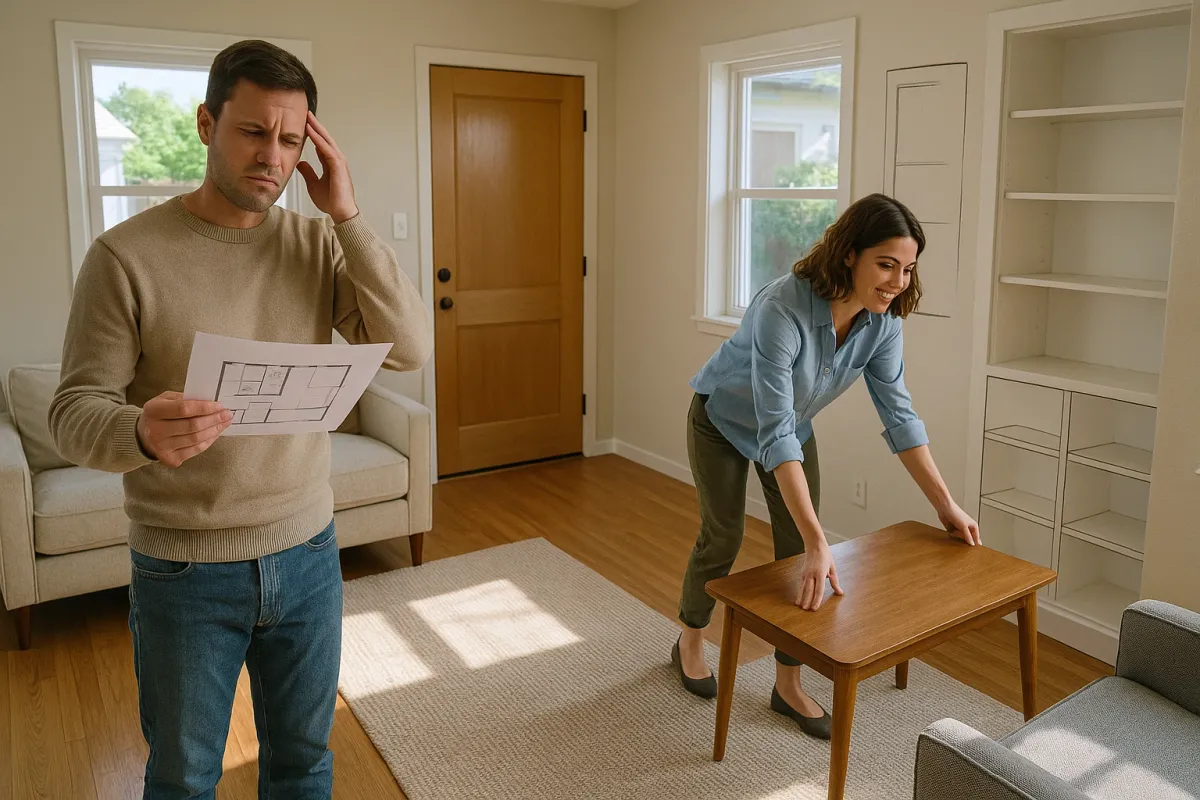
- Sketch a quick floor plan (it doesn’t have to be perfect).
Include doors, windows, radiators, columns, and stairs. Free apps like Magicplan or RoomScan can help, or you can do a simple graph-paper sketch.
- Identify the main problems in plain language.
Use simple labels:
- “Kitchen has no prep space.”
- “Front door opens directly into sofa.”
- “Bedroom has no place for a dresser.”
- “Can’t walk from kitchen to dining without detour.”
Group issues into three buckets:
- Flow problems: Tight walkways, blocked doors, confusing paths. - Function problems: No landing zone at entry, nowhere to eat, no place to work. - Light/feel problems: Dark corners, no focal point, rooms feel cramped.
Once you can say “My problem is flow” (or function, or light), you avoid random changes and design with a purpose.
Step 2: Fix Flow First With “Invisible” Renovations
Most awkward rooms feel bad because of flow—how you move through them. You don’t always need to move walls; you can often fix flow with smarter layout and small adjustments.
- Establish one clear main pathway.
Walk from door to door. That path should be:
- 30–36 inches wide (minimum)
- Not zigzagging around furniture
- Not blocked by doors that swing into it
Rearrange furniture so there’s one obvious way through.
- Relocate the biggest “obstacle” item.
Often it’s a sofa, dining table, or bed. Ask: “If this one thing moved, would the room suddenly make sense?” Try that first before anything else.
- Standardize door swing directions where possible.
If a door swings into a tight hallway or blocks a cabinet, consider:
- Reversing the swing direction
- Changing to a pocket door (bigger project but powerful)
- Switching to double doors that open away from the main path
This is a modest carpentry job that can dramatically improve daily use.
- Use rugs and lighting to “draw” paths.
Runners or area rugs can visually guide movement, just like in well‑designed hotels and restaurants. Pair them with clear ceiling or wall lighting so paths feel intentional, not improvised.
- Test your changes with a “tray test.”
Pretend you’re carrying a full tray of drinks from kitchen to sofa. Walk the path:
- Did you have to twist sideways?
- Did you bump into anything?
- Did any door get in the way?
If that route feels calm and direct, your flow is on the right track.
Step 3: Create Functional “Zones” Instead of Random Furniture Piles
A lot of the viral weird-room photos blow up online because the space has no logic: dining chairs blocking built‑ins, desks halfway into hallways, TVs with nowhere logical to sit. Fix that by turning open areas into clear “zones.”
- Decide what the room actually needs to do—no more, no less.
For example, a living room might need to:
- Seat 4–6 people comfortably
- Provide a place to watch TV
- Offer one reading or work spot
Skip the treadmill, craft table, and overflow storage if they don’t truly belong.
- Assign each function a zone.
A zone is simply a specific spot with a job. For a living room:
- TV/sofa zone
- Reading chair by window
- Entry landing zone near the door
If your room has more than 3–4 functions, it will almost always feel chaotic.
- Use physical cues to separate zones.
You don’t need walls. Use:
- Rugs (one per main zone)
- Furniture backs (like a sofa separating living room from dining)
- Low bookcases or console tables
- Changes in lighting style (pendant over dining, lamps in seating)
- Give every zone a clear “anchor.”
- A focal point (TV, fireplace, window, artwork)
- A main piece of furniture (sofa, table, bed)
- Supporting pieces that point at that anchor (chairs, lamps, side tables)
- Remove anything that doesn’t belong to a zone.
People share confusing room photos online when nothing makes sense visually. Fix that by giving each zone:
If an item doesn’t clearly support one of your defined functions, relocate it. This single discipline keeps rooms from turning into the next internet meme.
Step 4: Use Smart, DIY-Friendly Changes Instead of Gut Renovations
Not every layout problem needs demolition. Some of the most shared “how did this get built?” photos could be fixed with simple, code‑compliant improvements.
- Tame awkward corners with built‑ins or custom storage.
Weird nooks, shallow alcoves, and random columns can become:
- Shallow bookcases
- Built‑in desks or vanities
- Bench seating with storage
Use off‑the‑shelf cabinets trimmed with filler pieces for a semi‑custom look.
- Reclaim wasted space around doors and windows.
Add:
- Shallow shelving around doorways
- Window benches under low windows
- Over‑door storage in closets or pantries
This turns “dead” wall into useful space, so your main area can stay open.
- Adjust heights and proportions to feel more natural.
Some rooms feel “off” because of scale, not layout:
- Hang curtain rods closer to the ceiling, not just above the window
- Size rugs so front legs of furniture sit on them
- Lower overly high light fixtures to a comfortable level (e.g., 30–36" above a dining table)
- Use paint and materials to visually correct odd shapes.
- Paint low ceilings and top part of walls the same light color to make them feel taller.
- Paint off‑center architectural features (like a fireplace) and the wall around them the same color to downplay misalignment.
- Use one continuous flooring type across small rooms to unify them.
- Upgrade lighting in three layers.
- Ambient: ceiling fixtures or well‑placed recessed lights
- Task: under‑cabinet lights, reading lamps, desk lamps
- Accent: wall lights, picture lights, or LED strips in shelves
Poor lighting exaggerates weirdness. Aim for:
A balanced lighting plan can make even an imperfect layout feel intentional.
Step 5: Plan Structural Changes Safely (When You Really Need Them)
Sometimes, the layout problem is the wall—like a bathroom opening directly into the kitchen or a bedroom you can only reach through another bedroom. These are the “how is this legal?” spaces that go viral for a reason. If you’re going to make structural changes, do it right.
- Start with building codes and common sense.
Research local rules around:
- Bedroom egress (windows, door access)
- Stair width and handrails
- Minimum hallway widths
- Required clearances in kitchens and bathrooms
Ignoring code can tank resale value and introduce safety risks.
- Identify which walls might be load‑bearing.
As a DIYer, assume a wall might be structural if:
- It runs perpendicular to floor joists
- It lines up with beams or walls on floors above/below
- It’s near the center of the house
Never remove or heavily alter a wall without a structural assessment from a qualified pro.
- Use professionals where it matters.
Bring in an engineer or experienced contractor for:
- Removing or shortening walls
- Widening doorways in suspected load‑bearing walls
- Moving stairs or major plumbing lines
You can still demo non‑structural finishes, patch drywall, and handle painting yourself to cut costs.
- Consider “partial” structural fixes.
You don’t always need a full open-floor plan. Strong, layout‑saving changes include:
- Widening a doorway to a cased opening
- Adding an interior window between two dark spaces
- Removing just the upper half of a wall to create a pass‑through
These changes improve flow and sightlines while keeping structure intact.
- Phase big changes over time with a clear plan.
Even if the end goal is major, break it into doable pieces:
- Season 1: Rework furniture, zones, and lighting
- Season 2: Add built‑ins and storage to fix function
- Season 3: Tackle a single structural change with pro help
This staging keeps your home usable and your budget under control.
Conclusion
The internet loves to laugh at “Wait… what?” rooms, but when you’re living in one, it’s not a joke—it’s daily frustration. The good news: you rarely need a full teardown to fix an awkward layout. By diagnosing the real problem, improving flow, defining functional zones, using smart DIY upgrades, and planning structural work carefully, you can turn a confusing space into a home that simply works.
If you’re staring at your own “this could go viral for the wrong reasons” room, start with Step 1 today. Take photos, sketch the layout, and name the problems. From there, every change you make will be a move toward a Fix Ready home—practical, livable, and finally free of those “Wait… what?” moments.
Key Takeaway
The most important thing to remember from this article is that following these steps can lead to great results.