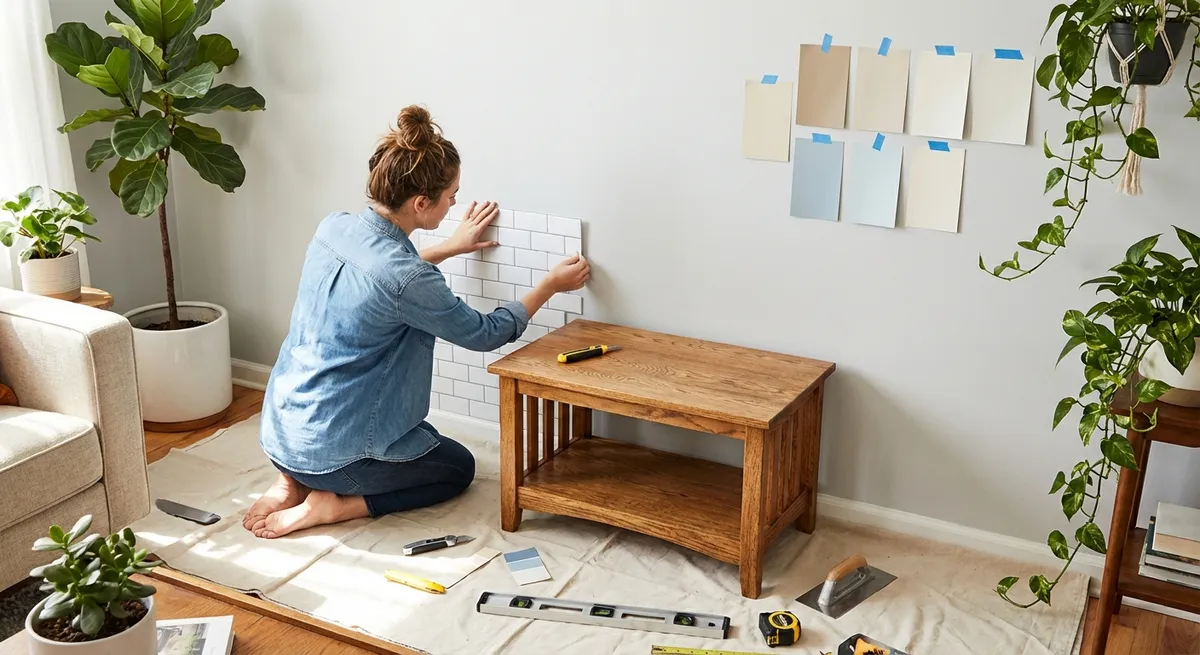
DIY isn’t about having a perfect workshop or pro-level skills—it’s about making your place work better for you with the tools and time you actually have. This guide walks you through five practical, step-by-step projects that deliver real results: better lighting, more storage, safer walls, and a fresher look. Each project is designed to be achievable for most DIYers with basic tools and a free afternoon.
1. Install a Dimmable Light Switch for Better Room Control
Upgrading a standard light switch to a dimmer is one of the simplest ways to change how a room feels—brighter for tasks, softer for evenings, and more energy-efficient overall.
What you’ll need
- New dimmer switch (compatible with your bulbs, especially if using LEDs)
- Screwdriver (typically flathead and Phillips)
- Voltage tester
- Wire stripper/cutter
- Electrical tape
- Flashlight (for working with power off)
Step-by-step
Turn off the power at the breaker panel
- Find the correct circuit breaker for the room and switch it OFF. - Don’t trust the wall switch alone—always cut power at the breaker.
Confirm the power is off
- Remove the switch plate with a screwdriver. - Use a voltage tester on the wires and terminals to ensure no power is present. - Only proceed when the tester shows zero voltage.
Remove the old switch
- Unscrew the switch from the electrical box and gently pull it out. - Take a photo of the wiring before disconnecting—this makes reinstallation easier. - Loosen terminal screws and detach the wires (hot, load, ground, and possibly neutral).
Wire the new dimmer switch
- Match wires from the dimmer to the house wires as shown in the dimmer’s instructions. - Typically: black to hot, another black to load, green or bare to ground, and white to neutral if your dimmer uses one. - Use wire nuts and electrical tape to secure each connection.
Install and test the dimmer
- Carefully fold wires back into the box, avoiding sharp bends. - Screw the dimmer to the box and attach the faceplate. - Turn the breaker back on and test the dimmer through its full range—if lights flicker, confirm the dimmer is LED-compatible and tighten connections.
2. Add a Wall-Mounted Entry Organizer (Hooks + Shelf Combo)
A simple wall organizer near your entry can control clutter fast—keys, coats, bags, and mail get a designated spot instead of landing on every surface.
What you’ll need
- Wall-mounted coat rack or hooks
- Small wall shelf (or a hook/shelf combo unit)
- Level
- Tape measure
- Stud finder
- Pencil
- Drill and appropriate bits
- Wall anchors and screws (if no studs)
Step-by-step
Choose the right spot and height
- Stand in your entryway and imagine your daily drop-off: keys, bag, coat, mail. - Hooks usually work best at 65–70 inches from the floor for adults. - Leave enough space underneath for a shoe rack or bench if you plan to add one later.
Find studs or plan for anchors
- Use a stud finder to locate studs along the wall. - Mark stud locations lightly with a pencil. - If the ideal hook location has no stud, use wall anchors rated for the weight you’ll hang.
Mark mounting holes with a level
- Hold the organizer or shelf where you want it and use a level to ensure it’s straight. - Mark the screw hole positions through the mounting holes onto the wall. - Double-check measurements from the floor and any nearby trim so it looks centered and intentional.
Drill pilot holes and insert anchors (if needed)
- Drill small pilot holes at your marks—use a bit sized for your screws or anchors. - If not drilling into a stud, insert wall anchors flush with the wall. - Tap lightly with a hammer if needed, but don’t crush the drywall.
Mount securely and load test
- Hold the unit in place and drive screws into studs or anchors. - Once mounted, gently pull down and out on the organizer to test stability. - Hang one or two heavier items first to confirm it holds before loading it fully.
3. Refresh a Room with Caulk and Paint Touch-Ups
Small gaps and tired trim can make even a clean room feel worn. A few tubes of caulk and some careful paint touch-ups can tighten everything up visually.
What you’ll need
- Paintable latex caulk
- Caulk gun
- Utility knife or caulk removal tool
- Painter’s tape
- Damp sponge or rag
- Trim/leftover wall paint and brush or small roller
- Drop cloths
Step-by-step
Inspect trim, baseboards, and around windows/doors
- Look for cracks where trim meets the wall, gaps at corners, and separated joints. - Lightly press trim to see if it moves—address loose nails first if necessary. - Make a list of the worst areas to prioritize.
Remove old, failed caulk
- Use a utility knife or caulk removal tool to slice and scrape out cracked or peeling caulk. - Vacuum or brush away dust and debris so new caulk adheres properly. - Wipe surfaces with a damp cloth and let dry fully.
Tape off edges for cleaner lines
- Apply painter’s tape along the wall and trim edges where you’ll caulk. - This makes it easier to get a clean, narrow bead and avoid smearing onto visible surfaces. - Press tape firmly to prevent caulk or paint from bleeding underneath.
Apply and smooth the new caulk
- Cut the caulk tube nozzle at a small angle with a small opening—the smaller the bead, the more control you have. - Run a steady bead along gaps, keeping consistent pressure on the trigger. - Smooth the caulk with a damp finger or a caulk tool, wiping excess onto a rag. - Pull painter’s tape off while the caulk is still wet for the cleanest line.
Touch up paint for a finished look
- After caulk dries per the manufacturer’s instructions, use matching paint on trim and walls. - Feather paint slightly beyond the repair area so patches blend in. - Focus on high-visibility areas like door frames, corners, and around light switches for maximum impact.
4. Install Simple Pull-Out Storage in a Lower Cabinet
Pull-out storage solves the “crawl into the cabinet to reach the back” problem. It’s a practical upgrade for kitchens, bathrooms, or utility rooms.
What you’ll need
- Pre-made pull-out shelf kit or wire basket on slides
- Tape measure
- Screwdriver or drill/driver
- Level
- Pencil
- Optional: wood shims
Step-by-step
Measure the inside of your cabinet accurately
- Measure width, depth, and height inside the cabinet frame, not just the door opening. - Compare these numbers to the pull-out kit’s required space. - Ensure doors and hinges won’t interfere when the unit slides out.
Clear and prep the cabinet floor
- Empty the cabinet completely. - Vacuum or wipe the inside floor clean; remove any loose pieces or old shelf liners. - Check that the base is flat—if not, note where you’ll need shims.
Plan slide placement
- Most kits mount rails directly to the cabinet floor or, for frameless cabinets, to the sides. - Place the pull-out unit centered left-to-right with enough clearance from hinges and door edges. - Mark the screw hole locations for the rails or brackets with a pencil.
Attach rails and adjust for level
- Pre-drill small pilot holes if your kit recommends it to prevent splitting. - Secure each rail or bracket with the provided screws. - Use a level to confirm front-to-back and side-to-side alignment; use shims under brackets if the cabinet base is uneven.
Install the pull-out and test movement
- Slide the basket or shelf onto the rails according to the manufacturer’s directions. - Pull it in and out several times to ensure smooth travel and that it clears the cabinet frame. - Load heavier items on the bottom and test again—listen for rubbing or binding and adjust if necessary.
5. Mount a TV Safely and Hide the Cables Neatly
Wall-mounting a TV frees up space, reduces tip-over risk, and looks cleaner—especially when paired with simple cable management.
What you’ll need
- TV wall mount (rated for your TV size and weight, correct VESA pattern)
- Stud finder
- Level
- Tape measure
- Drill and bits
- Socket wrench or screwdriver (as required by the mount)
- Cable raceway or cord cover kit
- Pencil
Step-by-step
Pick the right height and location
- For most setups, the center of the TV should be roughly at seated eye level (around 42–48 inches from the floor, depending on your seating). - Avoid areas with heavy glare from windows if possible. - Confirm an outlet is nearby or plan for a cord cover to reach one.
Locate studs and mark bracket position
- Use a stud finder and verify studs with a small test hole if needed. - Plan to attach the wall mount bracket to at least two studs for strength. - Hold the mount on the wall at your chosen height, level it, and mark the mounting holes on each stud.
Drill pilot holes and secure the wall plate
- Drill pilot holes at your marks using the bit size recommended by the mount instructions. - Position the mount over the holes, confirm it’s level, and drive lag bolts into the studs. - Don’t fully tighten until all bolts are started, then snug them down firmly.
Attach mounting arms to the TV
- Lay the TV face-down on a soft surface like a blanket or foam. - Align the bracket arms with the VESA holes on the back of the TV. - Use the correct length screws (often included); don’t overtighten into the TV casing. - Double-check that both arms are securely attached and even.
Hang the TV and manage the cables
- With a second person, lift the TV and hook the brackets onto the wall plate as the mount design requires. - Confirm any safety clips or locks are engaged. - Route power and HDMI cables through a surface-mount cable raceway that runs from the TV to the outlet or media console; cut it to length and stick or screw it to the wall. - Snap on the raceway cover for a cleaner, concealed look.
Conclusion
You don’t need a massive renovation budget to make your home feel more functional and put-together. Projects like installing dimmers, tightening up trim, organizing the entry, upgrading storage, and safely mounting a TV deliver daily benefits with manageable effort. Start with one project that solves a real annoyance in your space, gather the right tools, and work methodically—your confidence and skill will grow with each fix you complete.
Sources
- [U.S. Consumer Product Safety Commission – Electrical Outlet and Switch Safety](https://www.cpsc.gov/Safety-Education/Safety-Education-Centers/Electrical-Safety-Center) - Guidance on safe practices when working with home electrical components
- [Energy Star – Lighting Choices to Save You Money](https://www.energystar.gov/products/lighting_ventilating_fans/light_bulbs) - Information on efficient lighting and dimmer compatibility with modern bulbs
- [Family Handyman – How to Install a Dimmer Switch](https://www.familyhandyman.com/project/how-to-install-a-dimmer-switch/) - Step-by-step reference for dimmer installation with diagrams
- [This Old House – How to Caulk Like a Pro](https://www.thisoldhouse.com/painting/21015112/how-to-caulk) - Detailed techniques for effective caulking and achieving clean lines
- [U.S. Fire Administration – TV and Furniture Tip-over Safety](https://www.usfa.fema.gov/prevention/outreach/tv_furniture_tip_over.html) - Safety guidance related to securing TVs and furniture to prevent tip-overs
Key Takeaway
The most important thing to remember from this article is that this information can change how you think about DIY Projects.