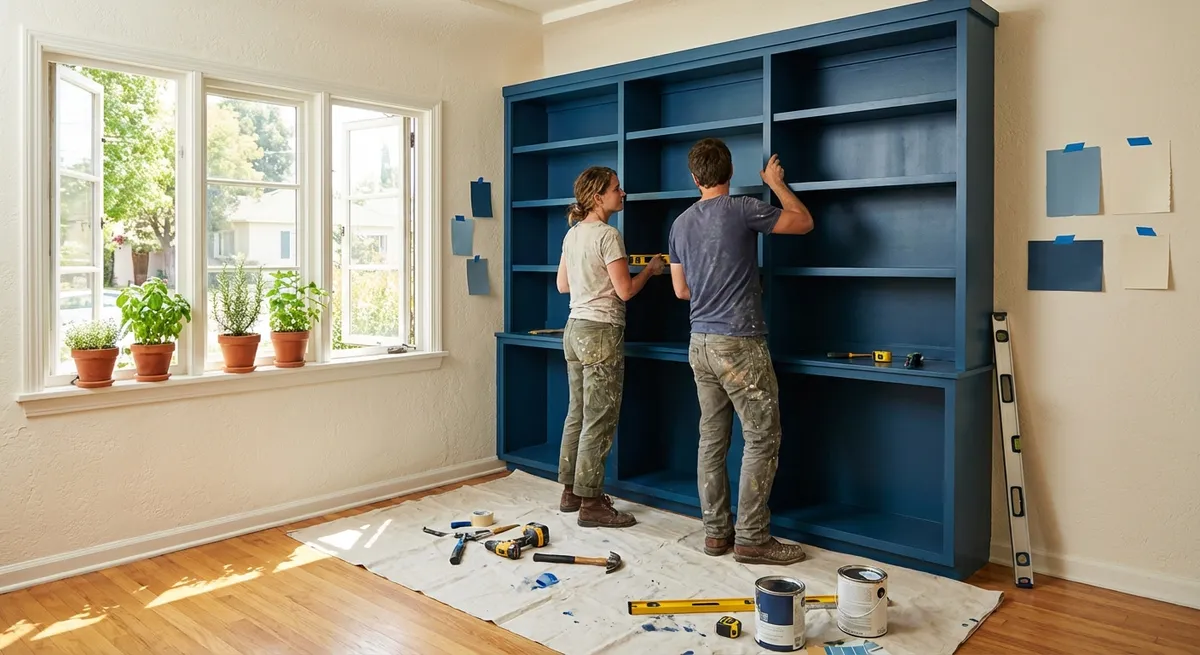
DIY projects don’t have to be massive renovations to make a real difference. With the right plan and a few tools, you can tackle practical upgrades that improve comfort, function, and even energy efficiency. This guide walks you through five step-by-step projects that are beginner-friendly, budget-conscious, and useful in almost any home.
Each project is broken down clearly so you can follow along, avoid common mistakes, and end up with a result you’re proud of.
Project 1: Seal Drafty Windows and Doors for Better Comfort
Small air leaks around windows and doors can make your home feel colder in winter, hotter in summer, and cost you money on energy bills. Sealing drafts is one of the simplest, highest-impact DIY projects you can do.
Step 1: Find the Drafts
Turn off fans and HVAC so air is still. On a windy day, slowly move your hand around window and door frames, especially corners and the area where the trim meets the wall. Feel for cool or warm air movement. You can also use a lit incense stick or a very small strip of toilet paper—watch where the smoke or paper moves. Mark leaky spots with painter’s tape or a pencil so you know where to come back and seal.
Step 2: Choose the Right Sealing Materials
For gaps around stationary parts (like window frames and door frames), use paintable latex caulk or silicone caulk meant for windows and doors. For the gap at the bottom of doors, use a door sweep or adjustable threshold. For older windows with loose sashes, consider adhesive foam weatherstripping around moving parts. Read the product labels—indoor vs outdoor, paintable vs non-paintable—so you buy the right type for each location.
Step 3: Prep the Surfaces
Use a utility knife or scraper to remove cracked or peeling old caulk. Brush away dust and debris with a dry paintbrush or vacuum with a brush attachment. Wipe the area with a slightly damp cloth and let it dry completely. Good adhesion depends on clean, dry surfaces; rushing this step can cause the new caulk or weatherstripping to fail early.
Step 4: Apply Caulk or Weatherstripping
Cut the caulk tube tip at a 45-degree angle, making a small opening. Use a caulk gun and run a steady, continuous bead along the gap, aiming to fill the gap without creating a huge mound. Immediately smooth it with a damp finger or a caulk-smoothing tool for a neat finish. For weatherstripping, cut pieces to length with scissors, peel backing, and press firmly into place, checking that doors and windows still close fully without forcing them.
Step 5: Test Your Work
Let caulk cure according to the package (often 24 hours) before painting or exposing to heavy moisture. Once cured, repeat your draft test with your hand or incense stick. If you still feel air, you may need a second, thinner bead of caulk or slightly thicker weatherstripping. Keep leftover materials labeled and stored in a cool, dry place for quick touch-ups in the future.
Project 2: Install a Simple Backsplash Without Tile Experience
A backsplash protects your wall from splashes and stains and can dramatically change the look of a kitchen or bathroom. You don’t need to be a tiling pro—there are DIY-friendly options that stick directly to the wall.
Step 1: Choose Your Backsplash Type
Decide how permanent you want this project to be. Peel-and-stick tiles (vinyl, metal, or lightweight composite) are beginner-friendly and easy to cut. Traditional tile with mastic or thin-set mortar is more durable but more complex. For renters, removable panels or peel-and-stick are usually the best choice. Measure your backsplash area (length × height) and buy 10–15% extra material to account for cutting and mistakes.
Step 2: Prepare the Wall
Turn off power to any outlets or switches in the backsplash area at the breaker. Remove outlet and switch covers. Clean the wall thoroughly with a degreaser or a mix of warm water and mild dish soap; rinse and let dry fully. Lightly sand glossy paint with fine-grit sandpaper so adhesive or tile mastic can grip better. Wipe away dust with a damp cloth and let dry.
Step 3: Plan Your Layout
Use a level and pencil to draw a horizontal reference line about one tile height above the countertop. Dry-fit a row of tiles or panels along the counter to see where full tiles will land and where you’ll need cuts. Try to avoid tiny slivers of tile at the ends—shift your layout slightly if needed so both sides look balanced. Mark centers, edges, and outlet locations so nothing surprises you mid-install.
Step 4: Install the Backsplash
For peel-and-stick, start at the center and work outward. Peel back a portion of the backing, align carefully with your level line and counter edge, and press firmly from the center out to avoid bubbles. For traditional tile, use a notched trowel to spread adhesive in small sections, then press tiles into place using tile spacers. Check often with a level to keep lines straight. Cut edge or outlet pieces with a utility knife (for vinyl), tin snips (for thin metal), or a tile cutter (for ceramic/glass).
Step 5: Finish Edges and Reinstall Covers
Once all tiles or panels are in place, add any edge trim recommended by the manufacturer for a clean look. For traditional tile, apply grout after the adhesive cures, then wipe off excess with a damp sponge and buff when dry. Reinstall outlet and switch covers with slightly longer screws if needed to reach through the new thickness. Turn power back on and wipe the backsplash gently with a soft cloth to remove fingerprints or dust.
Project 3: Swap an Old Thermostat for a Programmable or Smart Model
Upgrading your thermostat helps you control heating and cooling more precisely, saving energy and improving comfort. If you can safely handle basic electrical tasks and follow instructions closely, this is a manageable DIY.
Step 1: Confirm Compatibility and Turn Off Power
Before buying a new thermostat, check your HVAC system type (single-stage, multi-stage, heat pump, etc.) and confirm compatibility on the manufacturer’s website. Once you have the right model, shut off power to your heating and cooling system at the breaker panel—not just at the thermostat. This reduces the risk of shorting control wires or getting a shock.
Step 2: Remove the Old Thermostat and Label Wires
Take off the thermostat cover to expose the wiring and mounting plate. Take a clear photo of the wiring connections. Use the included wire labels from your new thermostat kit or small pieces of masking tape to label each wire according to its terminal (e.g., R, W, Y, G, C). Loosen the terminal screws and carefully pull the wires through the old base. Unscrew the mounting plate from the wall.
Step 3: Mount the New Base
Hold the new thermostat’s mounting plate against the wall, feeding the labeled wires through the center opening. Use a level to make sure it’s straight. Mark screw hole locations with a pencil, then drill pilot holes if needed. Install wall anchors if the screws don’t hit a stud. Secure the base with the screws provided, ensuring it’s snug but not over-tightened.
Step 4: Connect the Wires
Match each labeled wire to the corresponding terminal on the new base, following the new thermostat’s wiring diagram—not just the old setup. Insert each wire fully and tighten the terminal screws. Tuck any extra wire length gently into the wall cavity so the thermostat body can sit flush. Clip or slide the thermostat face onto the mounted base until it clicks.
Step 5: Restore Power and Program
Turn the breaker back on and confirm that the thermostat powers up. Follow the on-screen prompts or app instructions to set your language, Wi‑Fi connection (for smart models), and schedule. Set reasonable heating and cooling setpoints (for example, slightly lower at night in winter and slightly higher when you’re away in summer). Test heating and cooling modes briefly to confirm the system responds correctly to temperature changes.
Project 4: Build a Pegboard Wall for Tool and Supply Organization
A pegboard wall turns a messy garage, laundry room, or craft area into a flexible, easy-to-reach storage system. It’s a great project if you want order without building custom cabinets.
Step 1: Plan the Layout and Load
Choose the wall area you want to use and think about what will hang there: light hand tools, small bins, or heavier items like drills and garden tools. Measure the width and height and sketch a rough layout showing where you want hooks, shelves, and bins. This helps you decide how many pegboard panels and accessories you need, and where studs might help support heavier loads.
Step 2: Find Studs and Create a Furring Strip Frame
Use a stud finder to locate wall studs and mark them vertically with a pencil. Cut 1x2 or similar dimension lumber into horizontal strips for the top and bottom of your pegboard area, and potentially a middle strip for extra support. Screw these strips into the studs; this creates a gap behind the pegboard so hooks can insert properly. Make sure the strips are level and firmly attached.
Step 3: Cut and Position the Pegboard
Measure the space within your furring strips and cut the pegboard panels to fit using a circular saw or handsaw. Wear eye protection and support the board fully while cutting. Dry-fit the panels on the wall to confirm alignment. Adjust your frame if needed so the pegboard edges land on wood for solid fastening.
Step 4: Secure the Pegboard to the Wall
Hold the pegboard in place (a second person helps here) and drive wood screws through pre-drilled holes or directly through the pegboard into the furring strips. Space screws every 12–16 inches around the perimeter and on any middle supports. Countersink lightly so screw heads sit flush and don’t interfere with hooks.
Step 5: Arrange Hooks and Accessories
Start by hanging the tools or items you use most often at eye level and within easy reach. Use a mix of straight hooks, angled hooks, shelves, and small baskets. Group items by category—hand tools together, garden tools together, craft supplies together. Don’t overfill; leave some open space so you can adjust as your needs change. Step back and test access: can you grab what you need without moving three other things first?
Project 5: Refresh Interior Doors with New Hardware and Alignment
Old doors that stick, rattle, or have dated hardware can make a home feel worn out. Adjusting alignment and updating handles and hinges is a relatively quick DIY that improves both function and appearance.
Step 1: Inspect the Door’s Problems
Open and close the door slowly, paying attention to where it rubs, sticks, or doesn’t latch properly. Look at the gap around the door—ideally it should be fairly even along the sides and top. Check if hinges are loose, bent, or painted over. Decide if you’re only replacing hardware or also need to plane a rubbing edge or adjust the strike plate.
Step 2: Remove Old Hardware
Prop the door open or have someone hold it. Use a screwdriver to remove hinge pins (tapping gently with a hammer and nail set if they’re stuck). Carefully take the door off the hinges and set it on a pair of padded sawhorses or a blanket. Remove the old handle, latch, and strike plate by unscrewing them. Keep small parts in a container in case you need to reference them.
Step 3: Address Sticking or Rubbing
Close the door gently in the frame (without hardware) to see where it contacts the jamb. Lightly mark high spots with a pencil. Use a hand plane, sanding block, or power sander to remove a little material at a time from the rubbing areas, checking fit often. Don’t over-plane; small adjustments usually fix the issue. If the door rubs because hinges are loose, tighten hinge screws or use slightly longer screws to bite into the framing.
Step 4: Install New Hinges and Handle Set
Align the new hinges with the existing mortises (recesses) in the door and jamb. If the new hinge plates are slightly different size, you may need to chisel the mortise gently to fit. Screw hinges to the door first, then rehang the door on the jamb and insert hinge pins. Install the new latch into the door edge, then the handle set, following the manufacturer’s template. Make sure the handle operates smoothly and the latch retracts and extends fully.
Step 5: Adjust the Strike Plate and Final Fit
Close the door and see if the latch lines up with the strike plate opening. If it doesn’t, you may need to move the strike plate slightly up, down, in, or out. Loosen the screws, adjust position, and retighten. For minor misalignment, filing the opening a bit wider can help. Once the door closes cleanly and latches with light pressure, test multiple times. Finish by touching up any exposed wood or scuffs with matching paint or stain.
Conclusion
These five projects are designed to give you visible, practical improvements without requiring advanced skills or specialty tools. By sealing drafts, upgrading your backsplash, installing a programmable thermostat, organizing with pegboard, and tuning up your doors, you’ll make your home more comfortable, efficient, and enjoyable to live in.
Start with the project that solves the most annoying issue in your home right now. As you work through each step methodically—measuring carefully, prepping surfaces, and testing as you go—you’ll build both your DIY confidence and a home that feels more “fixed and ready” every day.
Sources
- U.S. Department of Energy – Air Sealing Your Home - Guidance on locating and sealing air leaks for better efficiency and comfort
- Energy Star – Programmable Thermostats - Overview of benefits, energy savings, and best practices for thermostat use
- Family Handyman – How to Install a Kitchen Backsplash - Practical tips and visuals for DIY backsplash installation
- This Old House – How to Hang Pegboard - Step-by-step instructions and advice on building a pegboard storage wall
- Lowe’s – How to Fix a Sticking Door - Detailed guidance on diagnosing and correcting interior door alignment issues
Key Takeaway
The most important thing to remember from this article is that this information can change how you think about DIY Projects.