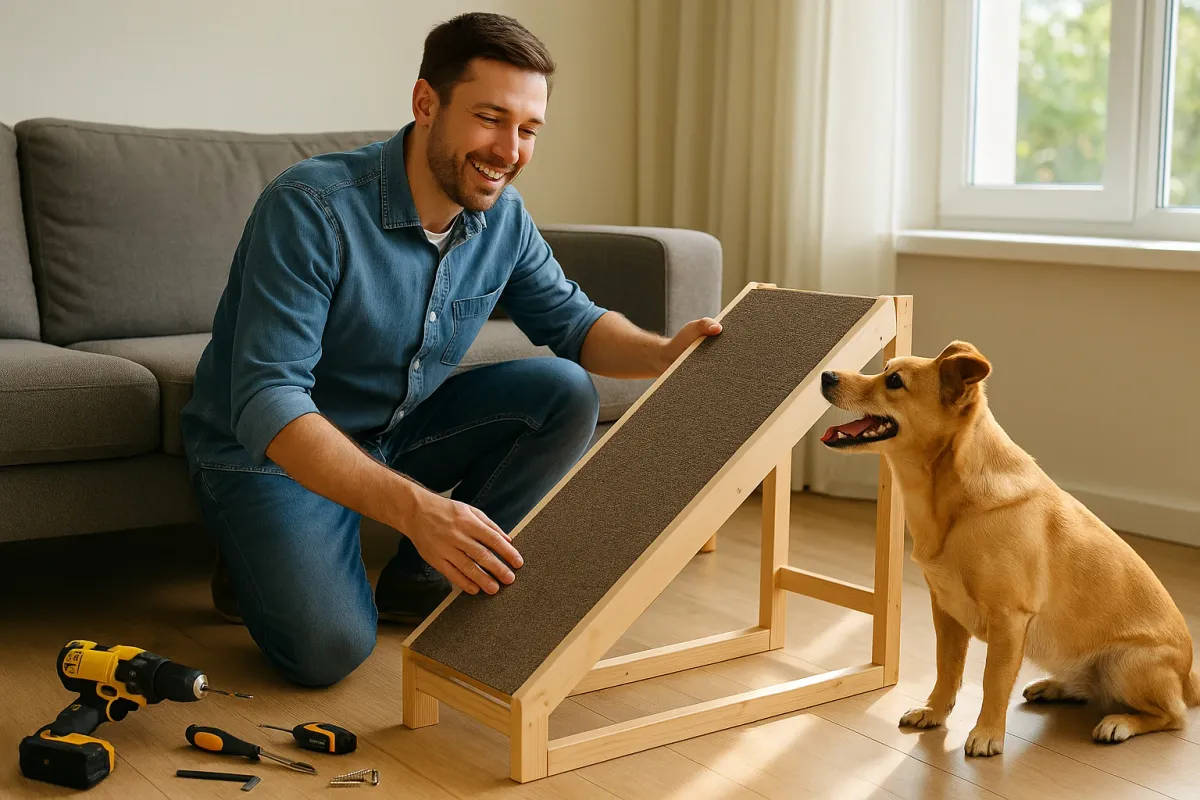
Dog owners all over social media are showing off over-the-top projects in the viral “I Did It For My Dog” challenge—custom dog rooms, tiny back-yard playgrounds, and luxury beds that look nicer than most human furniture. Instead of just scrolling past those posts, you can actually build your own version at home with basic tools and a weekend of effort.
Whether you’re in a small apartment or a house with a yard, these DIY projects are designed to be realistic, budget-conscious, and upgradeable over time. Use the online trend as inspiration, then customize the details to fit your space, your dog’s size, and your skill level.
Below are five step‑by‑step projects to get you started.
Project 1: Build a Simple Elevated Dog Bed That Actually Lasts
An elevated bed keeps your dog off cold floors, improves airflow in summer, and is much easier to clean than a pile of blankets. Think of it as a practical version of the fancy beds you’ve seen in the “I Did It For My Dog” posts.
Materials:
- 4 pieces of 2x2 lumber for the frame (cut to your dog’s length and width + 4–6")
- 4 legs (2x2, 6"–12" high depending on dog size)
- Outdoor fabric or mesh (cordura, textilene, or similar)
- Wood screws
- Corner brackets (optional but helpful)
- Sandpaper, drill/driver, saw, measuring tape, staple gun or heavy-duty upholstery tacks
Steps:
- Measure your dog and plan the size.
Have your dog lay down naturally and measure from nose to tail and across the widest part of their body. Add 4–6" to each dimension for comfort. This is the size of the fabric and interior frame.
- Cut and sand the wood.
Cut two long pieces and two short pieces for the perimeter frame, then four leg pieces. Sand all edges and corners so there are no splinters. Pay extra attention where paws or faces might rub.
- Assemble the frame and legs.
Form a rectangle with the frame pieces and screw them together through the corners. Use corner brackets inside the corners if you want extra strength. Attach one leg at each corner from the inside of the frame, driving screws through the frame into the leg.
- Attach the fabric sleeping surface.
Lay your fabric over the frame with at least 2–3" extra on each side. Flip the frame upside down. Pull the fabric tight and staple it along one long side first, then the opposite side, then the short ends. Work from the center out toward the corners to keep tension even.
- Test, adjust, and reinforce.
Press down hard in the middle to simulate your dog’s weight. If there’s too much sag, pull the fabric tighter and re‑staple. Add extra staples along each side. Once it feels solid, let your dog try it out. If they’re a chewer, you can screw thin wood strips over the fabric edges to hide the staples.
Project 2: Create a Wall‑Mounted Dog Gear Station by the Door
Those “dog room” photos going viral usually have one thing in common: all the leashes, harnesses, and treats are perfectly organized. You can steal that idea in a small space with a simple wall‑mounted station near your main exit.
Materials:
- 1 wood board (around 24–36" long, 6–8" tall)
- 3–5 sturdy hooks (for leashes, harnesses, and bags)
- 1–2 small baskets or bins (for wipes, booties, treats)
- Paint or stain (optional)
- Screws, anchors, drill, level, sandpaper
Steps:
- Choose the location and size.
Stand where you usually clip the leash on. Measure a comfortable arm’s reach to the wall—that’s a good mounting spot. Measure how much horizontal space you have and cut or choose a board to fit that area.
- Prep and finish the board.
Sand the board so it’s smooth, then paint or stain to match your trim or entry decor. Let it dry fully. This is a good time to test color on the back first if you’re unsure.
- Lay out hooks and baskets before drilling.
On the floor or a table, arrange your hooks and baskets on the board. Plan spots for daily items (main leash, harness) near the center and lower, with backup gear or seasonal items toward the ends or top. Mark screw positions with a pencil.
- Attach the hardware to the board.
Screw the hooks and baskets to the board. Don’t overtighten—if the screws start to strip, back them out and use a slightly larger screw.
- Mount securely to the wall.
Use a level to mark a straight line on the wall at the height you want. If you can hit wall studs, screw directly into them. If not, use appropriate wall anchors for the board’s weight plus the gear. Hang the board, tug on it firmly, then load it up and adjust if it tilts or flexes.
Project 3: Build a Compact Indoor “Dog Nook” Under a Table or Stair
Not everyone has space for a full dog room like the ones trending online, but most homes have dead space under a console table, desk, or stairs. Turning that area into a cozy, built‑in‑feeling nook gives your dog a “den” without a remodel.
Materials:
- 1–2 sheets of foam board, thin plywood, or beadboard (for side/back walls, if needed)
- Peel‑and‑stick wallpaper or paint (optional)
- Soft bed or foam cushion cut to size
- LED puck light or motion‑sensor light (battery operated)
- Double‑sided mounting tape or small screws
- Measuring tape, utility knife, level
Steps:
- Pick the space and take measurements.
Look for a quiet, low‑traffic spot: under a console table, next to a couch, or under stairs. Measure width, depth, and height. Confirm your dog can stand up, turn around, and lie down comfortably in that space.
- Decide how “built‑in” you want it.
If the area already has walls on two or three sides, you may just need a backdrop and a bed. If it’s wide open, plan on adding side panels or a partial “front” to make it feel den‑like while still open enough for air and visibility.
- Cut and finish your panels.
Cut foam board or thin plywood to match the interior walls you want to cover. Apply peel‑and‑stick wallpaper, paint, or even adhesive vinyl flooring to the front-facing side to create a clean, finished look. Let any paint cure fully before installing (fumes and pets don’t mix).
- Install the panels and lighting.
Attach panels using double‑sided mounting tape or small screws (into furniture, not structural walls, if you’re renting and want this removable). Install a battery‑powered puck light or motion‑sensor strip on the “ceiling” of the nook so you can see to clean and your dog isn’t in a dark hole.
- Add bedding and test for comfort.
Place a bed or cut foam to fit the base. Add a washable cover so you can toss it in the laundry weekly. Invite your dog in with treats and watch how they move—if they bump their head or hesitate to turn, adjust the space, move the opening, or remove panels until it feels welcoming, not cramped.
Project 4: DIY Indoor Snuffle Mat for Mental Exercise
The dog challenge online shows a lot of elaborate dog playgrounds, but many dogs get just as much joy from a “job” that uses their nose. A snuffle mat is a low‑profile puzzle that hides treats in fabric strips for scent work, perfect for rainy days or small apartments.
Materials:
- Rubber sink mat or rubber doormat with holes
- Fleece fabric (2–3 colors, about 1–1.5 yards total)
- Scissors or rotary cutter
- Measuring tape
Steps:
- Prepare the base.
Choose a mat with evenly spaced holes. Wash and fully dry it before starting, especially if it has any strong factory odor.
- Cut fleece strips.
Cut fleece into strips about 1"–1.5" wide and 8"–10" long. They don’t need to be perfect. Mixing colors makes it easier to see where you’ve already tied.
- Tie fleece into the base.
Thread each strip through two adjacent holes (like a loop), bring the ends up, and tie a double knot on top. Work row by row. Aim for dense coverage so treats can really hide; sparse mats are too easy.
- Fluff and check for loose knots.
Once the mat is full, fluff the fleece so it stands upright. Tug randomly on strips to confirm knots are tight. If any slip, retie firmly or double‑knot them.
- Introduce the mat safely.
Start by placing a few large treats or kibble pieces on top so your dog understands the game. Gradually push treats deeper into the mat. Supervise at first—if your dog tries to chew the fleece instead of snuffling, remove the mat and reintroduce with fewer treats and more guidance.
Project 5: Build a Simple Backyard “Enrichment Corner” Without a Full Dog Park
The viral dog playgrounds making the rounds online are impressive, but you don’t need a full‑scale build to make your yard more interesting. A compact enrichment corner combines textures, balance, and exploration in a small footprint.
Materials:
- 1 low balance beam (a 2x4 on edge, 6–8' long)
- 2 concrete blocks or scrap wood for supports
- 2–3 shallow storage bins or trays (for different surfaces)
- Fill materials: pea gravel, rubber mulch, sand, or smooth river stones
- 1 shade sail or umbrella (optional)
- Exterior screws, drill, sandpaper
Steps:
- Choose a safe, visible corner.
Pick a spot you can see from indoors so you can supervise easily. Avoid mud-prone areas and check local rules if you’re renting. Clear away any sharp debris or toxic plants.
- Build the low balance beam.
Sand the 2x4 thoroughly, especially the edges. Place a concrete block or solid scrap wood under each end to raise it a few inches off the ground. Screw the board to the supports from the top so it can’t roll. Keep it very low at first—this is not an agility competition, just gentle balance practice.
- Create texture trays.
Place the shallow bins side by side, then fill each with a different safe material: one with pea gravel, one with sand, one with rubber mulch or smooth stones. Keep depth just enough to fully cover the bottom—too deep and it will be messy and harder for some dogs to walk in.
- Add shade and comfort.
If the area gets full sun, install a shade sail, use a portable umbrella, or position the corner near existing shade. You can also place a simple outdoor dog bed or mat nearby so your dog can rest and observe.
- Introduce slowly and keep it positive.
Walk with your dog through each tray, scattering a few treats in the materials to encourage exploration. Lure them gently onto the beam with treats in your hand, allowing them to hop off anytime. Short, frequent sessions are better than one long forced training. Watch for signs of stress; if they’re hesitant, lower the beam or remove one surface and rebuild confidence.
Conclusion
The internet’s “I Did It For My Dog” challenge proves one thing: people are willing to put in serious effort for their pets. You don’t need a huge budget or pro‑level carpentry skills to join in. Start with one project that fits your space—a gear station by the door, a snuffle mat, or a small indoor nook—and build from there as your confidence grows.
Each of these DIY upgrades does more than look good in photos. They solve real problems: clutter by the door, bored dogs on rainy days, cold floors, and unused corners of your home and yard. Pick a weekend, gather your materials, and make something your dog will actually use every day. If you share your results online, tag it with the challenge and show that smart, simple builds can be just as impressive as the most over‑the‑top dog rooms.
Key Takeaway
The most important thing to remember from this article is that this information can change how you think about DIY Projects.