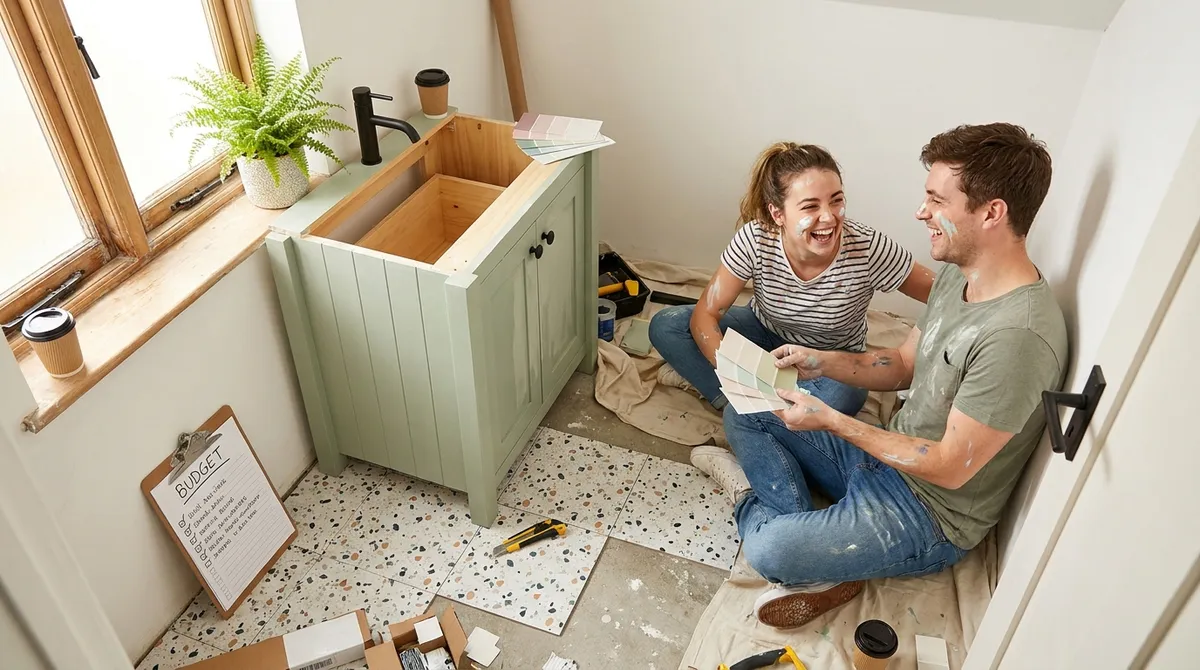
A full bathroom remodel can get expensive fast, but you don’t always need to tear everything down to make the space feel new. A smart “refresh” focuses on high-impact changes you can handle yourself, without moving walls or plumbing. This guide walks you through a practical, step‑by‑step approach that DIY‑minded homeowners can use to transform a tired bathroom into a clean, modern, and more functional space.
Step 1: Evaluate What Stays, What Goes, and What You Can Reuse
Before buying anything, take an honest look at your bathroom and decide what actually needs to change.
Start by listing major elements: vanity, sink, faucet, mirror, lighting, toilet, tub/shower, flooring, wall finishes, and storage. Note the condition of each: Is it damaged, dated, or just dirty? Many items that look “old” can be revived with deep cleaning, new hardware, or paint instead of full replacement. For example, a solid wood vanity might just need sanding and paint, while an acrylic tub with cracks may require replacement or a professional refinish.
Set a maximum budget and rank your priorities—maybe you hate the lighting and flooring but can live with the tub. Aim to keep plumbing locations where they are; moving drains or supply lines tends to be where costs explode. Take measurements (wall widths, vanity depth, ceiling height, shower dimensions) and photos of the space. These will help you compare product sizes, remember clearances around doors, and visualize changes as you shop.
Once you know what stays and what goes, you can plan a refresh that focuses your time and money where it will have the biggest impact.
Step 2: Refresh Surfaces: Walls, Caulk, and Grout
Fresh walls and clean lines instantly make a bathroom look newer, even if you don’t touch the fixtures.
Start with a deep clean: remove soap scum, mildew, and mineral deposits from tile, fixtures, and glass using appropriate cleaners. For mold or mildew on grout or caulk, use a cleaner rated for bathrooms and follow the label carefully—ensure good ventilation and protective gloves. This step shows you which areas are stained versus actually damaged.
Next, deal with failing caulk. Carefully cut and scrape out old caulk around the tub, shower, and sink using a caulk removal tool or utility knife. Clean the joint with rubbing alcohol and let it dry completely. Apply a new bead of bathroom‑grade, mold‑resistant silicone or siliconized acrylic caulk, smoothing it with a caulk tool or a damp finger. Clean caulk lines not only look better but also protect against leaks.
If grout is cracked or missing, use a grout saw to remove loose sections and regrout those joints, following package instructions. For discolored but intact grout, a grout cleaner or grout color sealer can dramatically improve appearance without a full regrout.
Finally, repaint the walls and ceiling with a high‑quality, moisture‑ and mildew‑resistant bathroom paint. Light, neutral colors typically make small bathrooms feel more open, while a darker accent wall can add interest. Mask off trim and tile carefully and use a roller for larger areas with a brush for edges. Allow proper drying time between coats and before showering in the room.
Step 3: Upgrade the Vanity Area for Maximum Impact
The vanity zone—cabinet, sink, faucet, mirror, and lighting—is often the visual focal point of the bathroom. Improving it can make the whole room feel upgraded.
If your existing vanity is structurally sound, consider painting or refinishing instead of replacing. Light sanding, a bonding primer, and a durable cabinet paint can take dated wood or laminate from dull to modern. Swap out knobs and pulls for new hardware in a finish that matches your updated fixtures (brushed nickel, black, or brass are common choices). Check that new hardware matches the existing hole spacing or be prepared to fill and drill new ones.
When replacing the faucet, shut off the water supply valves under the sink and open the faucet to relieve pressure. Place a bucket or towel under the P‑trap, then disconnect the supply lines and mounting hardware. Install the new faucet following the manufacturer’s instructions, using plumber’s putty or included gaskets where specified. Hand‑tighten connections first, then snug them gently with a wrench—overtightening can damage fittings. Turn the water back on slowly and check for leaks.
A new mirror or mirror‑cabinet can improve both style and storage. Measure carefully; leave enough wall space for lighting and avoid overcrowding the sink area. When mounting, use anchors appropriate for drywall or locate studs for heavier cabinets. A framed mirror can instantly modernize a basic builder‑grade plate glass mirror.
If lighting is outdated or dim, replacing or repositioning fixtures can make a big difference. Turn off the circuit at the breaker panel, confirm power is off with a non‑contact voltage tester, then remove the old fixture. Install the new light using the existing junction box, matching wire colors (typically black to black, white to white, ground to ground) with wire nuts and mounting it firmly. Choose bulbs with a color temperature of around 2700K–3000K for a warm, flattering bathroom light.
Step 4: Modernize the Shower or Tub Area Without a Full Demo
You don’t necessarily need to demolish tile walls or replace a tub to make the wet area feel more current and functional.
Start with hardware. Replacing a basic shower head with a handheld or multi‑spray unit is usually straightforward. Wrap plumbing threads with plumber’s tape, then hand‑tighten the new shower head and adjust its angle. If your tub spout or shower valve is leaking or corroded, consider replacing those as well; make sure you match the existing valve type unless you’re prepared for more invasive wall work.
If your tub or shower surround is structurally sound but dated, consider options like tub refinishing (often a professional job) or installing a new curved shower rod and updated curtain to improve usability and appearance. Glass shower doors can sometimes be replaced with framed‑to‑frameless conversion kits, but verify compatibility and take precise measurements.
For tiled areas, fixing cracked or missing tiles and regrouting can go a long way. Remove damaged tiles carefully with a chisel and hammer, scrape old adhesive, then set new tiles using thin‑set mortar. Once cured, regrout and seal as recommended. Seal natural stone and grout per manufacturer guidelines to reduce staining and water penetration.
Small functional upgrades add a lot: install new wall‑mounted corner shelves or a recessed niche kit (if you’re comfortable opening the wall and waterproofing) for better storage. Choose stainless or rust‑resistant materials designed for wet environments and anchor them properly to prevent pulling out of the wall.
Step 5: Improve Storage, Ventilation, and Small Details
Once the big visuals are handled, focus on the finishing touches that make the bathroom work better day to day.
Evaluate ventilation first. A poorly vented bathroom invites mold and peeling paint. If you already have an exhaust fan, clean the cover, vacuum dust from the housing, and verify it actually vents to the outside, not just into the attic. If the fan is noisy or weak, replace it with a quieter, higher‑CFM model rated for your bathroom size. As with any electrical work, shut off power at the breaker and follow manufacturer instructions; if ducting changes are needed or you’re not comfortable with wiring, this part may be best left to a pro.
Next, address storage. Add wall‑mounted shelves, tower cabinets, or over‑the‑toilet units to keep essentials off the counter. Use screw‑in anchors appropriate for your wall type and avoid overloading shelves. Consider recessed medicine cabinets if your wall layout and wiring allow. Inside cabinets and drawers, use baskets and organizers to group items, so the space stays usable rather than cluttered.
Replace old towel bars, toilet paper holders, robe hooks, and door hardware with a coordinated set for a cleaner look. Always check for studs when installing; if you can’t hit a stud, use the right type of wall anchor and follow the weight ratings. Mount towel bars within easy reach of the shower or tub to reduce dripping water on the floor.
Finish by updating soft elements: new towels, a bath mat, a shower curtain, and maybe a small piece of moisture‑tolerant art or a plant. Choose items that complement your new wall and vanity colors, and prioritize washable materials. These details are easy to swap later, so don’t overthink them—focus on function and comfort first.
Conclusion
Refreshing a bathroom doesn’t have to mean ripping everything out or draining your savings. By keeping plumbing in place, focusing on surfaces, upgrading the vanity and lighting, modernizing the shower area, and tightening up storage and ventilation, you can get a space that feels cleaner, brighter, and more modern with work you can realistically tackle yourself. Plan carefully, move step by step, and you’ll end up with a bathroom that looks and works like new—without a full‑scale renovation.
Sources
- U.S. Department of Energy – Ventilation in the Home - Explains why proper bathroom ventilation matters and how to size exhaust fans
- Environmental Protection Agency (EPA) – Mold, Moisture and Your Home - Guidance on managing moisture and preventing mold growth in bathrooms
- Family Handyman – How to Recaulk a Bathtub or Shower - Step‑by‑step instructions for removing old caulk and applying new bead lines
- This Old House – How to Install a Bathroom Faucet - Detailed DIY guide for swapping out an outdated faucet
- HGTV – Budget Bathroom Renovation Ideas - Examples and inspiration for high‑impact, lower‑cost bathroom updates
Key Takeaway
The most important thing to remember from this article is that this information can change how you think about Renovation.