Most bathrooms feel tired not because of the layout, but because of worn finishes, bad lighting, and builder-basic details. You don’t always need demolition to make the room feel new. With a focused plan, you can pull off a dramatic bathroom refresh in a single weekend using smart, high-impact upgrades.
This guide walks you through five clear steps DIYers can tackle with basic tools. You’ll prioritize the projects that deliver the biggest visual change for the least mess, and you’ll know exactly what to do—and in what order—to avoid common mistakes.
Step 1: Build a Simple Weekend Game Plan
Before you touch a tool, decide what you can realistically finish between Friday evening and Sunday night. A rushed bathroom project gets stressful fast.
Start by taking honest stock of the room: lighting, vanity, mirror, hardware, grout/caulk, paint, and storage. List what bothers you most—yellowed caulk, outdated faucet, harsh light, or cluttered counter. Rank these problems from “eyesore” to “minor annoyance.”
Next, set a hard budget range and work backward. For example, with $300–$500, you might afford new faucet and drain, a better vanity light, mirror, paint, and all supplies. Check what you already own: paint rollers, drill/driver, stud finder, caulk gun, safety glasses, and a voltage tester.
Then, sketch a simple timeline:
- Friday evening: Shopping and prep (tape, cleaning, patching).
- Saturday: Painting, lighting swap, hardware changes.
- Sunday: Mirror/vanity updates, caulking, deep clean, touch-ups.
Finally, confirm you understand any electrical work you plan to do. If you’re not comfortable replacing a light fixture or outlet, arrange a licensed electrician ahead of time and adjust your DIY tasks accordingly. Planning now keeps you from ending Sunday with a half-finished bathroom.
Step 2: Clean, Repair, and Prep Like a Pro
Any “refresh” looks amateur if it’s built on dirty surfaces, failing caulk, or damaged walls. Thorough prep makes mid-range materials look high-end.
Start with a full clear-out: remove everything from counters, take down shower curtains, and pull out wall decor. Ventilate the room and wear gloves and a mask if you’re using strong cleaners. Scrub tile, tub, and grout with a bathroom cleaner or a mix of baking soda and water for soap scum, and use a dedicated mildew remover for any black spots.
Inspect all caulk lines around tubs, showers, and sinks. If the caulk is cracked, moldy, or pulling away, cut it out with a utility knife or caulk removal tool. Clean and dry the area thoroughly; new caulk won’t stick to damp or dirty surfaces.
Check the walls for nail holes, dings, and peeling paint. Use a lightweight spackle for small holes and a larger patch for any bigger damage. Sand smooth once dry. In humid bathrooms, consider a stain-blocking or mildew-resistant primer on problem areas before paint.
Finish prep by removing switch plates, outlet covers, vent covers, and any easily removable hardware. Tape edges around trim, vanity, and tub if you’ll be painting. Solid prep might feel slow, but it’s what makes the final result look intentionally renovated rather than hastily updated.
Step 3: Repaint Strategically for Maximum Impact
Paint is the fastest way to change how a bathroom feels—bright, calm, modern, or cozy—without touching the layout. The key is choosing the right product and using it where it matters most.
Pick a moisture-resistant paint designed for bathrooms or kitchens, often labeled as semi-gloss, satin, or “bath and kitchen” paint. These finishes are easier to clean and more resistant to humidity than flat paint. If your bathroom has poor ventilation, this matters a lot.
Light, neutral colors (soft whites, warm grays, pale greiges) usually make a small bathroom feel bigger and cleaner. If your vanity or tile is dated but in decent shape, choose colors that work with them. For example, creamier whites can soften off-white or beige fixtures, while cooler whites flatter gray tile.
Apply paint in this order for efficiency:
- Ceiling: Use a flat or matte ceiling paint to cut glare from overhead lights.
- Walls: Work from top to bottom, cutting in at edges with a brush and filling larger areas with a roller.
- Trim and door: Use semi-gloss for durability if you plan to repaint trim.
If you’re short on time, focus only on walls and the back wall behind the vanity. That back wall is in every mirror shot and photo, so any change there has outsized impact. Let each coat dry completely before applying the next; rushing this is how you end up with peeling or uneven coverage in a damp space.
Step 4: Upgrade Fixtures, Lighting, and Hardware
Swapping “builder-basic” fixtures for better-looking, better-functioning hardware is where your bathroom starts to look truly renovated—without touching the plumbing layout.
Begin with lighting, because it affects how everything else looks:
- Turn off power at the breaker panel and verify with a non-contact voltage tester.
- Remove the old fixture and compare the mounting hardware to your new one.
- Install a new vanity light that directs some light upward to reflect off the ceiling and reduce harsh shadows.
- Use LED bulbs in the 2700K–3000K range for warm but clear lighting suited to bathrooms.
Next, tackle the faucet and drain if you’re comfortable with basic plumbing:
- Shut off water valves under the sink and open the faucet to relieve pressure.
- Place a bucket under the drain trap.
- Follow the manufacturer’s instructions for removing the old faucet and drain, and use plumber’s putty or supplied gaskets where specified.
- Check for leaks carefully after turning the water back on.
Then, update hardware:
- Replace old towel bars, toilet paper holder, and robe hooks with a matching set in a finish that complements your faucet and light (black, brushed nickel, brass, etc.).
- Use a stud finder or proper anchors for towel bars; they take more weight than most people expect.
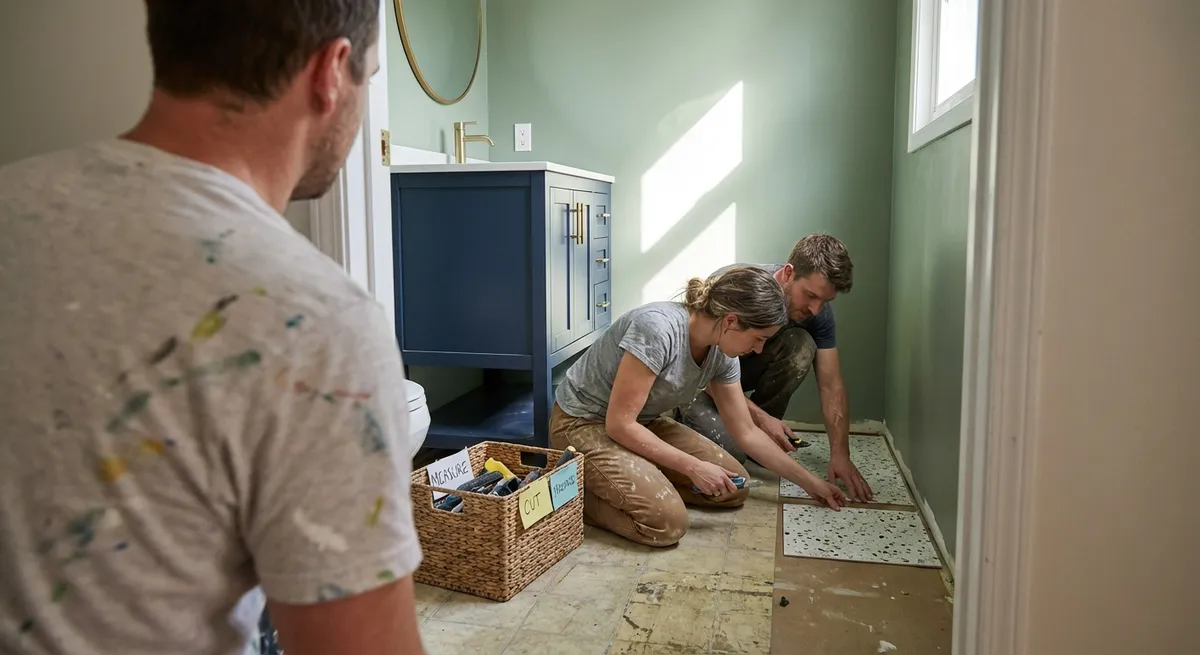
- Measure carefully to keep everything level and consistent in height.
Finally, don’t overlook small, cheap updates that make a big difference: swap yellowed outlet/switch covers for new ones, add a quiet-close toilet seat, and replace rusted or mismatched shower curtain hooks. These elements collectively change the room’s perceived age.
Step 5: Refresh the Vanity, Mirror, and Storage
The vanity wall is usually the focal point of a bathroom. A few targeted upgrades here can make it look like you replaced the entire unit—even if you didn’t.
If your existing vanity box is solid but dated, consider:
- Painting the vanity cabinet: Lightly sand, clean with a degreaser, prime with an adhesion primer, and finish with a durable cabinet or trim paint. Swap knobs and pulls for a modern style.
- Replacing only the top and sink: Many home centers sell pre-made vanity tops with integrated sinks sized for standard bases.
Update the mirror to match your new look:
- Replace a builder-grade plate mirror with a framed mirror sized a few inches narrower than the vanity.
- If removal is tricky or the mirror is glued on, you can build or buy a frame kit that mounts over the existing mirror for a finished look.
Add smart storage to keep surfaces clear:
- Mount a simple wall shelf or narrow cabinet above the toilet to hold extra towels and toiletries.
- Use stackable bins or drawer organizers inside the vanity so items have a dedicated spot.
- Add a couple of wall hooks to capture robes, pajamas, or frequently used towels.
Finish with textiles and accessories that support your new color palette: a fresh shower curtain, coordinated towels, and a bath mat that fits the space. Keep decor minimal—two or three items like a small plant, soap dispenser, and a tray for daily essentials. The combination of a cleared countertop, updated mirror, refreshed vanity, and intentional storage will make the room feel like it went through a much bigger renovation than it actually did.
Conclusion
A bathroom can feel completely different after one focused weekend if you tackle the right projects in the right order. Solid prep, fresh paint, better lighting, upgraded fixtures, and a cleaned-up vanity wall work together to mimic the results of a more expensive remodel—without the demolition, permits, or weeks of disruption.
By planning realistically, working safely, and focusing on high-impact changes, you’ll turn a tired bathroom into a clean, modern space that’s easier to use and easier to maintain. And because these changes are mostly surface-level, you can adapt them again later as your taste or budget evolves.
Sources
- U.S. Department of Energy – Bathroom Lighting Tips - Guidance on choosing efficient, effective lighting for residential spaces
- Family Handyman – How to Replace a Bathroom Faucet - Step-by-step walkthrough of faucet and drain replacement for DIYers
- Benjamin Moore – Paint for Bathrooms - Explains moisture-resistant paint types and finishes suitable for humid rooms
- Mayo Clinic – Mold and Mildew in the Home - Overview of mold-related health concerns and why proper cleaning and ventilation matter
- National Association of Home Builders – Bathroom Remodeling Trends - Industry insights into features and finishes that add appeal and perceived value
Key Takeaway
The most important thing to remember from this article is that this information can change how you think about Renovation.