A small bathroom can feel cramped, cluttered, and outdated—but it doesn’t have to stay that way. With some focused planning and smart upgrades, you can transform it into a space that feels bigger, works better, and looks intentional. This guide walks through a practical, step-by-step approach so you’re not just swapping fixtures at random, but creating a bathroom that fits your routine, your budget, and your skill level.
Step 1: Map How You Use the Space (Before Touching a Tool)
Before you pick tile or paint, you need a clear picture of what isn’t working now.
Spend a few days paying attention to how you actually use the bathroom. Do you fight over counter space in the morning? Is there never a place to hang towels? Do you bump into the vanity door or shower curtain? Write down specific annoyances and what you wish you had instead—more storage, better lighting, a larger mirror, a place to plug in a hair dryer, or a spot for kids’ bath toys.
Next, measure everything: room length, width, ceiling height, doorway width, existing vanity size, toilet clearance, and shower/tub dimensions. Sketch a basic floor plan on paper or use a simple app. Include where the door swings, window locations, and vent fan. This helps you see where you’re locked into existing plumbing locations (which are expensive to move) and where you have flexibility with things like storage, lighting, and fixtures.
Finally, decide your must-haves versus nice-to-haves. Maybe a new waterproof floor and proper ventilation are non‑negotiable, while a new vanity can wait. This priority list will guide every decision and help you avoid impulse buys that don’t solve real problems.
Step 2: Set a Realistic Budget and DIY Scope
Once you know what needs to change, decide how much you can reasonably spend—and what you can do yourself.
Start by listing all potential costs: flooring, paint, vanity, faucet, toilet, lighting, mirror, shower hardware, storage, and any tools you’ll need to buy or rent. Then put a realistic number next to each item, based on quick online price checks from big-box stores and local suppliers. Add a 10–20% buffer for surprises; small bathrooms often hide issues like minor water damage or outdated plumbing.
Be honest about your skills and comfort level. Many DIYers can handle tasks like painting, replacing a faucet, swapping a light fixture (with power off), installing towel bars, or assembling and installing a pre-made vanity. More advanced or risky work—moving plumbing lines, altering electrical circuits, or dealing with structural damage—should usually be hired out. Splitting the project like this (DIY the cosmetic work, hire pros for critical systems) often gives you the best balance of savings and safety.
Create a simple timeline: for example, “Weekend 1: prep and paint; Weekend 2: flooring and baseboards; Weekend 3: vanity, faucet, and lighting.” Smaller chunks help you avoid living with a half-finished bathroom for months. If this is your only bathroom, plan work in phases so the toilet and at least basic functionality are available at the end of each work day.
Step 3: Improve the Layout Without Moving Walls
You don’t need a full gut renovation to make a small bathroom feel more spacious. Thoughtful layout tweaks and slimmer fixtures can make a big difference without moving plumbing in the walls.
Start by reassessing each big piece: vanity, toilet, and tub or shower. In many cases, keeping the toilet and tub in the same locations saves significant money. Focus instead on how much physical and visual space your vanity and storage are taking up. A bulky cabinet vanity might be replaced with a shallower model or a wall-mounted unit that frees up floor area and makes the room feel larger.
Look at door swings. A standard swing door that blocks the vanity or toilet can be re-hung to swing out (if your hallway allows), or you can consider a pocket door or a sliding barn-style door mounted on the outside of the bathroom. Even just rehanging the door on the opposite jamb can change how the room functions.
Inside the room, make smart space trades: a curved shower curtain rod can add elbow room in a tub/shower combo; a recessed medicine cabinet can give you storage without crowding the sink; and a narrow shelving unit over the toilet can reclaim vertical space. Keep at least 30 inches of clear width in front of the toilet and vanity where possible for comfortable access.
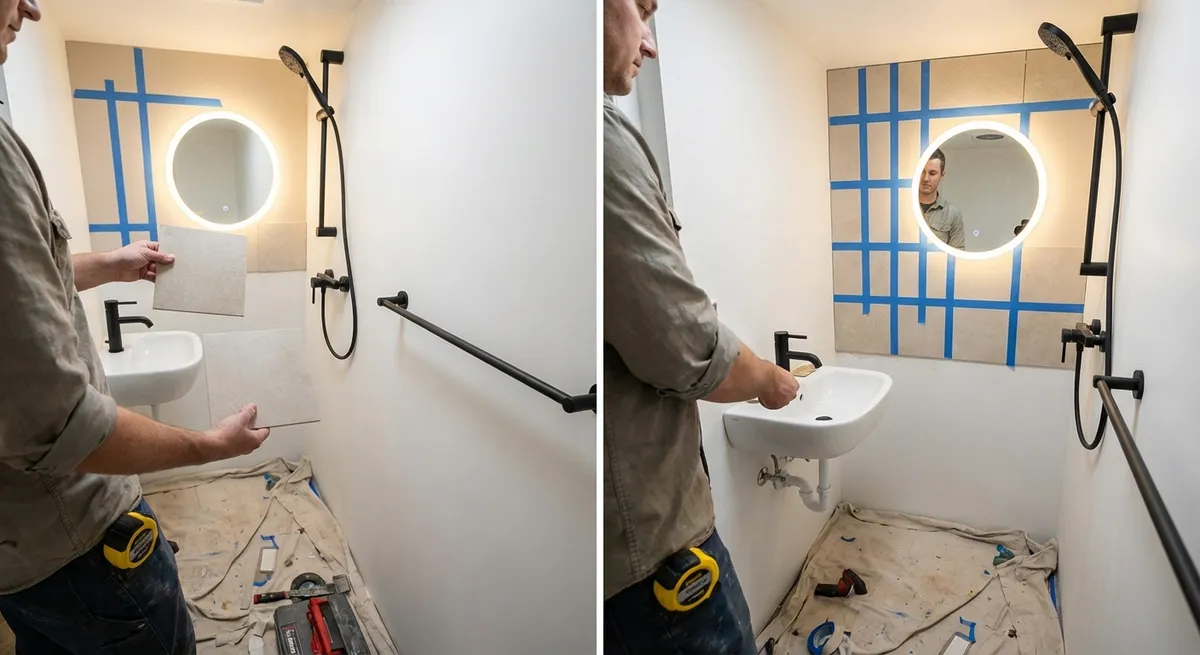
Before you commit, tape out the footprint of any new vanity or storage pieces on the floor and walls. Stand in the space and “practice” moving around. This low-tech test helps you catch awkward clearances before you spend money.
Step 4: Upgrade Surfaces and Fixtures for Big Impact
In a small bathroom, surface choices and fixtures do most of the visual heavy lifting. A few smart changes can make the room feel brighter, cleaner, and more modern with manageable DIY effort.
For walls, moisture-resistant paint in a lighter, neutral color will usually make the space feel larger. Use a satin or semi-gloss finish in the shower area and around the vanity for easier cleaning. If you’re adding wall tile, consider keeping the tile light and extending it higher around the shower or behind the vanity; vertical lines and higher finishes draw the eye up and make the ceiling feel taller.
Flooring should be water resistant and grippy when wet. Many DIYers use vinyl plank or tile rated for bathrooms because it’s easier to cut and install than ceramic tile and more forgiving on imperfect subfloors. If you choose traditional tile, pay attention to slip resistance and grout color—darker grout often hides stains better in high-traffic bathrooms.
When updating fixtures, focus on three workhorses: faucet, showerhead, and toilet. A modern, WaterSense-labeled faucet and showerhead can improve performance while using less water, and a compact, efficient toilet can save space and reduce water bills. For DIY-friendly swaps, replace like with like (single-hole faucet for single-hole sink, same type of toilet rough-in) to avoid extra plumbing work.
Lighting is another high-impact upgrade. Aim for layered lighting: a bright overhead fixture plus task lighting at the mirror. Choose fixtures rated for damp or wet locations, and use LED bulbs with a warm or neutral color temperature so the room feels comfortable, not clinical.
Step 5: Add Storage and Details That Keep It Working Long-Term
Once the big pieces are in place, finish the space with storage and details that keep clutter from creeping back in.
Think vertically first. Install shelves, cabinets, or open ledges above the toilet, over the door, or on any unused wall section. A medicine cabinet (recessed or surface-mounted) can store daily items at eye level, freeing the vanity top. Inside the vanity, use stackable bins, drawer organizers, or small caddies for items you use every day versus occasionally.
Plan dedicated spots for towels, robes, and toilet paper. A mix of hooks and bars gives flexibility for different users and towel sizes. Mount hooks at heights that work for everyone in the household, and ensure there’s a reachable place for a hand towel near the sink.
Small hardware choices add up: choose cabinet pulls and towel bars that match your faucet or lighting finish for a more cohesive look. Add a simple, washable bath mat, a shower liner that’s easy to replace, and a trash bin with a lid if needed. Consider a moisture-resistant window covering or privacy film if you have a bathroom window.
Finally, protect your work. Run the exhaust fan during and after showers to reduce humidity, and if your fan is weak or noisy, plan to replace it with one correctly sized for your bathroom. Keep a simple maintenance checklist: reseal grout or caulk when you see cracks, fix drips quickly, and touch up paint as needed. These small habits help your bathroom stay fresh and functional for years, instead of sliding back into “project mode” after a few months.
Conclusion
A small bathroom makeover doesn’t have to mean tearing everything down to the studs. By starting with how you actually use the space, setting a clear budget, making smart layout tweaks, upgrading key surfaces and fixtures, and finishing with practical storage, you can create a room that feels bigger and works better every day. Break the work into manageable steps, handle the DIY tasks you’re comfortable with, and leave any advanced plumbing or electrical changes to the pros. The result is a bathroom that fits your home, your routine, and your budget—without a full-scale renovation.
Sources
- [U.S. Department of Energy – Bathroom Remodeling: Practices for Energy Efficiency](https://www.energy.gov/energysaver/bathroom-remodeling) - Overview of efficient fixture choices, ventilation, and lighting considerations
- [EPA WaterSense – Labeled Bathroom Fixtures](https://www.epa.gov/watersense/bathrooms) - Guidance on choosing water-efficient faucets, showerheads, and toilets
- [Consumer Reports – Bathroom Remodeling Guide](https://www.consumerreports.org/home-garden/bathroom-remodeling/bathroom-remodeling-guide-a8296761380/) - Cost ranges, product comparisons, and planning tips for bathroom upgrades
- [This Old House – Small Bathroom Design Ideas](https://www.thisoldhouse.com/bathrooms/21017774/small-bathroom-design-ideas) - Practical space-saving strategies and layout ideas for compact bathrooms
- [Family Handyman – How to Install a Bathroom Vanity](https://www.familyhandyman.com/project/how-to-install-a-bathroom-vanity/) - Step-by-step instructions for one of the most common DIY bathroom upgrades
Key Takeaway
The most important thing to remember from this article is that this information can change how you think about Renovation.