A small bathroom remodel can make your whole home feel newer—without a full-gut renovation or a massive budget. The challenge is keeping the project under control: time, cost, mess, and surprises behind the walls. This guide walks you through a practical, step-by-step approach so DIY‑minded homeowners can upgrade a bathroom with fewer headaches and more confidence.
Step 1: Get Real About Budget, Scope, and What You Can DIY
Before you touch a tile or buy a faucet, define what you’re actually doing—and what you’re not.
Start by listing your must‑haves (for example: new vanity, better lighting, updated flooring) and your nice‑to‑haves (heated floor, luxury fixtures, custom storage). Put a ballpark price next to each using big‑box store websites to get a realistic sense of cost. This quick exercise usually reveals where you’re about to overspend.
Decide where you’re comfortable doing the work yourself: painting, installing a vanity, swapping a faucet, and laying simple tile are within reach for many beginners who are patient and willing to learn. Anything involving moving plumbing lines, altering electrical circuits, or changing ventilation should be approached with caution—many homeowners bring in pros just for those parts to avoid safety issues and code problems.
Check whether you need permits for any structural, plumbing, or electrical changes by visiting your local building department website or calling them directly. Taking 15 minutes now can save you fines and failed inspections later. Once you know your scope and limits, set a firm total budget, then reserve 10–20% of that amount as a contingency for surprises (like hidden water damage behind the shower).
Finally, create a rough timeline. Identify which tasks are dependent on others (for example, you can’t install flooring before fixing subfloor damage, and you can’t mount a new vanity before the wall is patched and painted). Writing this down helps prevent you from demoing everything at once and then living in a construction zone for weeks.
Step 2: Plan the Layout and Storage Before You Buy Anything
In a small bathroom, inches matter. A well‑planned layout and storage solution can make the space feel bigger without knocking down walls.
Start by measuring everything: room length and width, ceiling height, window locations, door swing, and current fixture locations (toilet, tub/shower, sink). Sketch a simple floor plan on graph paper or use a free online tool. Note clearances: you need space for the door to open, for knees in front of the toilet, and enough room to stand and turn in front of the vanity.
Ask yourself what currently doesn’t work. Is there nowhere to put towels? Do toiletry bottles crowd the sink? Are you constantly bumping into the vanity? Let those pain points guide your decisions. Often, switching from a bulky vanity to a slightly narrower one with better drawers or a wall‑mounted cabinet can free up needed floor space.
Look up your local building or plumbing code clearances if you’re moving fixtures at all; there are usually minimum distances from walls and other fixtures for toilets, sinks, and showers. Even if you’re keeping fixtures in place, ensure your new vanity or toilet has similar dimensions so you don’t end up blocking a door or creating awkward gaps.
Plan storage in layers: closed storage (vanity drawers, mirrored cabinet), open storage (small shelves), and vertical storage (over‑the‑toilet cabinets, hooks on the back of the door). In tight bathrooms, wall‑hung or corner shelves can give you usable space without crowding the room.
Once you have a layout you like, double‑check product dimensions against your drawing before purchasing. This one step is where many DIYers save themselves from returns and “this doesn’t fit” disasters on installation day.
Step 3: Choose Durable, Moisture‑Smart Materials and Fixtures
Bathrooms are harsh environments—high humidity, splashes, and frequent cleaning. Choosing the right materials upfront prevents early failures and mold issues.
For walls near tubs and showers, use tile backer board (like cement board or fiber‑cement) rather than regular drywall. If you’re not retiling the shower, at least inspect and re‑seal existing grout and caulk to keep water from sneaking behind surfaces. For painted walls, choose a mildew‑resistant, bathroom‑rated paint in a satin or semi‑gloss finish; these hold up better to moisture and scrubbing.
On the floor, prioritize slip resistance and water resistance. Porcelain tile is a popular choice because it’s durable, dense, and comes in many styles—including stone and wood looks. If you choose tile, look for options with a slight texture and check their slip rating for wet areas. If you’re going with vinyl (like luxury vinyl plank or tile), make sure it’s rated as waterproof and suitable for bathrooms.
When choosing a toilet, look for WaterSense‑labeled models, which use less water per flush without sacrificing performance. For faucets and showerheads, consider both style and maintenance. Simple designs with fewer crevices are easier to clean, and finishes like brushed nickel or matte black tend to show fewer water spots than polished chrome.
Ventilation is non‑negotiable. If your current exhaust fan is underpowered or noisy, plan to upgrade it as part of the remodel. Check the CFM (cubic feet per minute) rating against your bathroom’s square footage and choose a fan with a built‑in timer or humidity sensor if possible. Proper exhaust helps prevent peeling paint, mold, and that constantly damp feeling.
Before you buy anything, read installation manuals and verify that your existing plumbing and electrical connections are compatible. For example, some modern vanities require specific drain or supply locations, and many new light fixtures require a standard junction box. Knowing this now avoids mid‑project surprises.
Step 4: Prepare the Space and Handle Demolition Safely
Preparation and smart demolition can keep your remodel efficient and safer, and they reduce the chance of accidental damage to plumbing, wiring, or your own lungs.
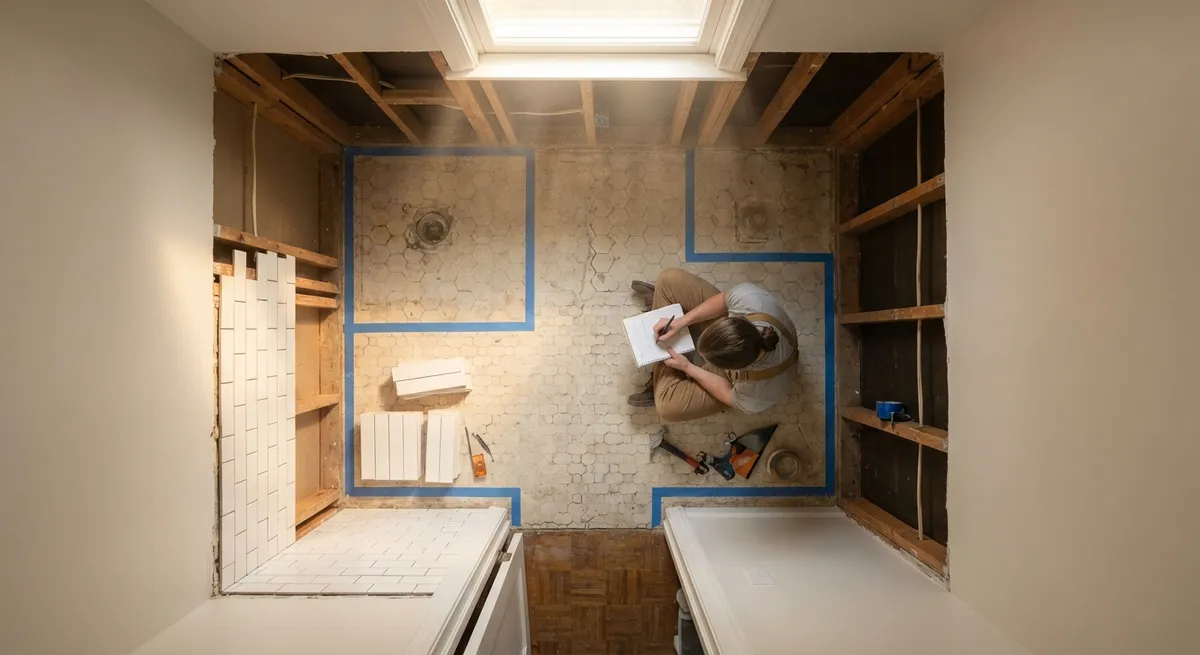
Start by clearing the room completely: remove toiletries, towels, and anything on the walls. Protect adjacent areas with plastic sheeting and painter’s tape—dust travels farther than you think. Lay down rosin paper or drop cloths in the hallway to keep debris off your floors.
Turn off water to the bathroom at the shutoff valves (under the sink and behind the toilet) or at the main supply if necessary. Open a faucet to relieve pressure. For electrical, switch off power to the bathroom at the breaker panel and use a non‑contact voltage tester to confirm that outlets and fixtures are truly off before you remove anything.
When removing fixtures like a vanity or toilet, go slowly. For toilets, shut off water, flush to empty the tank, sponge out remaining water, disconnect the supply line, and lift straight up after loosening the bolts. Plug the drain opening temporarily with a rag to block sewer gas. For vanities, cut through caulk lines with a utility knife before prying them away from the wall.
If you’re opening walls or ceilings, be cautious. Older homes may have asbestos in certain materials and lead in old paint. If your house was built before 1980, read your local guidelines on safe handling, or consider professional testing before heavy demolition. Regardless of age, wear eye protection, gloves, and a dust mask or respirator rated for fine dust.
During demolition, keep an eye out for signs of water damage—soft subfloors, dark stains, crumbling drywall, or mold. Take photos before you cover anything back up; they’re useful if you later sell the home or need to show a pro what’s behind the finishes. Remove all debris promptly and follow your municipality’s rules for disposal, especially for any potentially hazardous materials.
Step 5: Rebuild Methodically—from the “Inside” Out
Once everything is opened and cleaned up, rebuild in layers, starting with what you can’t see and ending with fixtures and finishing touches.
Begin with any repairs to framing or subflooring. Replace rotten sections, ensure everything is solid, and correct any obvious issues like large gaps or uneven surfaces—these small fixes make tile laying and vanity installation much easier. If you need to upgrade or move plumbing or electrical, this is the stage where many DIYers bring in licensed pros for code‑compliant work.
Install or upgrade the exhaust fan and ensure the duct vents outdoors, not just into the attic. Then close up walls and ceilings with appropriate materials (cement board around wet areas, moisture‑resistant drywall where needed). Tape and mud seams, allow them to dry fully, then sand and prime. Priming before paint or tile helps with adhesion and a better finish.
Next, tackle flooring. Dry‑fit tiles or planks before committing to adhesive or thinset, checking that cuts around the toilet flange and vanity area are clean. Follow manufacturer instructions carefully for setting materials, spacing, and cure times. Resist the urge to rush—walking on floors too soon can ruin your work.
Once the floor is done and cured, install the vanity, reconnect plumbing, and mount your new faucet. Keep a bucket and towels handy in case of slow leaks and use plumber’s tape on threaded connections as directed. After the vanity, install the toilet with a new wax ring (or wax‑free seal) and confirm there are no leaks at the base or supply line.
Finish with lighting, mirrors, shelving, and accessories. Install GFCI‑protected outlets as required by code, and use proper anchors for anything mounted to drywall. Apply fresh caulk at joints between the tub or shower base and walls, around the vanity backsplash, and at the base of fixtures where recommended. Finally, run the fan during and after hot showers to help your new finishes last.
Conclusion
A small bathroom remodel doesn’t have to become an endless, expensive project. By planning your scope realistically, designing the layout around real‑world use, choosing moisture‑smart materials, handling demolition carefully, and rebuilding in a logical sequence, you can dramatically improve the look and function of your bathroom without losing control of time or budget. Take it step by step, know when to call in a pro, and focus on solid basics over flashy extras—the result will feel like a big upgrade in a very small space.
Sources
- [U.S. Department of Energy – Bathroom Ventilation](https://www.energy.gov/energysaver/bathroom-ventilation-fans) - Guidance on properly sizing and using bathroom exhaust fans to control moisture
- [EPA WaterSense – Water‑Efficient Toilets](https://www.epa.gov/watersense/toilets) - Information on performance and water savings from WaterSense‑labeled toilets
- [Consumer Product Safety Commission – DIY Home Improvement Safety](https://www.cpsc.gov/Safety-Education/Safety-Guides/home-improvement-and-maintenance) - Safety tips for homeowners doing renovation and maintenance work
- [Mayo Clinic – Mold and Dampness in Homes](https://www.mayoclinic.org/diseases-conditions/mold-allergy/in-depth/mold-exposure/art-20047401) - Health considerations related to mold and moisture problems in bathrooms
- [Habitat for Humanity – Home Repair and Maintenance Tips](https://www.habitat.org/stories/maintain-your-home) - General advice on keeping home repairs durable and cost‑effective
Key Takeaway
The most important thing to remember from this article is that this information can change how you think about Renovation.