A full kitchen remodel is expensive, messy, and often overkill. If your kitchen layout basically works but looks tired, a targeted refresh can make it feel new without gutting anything. By focusing on a few high-impact updates and doing the work in the right order, you can dramatically change how your kitchen looks and functions on a realistic DIY budget.
This guide walks you through a practical, step‑by‑step plan for a small kitchen refresh that feels like a renovation—without moving walls, changing plumbing locations, or living in chaos for months.
Step 1: Diagnose What Actually Needs to Change
Before you grab a paint roller or order anything, get clear on what’s wrong with your kitchen now and what realistically can stay.
Spend 10–15 minutes in the space at different times of day and write down:
- What feels dated (cabinet color, hardware, lighting, counters, backsplash, floor).
- What doesn’t work functionally (no prep space, poor lighting, cluttered counters).
- What is fine and doesn’t bother you (maybe the cabinet boxes are solid, or the layout works).
Take photos from all angles. Viewing your kitchen in photos often highlights things you ignore in daily life, like mismatched finishes, clutter hotspots, or awkward gaps.
Then sort your notes into three buckets:
- Keep as‑is – things that don’t need money or time right now.
- Refresh – items that can be painted, swapped, or resurfaced (cabinets, lighting, hardware, backsplash).
- Replace later – big‑ticket items like counters or flooring that may need a pro or a bigger budget.
This exercise keeps you from overspending on things that don’t matter while making sure your refresh actually fixes your daily annoyances.
Practical tip: Put painter’s tape on anything you plan to change (cabinet doors, fixtures, etc.). If the tape ends up nearly everywhere, your scope is too big—scale back to the items that impact your daily use the most.
Step 2: Build a Realistic Budget and Sequence the Work
Once you know what you want to change, you need a basic budget and a smart order of operations. Doing work in the wrong order is how DIYers waste time and damage new finishes.
Start with a rough budget outline:
- Paint and prep materials (primer, paint, rollers, tape, plastic, sandpaper)
- Cabinet refresh supplies (degreaser, filler, hinges, hardware)
- Lighting upgrades (new fixtures, under‑cabinet lights, bulbs)
- Backsplash or wall treatment (tile, peel‑and‑stick, or washable paint)
- Storage/organization (drawer dividers, shelf risers, hooks, pull‑outs)
Assign a realistic price range for each based on local prices or big‑box store browsing. Add 10–15% as a buffer for hidden costs (extra sandpaper, replacement screws, damaged parts).
Then sequence the work to avoid redoing tasks:
- Declutter and deep clean – remove everything from counters and open shelves.
- Electrical and lighting changes – safest to do first so you’re not cutting into newly finished walls or paint.
- Cabinet and trim work – cleaning, repairs, painting, and hardware installation.
- Walls and backsplash – paint or tile after cabinets are done to get clean lines.
- Organization and styling – last, after surfaces are dry and functional.
Practical tip: Plan work in “zones” if you need to keep the kitchen functional (e.g., do one wall of cabinets at a time so you always have some storage and prep area available).
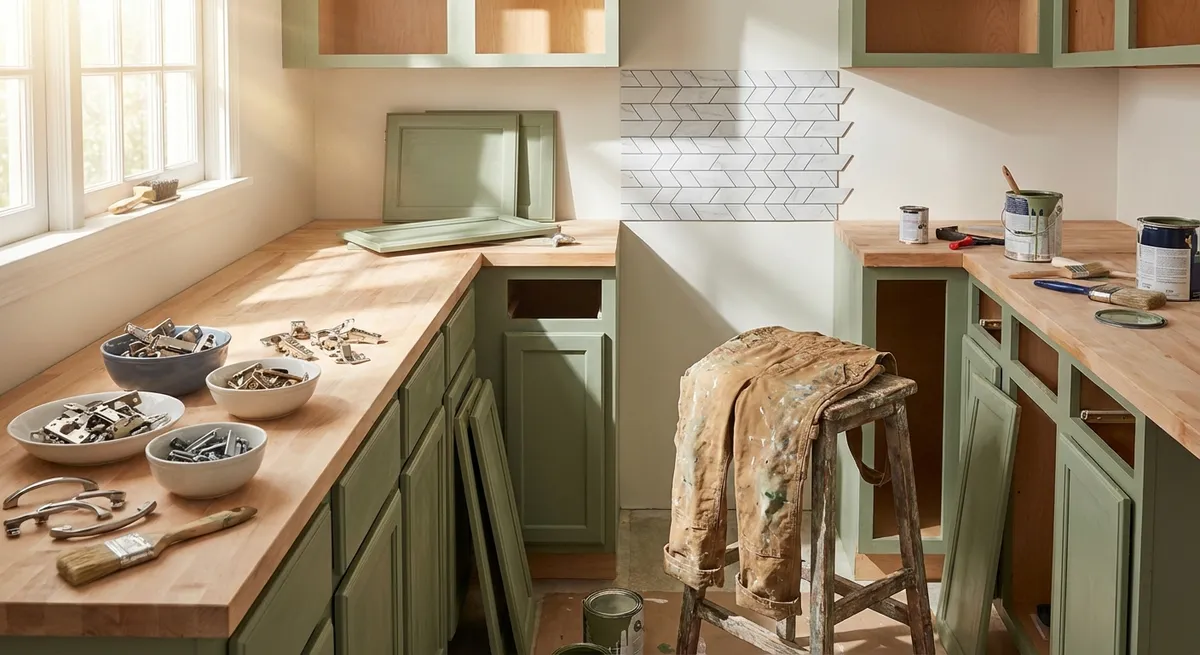
Step 3: Refresh Cabinets Without Replacing Them
Cabinets dominate most kitchens visually. If the boxes are solid and the layout works, refreshing them can do 80% of the visual heavy lifting for a fraction of the cost of replacement.
Here’s a simple, reliable process:
- Remove doors and hardware.
Label each door and its matching hinge location with painter’s tape (e.g., “Sink Upper Left 1”). This avoids a puzzle later. Remove knobs, pulls, and hinges.
- Degrease thoroughly.
Kitchen cabinets collect grease and residue that ruin paint adhesion. Use a degreaser or a TSP substitute, working from top to bottom. Rinse with clean water and let dry completely.
- Sand and repair.
Lightly scuff sand with 120–220 grit sandpaper to remove gloss. Fill dents, holes, and deep scratches with wood filler. Once dry, sand smooth and wipe away dust with a tack cloth or damp microfiber.
- Prime correctly.
Use a bonding primer designed for glossy surfaces or previously finished wood. Apply a thin, even coat to doors, drawer fronts, and cabinet frames. Let it dry as recommended, then lightly sand to knock down raised grain.
- Paint in thin coats.
Use high‑quality enamel or cabinet paint (often labeled as trim/cabinet paint). Apply two to three thin coats, letting each dry fully and lightly sanding between coats. Use a brush for grooves and a small foam roller for flat areas to minimize brush marks.
- Update hardware.
While doors dry, lay out your new hardware. If you’re changing from single‑hole knobs to two‑screw pulls, use a hardware template to drill consistent holes. Always check alignment on a scrap board or hidden area first.
Practical tip: Set up a simple painting rack with 2x4s and screws to hang cabinet doors by their hinge holes. This keeps dust off wet paint and lets you paint both sides more efficiently.
Step 4: Fix Your Lighting So the Kitchen Actually Works
Good lighting is one of the most underrated upgrades in a kitchen refresh. It affects how clean the space feels, how easy it is to cook, and how your new finishes look.
Think in three simple layers:
- Ambient lighting – your main ceiling light(s) that make the room usable.
- Task lighting – under‑cabinet or focused lights for counters, sink, and stove.
- Accent lighting – softer lights that add warmth (above cabinets, inside glass fronts).
For a DIY‑friendly refresh:
- Replace outdated fixtures.
Swap a single dated dome light for a flush‑mount LED or a simple multi‑bulb fixture to spread light more evenly. Match the metal finish to your new cabinet hardware if possible.
- Upgrade bulbs.
Choose LED bulbs with a color temperature between 2700K and 3000K (soft warm white) for most homes, or 3500K if you prefer a crisper look. Stick to one color temperature across all bulbs in the kitchen.
- Add under‑cabinet lighting.
Plug‑in or battery‑powered LED bars and strips are easy to install with adhesive strips or small clips. Mount them toward the front underside of upper cabinets to light the counter, not the backsplash.
- Check shadows and glare.
Turn on all lights at night and test your main prep areas. If your body casts a shadow when you stand at the counter, adjust fixture positions or add an extra under‑cabinet light.
Safety note: If your lighting upgrade requires new wiring or moving boxes, and you’re not completely confident in your electrical skills, hire a licensed electrician for that portion. You can still handle fixture selection and mounting plates under their guidance.
Practical tip: Put under‑cabinet lights on a separate switch or remote. They double as excellent night lights and can make the kitchen feel cozy after dark.
Step 5: Clean Up the Walls and Backsplash for a Finished Look
Once cabinets and lighting are in good shape, your walls and backsplash will either pull the space together or drag it down. You don’t need elaborate tile work to get a clean, finished look.
Choose one of three main paths based on budget and skill:
- Scrub and repaint walls.
If you’re keeping your existing backsplash or don’t have one, a thorough cleaning and a fresh coat of washable, satin or semi‑gloss paint can go a long way. Stick to lighter neutrals or soft colors to reflect light and make the room feel bigger.
- Install a simple backsplash.
Classic subway tile, larger format tiles, or even beadboard panels can be very DIY‑friendly if your walls are fairly flat. Work in small sections, use tile spacers, and follow manufacturer instructions for mortar and grout.
- Use peel‑and‑stick or panel products.
For renters or those not ready for full tile, peel‑and‑stick tiles or wall panels offer a low‑commitment option. Focus on key sightlines: behind the stove and sink, and along the main work counter.
Whichever you choose:
- Start at the most visible area (usually behind the range or sink) and work outward.
- Use painter’s tape to protect your freshly painted cabinets and counters.
- Finish edges cleanly with caulk, trim pieces, or neat paint lines.
Practical tip: If your budget is tight, prioritize a clean, durable paint job on walls and just do a small “feature” backsplash area—like behind the stove—with real tile or higher‑end panels. It still gives a custom feel without tiling the entire room.
Conclusion
A small kitchen refresh doesn’t need demolition, new plumbing, or a giant budget to feel transformative. By diagnosing what actually needs to change, sequencing your work, and focusing on cabinets, lighting, and wall surfaces, you can create a kitchen that looks significantly newer and works better for everyday cooking.
Tackle the project in manageable steps, protect the work you’ve already finished, and be honest about when to call in a pro (especially for electrical). The result: a kitchen that feels like a renovation, done on your schedule, with improvements you’ll notice every time you cook.
Sources
- [U.S. Department of Energy – LED Lighting Basics](https://www.energy.gov/energysaver/led-lighting) – Explains LED bulbs, color temperature, and efficiency, helpful for planning kitchen lighting upgrades.
- [Consumer Reports – Kitchen Cabinet Refacing & Refinishing Guide](https://www.consumerreports.org/home-garden/kitchen-cabinets-guide-a1194827079/) – Overview of options and when it makes sense to refresh instead of replace cabinets.
- [This Old House – How to Paint Kitchen Cabinets](https://www.thisoldhouse.com/cabinets/21016415/how-to-paint-kitchen-cabinets) – Step‑by‑step cabinet painting guidance with pro tips on prep, priming, and finishing.
- [Lowe’s – How to Install Undercabinet Lighting](https://www.lowes.com/n/how-to/install-undercabinet-lighting) – Practical instructions and diagrams for different under‑cabinet lighting types.
- [Family Handyman – Kitchen Backsplash Installation Tips](https://www.familyhandyman.com/project/how-to-tile-a-kitchen-backsplash/) – Detailed backsplash tiling tutorial with layout, cutting, and grouting advice.
Key Takeaway
The most important thing to remember from this article is that this information can change how you think about Renovation.