A full kitchen remodel is expensive, messy, and usually way more than most DIYers want to tackle right away. The good news: you don’t have to gut your kitchen to make it look and feel dramatically better. With smart planning and a focused weekend, you can upgrade what you see and touch every day—without moving walls or ripping out cabinets.
This guide walks you through a practical, DIY-friendly kitchen mini-makeover you can realistically complete over a weekend, broken into five clear, step-by-step stages.
Step 1: Define Your Mini-Makeover Scope (So You Don’t Get Overwhelmed)
Before you touch a tool, decide exactly what will and won’t be part of this weekend project. Scope creep is what turns “a few quick updates” into a half-finished renovation.
Spend 20–30 minutes walking your kitchen and making notes under three headings:
- Cosmetic Only (good for a weekend): paint, hardware swap, light fixture change, backsplash refresh, faucet replacement, open-shelf styling, minor organization.
- Maybe Later (requires planning or permits): moving plumbing, changing appliance locations, new flooring, adding windows, rewiring.
- Leave Alone (fine for now): anything in good shape that doesn’t bother you daily.
Pick 2–3 high-impact updates for this weekend. For most kitchens, that’s:
- Painting or refinishing cabinets or walls (not both if you’re new to DIY)
- Updating cabinet hardware and/or faucet
- Improving lighting or adding a simple backsplash
Take “before” photos from a few angles. This helps you track progress and makes sharing the transformation easier later.
Quick planning checklist:
- Measure your kitchen walls, backsplash area, and cabinet faces.
- Photograph existing hardware, faucet, lights, and any tricky areas.
- Note what you like (color, layout, storage) and what bothers you most.
- Set a realistic budget and time limit (e.g., one weekend, $300–$800).
Step 2: Prep Like a Pro (The Part Most DIYers Rush and Regret)
Proper prep is the difference between a quick fix that peels in six months and a durable upgrade that still looks good years later.
1. Clear and protect the space
- Empty countertops and clear out the sink area.
- Move small appliances to another room.
- Cover countertops, backsplash, and appliances with rosin paper or plastic; tape edges.
- Lay drop cloths or old sheets on the floor.
- Turn off power at the breaker if you’ll work on lighting or outlets.
2. Clean every surface you plan to touch
Grease and dust ruin paint adhesion and make hardware install harder.
- Use a degreaser (like a TSP substitute) on cabinets, walls near the stove, and around the range hood.
- Rinse with clean water and let dry completely.
- Pay extra attention to door/handle areas and along cabinet edges.
3. Gather tools and materials in one spot
You’ll work faster and with less stress if everything is staged before you start. Typical mini-makeover kit:
- Painter’s tape, sanding sponges (120–220 grit), tack cloth
- Quality primer and paint (cabinet enamel or acrylic latex for walls)
- Painter’s tool/putty knife and lightweight spackle for ding repairs
- Drill/driver, bits, screwdriver set, stud finder
- New hardware (handles/pulls/knobs) and template or simple jig
- New faucet and/or light fixtures (if in scope)
- Safety gear: respirator or mask, safety glasses, gloves
Double-check return policies on paint, hardware, and fixtures in case you change your mind mid-project.
Step 3: Refresh Surfaces for Maximum Visual Impact
You don’t have to replace everything; updating what the eye lands on first makes the biggest difference.
Option A: Paint your walls (faster win for beginners)
If your cabinets are decent but the room feels dark or dated, wall color is a good place to start.
Patch and sand
- Fill nail holes and small dings with lightweight spackle. - Sand smooth once dry; wipe down with a damp cloth.
Tape and cut in
- Tape along trim, cabinets, backsplash, and ceiling line. - Use a good angled brush to “cut in” around edges before rolling.
Roll the walls
- Work in 3’ x 3’ sections, keeping a wet edge to avoid lap marks. - Apply two coats, letting the first dry per manufacturer’s instructions.
Practical tips:
- Choose an eggshell or satin finish; both clean easier than flat.
- Light, neutral colors (soft white, pale gray, warm beige) make small kitchens feel bigger.
- Test color on multiple walls; light changes everything.
Option B: Refresh cabinet faces (more effort, bigger payoff)
If your cabinets are structurally sound but dated, a careful paint job can transform the whole space.
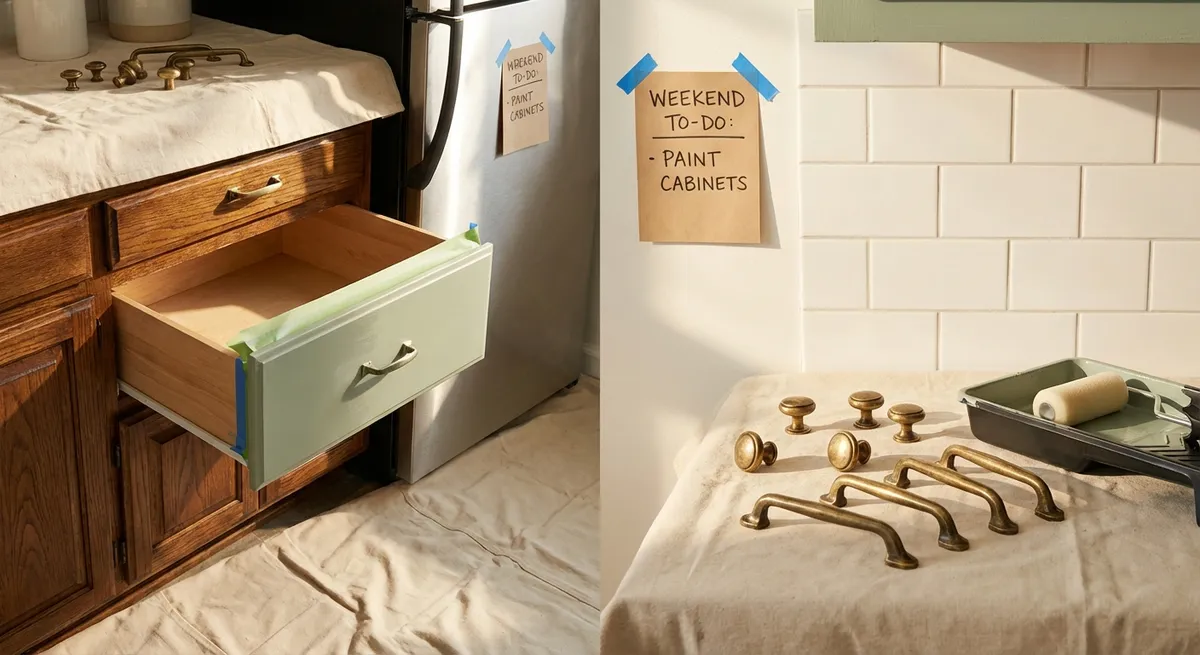
Label and remove doors/drawers
- Number each door/drawer and its location with painter’s tape. - Remove hardware and hinges; store screws in labeled bags.
Scuff-sand all surfaces to be painted
- Use 120–180 grit sanding sponges to dull the existing finish. - Wipe away dust with a tack cloth.
Prime properly
- Use a primer formulated for cabinets or glossy surfaces. - Apply thin, even coats; follow dry times closely.
Apply cabinet paint
- Use a high-quality enamel or cabinet-specific paint. - Apply 2–3 thin coats, sanding lightly with 220 grit between coats if needed.
Let cure before reassembly
- Even when paint feels dry, it may need a few days to fully harden. - If possible, wait at least 24 hours before re-installing hardware.
If you don’t want to paint everything, consider just the upper cabinets or just the island in a contrasting color for a fresh, custom look.
Step 4: Replace Key Fixtures and Hardware for a Modern Look
These are the “touch points” you use every day. Updating them can make the kitchen feel new even if you haven’t changed the layout.
1. Swap cabinet hardware
- Choose a consistent finish (brushed nickel, black, brass) that works with your appliances and faucet.
- For a straightforward swap, match existing hole spacing so you don’t need to fill and drill new ones.
- Use a hardware template or make a simple cardboard jig to keep placement consistent.
Install steps:
- Hold new hardware in place to confirm look and reach.
- Drill pilot holes if you’re changing hardware style or location.
- Attach with machine screws from the inside; don’t overtighten.
2. Upgrade the faucet
A new faucet can update both function and style.
- Shut off water at the supply valves under the sink, then open the faucet to relieve pressure.
- Disconnect the old faucet supply lines with an adjustable wrench.
- Loosen mounting nuts (often easiest with a basin wrench) and lift out the old faucet.
- Install the new faucet following the manufacturer’s instructions—usually involves dropping lines through the sink, tightening a bracket from below, and reconnecting hot/cold lines.
- Turn water back on slowly, check for leaks with a dry paper towel around all connections.
If your sink and faucet are very old, have a bucket and extra plumber’s tape on hand for minor surprises.
3. Improve lighting
You don’t have to rewire the room to improve lighting.
Good weekend options:
- Replace a dated ceiling fixture with a modern, brighter LED fixture.
- Add plug-in under-cabinet lights for better task lighting—no electrician needed.
- Use daylight or soft white bulbs consistently to avoid mixed color temperatures.
Always turn power off at the breaker before working on any hardwired fixture, and verify with a non-contact voltage tester.
Step 5: Add a Simple Backsplash or Style Open Surfaces
This step pulls the look together and makes the space feel intentionally designed.
Option A: Easy backsplash upgrade
If you’re not ready for full tile work, try:
- Peel-and-stick backsplash tiles: Many are heat- and moisture-resistant and cut with a utility knife.
- Beadboard panels: Cut to size, glue or nail up, and finish with caulk and paint.
- Painted backsplash: Clean, prime, and paint with durable, washable paint as a temporary solution.
Basic peel-and-stick install:
- Measure your backsplash area and plan your pattern from a central focal point (like behind the stove or sink).
- Dry-fit a few pieces before peeling the backing.
- Peel, stick, and press firmly with a grout float or clean block of wood.
- Trim edges with a sharp utility knife and straightedge.
Option B: Style open shelves and counters
If you don’t want to add materials, refine what’s visible:
- Limit open shelves to functional and attractive items (matching dishes, glassware, a few cookbooks).
- Use trays or boards to group everyday items like oils, salt, and utensils so it feels organized, not cluttered.
- Add one or two natural elements: a small plant, a bowl of fruit, or a wooden cutting board.
The goal is a kitchen that looks cared-for and intentional, not staged like a showroom you’re afraid to cook in.
Conclusion
A weekend kitchen mini-makeover isn’t about perfection—it’s about targeted updates that make the room easier and more enjoyable to use. By defining a tight scope, doing solid prep, refreshing key surfaces, and upgrading the fixtures you touch every day, you can transform how your kitchen looks and feels without gutting it or draining your savings.
Take clear “before and after” photos, track what you learned, and note what you’d tackle next time. Renovation confidence builds in layers—this weekend project is one solid layer in a kitchen you’ll be proud to cook and live in.
Sources
- [U.S. Department of Housing and Urban Development – Rehab a Home](https://www.hud.gov/program_offices/housing/sfh/203k/203k--df) – General guidance on planning and budgeting for home rehabilitation projects
- [This Old House – How to Paint Kitchen Cabinets](https://www.thisoldhouse.com/cabinets/21015023/how-to-paint-kitchen-cabinets) – Detailed professional tips for cabinet prep, priming, and painting
- [Family Handyman – How to Replace a Kitchen Faucet](https://www.familyhandyman.com/project/how-to-replace-a-kitchen-faucet/) – Step-by-step instructions with photos for swapping out a faucet safely
- [Energy.gov – Lighting Choices to Save You Money](https://www.energy.gov/energysaver/lighting-choices-save-you-money) – Useful background on efficient lighting types and bulb selection
- [Consumer Reports – Kitchen Remodeling Guide](https://www.consumerreports.org/home-garden/kitchen-remodel/kitchen-remodeling-guide-a2003814499/) – Overview of high-impact upgrades and how to prioritize changes in a kitchen renovation
Key Takeaway
The most important thing to remember from this article is that this information can change how you think about Renovation.