Power tools can make home projects faster, cleaner, and more precise—but only if you know what to buy and how to handle each one safely. The wrong choice (or the right tool used the wrong way) can ruin materials, slow you down, or even cause injuries. Fix Ready’s approach is simple: treat tools like long‑term partners in your DIY life, not impulse buys for a single weekend.
This guide focuses on corded tools—drills, saws, sanders, and more—that plug into the wall. They’re often cheaper, more powerful, and more reliable than battery options for homeowners who work mostly around the house. Follow these five step‑by‑step sections to build a smart setup, use your tools with confidence, and keep everything running for years.
Step 1: Match The Tool To The Job (Before You Spend A Dollar)
Before buying anything, you need a clear picture of what you’ll actually do with it over the next year, not just the project you want to start this weekend. Make a short list of real tasks: for example, “install shelves, cut trim, sand a table, drill into concrete for anchors.” Group them into categories—drilling, cutting, fasteners, sanding—so you can see patterns in how you’ll use tools. For each category, write down what materials you’ll mostly work with: softwood, hardwood, drywall, metal, masonry, or composite products.
Now look up the basic tool families that handle each job: a corded drill for holes and driving fasteners, a circular saw for straight cuts, a jigsaw for curves, and a random orbit sander for smooth finishes. Avoid “do‑everything” gimmick tools that claim to replace several dedicated tools but don’t excel at any; instead, prioritize tools that will see repeat use in multiple projects. Check whether your home has enough accessible outlets where you’ll work—garages and basements may need heavy‑duty extension cords or additional outlets installed by a pro. Finally, decide what absolutely needs to be powered vs. what can stay manual: for example, a good cordless screwdriver might be optional if you already have a corded drill, but a powered sander is a game changer versus sanding by hand.
Step 2: Read The Specs Like A Pro (So You Don’t Overbuy Or Underbuy)
Tool marketing loves big numbers, but not all specs matter equally for homeowners. Start with power ratings: corded tools often list amps (A). For most household drilling or light cutting, 5–7 amps is plenty; for frequent cutting of thick lumber or dense materials, 10–15 amps is more appropriate. When comparing tools, only compare similar categories—don’t compare the amps on a drill to the amps on a circular saw, because what “enough power” means is different for each.
Next, look at speed and control features. A corded drill should have variable speed and a reversible switch; a circular saw should have a stable base plate and clear depth adjustment markings; a sander should have random orbit action to avoid swirl marks. Pay attention to build quality details: metal gears, solid housings, and comfortable grips are more important in real use than an extra 0.5 amp on the box. Check cord length and quality—a thicker, flexible cord with a reinforced strain relief where it meets the tool will last longer and be safer. Before you buy, search for parts availability: can you easily get replacement brushes, bases, or pads? Tools that support repair are better long‑term investments than sealed, disposable units.
Step 3: Set Up A Safe, Efficient Work Zone (Before Plugging Anything In)
Many DIY problems start not with the tool but with the workspace. Begin by choosing a stable, flat area with good lighting and enough room to move the tool and materials freely, especially on the “exit” side of cuts or drilling. Set up a sturdy work surface—this can be a proper workbench, a pair of saw horses with a thick sheet of plywood, or a folding work table rated for tools. Secure your workpiece with clamps; never try to hold a board with one hand and run a saw or drill with the other.
Run power in a way that keeps cords out of your cutting or drilling path. Use heavy‑duty, grounded extension cords rated for outdoor or contractor use if you need extra reach, and fully unwind them to prevent overheating. Keep cords away from water, sharp edges, and pinch points under doors or heavy furniture. Put all your safety gear where you can reach it quickly: safety glasses, hearing protection, dust mask or respirator, and work gloves appropriate for the task. Lay out your tools so you don’t stack cords on top of one another; if you’re using multiple corded tools, plug them into a quality surge‑protected power strip, but never overload a circuit. Finally, consider dust control: a simple shop vacuum connected to your sander or saw (if it has a port) can keep the air cleaner and the workspace safer.
Step 4: Use Corded Tools Correctly (And Avoid Costly Mistakes)
Every corded tool has its own technique, but a few core habits will keep you safe and produce cleaner results. Always start by inspecting the tool: check that the cord has no cuts or crushed spots, the plug is intact, and any moving parts spin freely by hand with the power off. Confirm that blades, bits, or sanding discs are firmly attached and appropriate for the material you’re working on. When turning a tool on, bring it up to full speed before it touches the workpiece; starting against the material can cause skipping, binding, or rough starts.
Maintain a steady, moderate feed rate: forcing a saw or drill through material generates heat, burns wood, and dulls bits or blades quickly. Let the tool do the work and listen for changes in sound—straining or bogging means you’re pushing too hard or using the wrong accessory. Always keep both hands where the manufacturer intends: one on the main handle, one on the auxiliary handle if provided. Never defeat safety guards or remove covers to “see better”; instead, reposition your body and the workpiece for a clearer view. When you finish a cut or hole, keep holding the tool firmly until the moving parts fully stop, then set it down with the blade, bit, or pad facing away from you. Finally, unplug the tool before changing blades, bits, or accessories—do not rely on the switch alone.
Step 5: Clean, Store, And Maintain Your Tools So They Last For Years
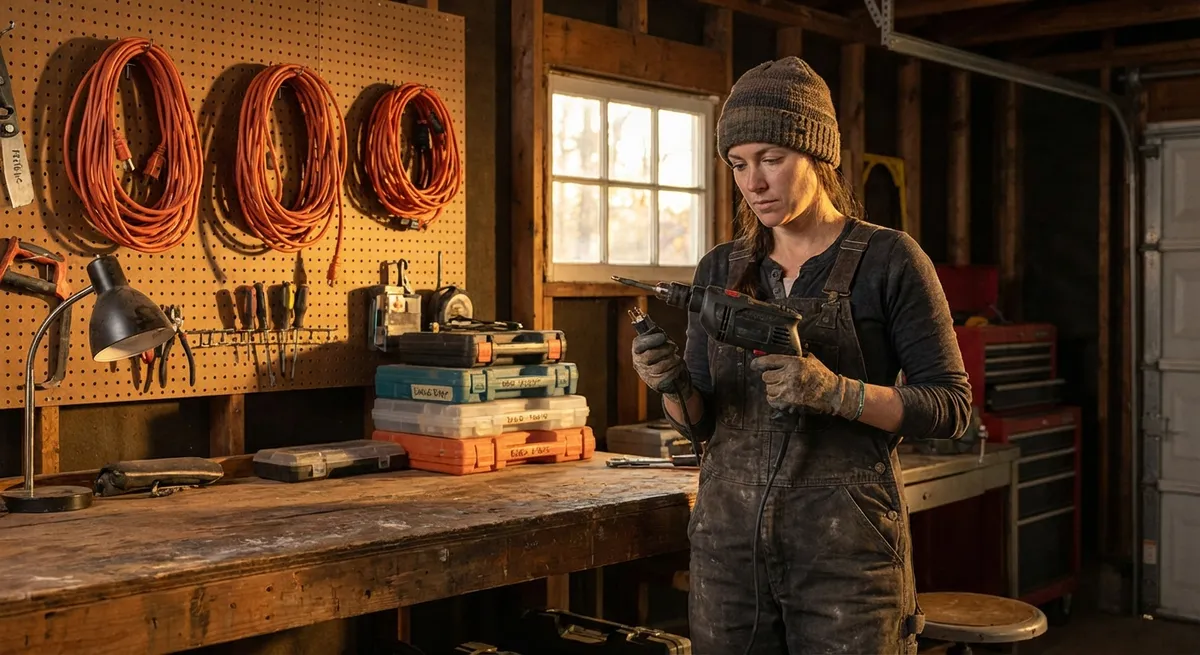
How you treat your corded tools after each project matters almost as much as how you use them. Once you’re done for the day, unplug every tool and let it cool down for a few minutes. Use a dry brush, compressed air, or a shop vacuum to remove sawdust, drywall dust, or metal shavings from vents, switches, and moving parts; dust buildup leads to overheating and early motor failure. Wipe down housings and handles with a slightly damp cloth and then a dry one—avoid soaking any electrical parts. For saws, lightly clean blades with a suitable cleaner if they show pitch or resin buildup, which can cause burning and rough cuts.
Inspect cords regularly: if you see exposed copper, deep cuts, or crushed areas, label the tool “Do Not Use” and repair or replace the cord before using it again. Store tools in a dry, temperature‑stable area off the floor; hanging them on a wall or keeping them in labeled bins or their original cases protects them from moisture and accidental damage. Coil cords loosely—tight, sharp wraps can break internal wires over time. For tools with brushes or other wear parts, check the manual’s maintenance schedule and mark a reminder in your calendar to inspect them annually if you’re a frequent user. Create a small “support kit” with spare blades, drill bits, sanding discs, and a bottle of light machine oil so you’re always ready for the next project without abusing worn‑out accessories.
Conclusion
Corded tools can turn frustrating home projects into straightforward tasks—as long as you choose wisely, set up your workspace, and respect the power at your fingertips. By matching each tool to real jobs, reading the specs that matter, creating a safe work zone, using proper technique, and maintaining everything carefully, you’ll build a setup that actually makes your DIY life easier instead of more complicated.
Save or share this guide before your next tool purchase or weekend project. A few smart decisions now can keep your tools working smoothly and your projects on track for years.
Key Takeaway
The most important thing to remember from this article is that following these steps can lead to great results.