A solid tool collection is only half the story. What really matters is how safely, efficiently, and accurately you use what you already own. Whether you’re tightening a loose railing, hanging cabinets, or framing a new wall, the way you handle your tools can make the difference between a clean, durable result and a frustrating do-over. This guide walks through five practical, step‑by‑step routines that help you get better results from common DIY tools—without needing pro-level gear.
Step 1: Set Up a Safe, Efficient Workspace Before You Touch a Tool
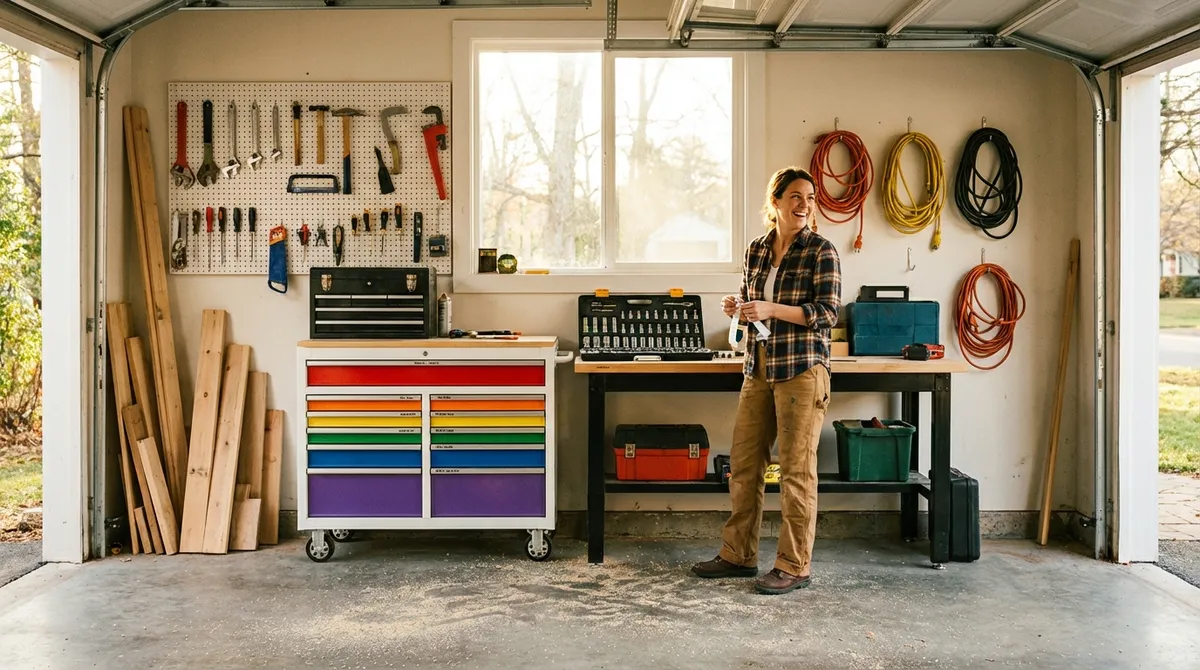
A good setup makes every tool work better. Instead of chasing extension cords, losing bits, and tripping over lumber, you’ll move smoothly from cut to cut and project to project.
- Choose a stable work surface. Use a sturdy workbench or a pair of sawhorses with a sheet of plywood on top. Make sure it doesn’t wobble and is roughly at waist height so you’re not hunched over all day.
- Plan where power will come from. Use a heavy‑duty, grounded extension cord rated for your tools (typically 12–14 gauge for most DIY power tools). Keep cords away from cutting paths and tape them down if they cross walkways.
- Create a “tool triangle.” Arrange your most-used tools (drill/driver, measuring tools, cutting tools) within arm’s reach of your main work area. Use a small bin or magnetic tray for screws, bits, and small parts so they don’t roll away.
- Set up proper lighting. Add a clamp light or LED work light that shines from above and slightly to the side to reduce shadows. Poor lighting leads to bad cuts, crooked holes, and unsafe mistakes.
- Define a safety zone. Keep kids, pets, and extra clutter out of a 3–5 ft radius around your work area. Store sharp tools with blades retracted or covered when not in hand, and unplug power tools before setting them down for more than a quick break.
A few minutes of prep here will prevent damaged materials, miscuts, and near-misses when you’re running saws, drills, or sanders.
Step 2: Use a Drill/Driver the Right Way for Clean, Straight Fastening
The cordless drill/driver is the workhorse of most DIY projects, but it’s easy to strip screws, damage surfaces, or drain batteries if you’re using it incorrectly. This routine helps you drive screws cleanly and consistently.
- Match the bit to the screw. Use the correct bit size and head type (PH2 for most construction screws, star/T25 for many outdoor fasteners). A loose-fitting bit leads to cam-out (slipping and stripping). If the bit wiggles in the screw head, pick a better fit.
- Set the clutch properly. The numbered ring near the chuck is your torque control. For light-duty work (hinges, cabinet hardware), start on a low setting. For building a deck or framing, go higher. Start low, test on scrap, and increase until the screw seats firmly without burying itself.
- Pre‑drill when needed. For hardwood, close-to-edge fasteners, or brittle materials, drill a pilot hole slightly smaller than the screw’s core. This reduces splitting and makes driving easier, especially with longer screws.
- Keep the drill square. Line your forearm up behind the drill and watch from the side to keep the bit perpendicular to the surface. If you’re unsure, use a small torpedo level on the drill body or mark a 90° reference line nearby to compare visually.
- Control speed, don’t just floor it. Start slow to seat the bit fully in the screw, then squeeze the trigger more as the screw goes in. Back off speed near the end so you don’t overdrive or strip the fastener. Use the drill’s low-speed/high-torque gear for driving screws and the high-speed gear for drilling small holes.
Once you dial in these basics, your screws will go in faster, straighter, and with less damage to the material—and your batteries will last longer.
Step 3: Make Accurate Cuts With a Circular Saw Using Simple Guides
A circular saw can feel wild if you’re freehanding cuts, but with a few simple steps and homemade guides, you can get straight, repeatable cuts that rival a table saw for most home projects.
- Mark your cut clearly. Use a sharp pencil and a reliable square (speed square or combination square) to draw a full line across the board. Mark an “X” on the waste side so you know which side of the line the blade should follow.
- Support the work properly. Place the board on sawhorses or foam insulation on the ground so the cut-off can fall away without pinching the blade. Never cut where the scrap piece is trapped between supports—that’s how boards bind and kick back.
- Set the blade depth. Unplug or remove the battery, then adjust the blade so it extends about 1/8–1/4 inch below the material. A shallower cut is safer, easier on the motor, and cleaner on the edge.
- Use a straightedge guide. Clamp a straight board or aluminum guide rail so the saw’s base rides against it. Measure from the saw blade to the edge of the base plate, then offset the guide that exact distance from your cut line before clamping. This transforms your circular saw into a track saw for straight cuts.
- Start the saw off the material. Bring the blade up to full speed before gently feeding it into the cut. Keep steady, forward pressure while pressing the base tightly against the guide. Don’t force it—let the blade do the work. If it bogs down or burns the wood, your blade may be dull or the feed rate too aggressive.
With these habits, you’ll waste fewer boards, get tight-fitting joints, and feel less nervous every time you pull the trigger.
Step 4: Measure and Mark Like a Pro So Your Tools Don’t Fight You
Most “crooked” results aren’t the tool’s fault—they start with poor measurements and markings. This routine boosts accuracy so your saws, drills, and nailers can actually do their jobs.
- Lock your tape and hook correctly. When you measure from an outside edge, hook the tape on the edge and pull it taut; when measuring inside (between two walls), press the hook firmly into the corner so the sliding hook compensates for its own thickness. Avoid bending the tape in tight corners—use a rigid ruler or add measurements when needed.
- Use consistent reference points. Always measure from the same edge or corner of a board when laying out multiple cuts. Mark which side is your “reference edge” with a light pencil line so you don’t flip boards randomly and introduce small errors.
- Mark with symbols, not just lines. Use a “V” mark with the point on your exact measurement instead of a random scratch. The point of the V tells you exactly where to align your blade or drill bit. For repetitive cuts, label each piece with its length and location (e.g., “36 – left rail”) so nothing gets mixed up.
- Square your layout lines. Use a speed square or framing square to draw perpendicular lines for cuts and holes. If a cut line isn’t square to an edge, your tools will follow that crooked line perfectly—and your project will be off.
- Double-check critical dimensions. For anything that has to fit inside an opening (shelves, cabinets, trim), measure the actual opening in at least two places (top and bottom, left and right). Use the smaller measurement and dry-fit pieces before permanently fastening.
Once your measuring and marking are consistent, even budget tools can produce clean, professional-looking results.
Step 5: Handle Dust, Noise, and Vibration So You Can Work Longer and Safer
Your tools don’t just cut and drill; they also produce dust, noise, and vibration that can wear you down and damage your health over time. Setting up simple controls helps you work more comfortably and effectively.
- Wear the right protection. Use safety glasses with side shields for cutting and drilling, hearing protection (earmuffs or plugs) for loud tools, and a dust mask or respirator rated at least N95 when sanding or cutting materials that generate fine dust (especially MDF, fiber cement, or old paint).
- Capture dust at the source. Many sanders, miter saws, and circular saws have dust ports. Connect a shop vacuum with a proper filter and secure the hose so it doesn’t pull loose. Even a basic vac dramatically cuts cleanup time and improves visibility while you work.
- Control vibration exposure. When using tools like reciprocating saws, hammer drills, or orbital sanders, take short breaks instead of long, continuous sessions. Use both hands, keep a relaxed but firm grip, and let the tool do the work. Over-gripping increases fatigue and vibration transfer.
- Reduce noise where possible. Close doors to living spaces, work during reasonable hours, and consider using quieter tool modes (impact driver vs. hammer drill in masonry only when needed). For indoor projects, lay down a scrap rug or foam under your workpiece to absorb noise and vibration.
- Maintain a clean, breathable area. Sweep or vacuum regularly during the project, not just at the end. Clear chips and dust from your work surface before making layout marks so you’re not measuring on debris. If working indoors, use a box fan in a window blowing out to help exhaust dusty air.
Managing the “side effects” of tools doesn’t just protect your health—it also keeps your mind clearer and your results more precise over the full length of a project.
Conclusion
Good DIY work isn’t about having every fancy tool on the market. It’s about setting up your space smartly, using the tools you already have with intention, and following simple, repeatable steps for cutting, drilling, fastening, and protecting yourself. When you dial in your workspace, technique, accuracy, and safety, your tools start to feel more predictable—and your projects look and perform closer to what you had in mind from the start. Build these routines into every job, and each project will feel smoother than the last.
Sources
- Occupational Safety and Health Administration (OSHA) – Hand and Power Tools - Official U.S. guidance on safe use of common tools and equipment
- Centers for Disease Control and Prevention (CDC) – Noise and Hearing Loss Prevention - Information on protecting your hearing when using loud tools
- Environmental Protection Agency (EPA) – Protecting Workers from Lead-Based Paint Hazards - Guidance on dust and safety when working on older homes with potential lead paint
- Family Handyman – How to Use a Circular Saw - Practical tips and visual examples for safer, straighter cuts
- Fine Homebuilding – A Beginner’s Guide to Cordless Drills and Drivers - In-depth overview of drill/driver setup, clutch settings, and bit selection
Key Takeaway
The most important thing to remember from this article is that this information can change how you think about Tools & Equipment.