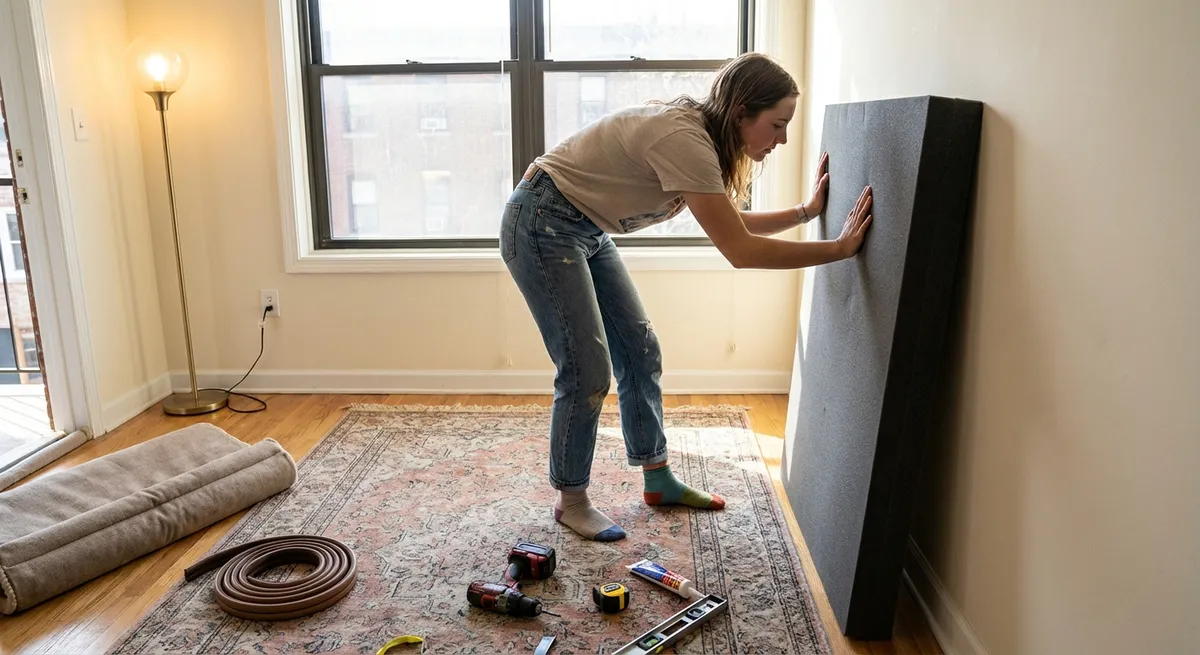
Noise leaks in from all directions—neighbors, traffic, kids, pets, appliances. Full professional soundproofing can be expensive, but a few smart DIY projects can make your home noticeably quieter without major construction.
This guide walks you through five practical, step-by-step soundproofing projects you can do with basic tools. Each one focuses on small, targeted fixes that add up to a calmer space.
Understand Where the Noise Is Really Coming From
Before you start sealing or building anything, you need to find your biggest weak spots. Sound moves through air gaps, thin materials, and rigid connections between rooms. A quick “noise audit” helps you spend time and money where it matters.
Walk through your home at different times of day when noise is worst—maybe morning traffic, evening TV, or weekend yard work. Listen from the inside and note where the sound feels strongest: windows, doors, shared walls, floors, or ceilings. Use a notepad or your phone to list locations and types of noise (voices, bass, traffic, footsteps).
If you can, stand on the noisy side (hallway, outside, or another room) and have someone talk at a normal volume while you listen from the other side. Trace around doors, windows, outlets, vents, and baseboards with your hand to feel for drafts—air leaks often equal sound leaks. Identify 2–3 “priority” areas to start with. Focusing on these will give you the most noticeable improvement with the least work.
Step 1: Seal Door Gaps That Leak Sound
Interior and exterior doors are some of the biggest sound leaks in most homes, especially around the edges and underneath. Tightening up those gaps is one of the fastest, cheapest upgrades you can do.
What you’ll need
- Adhesive foam or rubber weatherstripping
- A door sweep (for the bottom gap)
- Measuring tape
- Scissors or utility knife
- Screwdriver (for some sweeps)
How to do it
Inspect the door in daylight
Close the door and turn off the lights inside the room during the day. If you can see light around the edges or under the door, sound is getting through the same openings.
Measure the frame gaps
Open the door and measure the length of the top and both sides of the frame. Note whether the gaps are large (you can easily see through) or small (hairline).
Apply weatherstripping around the frame
Clean the frame with a dry cloth. Starting at the top, peel and stick weatherstripping along the door stop (the part the door closes against), pressing firmly as you go. Cut the ends cleanly at the corners so there are no breaks or overlaps. Close the door and make sure it still latches smoothly—if it’s hard to close, use thinner weatherstripping.
Install a door sweep on the bottom
With the door closed, measure the width. Choose a door sweep that matches or can be trimmed. Mark the sweep to size and cut if needed. Attach according to the instructions—some screw into the bottom of the door, others slide on. Adjust so the rubber or brush just touches the floor or threshold without dragging heavily.
Test and tweak
Close the door and check for light around the edges again. Listen from both sides while someone speaks or plays music at normal volume. If there are still leaks, add additional thin weatherstripping or adjust the sweep height until the gaps are minimized.
Tip: For doors between noisy and quiet rooms (like a bedroom off a living room), treat both sides of the door area—door sweep, frame gaps, and even a heavy curtain over the door if needed.
Step 2: Dampen Noisy Walls with Fabric and Furniture
You don’t need to build new walls to make them quieter. Often the goal isn’t perfect soundproofing but reducing echoes and softening how noise carries from room to room.
What you’ll need
- Heavy curtains or fabric panels
- Curtain rods or wall hooks
- Bookshelves or cabinets
- Area rugs and soft furnishings
- Basic tools (drill, level, screws, anchors)
How to do it
Target the loudest wall
Stand in the room and clap your hands. If you hear a sharp echo or “ring,” the room is too reflective. Walls shared with noisy neighbors or active rooms (TV area, kid’s room) are good starting points.
Use furniture as a sound buffer
Move a full bookcase, storage cabinet, or wardrobe against the shared or noisy wall. Filling it with books, baskets, or linens adds mass and absorbs sound. Make sure it sits flat and secure; use wall anchors or anti-tip straps where needed.
Add soft surfaces strategically
Place area rugs on hard floors, especially in the middle of the room and within 2–3 feet of the noisy wall. Add fabric elements—sofas, upholstered chairs, cushions—near that wall so sound doesn’t bounce directly off hard surfaces.
Hang heavy curtains or fabric panels
For particularly noisy walls, hang heavy curtains or fabric panels a few inches off the wall, like a “false wall” of fabric. Install a curtain rod or hooks above the area you want to cover. The small air pocket between fabric and wall helps absorb sound better than fabric alone.
Check the difference and adjust
Repeat the hand-clap test and compare. If one spot still sounds harsh, add a second fabric layer or shift furniture closer to that section. Sometimes even moving a couch 6–12 inches can noticeably cut how sound travels.
Tip: Focus on the first surfaces sound hits: the wall across from your speakers or TV, and the wall behind seating. Treating these areas first usually gives the best return.
Step 3: Quiet Rattling Windows and Street Noise
Windows are another major sound pathway, especially in older homes. You don’t need to replace them to improve things—tightening them up and adding layers can make a big difference.
What you’ll need
- Weatherstripping tape (foam, rubber, or V-strip)
- Acoustic or thermal blackout curtains
- Caulk (for gaps between frame and wall)
- Utility knife, caulk gun, measuring tape
How to do it
Inspect the window for movement and gaps
Gently push on the window sash (the part that moves). If it rattles, shifts, or you feel air coming in around it, that’s where to start. Look for cracks between the window frame and wall.
Seal frame-to-wall gaps
If you see visible cracks around the window frame, run a thin bead of paintable caulk along these seams on the interior side. Smooth it with a damp finger or tool and let it cure per the instructions.
Add weatherstripping to the sash
Open the window and clean the contact surfaces where the sash meets the frame. Apply adhesive weatherstripping along those contact points, focusing on areas with the biggest gaps. Close the window to check that it still locks and seals without excessive force.
Hang heavy curtains over the entire window area
Mount a curtain rod several inches above the window and at least 3–6 inches wider than the frame on each side. Hang heavy, lined, or “acoustic” curtains that reach to the floor. For best effect, use two layers: a sheer or lighter curtain near the glass and a heavy curtain closest to the room.
Optional: add a removable window plug
For very noisy locations (busy streets, loud neighbors), cut a piece of rigid foam board to fit snugly inside the window frame. Wrap it in fabric for appearance and insert it when you need maximum quiet. Remove it when you want natural light.
Tip: Even if you can’t fully soundproof a window, combining sealing, curtains, and a plug where needed can significantly reduce high-frequency noise like voices and traffic hiss.
Step 4: Soften Footstep Noise Between Floors
If you hear every footstep from upstairs—or your downstairs neighbors complain about you—you can reduce impact noise with a few surface-level changes.
What you’ll need
- Area rugs or carpet runners
- Rug pads (dense felt or rubber, not thin foam)
- Door sweeps or draft stoppers for hallway doors
- Basic tools for trimming rug pads
How to do it
Identify “impact zones”
Walk around and note where footsteps sound loudest—hallways, near stairs, kids’ play areas, and in front of beds often top the list. Focus on these first; you don’t need to cover every square foot.
Choose rugs that cover walking paths
Select area rugs or runners that cover primary walkways rather than just decorating empty space. Measure the space to ensure the rug isn’t too small—a rug that floats in the middle of the room won’t help much with impact noise.
Use dense rug pads underneath
Lay down a high-density felt or rubber pad cut slightly smaller than the rug. Avoid very thin or flimsy foam pads; heavier pads absorb more impact and help keep rugs from sliding.
Layer where you can
In problem spots, you can double up thinner rugs or use a thicker pad and a medium-thick rug on top. Make sure edges are secure to prevent trip hazards—use rug tape or non-slip pads at corners if needed.
Block hallway and stairwell sound paths
Add door sweeps or draft stoppers to doors near stairwells or central halls. Even partially closing these doors can reduce how far noise travels. Combine this with rugs on stairs or landings if possible.
Tip: If you’re upstairs and someone else is below, walk in socks or soft-soled slippers and keep hard-heeled shoes by the door. Pair this habit change with the physical fixes for the best results.
Step 5: Create a Quieter “Work or Sleep” Zone
Sometimes you don’t need the whole home quieter—you just need one reliable refuge to focus or rest. You can build a calmer zone with targeted upgrades even in a generally noisy space.
What you’ll need
- Weatherstripping and door sweep (from Step 1)
- Heavy curtains or a door curtain
- Soft furnishings: rug, cushions, wall hangings
- White noise machine or smartphone app + speaker
How to do it
Pick the best candidate room
Choose a room with only one or two shared walls if possible (like a corner bedroom or interior office). Fewer shared surfaces mean fewer paths for sound.
Tighten the door and main window
Install weatherstripping and a door sweep on the room’s door. Treat the main window with sealing and heavy curtains as in previous steps. This prevents outside and hallway noise from pouring in.
Soften surfaces inside the room
Add an area rug if you have hard floors. Place upholstered furniture or cushions near the noisiest wall and hang a fabric wall hanging or curtain panel if that wall is bare.
Add a layered curtain or door drape
If noise comes from the hallway or another room, install a curtain rod above the door on the inside of the “quiet room” and hang a heavy, floor-length curtain that you can close when needed. This adds another sound barrier without permanent changes.
Use controlled sound to mask what remains
Add a white noise machine or use a smartphone app with a small speaker. Set it to a consistent, low-level sound (like rain, fan noise, or brown noise). This doesn’t remove noise but makes sudden sounds less noticeable and easier to ignore.
Tip: Treat this room as your “quiet zone rules” area—no loud devices, no speakerphone calls, and minimal hard, echoey surfaces. The combination of physical changes and behavior shifts can make it your most peaceful space.
Conclusion
You don’t need specialized tools or a full remodel to make your home quieter. By sealing obvious gaps, adding soft and dense materials where sound travels most, and creating at least one dedicated quiet zone, you can make a noticeable difference in how your home sounds and feels.
Start with one or two of these projects in the loudest areas, live with the changes for a week, and then decide where to improve next. Small, focused fixes add up—and a calmer space can make everything from sleep to work at home a little easier.
Sources
- [U.S. Department of Energy – Weatherstripping](https://www.energy.gov/energysaver/weatherize/air-sealing-your-home/weatherstripping) - Guidance on choosing and installing weatherstripping to seal gaps around doors and windows
- [U.S. Department of Energy – Caulking](https://www.energy.gov/energysaver/weatherize/air-sealing-your-home/caulking) - Explains where and how to use caulk to seal cracks and openings in building envelopes
- [EPA – Noise Pollution Basics](https://www.epa.gov/aboutepa/noise-pollution) - Overview of noise pollution, its impacts, and basic mitigation concepts
- [ScienceDirect – Sound Insulation and Absorption Overview](https://www.sciencedirect.com/topics/engineering/sound-insulation) - Technical background on how materials and assemblies affect sound transmission and absorption
- [Mayo Clinic – White Noise and Sleep](https://www.mayoclinic.org/healthy-lifestyle/adult-health/expert-answers/white-noise-and-sleep/faq-20417082) - Discusses how consistent background sound can help mask disruptive noises and support better sleep
Key Takeaway
The most important thing to remember from this article is that this information can change how you think about DIY Projects.