Sound travels through walls, floors, ceilings, and even tiny gaps you barely notice—until your neighbor’s TV or your kid’s drum practice proves otherwise. If you’re already planning a renovation, it’s the perfect time to add real soundproofing instead of just hanging thicker curtains and hoping for the best.
This guide walks you through practical, DIY‑friendly soundproofing steps you can build into a remodel. You’ll learn what actually works, what’s a waste of money, and how to tackle sound at the structure, not just the surface.
Understand How Sound Really Moves Through Your Home
Before you start buying special drywall or fancy foam, it helps to know what you’re fighting.
Sound moves in three main ways:
- Airborne noise: Voices, TV, music, dogs barking. These move through air and into gaps, thin walls, outlets, and doors.
- Impact noise: Footsteps, dropped objects, chairs sliding. These travel through the structure—floor joists, studs, and framing.
- Flanking noise: Sound that takes the “long way around,” traveling through ceilings, side walls, ducts, or shared framing into other rooms.
Key concepts to keep in mind:
- Mass blocks sound: Heavier, denser materials (drywall, plywood, concrete) reduce airborne noise better than light, flexible ones.
- Decoupling helps: Creating breaks between surfaces (like a “floating” wall or resilient channels) makes it harder for vibrations to pass through.
- Absorption tames echo: Soft, porous materials (insulation, acoustic panels, rugs) reduce reflections inside a room but don’t block sound entirely.
- Weak points ruin everything: A solid wall loses a lot of performance if you leave gaps around outlets, doors, or vents.
During renovation, your best move is to combine mass, decoupling, and sealing where it matters most: walls, ceilings, and floors between noisy and quiet spaces.
Step 1: Plan Your Soundproofing Before You Open Any Walls
A solid plan will save you money, time, and rework.
Identify your priority room(s)
Decide what you’re trying to quiet or contain: a home office, nursery, home theater, music room, or a bedroom near a busy street. Focus your budget there first.
Map the noise paths
Walk the house at a noisy time (evening or weekend) and note: - Which walls share space with loud rooms or the outside - Where noise “leaks” most (air vents, under doors, thin interior walls) - Floors directly under/over noisy rooms (kids’ rooms, living rooms, kitchens)
Choose a realistic soundproofing level
You’re not building a recording studio; you’re aiming for: - “Quieter and less distracting” vs. - “Barely audible through the wall” A moderate level might mean adding insulation and sealed drywall. A more aggressive approach may include double drywall, damping compounds, and decoupling.
Check building codes and structure
- Verify what changes are allowed in your area (especially in shared buildings or condos). - Don’t overload structures with extra layers of drywall without confirming joist and framing capacities or local code limits.
Set a focused budget
Prioritize: - Shared walls between noisy and quiet rooms - Ceilings below high‑traffic floors - Exterior walls facing busy roads This keeps your spending targeted, not scattered.
Step 2: Open Walls and Add Proper Insulation Where It Matters
Once walls or ceilings are open, you have a rare chance to control sound at the framing level.
Choose the right insulation type
For most residential projects, focus on: - Mineral wool (rockwool): Great sound absorption, fire‑resistant, easy to cut; often better acoustically than standard fiberglass. - Fiberglass batts: Cheaper and still helpful, but slightly less dense than mineral wool. - Don’t rely on spray foam for soundproofing: It’s excellent for air sealing and energy efficiency but not a top performer for blocking noise by itself.
Fill the cavity correctly
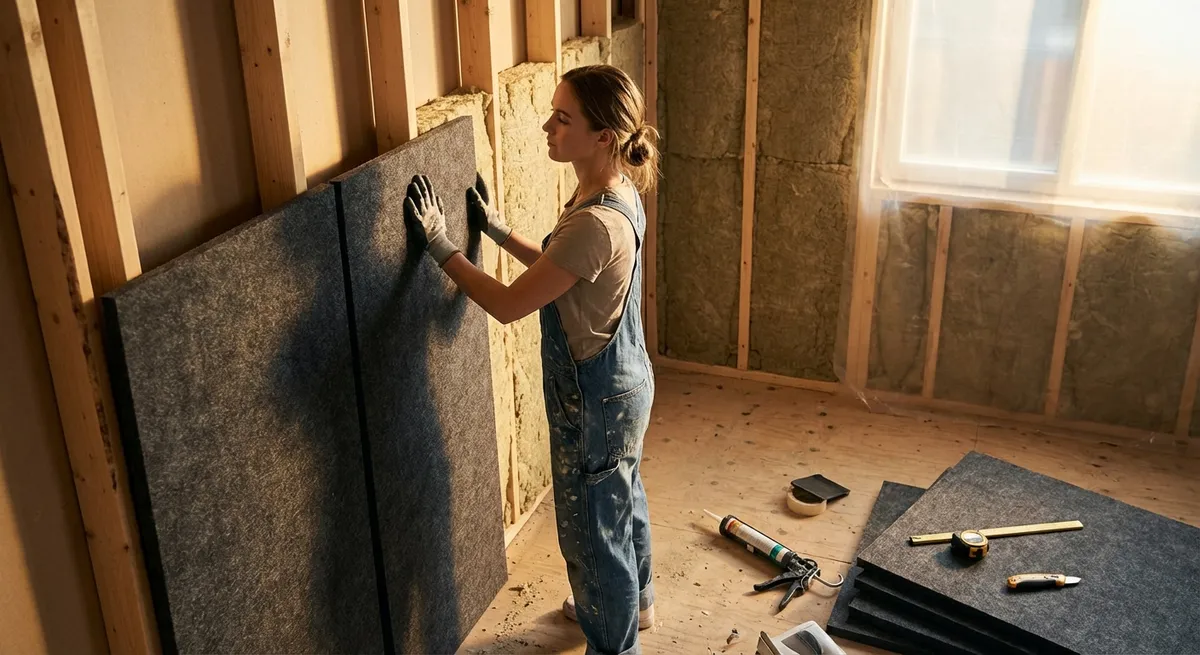
- Completely fill stud bays with snug‑fitting batts; avoid big compressed lumps or large gaps. - Cut around wires, boxes, and pipes instead of cramming insulation behind them. - Avoid leaving open cavities—these act like drums and amplify sound.
Address flanking paths inside the cavity
- Seal large gaps or penetrations between rooms (like plumbing chases) with fire‑rated sealant or appropriate covers. - Avoid direct contact between pipes/ducts and framing where possible; use isolation hangers or pads if feasible.
Consider resilient techniques if you’re going big
If you’re willing to invest and do more advanced work: - Use staggered studs or double studs on new interior walls to physically separate surfaces. - For ceilings, consider resilient channels or sound isolation clips to decouple drywall from joists. Follow manufacturer instructions carefully—incorrect spacing or screw placement can ruin the benefit.
Don’t forget safety
- Wear a mask, gloves, and eye protection when handling insulation. - Keep insulation clear of recessed light fixtures unless they’re IC‑rated and approved for contact.
Step 3: Add Mass, Damping, and Sealed Drywall Layers
Once the cavity is treated, the wall or ceiling surface is your next defense.
Upgrade your drywall strategy
Options, from basic to better: - Standard single layer: Cheapest, some improvement when combined with insulation. - Double layer drywall: Adding a second layer with staggered seams significantly increases mass and helps block sound. - Sound‑rated drywall: Specialized boards with internal damping; more expensive but can save some installation time.
Use damping compounds where they make sense
- Apply an acoustic damping compound (like Green Glue or similar products) between two layers of drywall. - This converts some sound energy into heat (at a tiny, safe scale), reducing vibration through the wall. - Follow manufacturer coverage rates and screw patterns for best performance.
Stagger seams and joints
- Offset seams between the first and second drywall layers so you don’t create straight noise paths. - Aim to keep seams away from the exact middle of the wall span when possible.
Seal every edge and penetration
- Use acoustic caulk or high‑quality sealant: - Along the perimeter where drywall meets floors, ceilings, and adjacent walls - Around electrical boxes, pipes, and HVAC penetrations - Don’t leave open gaps; even small cracks can dramatically reduce overall performance.
Finish like a regular wall—but stay mindful
- Tape, mud, and sand as usual. - Avoid cutting unnecessary new holes after you’ve gone to all this trouble. Plan outlet, switch, and fixture locations in advance.
Step 4: Improve Doors, Windows, and Floors That Leak Noise
Even with solid walls, weak doors, windows, and floors can sabotage your work.
Upgrade interior doors where possible
- Replace hollow‑core doors with solid‑core doors on rooms that need quiet (bedrooms, home office, nursery). - Use a good door sweep and weatherstripping to seal gaps at the bottom and sides. - Make sure the latch side pulls the door tight against the seals.
Seal and enhance existing windows
If you’re not replacing windows: - Add high‑quality weatherstripping around sashes. - Use acoustic caulk at window-to-wall gaps behind trim. - Consider acoustic or laminated glass storm windows or interior window inserts where street noise is bad. - Heavy curtains help with echo and add a bit of sound reduction but are not a primary soundproofing method.
Handle floors for impact and airborne sound
For rooms above others: - Install a dense underlayment under new flooring (cork, rubber, or specialized acoustic underlayment). - Carpeting with a thick pad will always perform better than hard surfaces for impact noise. - For hardwood or vinyl, choose underlayments rated for sound transmission (look for IIC and STC ratings).
Pay attention to transitions and vents
- Use flexible acoustic sealant at floor edges and between different flooring materials. - Avoid straight‑through shared duct openings between rooms; if unavoidable, consider offset baffles or acoustic duct liners.
Treat the room’s interior if needed
- To cut down on echo (especially in offices, media rooms, or studios), add: - Bookshelves with books - Area rugs - Acoustic wall panels or fabric‑wrapped absorbers These don’t block sound leaving the room but make it more comfortable and reduce “loudness” inside.
Step 5: Test, Adjust, and Finish With Smart Design Choices
Once the heavy work is done, small tweaks can polish the result.
Do a simple noise test
- Play a consistent sound (music or a white noise app) on one side of the wall. - Walk the connected rooms and note: - Where it’s still loud - Which surfaces seem to be leaking (around outlets, doors, vents, or the floor/ceiling line)
Seal remaining small gaps
- Add gaskets or acoustic putty pads behind electrical outlet and switch covers for shared walls. - Re‑caulk any visible cracks or gaps with acoustic sealant. - Improve weatherstripping on doors if you can see light or feel air movement.
Adjust furniture layout to your advantage
- Place bookcases, cabinets, or wardrobes along shared walls (ideally with a bit of air gap) to add extra mass. - Avoid putting loudspeakers directly on or against shared walls; use stands or decoupling pads.
Dial in the room’s function
- For a home office, consider: - Soft wall art or acoustic panels behind your desk - A rug under your chair to reduce rolling noise - For a media or gaming room: - Place subwoofers on isolation pads or platforms - Use wall mounts with rubber isolation where possible
Document what you did for future projects
- Take photos of: - Insulation in the walls - Locations of wires, pipes, and any special channels/clips - Make notes on which products and techniques worked best so you can repeat them in other rooms.
Conclusion
Soundproofing works best when you treat it like part of the structure, not an afterthought. By planning ahead, filling wall cavities correctly, adding mass and damping, sealing every edge, and fixing weak links like doors and floors, you can make a noticeable difference without turning your home into a construction lab.
You don’t have to do everything at once. Start with the loudest room or the wall that bothers you most, apply these steps carefully, and build from there. The payoff is a home that feels calmer, more private, and better suited to real life—whether that’s working from home, raising kids, or just enjoying a quiet night in.
Sources
- [U.S. Department of Energy – Insulation Materials](https://www.energy.gov/energysaver/weatherize/insulation/insulation-materials) - Explains different insulation types and their properties, including sound-related benefits
- [Soundproofing 101 – Acoustical Surfaces](https://www.acousticalsurfaces.com/blog/soundproofing-101/) - Overview of basic soundproofing concepts like mass, decoupling, and damping
- [Green Glue Noiseproofing Compound – Technical Information](https://www.greengluecompany.com/noiseproofing-compound) - Manufacturer details on using damping compound between drywall layers
- [U.S. General Services Administration – Sound Isolation and Noise Control](https://www.gsa.gov/real-estate/design-construction/design-excellence/sound-isolation-and-noise-control) - Government guidance on designing for sound control in buildings
- [Harvard University – Acoustics and Noise Control Basics (EH&S)](https://www.ehs.harvard.edu/programs/acoustics-noise) - Educational overview of how sound travels and methods to reduce noise in buildings
Key Takeaway
The most important thing to remember from this article is that following these steps can lead to great results.