Updating tired kitchen cabinets can change the whole feel of your home—without the cost and chaos of a full gut renovation. With the right prep, tools, and a clear plan, you can turn dated, dinged-up cabinets into a cleaner, brighter focal point in a single long weekend.
This guide walks you through a practical, DIY-friendly cabinet refresh: cleaning, minor repairs, paint or finish updates, and new hardware. No fancy equipment, no pro crew—just careful steps and realistic expectations.
Step 1: Plan the Look and Check Your Cabinets’ Condition
Before you touch a screwdriver, decide what you’re aiming for and make sure your cabinets are worth the effort.
Start by choosing the finish you want: painted (most popular for a dramatic change), re-stained (best for solid wood you want to highlight), or just cleaned and refreshed with new hardware. Look at your countertop, backsplash, and flooring so your cabinet color doesn’t clash—warm whites work with creamy counters; cooler whites pair better with gray and black.
Inspect each cabinet door and drawer front for peeling veneer, water damage, warping, or soft spots around the sink. If doors are badly swollen or crumbling, replacement fronts might be smarter than a cosmetic refresh. Open each cabinet and make sure boxes are firmly attached to the wall and not pulling away; loose boxes or rotted bottoms may need more structural repair before a facelift.
Finally, take a full set of “before” photos and measurements, and make a simple sketch of your layout. This helps with ordering hardware, hinges, and any replacement parts, and sets a clear target for your finished look.
Step 2: Remove Doors, Label Everything, and Prep the Workspace
A clean, organized setup makes the whole project smoother and prevents frustration when it’s time to reassemble.
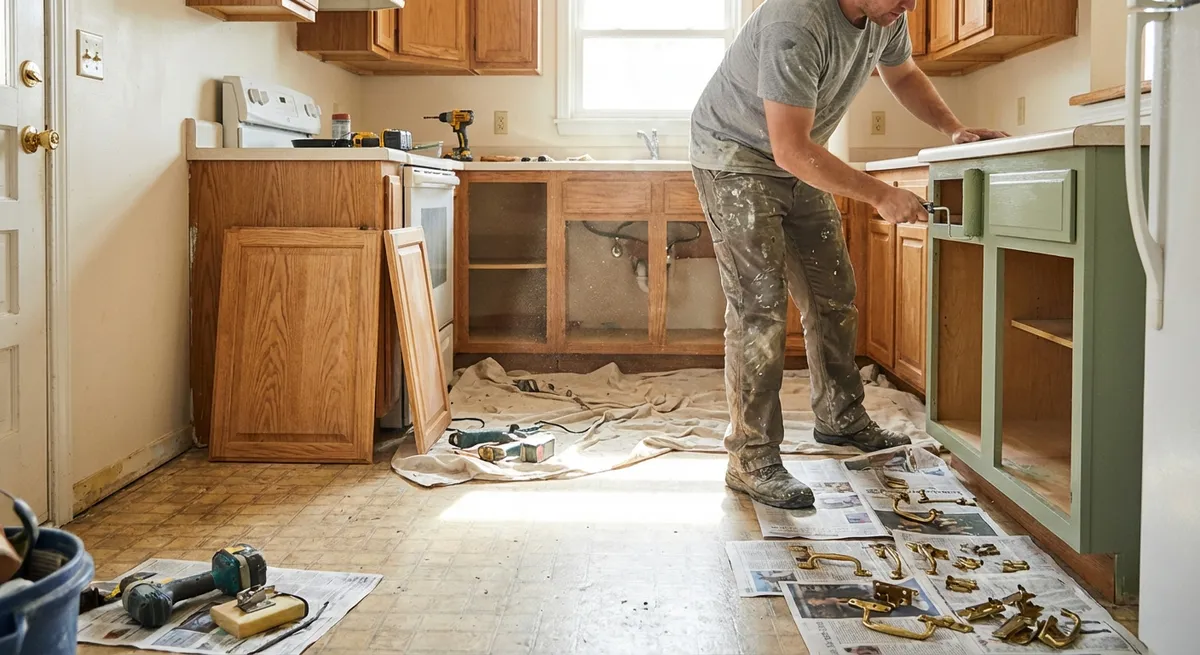
Start by clearing countertops and emptying the top shelves of cabinets so you can access hinges and box faces easily. Lay down drop cloths or rosin paper to protect counters and floors. Set up a work area in a garage, basement, or spare room with good ventilation where doors and drawers can dry undisturbed.
Remove doors one at a time, keeping hinges attached to either the door or the cabinet—just pick one method and stay consistent. As you remove each door and drawer, label it and the inside of its cabinet box using painter’s tape and a marker (for example: “Sink 1L” for left of sink, top door). This avoids the puzzle of mismatched doors later.
Pull all knobs, pulls, and bumpers, and store hardware you plan to reuse in labeled bags. If you’re upgrading hardware with a different hole spacing, plan now whether you’ll fill and re-drill holes. Take one door with you to the store if you need to match new hinges or handles that cover old marks.
Step 3: Deep Clean, Degloss, and Repair Surfaces
Good results depend far more on prep than on the paint or stain you buy.
Grease, smoke residue, and cooking film will ruin adhesion, so start with a thorough degreasing. Use a dedicated degreaser or a mix of warm water and a TSP substitute, scrubbing doors, drawer fronts, and cabinet frames. Pay special attention to edges, around handles, and near the stove. Rinse with clean water and let everything dry completely.
Once dry, fill dents, small chips, and old hardware holes with wood filler or spackle rated for cabinets or trim. For peeling veneer edges, use wood glue and clamps or painter’s tape to re-adhere loose sections. Allow fillers and glue to cure according to instructions, then sand them smooth with fine-grit sandpaper (180–220 grit).
Lightly sand all surfaces you plan to paint or re-stain. You’re not trying to remove all the old finish—just to knock down gloss and give the new finish something to grab. Use a sanding sponge for profiles and grooves. Vacuum dust and follow with a tack cloth or a damp, lint-free rag so no dust remains to contaminate the finish.
Step 4: Prime and Apply Your New Finish
This is where the visible transformation starts, but slow, careful work pays off in durability and appearance.
Choose a bonding primer designed for glossy or previously finished surfaces, especially if your cabinets are laminate or heavily varnished. For smoke-stained or very dark cabinets, a stain-blocking primer helps prevent bleed-through. Apply primer in thin, even coats with a high-quality brush for grooves and a foam roller for flat areas. Follow the grain of the wood, and avoid heavy buildup on edges where drips like to form.
After the primer dries, lightly sand with a fine grit (220 or higher) to knock down any raised fibers or roughness, then wipe clean. Apply your first coat of cabinet-grade paint or your selected stain. For paint, satin or semi-gloss formulas are easiest to clean in a kitchen; for stain, follow with a clear protective topcoat designed for cabinetry.
Use multiple thin coats rather than one heavy coat. Allow full dry times between coats—don’t rush this step or you’ll risk tacky finishes, fingerprints, and peeling later. Rotate doors as needed so you can work on one side at a time without smudging. Resist the urge to “just touch” surfaces that feel dry on top but may still be curing underneath.
Step 5: Install New Hardware and Reassemble Without Damage
Reassembly is where mistakes can chip fresh paint, so work slowly and protect your new finish.
If you’re changing hardware style or hole spacing, use a hardware jig or a simple cardboard template to mark consistent locations for new holes. Drill pilot holes carefully, using painter’s tape over the area to reduce chipping, and stop as soon as you break through the back of the door. Keep a light grip and let the bit do the work.
Reattach hinges to doors first, then mount doors onto cabinet boxes. Use your labels to put each door and drawer back in its original position. Place a folded towel or foam block under each door while you screw hinges back in, so dropped tools won’t dent your finish. Adjust hinge screws to straighten and align gaps between doors.
Install knobs and pulls, tightening them snugly but not so hard that they twist or compress the wood or finish. Add new felt or rubber bumpers to the corners of doors and drawers to prevent sticking and soft paint-on-paint contact. Give the cabinets another 24–72 hours to cure before heavy use, cleaning, or hanging very heavy items on doors.
Conclusion
A cabinet refresh isn’t as fast as a simple “weekend paint job,” but it can dramatically update your kitchen without replacing boxes or doors. With careful planning, thorough cleaning and prep, good primer, and patient reassembly, DIYers can get a crisp, durable new look that stands up to daily cooking and traffic.
Take your time with each step, especially cleaning, sanding, and drying. The more disciplined you are there, the more your finished cabinets will look like a professional upgrade—and the more value you’ll get out of every hour you put in.
Sources
- U.S. Department of Housing and Urban Development – Home Improvements - General guidance on home rehab and improvement considerations
- This Old House – How to Paint Kitchen Cabinets - Step-by-step tips and pro techniques for cabinet painting
- Benjamin Moore – Cabinet Painting Guide - Product-specific advice on primers, paints, and finishes for cabinets
- The Spruce – Pros and Cons of Painting Kitchen Cabinets - Helpful overview of what to expect from a DIY cabinet refresh
- Family Handyman – Installing Cabinet Hardware - Practical guide to drilling and aligning new knobs and pulls
Key Takeaway
The most important thing to remember from this article is that this information can change how you think about Renovation.