Interior doors are one of the most overlooked parts of a home, but upgrading them can make an entire space feel cleaner, newer, and more intentional—without tearing down walls or replacing floors. With some basic tools and a bit of patience, you can transform dingy, hollow-core doors into sharp, modern features that match the rest of your home.
This guide walks you through a practical, DIY-friendly door refresh: cleaning, repairing, painting, upgrading hardware, and dialing in the final fit. No need for a full remodel—just focused, manageable work that delivers a surprisingly big visual payoff.
Step 1: Decide Whether to Replace or Refresh Your Existing Doors
Before you pick up a sander or paintbrush, figure out if your existing doors are worth saving.
Start by walking through your home and looking at each interior door with a critical eye. Check for cracks, warping, water damage along the bottom edge, and any parts where the veneer is peeling or bubbling. Open and close each door: does it stick, drag on the floor, or fail to latch?
If a door is badly warped, has major structural damage, or is swollen from moisture, replacement may be smarter than repair. In that case, note the door size (width, height, and thickness), swing direction (left/right, in/out), and hinge locations. Matching these makes installation far easier.
If the doors are mostly sound but just look tired—yellowed paint, minor dents, sloppy caulk lines—they’re ideal candidates for a full refresh. Hollow-core flat-panel doors can be updated with new paint and hardware; solid or molded panel doors can look nearly new with careful prep.
Make a quick plan: which doors will you fully refresh, which might you upgrade with new hardware only, and which (if any) are worth replacing. This helps you budget both time and money and lets you group similar tasks together (like painting multiple doors at once).
Step 2: Prep the Door Like a Pro (Remove, Label, and Clean)
Good prep is what separates a clean, “factory” look from a rushed weekend project.
Start by removing the door from its hinges. With the door slightly open, wedge a piece of cardboard or a thin scrap of wood under the bottom edge to take some weight off the hinges. Use a hammer and small nail set, punch, or flat screwdriver to tap out the hinge pins from the bottom up. Once the pins are out, pull the door away from the jamb and carry it to a pair of sawhorses or a sturdy work surface.
Label everything as you go. Use painter’s tape on the top edge of the door and on each hinge leaf and strike plate: write the room name and position (“Hall bath – hinge top”). This makes reassembly much more straightforward and avoids doors getting mixed up if you’re doing several at once.
Next, remove hardware: knobs, latch plates, strike plates, and any old hooks or doorstops. Put the small parts for each door into a labeled plastic bag so nothing goes missing.
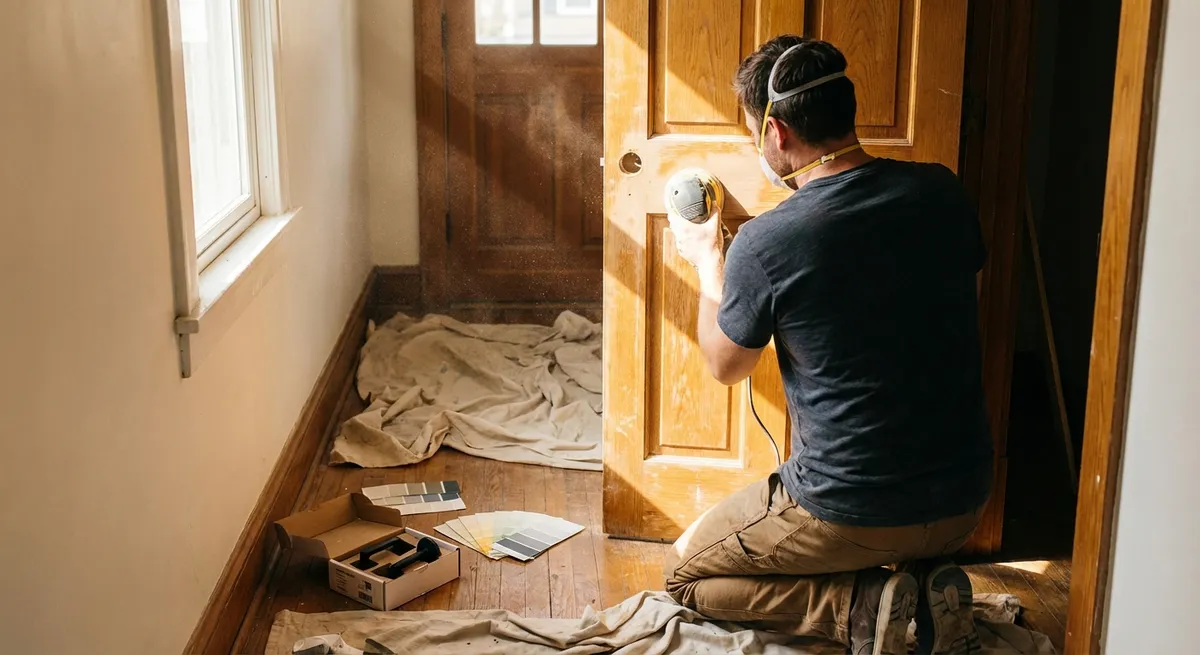
Before sanding or painting, clean the door thoroughly. Use a degreasing cleaner or a mild mix of dish soap and warm water to remove fingerprints, oils, and dust. Pay special attention to the area around the knob and along the edges where hands most often touch. Let the door dry completely; paint and filler adhere poorly to greasy or damp surfaces.
If your door has a glossy finish, gently scuff-sand the whole surface with 120–180 grit sandpaper to give your primer something to grip. Wipe away dust with a slightly damp cloth or tack cloth so you’re starting with a smooth, clean base.
Step 3: Repair Dents, Gaps, and Imperfections Before Painting
Refreshing a door isn’t just about color—it’s about restoring a clean, solid surface.
Inspect the door close up in good light. Look for nail holes, small dents, chipped edges, and hairline cracks around panels or trim. Run your hand lightly over the surface to feel for raised or low spots; often you’ll feel imperfections sooner than you see them.
For minor dents and nail holes in wood or MDF, use a paintable wood filler or spackle. Press it into the damage with a flexible putty knife, overfilling slightly to allow for sanding. For hollow-core doors with crushed or broken corners, you may need a denser filler or a two-part epoxy wood repair product; it’s stronger and bonds better where the surface is compromised.
If there are gaps where door panels meet stiles or rails, or between trim details and the flat parts of the door, use a paintable latex caulk. Cut the tip small, apply a thin bead, then smooth it with a damp finger or caulk tool. Caulk hides hairline gaps and gives painted doors a more finished, high-end look.
Let all fillers and caulk cure fully according to the package instructions. Once dry, sand the patched areas smooth with 180–220 grit sandpaper, blending them into the surrounding surface. You should not feel a ridge where the repair ends. Wipe down the door again to remove dust.
If you’ve exposed raw wood or made many repairs, spot-prime those areas with a quality primer. This prevents patched sections from flashing (looking different) under your top coat.
Step 4: Prime, Paint, and Upgrade Hardware for a Modern Look
Now you’re ready for the visible transformation: finish and hardware.
Start by applying a bonding primer suitable for your door material (wood, MDF, or previously painted surfaces). Use a quality synthetic brush for edges and a foam roller or low-nap roller for flat sections. Follow the natural lines of the door—panels first, then rails and stiles—for a more uniform look. Primer helps new paint adhere and improves durability, especially if you’re changing from a dark to a light color or going from oil-based to water-based finishes.
Once the primer is fully dry, lightly sand with fine (220 grit) sandpaper to knock down any raised fibers or dust nibs, then wipe clean.
Choose a durable, washable paint finish like satin or semi-gloss; these hold up well to frequent contact and cleaning. Interior door colors don’t have to be white—soft grays, warm taupes, or even deep, moody tones can look great if they coordinate with your trim and walls. If you’re unsure, matching or slightly contrasting with existing trim is a safe approach.
Apply the first coat of paint using the same pattern as the primer: panels, then horizontal rails, then vertical stiles. Avoid overworking the paint; maintain a wet edge to reduce brush marks. Allow it to dry thoroughly, then lightly sand again if needed and apply a second coat. A third coat may be necessary for dramatic color changes.
While the paint cures, turn to hardware. Replacing old, pitted brass knobs with modern levers or simple round knobs in black, brushed nickel, or matte brass can instantly update the look. When selecting new hardware, make sure it matches your door’s bore hole size and backset (distance from edge to center of knob). Many modern handlesets are designed as replacements and will fit standard pre-drilled doors with minimal fuss.
If your hinges are squeaky, rusty, or visibly dated, consider swapping them for new ones in a matching finish. Consistent hardware throughout a hallway or floor makes the whole area feel more intentional and finished.
Step 5: Rehang, Adjust, and Fine-Tune for a Smooth, Solid Feel
The final step is putting everything back together so your doors don’t just look better—they work better.
Start by reinstalling the latch and knob or lever. Follow the manufacturer’s instructions, making sure the latch’s beveled edge faces the strike plate side. Tighten screws firmly but don’t overtighten to the point that parts distort or bind.
Reattach the hinges to the door if you removed them. With a helper if possible, lift the door into position and line up the hinges with their counterparts on the jamb. Insert the hinge pins from the top down; tap them gently with a hammer until seated. Open and close the door a few times to make sure it swings freely.
If the door rubs against the floor or frame, identify where it’s binding. Light rubbing at the latch side can sometimes be fixed by slightly loosening the hinge screws and shifting the door within the existing play, then retightening. More significant interference may require trimming a small amount off the door edge with a hand plane or sander—remove a little at a time and test frequently.
If the latch doesn’t catch properly, inspect the strike plate. Sometimes simply loosening the screws and shifting it slightly up, down, in, or out solves the issue. For stubborn cases, you may need to enlarge the mortise (the recess in the jamb) slightly with a chisel to let the strike plate sit where it needs to.
Finally, check the gap around the door when it’s closed. A consistent reveal—roughly the same space along the top and sides—looks polished and also reduces sticking in humid weather. Tighten all hinge and hardware screws one last time, and wipe away any fingerprints or smudges from the fresh paint.
Once you’ve done one or two doors, the process becomes repeatable. Working in batches (prep day, paint day, hardware day) can make upgrading a whole floor of doors surprisingly manageable.
Conclusion
Updating tired interior doors is one of those projects that quietly transforms your home. You’re not knocking down walls or changing floorplans—but cleaner lines, fresh paint, and modern hardware make hallways, bedrooms, and living spaces feel more cohesive and intentional.
By assessing which doors are worth saving, doing solid prep, repairing imperfections, applying durable finishes, and dialing in the fit, you end up with doors that both look and feel better every time you use them. It’s a straightforward, DIY-friendly upgrade that can fit into weekends and evenings and still deliver results that feel close to a small renovation.
Sources
- [U.S. Department of Energy – Doors and Energy Efficiency](https://www.energy.gov/energysaver/doors) - Explains door types, materials, and basic performance considerations, helpful when deciding whether to replace or refresh.
- [Sherwin-Williams – How to Paint Doors](https://www.sherwin-williams.com/en-us/homeowners/how-to/painting-interior-doors) - Step-by-step guidance on priming, painting techniques, and finish choices for interior doors.
- [Benjamin Moore – Tips for Painting Trim and Doors](https://www.benjaminmoore.com/en-us/interior-exterior-paints-stains/how-to-advice/interior-painting-ideas/how-to-paint-trim) - Practical advice on surface prep, sheen selection, and achieving a smooth, durable finish.
- [Family Handyman – How to Fix a Sticking Door](https://www.familyhandyman.com/project/how-to-fix-a-sticking-door/) - Detailed methods for adjusting hinges, planing edges, and correcting latch issues when rehanging doors.
- [This Old House – How to Replace a Doorknob](https://www.thisoldhouse.com/doors/21015105/how-to-replace-a-doorknob) - Clear instructions and visuals for swapping old knobs with modern hardware on existing doors.
Key Takeaway
The most important thing to remember from this article is that this information can change how you think about Renovation.