Renovation doesn’t always mean tearing everything down to the studs. For many homes, a smart refresh—planned well and done safely—can transform a space without wrecking your budget or your week. This guide walks you through a practical, step-by-step process DIYers can use to update almost any room, from planning and prep to the finishing touches that make it feel intentional and complete.
Step 1: Define the Room’s Job Before You Pick Up a Tool
Before buying paint or tools, get clear on what this room actually needs to do for you. Function comes first—style is there to support it.
Start by standing in the doorway and asking three questions: Who uses this room most? What’s the main activity here (working, relaxing, hosting, sleeping, etc.)? What’s not working right now (storage, lighting, layout, comfort)? Write your answers down—those become your renovation priorities.
Walk the space once in the morning and again in the evening. Notice light, noise, and traffic patterns: Is the room too dark at night? Does glare hit screens during the day? Do doors or furniture block natural pathways? This helps you decide what matters more: better lighting, better furniture placement, or adding storage.
Finally, decide your “non‑negotiables” versus “nice‑to‑haves.” A non‑negotiable might be adding more outlets in a home office or fixing a drafty window in a bedroom. Nice‑to‑haves could be upgraded trim or swapping in new door hardware. This priority list keeps you from overspending on cosmetic changes while ignoring functional problems that will bother you every single day.
Step 2: Map Out a Realistic Scope, Budget, and Timeline
Once you know what needs to change, it’s time to define the scope so the project doesn’t balloon halfway through. Start by listing every task you think you need: paint walls, install shelves, replace light fixture, patch holes, update hardware, etc. Then group them into three categories: surface updates (paint, caulk, hardware), minor upgrades (lighting, storage, small carpentry), and major work (electrical changes, plumbing moves, structural work).
Match that list against your skills, tools, and time. Be honest: if you’ve never moved an electrical box before, that might be a “hire‑out” task, not a DIY experiment. Focus your own effort on jobs with clear instructions, low safety risk, and high visual impact—like painting, caulking, replacing trim, and assembling or installing prefabricated storage.
Build a rough budget by pricing materials online from at least two retailers and adding a 10–20% buffer for surprises. Include: paint and primer, caulk, patching compound, sandpaper, hardware, lighting, fasteners, and any tool rentals. If you’re doing anything electrical or plumbing, budget separately for a licensed pro even if you hope not to need one—then you’re prepared if something isn’t up to code.
Finally, set a timeline that fits your life. Break the work into blocks: “prep,” “paint,” “install,” and “finish.” Assign specific days or weekends to each block instead of vaguely planning to “work on the room this month.” This structure helps you keep momentum and avoid living in half-finished chaos for weeks on end.
Step 3: Prep the Space Like a Pro (So Everything Goes Faster)
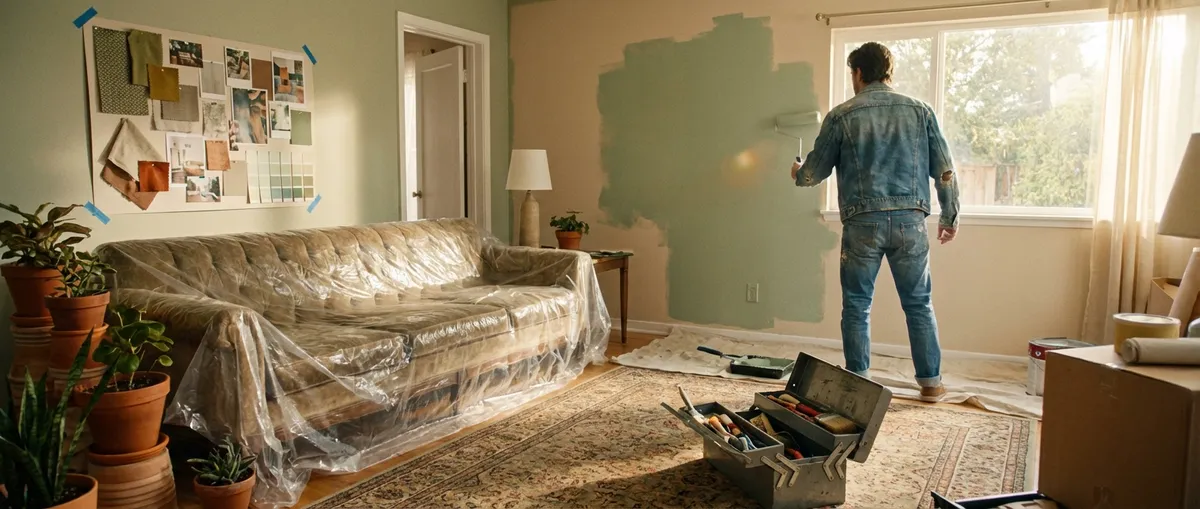
Good prep is what makes DIY work look clean instead of “obviously DIY.” It also protects the rest of your home from dust and damage. Before starting any work, clear as much out of the room as possible—furniture, rugs, decor, and anything on the walls or shelves. If something absolutely has to stay, push it to the center and cover it with plastic or old sheets.
Next, protect surfaces. Lay down rosin paper or a canvas drop cloth on the floor and tape it at the edges so it doesn’t shift. Cover vents to keep dust from circulating through your HVAC system, but remember to remove coverings when you’re done for the day. Remove switch plates, outlet covers, blinds, and curtain rods—even if you plan to put them back. This makes painting and patching much easier and cleaner.
Before you paint or install anything, deal with defects. Fill nail holes and small dings with spackle or lightweight joint compound using a putty knife, let it dry, then sand smooth. For larger cracks or gaps at trim or along baseboards, use paintable caulk, smoothing it with a damp finger or caulk tool. Always wipe away excess so you’re not fighting messy edges once it’s dry.
If you’re doing minor electrical work like swapping a light fixture, now is the time to shut off the power at the breaker panel and verify with a non‑contact voltage tester that circuits are actually dead. Label the breaker with tape so nobody accidentally flips it back on. Simple habits like this avoid rushed mistakes once you’re mid‑project.
Step 4: Tackle High‑Impact Surfaces First (Paint, Light, and Storage)
When refreshing a room, some updates deliver more value for your time than others. Focus first on changes that affect how the whole room feels: wall color, lighting, and storage.
For walls, choose a finish that matches how the room is used. Flat or matte paint hides flaws but is less washable; eggshell or satin is better in high‑traffic spaces and rooms that see more moisture or fingerprints. If your existing walls are glossy or patched in multiple places, use a primer first so your topcoat looks even. Cut in edges with a brush (ceiling lines, corners, and around trim) and then roll the walls in sections, keeping a “wet edge” to avoid lap marks.
Lighting is the next big upgrade. Replace harsh, outdated fixtures with options that spread light more evenly. For most general spaces, a warmer color temperature (2700–3000K) creates a comfortable feel. If this is a workspace or home office, consider neutral white (3500–4000K) for better visibility. Add task lighting where you actually work or read—desk lamps, under‑cabinet lights, or floor lamps positioned behind seating instead of overhead only.
Finally, build storage into the way you actually use the room. Instead of buying random organizers, look at empty wall areas, corners, and vertical space. Simple options like wall‑mounted shelves, hook rails near doors, narrow bookshelves, or storage benches can completely change how tidy the room feels. Secure any tall furniture to the wall with safety straps, especially in homes with kids or pets.
Throughout this step, constantly step back and view the room as a whole. After painting and updating lighting, you may realize you need fewer changes than you thought—sometimes new color and proper light solve problems that looked like “layout issues” or “clutter issues.”
Step 5: Finish With Details That Make the Room Feel Intentional
Once the big elements are done, the last step is tightening up details so the space feels finished instead of “almost there.” This is where you reassemble the room with better choices, not just put everything back the way it was.
Start by reinstalling or upgrading hardware: door handles, cabinet pulls, switch plates, and outlet covers. Choosing one consistent finish (like brushed nickel, matte black, or aged brass) throughout the room goes a long way toward making things feel cohesive. Make sure screws are aligned and tightened—small things like crooked plates instantly cheapen the look.
Next, look at textiles: curtains, rugs, and pillows. Hang curtain rods a bit higher and wider than the window frame when possible; this makes windows feel larger and lets in more light. Use a rug size that anchors the main furniture grouping, not just a small mat floating in the middle. These visual anchors make the layout feel deliberate and balanced.
Do a final pass on caulking and paint touch‑ups. Fill any gaps between trim and wall that became more obvious after painting, and carefully touch up scuffs, missed spots, or roller marks. Run a utility knife lightly along the edge of painter’s tape before pulling it off to avoid tearing your new paint.
Lastly, reintroduce decor with restraint. Start with what you actually use (lamps, trays, storage baskets, a few favorite books) and only then add art or personal items. Hang artwork at eye level for most people in your home and keep wall groupings tight instead of scattering small frames around. If something doesn’t earn its place—by function or by making you genuinely enjoy the room—don’t bring it back in.
Conclusion
Refreshing a room doesn’t require a massive budget or a demolition crew. When you define the room’s job, set a clear scope, prep properly, focus on high‑impact changes, and finish with intentional details, you can transform how a space feels in a matter of days—not months. The key is planning and sequence: function first, surfaces second, and style last. Follow this step‑by‑step approach and you’ll end up with a room that works harder for you, looks better, and feels like it finally fits the way you live.
Sources
- U.S. Department of Housing and Urban Development – Rehab a Home Guide - Overview of common renovation considerations, safety, and financing basics
- U.S. Consumer Product Safety Commission – Home Electrical Safety Checklist - Guidance on staying safe when working around electrical systems
- Energy.gov – Lighting Choices to Save You Money - Explains bulb types, color temperatures, and how to choose efficient lighting for different rooms
- Home Depot Project Guides – How to Paint a Room - Step‑by‑step instructions and tool lists for effective wall painting
- University of Missouri Extension – Improving Home Storage and Organization - Practical advice on planning and adding storage that fits how you use your home
Key Takeaway
The most important thing to remember from this article is that this information can change how you think about Renovation.