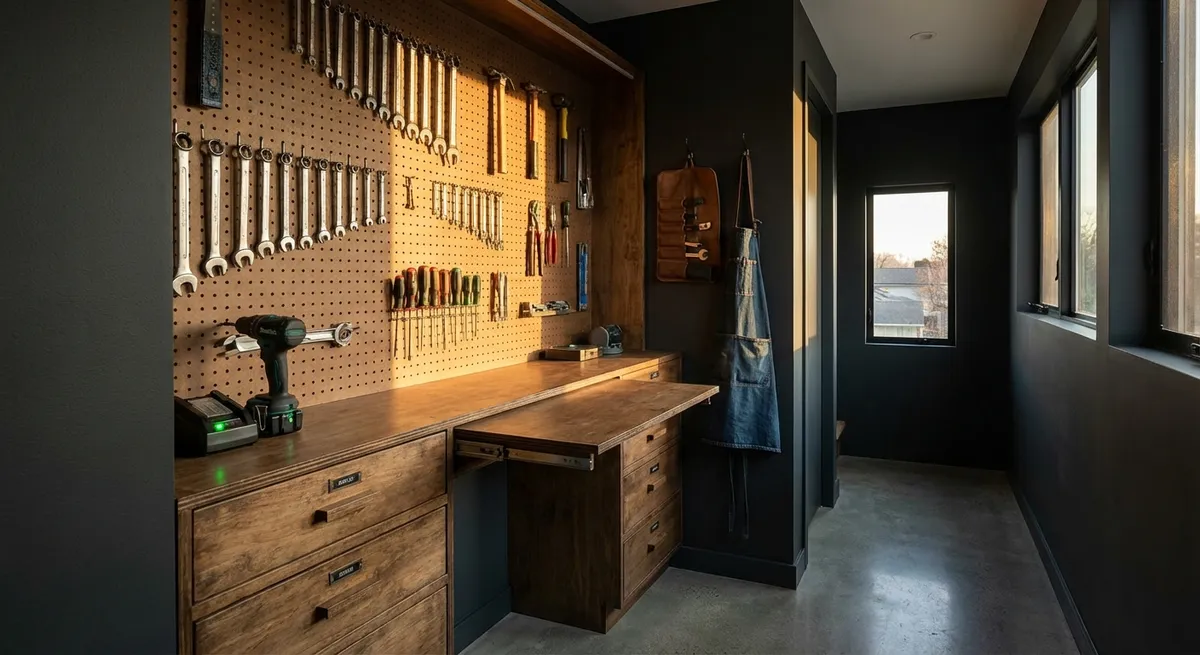
Most DIY frustrations don’t come from not having tools—they come from not being able to find, charge, or safely use the tools you already own. A compact, well‑planned tool station turns a cluttered corner of your home into a reliable base for repairs and weekend projects. This guide walks you through exactly how to plan, set up, and maintain a small but powerful tool station that fits in a garage, closet, or apartment nook.
Know Your Space and What You Really Need
Before you buy anything, decide where your tool station will live and what you’ll actually do there.
Look for a spot that’s dry, reasonably level, and has access to at least one outlet. A garage wall, basement corner, utility room, or even the inside of a deep closet can work. If moisture is an issue (like in some basements or garages), plan on shelving that keeps tools off the floor and consider a small dehumidifier or moisture‑absorbing packs.
Next, think about your real projects over the next year: hanging shelves, simple plumbing fixes, light electrical work, furniture assembly, or woodworking. This determines your must‑have tools and helps you avoid buying specialty equipment you won’t touch twice.
Finally, measure your space (width, height, and depth) and note any obstructions like water heaters, doors, vehicles, or breaker panels. These measurements will guide what kind of storage—wall‑mounted, freestanding, or rolling—you can safely use.
Step 1: Build a Safe, Stable Base for Your Tools
Your base is the core structure that holds everything safely—typically a combination of shelving and a work surface.
Choose your foundation style
- Small space or rental: a freestanding metal shelving unit and a portable workbench that folds away. - Dedicated garage/basement wall: a sturdy workbench (store‑bought or 2×4 DIY) plus wall‑mounted storage above.
Assemble and secure shelving
- Follow the manufacturer’s instructions closely; don’t skip cross‑braces or locking pins. - Place heavier items (like toolboxes or compressors) on the bottom shelves for stability. - If your shelving is over about 4 feet tall, anchor it to a studded wall using proper brackets and screws to keep it from tipping.
Set up your work surface
- For a store‑bought bench, verify it sits level—shim under legs if needed. - For a DIY bench, use construction screws and check for wobble; add diagonal braces to stiffen if necessary. - Aim for a work surface height between roughly 34–38 inches for most adults; adjust to your comfort.
Check clearances and access
- Make sure any doors or cars can still move without hitting your setup. - Keep at least 36 inches of walk space in front of your bench if possible. - Confirm you can easily reach outlets and that you’re not blocking access to your electrical panel or shut‑off valves.
Add basic surface protection
- Lay down a cheap rubber mat where you’ll stand to reduce fatigue. - Consider a scrap of plywood or a replaceable cutting mat on your benchtop for messy or cutting tasks.
Step 2: Create Logical Storage Zones So Tools Don’t Disappear
Good organization means you spend more time fixing and less time hunting for a tape measure.
Split your tool station into zones
Use broad categories and give each a “home”: - Fastening: screwdrivers, screws, drills, bits, impact driver. - Measuring & marking: tape measures, levels, squares, pencils. - Cutting & shaping: handsaws, utility knives, sandpaper, files. - Plumbing & electrical: pliers, wrenches, wire strippers, plumber’s tape. - Safety & consumables: safety glasses, ear protection, gloves, masks, painter’s tape, glue.
Install wall storage where possible
- Use pegboard with hooks for frequently used hand tools—outline tools with a marker so everything has an obvious spot. - Alternatively, use a French cleat system or track system for flexible hooks, bins, and small shelves. - Hang items you use constantly (tape measure, hammer, main screwdrivers) around eye level.
Use bins and drawers intelligently
- Clear, labeled plastic bins or drawer organizers are ideal for screws, anchors, nails, and miscellaneous hardware. - Label by use or size, like “Drywall Anchors,” “Wood Screws 1–1¼ in,” or “Picture Hanging.” - Keep small electrical parts (wire nuts, outlets, switches, cover plates) in a separate, clearly marked container.
Reserve a “grab‑and‑go” kit
- Dedicate one toolbox or tote to your most used, general‑purpose tools so you can carry them to any room: - 16–20 oz hammer - 16 ft tape measure - 4–6 common screwdrivers or a multi‑bit driver - Adjustable wrench - Pliers (standard and needle‑nose) - Utility knife - Small level - Keep this kit stored front and center, not buried.
Fine‑tune the layout after a few projects
- After a month of use, move tools you reach for most to easier spots. - Move rarely used specialty tools higher or further back.
Step 3: Set Up a Safe, Efficient Power Tool Charging and Storage Area
Power tools are game‑changers, but a dead battery or tangled extension cord can stall any project. A small, organized charging zone solves this.
Dedicate one section for power tools and charging
- Ideally, this is near an outlet but off the main work surface so you don’t crowd your workspace. - Use a short, heavy‑duty power strip (with surge protection) mounted to the wall or side of your bench, not dangling.
Mount or place chargers with airflow in mind
- Keep chargers on an open shelf or mounted where air can flow around them; avoid stuffing them in closed cabinets where heat can build. - Follow the tool brand’s manual for spacing and ventilation.
Create labeled parking spots for each tool and battery
- On a shelf or wall rack, give each key tool (drill, driver, sander) a dedicated spot. A simple labeled outline or tag helps. - Store batteries in a small bin or on a rack near the chargers; label by brand and voltage if you mix systems.
Manage cords and extension cables properly
- Use cord wraps, Velcro straps, or hose reels to keep extension cords coiled without tight kinks. - Avoid daisy‑chaining multiple power strips or running cords under rugs or where vehicles roll over them. - Reserve outdoor‑rated cords for outdoor use and check their amperage rating before plugging in heavy‑draw tools.
Build a simple charging routine
- After every project, plug in batteries so you don’t discover they’re dead mid‑repair. - If you won’t use tools for months, store batteries at partial charge, in a cool, dry place, per manufacturer guidelines. - Occasionally inspect cords and chargers for damage and replace anything with exposed wires, melted plastic, or loose plugs.
Step 4: Maintain and Protect Your Tools So They Last
Tools don’t need to be spotless, but basic care makes them work better and last longer.
Adopt a quick clean‑up habit after each project
- Brush off sawdust, drywall dust, and metal shavings from tools using a dry brush or shop vac. - Wipe down metal surfaces with a lightly oiled rag (machine oil or a dedicated tool oil) to limit rust, especially in humid garages.
Prevent rust and corrosion
- Store metal hand tools in a dry area; avoid sitting them directly on concrete floors, which can transfer moisture. - Add silica gel packs, moisture absorbers, or a small dehumidifier if your space is consistently damp. - For rust spots, gently remove with fine steel wool or a rust eraser, then lightly oil.
Keep cutting edges sharp and safe
- Replace utility knife blades often; dull blades are more likely to slip. - Use a simple sharpening stone or guided sharpener for chisels and some edged tools, following manufacturer instructions. - Store sharp tools with guards or in a dedicated drawer/holder so edges aren’t exposed.
Inspect tools regularly for safety issues
- Check wooden handles for cracks or splinters; replace any that feel loose or damaged. - Look for loose hammer heads, bent screwdrivers, or pliers that don’t close smoothly. - For power tools, inspect guards, switches, and housings for cracks or missing screws.
Create a “repair or retire” box
- Keep one small bin for tools that need attention (new handle, part replacement, or sharpening). - Once a month, either repair them properly or responsibly recycle/dispose of tools that are unsafe or beyond fixing.
Step 5: Make Your Tool Station Safer and More Comfortable to Use
A good tool station isn’t just organized—it’s safe and comfortable enough that you’ll actually want to use it.
Start with basic safety gear within arm’s reach
- Keep at least: - Safety glasses - Hearing protection (earmuffs or plugs) - Dust masks or respirators (for sanding or cutting) - Work gloves - Store them at eye level so they’re harder to ignore.
Improve your lighting
- Aim for bright, even light over your work surface—LED shop lights are inexpensive and energy‑efficient. - Add a clamp‑on or magnetic task light for close‑up work. - Avoid shadows where you’re measuring, cutting, or working near blades.
Plan for dust and debris control
- Use a shop vacuum or dedicated dust port when sanding or cutting if your tools support it. - Keep a broom and dustpan or floor brush nearby and sweep up after each session. - Consider a simple air filter or fan with a furnace filter in dusty spaces to reduce airborne particles.
Practice safe tool use habits
- Treat every power tool as if it can start unexpectedly—unplug or remove batteries before changing bits or blades. - Never work with loose clothing, jewelry, or untied hair around rotating tools. - Keep a small, up‑to‑date fire extinguisher rated for electrical and ordinary combustibles nearby and learn how to use it.
Make it comfortable so you’ll use it more
- Add an anti‑fatigue mat where you stand for long periods. - Keep a folding stool or chair nearby for detailed bench work. - Adjust the bench height or use a small platform if you’re constantly bending or reaching in awkward ways.
Conclusion
A compact home tool station doesn’t require a three‑car garage or a huge budget. By building a stable base, organizing tools into clear zones, setting up a smart power tool and charging area, keeping your equipment maintained, and paying attention to safety and comfort, you create a workspace that actually supports your DIY goals.
Once your station is in place, the key is consistency: put tools back in their “home,” charge batteries, and spend five minutes tidying up after each project. Your future self—standing in front of a working drill with a charged battery and a clear bench—will be glad you did.
Sources
- [U.S. Consumer Product Safety Commission – Power Tool Safety](https://www.cpsc.gov/Safety-Education/Safety-Education-Centers/Power-Tools) - Guidance on safe setup and use of power tools and related equipment
- [OSHA – Hand and Power Tools](https://www.osha.gov/hand-power-tools) - Official safety recommendations for handling and maintaining tools
- [Family Handyman – How to Build a Workbench](https://www.familyhandyman.com/project/how-to-build-a-work-bench/) - Practical workbench building tips and layout considerations
- [This Old House – Organizing Tools in the Workshop](https://www.thisoldhouse.com/workshops/21017858/10-tips-for-organizing-tools) - Ideas for tool storage, pegboards, and efficient workshop setups
- [Energy Star – Choosing and Using LED Lighting](https://www.energystar.gov/products/lighting_fans/light_bulbs/learn_about_led_bulbs) - Information on efficient, bright lighting options for work areas
Key Takeaway
The most important thing to remember from this article is that this information can change how you think about Tools & Equipment.