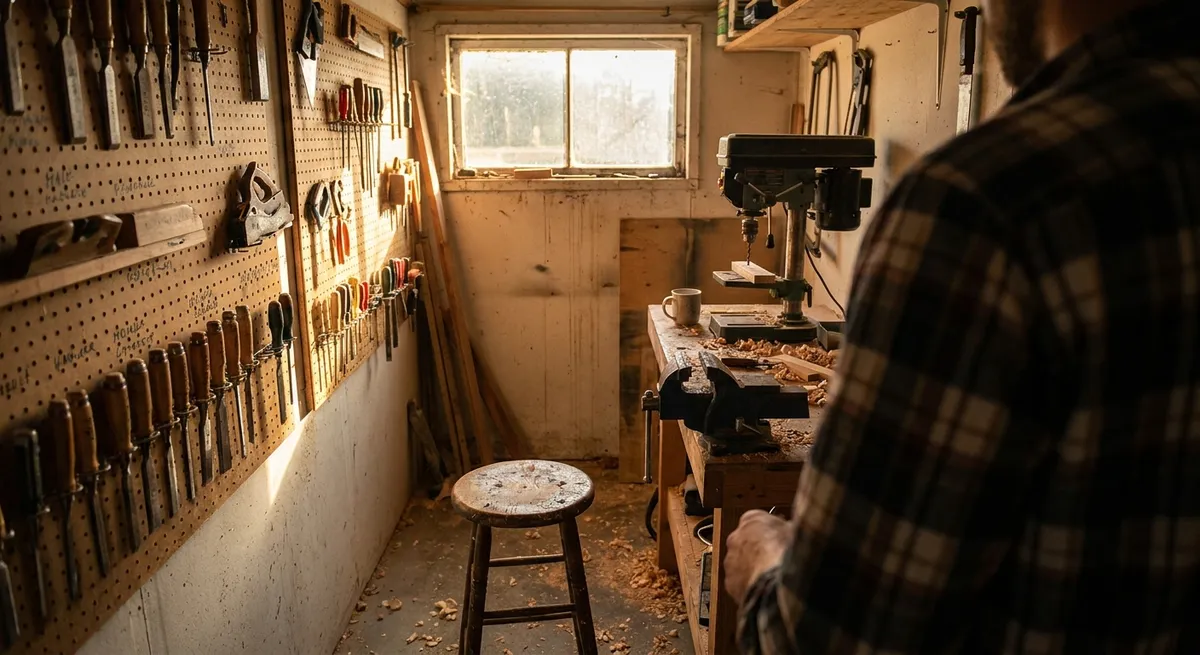
A solid home workshop doesn’t have to take over your garage or cost a fortune. With the right plan, tools, and layout, you can go from “where did I leave that drill?” to a space where every project starts smoother and finishes faster. This guide walks you through exactly how to plan, equip, and set up a small workshop that supports real DIY work—without wasting money on gear you won’t use.
Start With a Clear Plan (Before You Buy Anything)
Before you buy a single tool, get clear on what you’ll actually do in your workshop. This helps you avoid random purchases and clutter.
Think about your main project types: simple repairs, furniture building, painting, electrical, or plumbing work. If you mostly do light repairs and decor projects, your priorities will be very different from someone building tables and shelving.
Measure your space—length, width, and any obstacles like water heaters, door swings, or cars. Sketch a simple floor plan on paper or use painter’s tape on the floor to mark possible tool zones and a workbench area. Note where outlets and lighting are located so you know where power tools can realistically go.
Decide on one “primary work zone” where you’ll do most of your cutting, drilling, fastening, and measuring. Keep your most-used tools within arm’s reach of this spot. Planning this ahead of time keeps your workshop efficient instead of feeling like a storage room with a workbench.
Choose Core Tools That Do the Most Work
You don’t need every tool you see online. Focus on a small, well-chosen set that covers most home projects.
For general home DIY and light woodworking, prioritize these hand tools:
- Claw hammer (16 oz is a practical all-round size)
- Screwdriver set (both Phillips and flathead, multiple sizes)
- Tape measure (25 ft with a sturdy standout)
- Utility knife with replaceable blades
- Adjustable wrench and a basic combination wrench set
- Pliers: standard slip-joint, needle-nose, and locking pliers
- Torpedo level (small) and a 24" level for longer spans
For power tools, start with:
- Cordless drill/driver (18V or 20V) with at least two batteries
- Drill bit set for wood, metal, and masonry
- Circular saw or jigsaw (choose circular if you’ll cut sheet goods; jigsaw if you need curves and detail)
- Orbital sander if you’ll do any finishing or furniture work
When comparing tools, check for:
- Standard battery platforms (so future tools can share batteries)
- Comfortable grip and weight—especially for the drill and saw
- Clear safety features like blade guards, electric brakes, and trigger locks
Buy the best quality you can reasonably afford for high-use items like your drill and measuring tools. A precise tape measure, level, and square do more for your project quality than most “fancy” extras.
Build a Practical Work Surface and Tool Layout
Your work surface is the heart of your workshop. Even a small, sturdy bench beats working on the floor or balancing materials on sawhorses.
Aim for a bench height roughly at wrist level when your arms are relaxed at your sides (for many people, that’s in the 34"–38" range). If you’re unsure, start a bit taller—you can always add a platform to stand on if you need more leverage.
Basic workbench guidelines:
- Use 2x4s or similar lumber for the frame and legs
- Top it with plywood or a solid-core door for a flat, stable surface
- Add cross-bracing or a lower shelf to reduce wobble and add storage
- Place the bench where you have enough room to move material in front and to at least one side
Plan your layout so your most-used tools live near the bench:
- Hang frequently used hand tools (hammer, tape, screwdrivers, pliers) on the wall within reach
- Store your drill and batteries on a nearby shelf or small cart
- Keep safety gear (glasses, ear protection, dust mask) in a visible, dedicated spot near the entrance
A simple rule: anything you reach for on almost every project should be stored between chest and waist height, close to the workbench. Heavy or rarely used tools can go lower or higher.
Step-by-Step: Set Up Your First Essential Tool Kit
Follow this sequence to build a kit that supports most small-to-medium home projects without overspending.
Step 1: Lock in your measuring and marking tools
Get a 25 ft tape measure, a 6" or 12" combination square, and a carpenter’s pencil or fine-tip marker. These ensure your cuts and installations are accurate. Add a small notebook or project notebook to track measurements and materials.
Step 2: Cover fastening and basic assembly
Pick up a claw hammer, a mixed box of nails (finishing and general-purpose), and a screw assortment (wood screws and drywall screws in multiple lengths). Add a multi-bit screwdriver and a basic hex key (Allen wrench) set. Label your screw containers so you don’t waste time guessing sizes.
Step 3: Add a cordless drill/driver and bits
Choose a reputable brand with replaceable batteries. Buy a mixed drill and driver bit set that includes:
- Standard drill bits for wood and metal
- A few masonry bits
- Phillips, flat, square, and Torx driver bits
Keep bits in their labeled case so you can see everything at a glance. Practice driving screws into scrap wood to get used to clutch settings and speed control.
Step 4: Introduce one cutting tool
Start with either a circular saw (for straight cuts in plywood and framing lumber) or a jigsaw (for curved cuts and thinner material). Learn how to:
- Adjust and lock the blade depth
- Mark and clamp your workpiece
- Support both sides of your cut so offcuts don’t pinch the blade
Start with scrap material and slow, steady cuts until you’re comfortable.
Step 5: Round out with safety and support gear
Buy ANSI-rated safety glasses, hearing protection (earmuffs or plugs), and a dust mask or respirator suitable for sawdust. Get a pair of sturdy work gloves for handling rough lumber and metal.
Add two or more folding sawhorses and a couple of clamps (6" and 12" bar clamps are versatile). These let you support long boards and sheet goods safely while you cut or sand.
Step-by-Step: Organize Your Tools So You Can Actually Find Them
An organized workshop saves more time than any “smart” gadget. Use this process to get tools under control.
Step 1: Empty and sort
Pull every tool and related item into one area. Sort into four groups: hand tools, power tools, fasteners/hardware, and consumables (sandpaper, blades, glue, tape).
Step 2: Decide what stays
Remove duplicates you never use, broken tools, and anything you haven’t touched in a year and can’t reasonably see yourself needing. Set these aside for recycling, donation, or disposal.
Step 3: Assign a “home” for each category
- Hand tools: wall rack, peg rail, or shallow drawer near the bench
- Power tools: sturdy shelf, cabinet, or rolling cart
- Hardware: clear bins or small drawer organizers, labeled by type and size
- Consumables: plastic totes or boxes labeled by use (sanding, cutting, painting)
Keep walkways clear and avoid stacking heavy bins above shoulder height.
Step 4: Label everything
Use masking tape and a marker or a label maker to mark shelves, bins, and drawers. Label the outside, not just the top, so you can identify things even when they’re stacked.
Step 5: Create a quick “reset” routine
At the end of each project (or work session), spend 5–10 minutes putting every tool back in its “home.” Keep a small trash bin and scrap bin near the bench so you can clear surfaces quickly.
Step-by-Step: Set Up Lighting and Power Safely
Good lighting and safe power access are essential in any workshop, especially for detailed work and tool safety.
Step 1: Assess current lighting
Turn on all existing lights and stand at your workbench area. If you see strong shadows where you’d be cutting or measuring, you need more light. Aim for bright, even lighting over your main work zone.
Step 2: Add overhead LED fixtures
Install LED shop lights or strip fixtures rated for garages or basements. Mount them so the light shines in front of you (over your shoulders), not directly behind you where your body will cast shadows on the work.
Step 3: Add task lighting
Clamp-on or articulating arm lights are useful over your workbench for detailed tasks like layout, drilling, and assembly. Choose LED options that don’t get hot and can be angled exactly where you need light.
Step 4: Plan safe power access
Identify which outlets you’ll use for power tools. If your workshop is in a garage or basement, GFCI protection is important, especially near any moisture sources.
Avoid daisy-chaining power strips or running cords where you walk. If you need more outlets, use a heavy-duty power strip mounted to a wall or bench, and consider hiring a licensed electrician to add circuits if you’ll run multiple bigger tools eventually.
Step 5: Manage cords and trip hazards
Use cord wraps, hooks, or simple Velcro straps to keep excess cable out of the walking path. For tools that stay in one place, route cords along walls or under a bench rather than across open floor space.
Step-by-Step: Maintain Your Tools So They Last
A little maintenance dramatically extends tool life and keeps them safer to use.
Step 1: Clean after each use
Brush or wipe off sawdust, dirt, and debris. For power tools, use a dry brush or compressed air (short bursts) to clear vents and moving parts. Wipe metal surfaces with a slightly oiled rag to prevent rust, especially in humid areas.
Step 2: Check blades and bits
Inspect cutting edges before and after projects. Replace or sharpen:
- Dull drill bits that burn or squeal instead of cutting
- Saw blades with chipped or missing teeth
- Utility knife blades that tear instead of slice
Sharp tools are safer and require less force.
Step 3: Inspect cords and batteries
Check cords for cuts, exposed wires, or crushed sections. Replace damaged cords or have them professionally repaired—don’t tape over serious damage.
For cordless tools, avoid completely draining batteries every time. Store them in a cool, dry place and wipe contacts if they get dusty.
Step 4: Store tools properly
Keep tools off the floor and out of damp corners. Store hand tools in a closed box or cabinet if your space is very dusty or humid. Power tools should be stored with blades retracted or guards in place.
Step 5: Schedule deeper inspections
Every few months, pick one day to:
- Tighten loose screws, knobs, and handles
- Check alignment on tools like miter saws or drill presses (if you have them)
- Review your tool collection and make a list of anything that needs replacing or upgrading
Write these notes in your project notebook so you can plan future purchases instead of buying impulsively.
Conclusion
A small, well-thought-out home workshop is about planning and workflow more than square footage or expensive gear. When you prioritize a clear layout, a focused tool set, safe lighting and power, and simple organization habits, every project gets easier and more enjoyable. Start with the core tools and steps in this guide, build gradually, and let your workshop grow with your skills instead of trying to buy everything on day one.
Sources
- U.S. Consumer Product Safety Commission – Power Tool Safety - Guidance on safe selection and use of power tools at home
- Occupational Safety and Health Administration (OSHA) – Hand and Power Tools - Official safety practices for using and maintaining tools, adaptable to home workshops
- Family Handyman – How to Build a Workbench - Practical examples and dimensions for a sturdy DIY workbench
- This Old House – Setting Up a Workshop - Layout, storage, and planning ideas for small and large workshop spaces
- Energy.gov – LED Lighting Basics - Information on choosing efficient LED shop and task lighting for work areas
Key Takeaway
The most important thing to remember from this article is that this information can change how you think about Tools & Equipment.