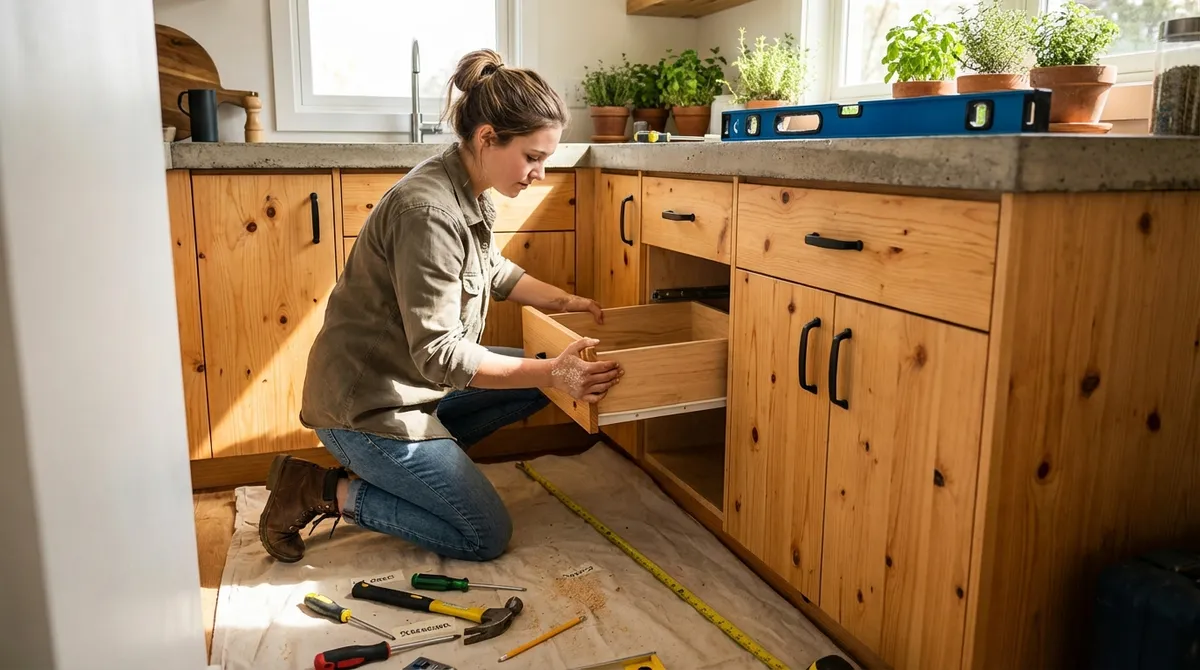
If you like the idea of improving your home but don’t want to dive into a full renovation, smart, focused DIY projects are the sweet spot. The right tasks will upgrade how your space looks and works while building your skills and confidence. This guide walks through five practical, step‑by‑step projects you can actually finish, using tools many DIYers already own or can easily borrow.
Each project is designed to teach you something useful: measuring, fastening, safe wiring basics, layout planning, and clean finishing. Do one this weekend, then build from there.
Project 1: Install a Sturdy Wall-Mounted Shelf (That Actually Stays Level)
A solid, level shelf is one of the easiest ways to add storage and make a room feel more organized. Done correctly, it’ll hold real weight and won’t sag or pull out of the wall.
What you’ll learn: Finding studs, using a level, choosing the right anchors, clean drilling.
Tools & materials
- Drill/driver and drill bits
- Level (2 ft or longer is ideal)
- Stud finder (or small nail + painter’s tape as a backup)
- Tape measure & pencil
- Wall shelf with included brackets, or separate metal brackets
- Appropriate screws and wall anchors
- Safety glasses
Step-by-step
Plan the height and location
Decide what will go on the shelf (books, decor, storage bins). Mark an approximate height with painter’s tape, stand back, and adjust until it looks and feels right. Standard eye level is around 57–60 inches from the floor for visual balance, but adjust for your space.
Find and mark studs (or plan for anchors)
Use a stud finder along the wall to locate studs and mark their centers lightly with a pencil. If your bracket holes don’t land over studs, plan to use proper wall anchors rated for the weight you need. For heavy loads, at least one bracket should be secured to a stud.
Mark the bracket holes with a level line
Hold your level where the bottom of the shelf will sit and draw a straight, level line. Line up each bracket on that line and mark the screw holes. Double-check with the level again—this is what keeps the shelf from looking crooked later.
Drill pilot holes and install anchors
Use the correct drill bit size for your screws or wall anchors. Drill pilot holes on your marks. If going into drywall without a stud, insert the anchors flush with the wall. For stud locations, you can skip anchors and go directly into the wood.
Attach brackets and mount the shelf
Screw the brackets into the wall, tightening firmly but not so hard that you strip the holes. Set the shelf on top, secure it per the manufacturer’s instructions, and check again with the level. Load it gradually; if anything feels loose or flexy, remove, inspect, and tighten.
Practical tip: Keep all your bracket and anchor packaging. Weight ratings listed there are your best guide to how much you can safely store.
Project 2: Replace a Light Fixture for Better Room Lighting
Upgrading a dated or dim light fixture can completely change how a room feels. If you can safely wire a basic fixture, you’ll unlock lots of affordable lighting upgrades.
What you’ll learn: Safe power shutoff, basic wiring, mounting brackets, testing.
Tools & materials
- New ceiling or wall light fixture
- Voltage tester (non-contact type is easiest)
- Screwdrivers (flat-head and Phillips)
- Wire strippers (often included on multi-tools)
- Wire nuts (often included with fixtures)
- Step ladder
- Safety glasses
Step-by-step
Turn off power and confirm it’s off
Flip the breaker for that room at your electrical panel, not just the light switch. Back at the fixture, remove the old bulbs and gently lower the existing cover or fixture. Use a non-contact voltage tester on the wires to confirm there’s no power before touching anything.
Remove the old fixture and inspect the box
Unscrew the fixture from the mounting bracket. Carefully support it with one hand while you disconnect the wires (note which wires are connected: usually black to black, white to white, ground to ground/box). Inspect the electrical box; it should be securely fastened and rated for the fixture’s weight.
Prepare the new fixture and mounting bracket
Attach any mounting strap or bracket that came with your new fixture to the electrical box, following the instructions. Pre-assemble any arms, shades, or decorative parts that won’t get in the way of wiring. Keep the fixture light enough to hold with one hand if possible.
Connect the wires securely
Strip about 1/2 inch of insulation if needed. Connect like-colored wires: black (hot) to black, white (neutral) to white, and the ground (bare or green) to the green screw or ground wire. Twist wires together clockwise, then twist on the wire nut until snug. Gently tug each connection to ensure it’s secure.
Mount, test, and finalize
Tuck the wires neatly into the box, mount the fixture to the bracket, and tighten screws until snug (don’t over-torque and bend the fixture). Install bulbs with the correct wattage. Turn the breaker back on and test the light from the switch. If it doesn’t work, turn power off again and re-check connections.
Safety note: If wiring colors are unclear, wires look damaged, or the box is loose, stop and consult a licensed electrician. Don’t guess with electrical.
Project 3: Refresh a Room with a Clean Paint Job
Painting is one of the highest-impact, lowest-cost DIY projects. A careful, patient approach gives you crisp lines and a professional look even as a beginner.
What you’ll learn: Surface prep, cutting in, rolling efficiently, clean edges.
Tools & materials
- Interior paint (quality matters more than quantity)
- Primer if needed (stains, bare drywall, dark colors)
- Painter’s tape
- Roller frame and covers (3/8"–1/2" nap for most walls)
- Angled sash brush (2"–2.5")
- Paint tray and liners
- Sanding sponge (fine/medium)
- Drop cloths, rags, mild cleaner
Step-by-step
Prep the room properly
Move furniture away from walls, cover with drop cloths, and remove switch plates and outlet covers. Wipe walls with a damp cloth and mild cleaner to remove dust and grease, especially near kitchens or light switches. Lightly sand glossy areas to help paint adhere.
Patch and tape strategically
Fill nail holes and small dents with spackle, let dry, then sand smooth. Use painter’s tape along baseboards, window trim, and door frames if you’re not comfortable cutting in freehand. Press tape edges down firmly to prevent bleed-through.
Prime where needed
Spot-prime patched areas and any stains (water marks, ink, heavy scuffs). If you’re covering a dark color with a much lighter one, consider priming the whole wall for more even coverage and fewer finish coats.
Cut in edges, then roll the field
Use an angled brush to “cut in” around ceilings, corners, outlets, and trim, working in manageable sections. While those edges are still wet, roll paint onto the main wall area in a “W” or “M” pattern, then fill in without pressing too hard. Keep a wet edge to avoid lap marks.
Apply a second coat and clean up right
Let the first coat dry completely, then apply a second for even color and coverage. Remove painter’s tape while the second coat is still slightly damp to avoid peeling. Clean brushes and rollers if they’re reusable, reattach switch plates, and return furniture once walls are fully dry.
Practical tip: Test your color on at least two walls in the room (different light) before committing. Light changes paint more than most people expect.
Project 4: Build a Simple Entryway Organizer Board
An entryway organizer keeps keys, mail, and notes in one place and cuts down daily chaos. This project teaches measuring, basic cuts, and simple assembly.
What you’ll learn: Measuring, marking, drilling, layout, basic fastening.
Tools & materials
- 1 board (e.g., 1x8 or 1x10, 24–36" long, pine or similar)
- Fine-grit sandpaper or sanding block
- Hooks (key hooks, coat hooks, or a mix)
- Small baskets, jars, or mail holder (optional)
- Wood screws and wall anchors
- Drill/driver, drill bits, screwdriver bits
- Tape measure, pencil, level
- Wood stain or paint and brush (optional)
- Saw (if you need to cut to size; many stores will cut for you)
Step-by-step
Plan the layout and function
Decide what you want the board to handle: keys, small mail pile, dog leash, sunglasses. Sketch a simple layout: hooks along the bottom, maybe a mail slot on one side, and a small shelf or jar for odds and ends. This will determine board length.
Cut and sand the board
If needed, cut your board to length. Sand all edges and faces until smooth, slightly rounding sharp corners. Wipe off dust. If you’re staining or painting, apply finish now and let it dry fully before adding hardware.
Mark hook and accessory positions
Measure and mark equal spacing for hooks along the bottom edge—symmetry matters here. Dry-fit hooks and baskets to make sure everything fits and looks balanced. Use a level to ensure any mail holder or shelf will sit straight.
Pre-drill and attach hardware
Drill small pilot holes where each hook or accessory will screw in. This helps prevent splitting and keeps screws straight. Attach hooks, baskets, or holders firmly but avoid over-tightening small screws.
Mount the organizer securely to the wall
Hold the finished board against the wall at a comfortable height near your entry. Use a level to get it straight, then mark mounting hole locations. Install screws into studs if possible; otherwise, use appropriate wall anchors. Hang the board, tighten, and test with actual weight.
Practical tip: Leave a small open space on the board for a clip or small whiteboard—perfect for quick reminders or to-do notes.
Project 5: Weatherstrip an Exterior Door to Cut Drafts
Drafty doors cost you comfort and money. Adding or upgrading weatherstripping is inexpensive, fast, and usually pays back in lower energy use.
What you’ll learn: Draft detection, measuring gaps, cutting flexible materials, clean installation.
Tools & materials
- Adhesive-backed foam or rubber weatherstripping
- Door sweep or bottom seal (if needed)
- Utility knife or scissors
- Tape measure & pencil
- Screwdriver (for door sweep)
- Rubbing alcohol and cloth (for cleaning surfaces)
Step-by-step
Check where air is getting in
On a windy day or with the HVAC running, feel around the door edges with your hand. You can also hold a lit incense stick or small piece of tissue near edges—movement shows drafts. Note top, sides, and bottom gaps separately.
Measure door edges and select materials
Measure the length of each edge you plan to seal. Choose weatherstripping thickness that matches the gap: too thin won’t seal; too thick will make the door hard to close. For bottom gaps, consider a door sweep or an adjustable threshold.
Clean surfaces thoroughly
For adhesive-backed weatherstripping, clean the door stop and frame where it will stick using rubbing alcohol and a cloth. Allow to dry fully. Good adhesion is the difference between a fix that lasts months and one that lasts years.
Apply weatherstripping along sides and top
Starting at one corner, peel a short section of backing and press the strip into place along the door stop. Work in small sections, keeping it straight and avoiding stretching. Press firmly along the full length. Repeat for the other side and top, making clean 45° angle cuts at corners if possible.
Add or adjust the door sweep and test the seal
If you’re installing a door sweep, hold it against the bottom of the door so the flexible part just touches the threshold. Mark screw holes, pre-drill if needed, and attach. Close and open the door several times to test: you want slight resistance and no obvious drafts, but the door should still latch smoothly.
Practical tip: Re-check your weatherstripping at the change of seasons. Humidity and temperature shifts can slightly change how tight the door closes.
Conclusion
Small, well-chosen DIY projects can dramatically improve how your home functions without overwhelming your time or budget. Installing a solid shelf teaches layout and anchoring. Swapping a light fixture builds electrical confidence. Painting sharpens your prep and finishing skills. Building an entryway organizer helps you think through everyday use. Weatherstripping a door shows how small tweaks can save energy and boost comfort.
Pick one project that solves a real annoyance in your home, gather your tools before you start, and move slowly enough to get each step right. As your skills grow, you’ll be able to tackle bigger upgrades with a lot less guesswork—and a lot more control over how your home works for you.
Sources
- U.S. Department of Energy – Air Sealing Your Home - Covers identifying and sealing drafts around doors and windows to improve efficiency
- U.S. Consumer Product Safety Commission – Electrical Receptacles and Switches - Provides safety guidance relevant to basic residential electrical work
- Benjamin Moore – How to Paint Interior Walls - Step-by-step best practices for interior wall painting and surface prep
- Family Handyman – How to Install Shelves - Detailed tutorial on types of shelves, anchors, and mounting methods
- Lowe’s – Weatherstripping Doors & Windows - Practical guide to choosing and installing different types of weatherstripping
Key Takeaway
The most important thing to remember from this article is that this information can change how you think about DIY Projects.