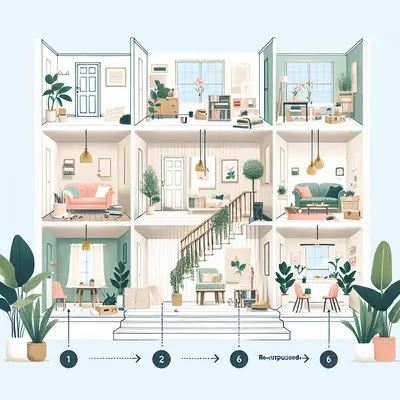
A living room renovation doesn’t have to mean tearing everything down to the studs or draining your savings. With a clear plan and a few strategic upgrades, you can completely change how your main living space looks, feels, and functions—without turning your home into a construction zone for months. This guide walks you through a practical, DIY-friendly process for planning and executing a living room refresh that feels like a real renovation, not just a quick tidy-up.
Step 1: Define How You Actually Use the Room
Before you think about paint colors or new furniture, get clear on what this room needs to do for you every day.
Spend a few days paying attention to how you and others use the space. Do you work from the sofa? Do kids play on the floor? Is this your main TV room, or more of a reading/hosting space? Write down the main activities, and then rank them by importance. This will guide every decision you make—from lighting to storage to seating.
Next, identify what currently frustrates you: not enough outlets, awkward traffic paths, cluttered corners, poor lighting, or no place to set down a drink. Take photos from multiple angles and mark problems directly on the images (you can use your phone’s markup tools). This creates a clear “before” record and a problem list to solve.
Finally, decide on a simple priority statement, like: “This living room needs to be comfortable for movie nights, functional for occasional work, and easy to keep tidy.” Refer back to this whenever you’re tempted by a pretty but impractical idea.
Step 2: Map Out the Layout Before You Move Anything
Good layout is the backbone of a successful renovation, and you can plan it without lifting a single piece of furniture yet.
Start by measuring the room: length, width, ceiling height, window sizes, and door openings. Sketch a simple floor plan on graph paper or use a free online room planner. Mark fixed elements such as windows, radiators, built-ins, and existing outlets. These are your “non-negotiables” that you’ll plan around.
Next, define zones based on how you use the room: a seating zone for conversation or TV, a reading corner, a play zone for kids, or a small desk area. Each zone should have a clear purpose and enough space for people to move naturally. Aim for walkways at least 30–36 inches wide where people regularly pass through.
Place your largest pieces first on the plan: sofa, media console, bookshelves. Align seating so people can talk without twisting uncomfortably, and consider where the TV will go if you have one—ideally with minimal glare from windows. Only after the big pieces are placed should you add side tables, floor lamps, and accent chairs.
Before committing, “test” the layout by taping rough furniture outlines on the floor with painter’s tape. Walk through the space, pretend to sit, stand, and move as you normally would. Adjust as needed until the flow feels natural and uncluttered.
Step 3: Set a Realistic Scope and Budget (and Lock It In)
Scope creep is what turns a simple refresh into a stressful, expensive project. A clear scope and budget keep your renovation on track.
List every change you’re considering: paint, lighting updates, new rug, window treatments, storage solutions, furniture swaps, or small carpentry projects like simple trim or a DIY TV wall. Divide the list into three categories: “Must Have,” “Nice to Have,” and “Someday.” Your main budget should focus on “Must Have” items.
Research rough price ranges for each item: check a few retailers for furniture and decor, and look at paint and electrical supplies at your local home center. Don’t forget consumables like sandpaper, caulk, painter’s tape, and brushes. Add a 10–20% buffer for surprises or upgrades you decide are worth it once you’re in the middle of the project.
Set a total number you’re comfortable with, then trim your list if you’re over that amount. If your budget is tight, prioritize changes with the biggest visual and functional impact: paint, lighting, and one or two standout pieces (like a properly sized rug or a well-placed bookshelf) often change the entire feel of the room.
Finally, choose your timeline. Break the renovation into weekend-sized chunks: one weekend for decluttering and patching walls, another for painting, another for lighting and furniture layout, and a final one for styling and finishing details. Put these dates on your calendar so the project doesn’t drag on indefinitely.
Step 4: Prep and Paint Like a Pro for a High-Impact Change
A careful paint job is one of the most powerful and affordable renovation moves you can make. Done right, it makes old trim look sharper, walls look cleaner, and the whole room feel more put together.
Start by clearing as much as you can out of the room. Pull remaining furniture to the center and cover it with plastic or old sheets. Remove outlet covers, vent grilles, and any wall hooks or floating shelves you don’t plan to reuse. Label screws and small hardware in zip bags so reinstallation is painless.
Inspect the walls under good lighting. Use a pencil to lightly circle nail pops, dings, hairline cracks, and rough patched areas. Fill holes and dents with spackle or joint compound, then sand smooth once dry. For larger cracks or gaps between trim and wall, use paintable caulk; it creates a clean, finished look around windows, baseboards, and door casings.
Choose a paint finish appropriate for a living room: typically eggshell or matte for walls (to hide minor imperfections) and semi-gloss for trim (for durability and easy cleaning). If your existing paint is dark or has stains, use a quality primer—especially on patched areas—to avoid uneven sheen and color.
Cut in edges slowly with a good angled brush, then roll the main wall areas with a quality roller, working in small sections and maintaining a wet edge to avoid lap marks. Two thin coats are usually better than one thick coat for a more even finish. Let the paint cure properly before pushing furniture back to the walls to avoid scuffs and stuck surfaces.
Step 5: Upgrade Lighting, Storage, and Finishing Touches
The last phase is where the room starts to feel like a true renovation instead of just a clean-up: lighting, storage, and styling.
Think in layers for lighting: overhead (ceiling fixture or recessed lighting), mid-level (floor and table lamps), and accent (wall sconces, picture lights, or LED strips for shelves). Even if you don’t touch your ceiling fixture, adding two to three lamps with warm, consistent bulbs (2700K–3000K) often transforms the comfort level of the room.
Tackle storage next. Use vertical space where possible—a tall bookcase, wall-mounted shelves, or a storage cabinet—to get clutter off the floor. Choose pieces that match how you live: baskets with lids for toys, a closed cabinet for electronics and wires, or an ottoman with hidden storage for blankets and games. Route cables with clips or simple cord covers so the room feels calm and intentional.
Finally, bring everything together with textiles and decor. A correctly sized rug (usually large enough for at least the front legs of your seating to sit on) anchors the room. Add a limited color palette for pillows and throws that ties back to your wall color and a few key accessories. Hang art at eye level and avoid overcrowding walls—empty space is part of the design, too.
Spend a few days living in the “new” room, then adjust. You might realize you need one more lamp, a side table near a favorite chair, or a small tray to keep remotes under control. Small tweaks after the main work is done are normal; they’re what make the space feel tailored to you rather than copied from a showroom.
Conclusion
A living room renovation doesn’t have to start with demolition. By focusing on how you use the space, planning your layout on paper first, setting a clear budget and timeline, and executing high-impact changes like paint, lighting, and smart storage, you can dramatically upgrade your main living area in a series of manageable steps. The result is a room that looks refreshed, functions better for everyday life, and feels like a place you actually want to spend time in—without the chaos of a full-scale remodel.
Sources
- [U.S. Department of Energy – Lighting Choices to Save You Money](https://www.energy.gov/energysaver/lighting-choices-save-you-money) - Overview of lighting types, efficiency, and color temperature basics to guide living room lighting upgrades
- [Benjamin Moore – How to Paint a Room](https://www.benjaminmoore.com/en-us/paint-and-stain-inspiration/how-to-advice/interior-painting/how-to-paint-a-room) - Step-by-step interior painting techniques, including prep, priming, and finish selection
- [Sherwin-Williams – Interior Paint Sheen Guide](https://www.sherwin-williams.com/en-us/homeowners/solutions/interior-paint-sheens) - Explains which paint sheens work best for walls, trim, and high-traffic areas
- [IKEA – How to Plan Your Living Room Layout](https://www.ikea.com/us/en/rooms/living-room/how-to-plan-your-living-room-pub2afd9e9f) - Practical ideas and visual examples for zoning, furniture placement, and traffic flow
- [Harvard Joint Center for Housing Studies – Remodeling Trends](https://www.jchs.harvard.edu/research-areas/remodeling) - Research insights on renovation spending and priorities, helpful for understanding where to invest in a living space refresh
Key Takeaway
The most important thing to remember from this article is that following these steps can lead to great results.