A well‑chosen tool can make a project smoother. A well‑used and well‑stored tool can make every project smoother. Most DIY frustration doesn’t come from “bad tools” — it comes from dull blades, dead batteries, missing bits, and guesswork. This guide walks you through practical, step‑by‑step habits for using, storing, and upgrading tools so they’re ready whenever you are.
Step 1: Match the Tool to the Job Before You Start
Grabbing “whatever is nearby” is how screws strip, drill bits snap, and projects stall. Spending a few minutes choosing the right tool avoids a lot of damage and rework.
- Identify the material and thickness.
Are you working with drywall, softwood, hardwood, masonry, metal, or tile? A drill bit for wood will burn out quickly in metal or concrete. Check both material and approximate thickness so you can set speed and bit type correctly.
- Confirm fastener type and size.
Look at the head: Phillips, slotted, Torx, square, hex, or specialty. Match the bit tightly to the fastener — a loose fit is a recipe for stripping. If you’re not sure, test several bits until one fits snugly with no wobble.
- Choose hand tool vs. power tool.
- Use hand tools when precision and control matter more than speed (e.g., adjusting hinge screws, assembling furniture near finished surfaces).
- Use power tools for repetitive, heavy, or deep work (e.g., framing, drilling into masonry, cutting many boards).
- Check power and reach.
For corded tools, ensure the outlet and extension cord rating matches the tool’s amperage. For cordless tools, confirm battery charge and that you have a second battery if you’ll be working more than 20–30 minutes.
- Read or recheck the manual for anything new.
Even experienced DIYers should skim the quick‑start or safety sections when using a new tool model. Look for torque settings, recommended materials, and any “Do not use for…” warnings.
- Do a 10‑second test on scrap.
Before cutting or drilling your actual workpiece, test on an off‑cut of the same or similar material. Adjust speed, pressure, and angle based on how the tool feels and how clean the result looks.
- Set up support and stability.
Clamp your work, support long boards on sawhorses, and ensure the cut path is clear. Even the right tool becomes dangerous if the material is unstable or flexing.
Step 2: Use Cordless Tools Without Killing Your Batteries
Cordless tools are only as good as the batteries that power them. Treating batteries right will dramatically extend their life, save money, and keep your tools ready when you need them.
- Avoid running batteries completely flat.
Most modern lithium‑ion batteries prefer staying above 20%. When you feel a noticeable drop in power, swap the battery instead of forcing it until shut‑off.
- Charge at room temperature.
Don’t charge batteries in freezing garages or hot vehicles. Extreme temperatures shorten battery life. Ideally, bring them indoors to charge between about 50–85°F (10–30°C).
- Use the right charger for the brand and voltage.
Mixing chargers or using knockoff chargers can damage cells or reduce capacity. Stick to the manufacturer’s charger or well‑reviewed, compatible alternatives made for that exact platform.
- Store batteries partially charged if you’re taking a break.
If you won’t use them for a month or more, store around 40–60% charged in a cool, dry place. Do not leave them on the charger for weeks at a time unless the charger specifically supports long‑term maintenance mode.
- Keep contacts clean and dry.
Wipe battery terminals with a dry cloth if you see dust, corrosion, or debris. Never spray cleaner directly onto the contacts. Avoid using tools in heavy rain or wet environments unless they’re rated for it.
- Label batteries by purchase date.
Mark the month and year on each battery with a permanent marker. This helps you track aging packs and identify which ones are losing capacity first.
- Retire damaged batteries immediately.
If a battery is swollen, cracked, leaking, or unusually hot, stop using it. Follow local hazardous waste guidelines for disposal — never throw a damaged lithium‑ion battery in regular trash.
Step 3: Keep Blades and Bits Sharp Enough to Do Real Work
Dull blades don’t just work poorly — they’re less safe because they force you to push harder and fight the tool. A basic sharpening routine makes cutting cleaner, faster, and more controlled.
- Check before every project, not just when something “feels wrong.”
Look closely at drill bits, saw blades, and utility knife blades. Rounded edges, shiny “rolled” tips, or burn marks indicate dullness. If you have to push harder than usual, stop and inspect.
- Replace, don’t rescue, cheap utility blades.
With snap‑off and replaceable utility knife blades, swapping is usually better than sharpening. Keep a small stash of new blades and change them as soon as cutting cardboard, drywall, or caulk feels rough.
- Learn basic drill bit care.
- Wood bits: Keep them free of pitch and sap by wiping with mineral spirits after heavy use.
- Metal bits: Use cutting oil on metal to reduce heat and wear. Let the drill bit do the work — moderate pressure, slower speed for metal.
- When bits visibly overheat (blue discoloration), they’re often dull or being used too aggressively.
- Sharpen chisels and plane irons on a simple setup.
A basic sharpening kit (coarse and fine stones or diamond plates plus a honing guide) is enough. Maintain a consistent bevel angle and finish with a light honing on a fine stone. You don’t need perfect mirror finishes — you need predictable, sharp edges.
- Respect saw blades as consumables.
Circular saw and miter saw blades can be resharpened or replaced. If cuts start burning, chipping, or wandering, the blade might be dull or dirty. Clean pitch and resin with a blade cleaner or mineral spirits; if that doesn’t restore performance, replace or have it professionally sharpened.
- Store edges so they don’t hit each other.
Tossing blades and bits loose in a drawer chips edges quickly. Use sleeves, racks, bit cases, or even simple cardboard guards for chisels and saw blades.
- Document what works.
Keep a quick note on which blades/bit types worked best on certain materials (e.g., “Fine‑tooth blade for laminate; 40‑tooth crosscut for trim”). Over time, this prevents trial‑and‑error on every new project.
Step 4: Set Up Simple, No‑Excuse Tool Storage That You’ll Actually Use
The best storage system is the one you can maintain on a busy, messy weekend. Aim for “easy to put away” rather than perfectly organized museum displays.
- Create one reliable “home base.”
Choose a primary spot (a wall, a rolling cart, or a cabinet) where your core tools always live. This is your reset point after every project — if you only do one cleanup thing, it’s returning tools to this base.
- Split into three obvious zones: grab‑and‑go, project, and long‑term.
- Grab‑and‑go: Everyday tools (tape measure, utility knife, favorite screwdriver, stud finder, small level) in a small bag or caddy.
- Project zone: Tools you’re currently using, staged on a bench, cart, or folding table.
- Long‑term: Rarely used items (specialty wrenches, paint sprayers, tile saw) stored higher or deeper.
- Use vertical space for hand tools.
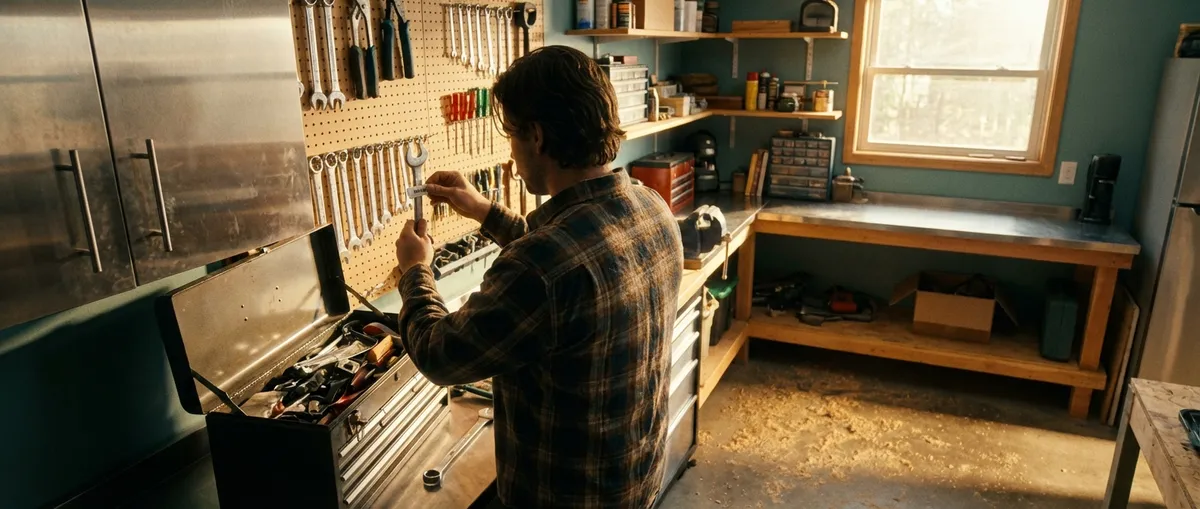
Pegboards, wall tracks, or magnetic strips keep tools visible and off surfaces. Outline tools or label hooks so you can see instantly what’s missing at the end of a project.
- Contain loose bits, blades, and accessories.
Use small clear bins, pill organizers, or labeled compartment boxes for screws, anchors, drill bits, and blades. Label by type and size (e.g., “Drywall anchors, medium,” “Torx bits, T15–T30”).
- Keep cleaning supplies with the tools, not across the house.
Rags, a small brush, mineral spirits or denatured alcohol (for adhesive and sap), and a mild cleaner should live near your tools. If cleaning is easy and close, you’re far more likely to do it before storage.
- Do a 5‑minute reset after each session.
Set a timer: put everything back in its zone, coil cords loosely, remove batteries from tools (if recommended by the manufacturer) before long storage, and toss obvious trash. Five minutes of reset prevents hours of searching later.
- Make maintenance reminders visible.
Post a small checklist near your tool area: “Sharpen? Charge? Clean? Put away?” Seeing it at the end of a session nudges you to do the basic tasks that keep tools reliable.
Step 5: Upgrade Tools Strategically Instead of Buying on Impulse
You don’t need a professional‑grade shop to do solid home improvement work. You do need a clear plan for when — and why — to upgrade, so you’re not stuck with piles of rarely used gear.
- Start with what’s blocking your projects, not what’s on sale.
Ask: “What slowed me down or frustrated me on my last three projects?” Maybe it was not having a drill with enough torque, or fighting a cheap tape measure. Those are your upgrade priorities.
- Build around one battery platform.
For cordless tools, sticking with one major brand’s battery system saves money and storage space. Once you have a couple of batteries and a charger, adding bare tools (tool‑only, no battery) becomes much cheaper.
- Upgrade safety and precision first.
- A more stable ladder is worth more than a flashy new gadget.
- A better stud finder or level can prevent expensive mistakes behind the wall.
- A quality dust mask or respirator is a smarter buy than a ninth specialty saw.
- Replace the weakest link, not the entire set.
If your drill is fine but the bits are cheap and dull, buy good bits first. If your circular saw is decent but the blade is junk, upgrade the blade. Often, accessories and consumables have more impact than the base tool.
- Borrow or rent for one‑off jobs.
For tile saws, large sanders, flooring nailers, or demolition tools you’ll use rarely, check local rental options or tool libraries. Try before you buy — and only purchase if you know you’ll use that tool regularly.
- Check ergonomics and balance, not just specs.
A tool that feels balanced and comfortable in your hand is safer and easier to control. If possible, pick tools up in person before buying: test weight, grip, trigger reach, and how it feels at different angles.
- Time upgrades around actual projects.
Plan purchases in the context of a real job (“I’m installing shelves in three rooms; a good stud finder and impact driver will pay off now”) rather than buying “for someday.” This keeps your toolkit focused and used.
Conclusion
Reliable tools aren’t just about brand names or how many you own. They’re about habits: choosing the right tool for the job, handling batteries intelligently, keeping blades and bits sharp, storing everything in a way you can maintain, and upgrading only when it removes real friction from your projects. If you make these five steps part of your routine, your tools will feel more capable, your projects will run smoother, and you’ll spend less time fighting equipment and more time actually building, fixing, and improving your home.
Sources
- [U.S. Department of Energy – Energy Saver: Portable Heaters and Power Tools Safety](https://www.energy.gov/energysaver/portable-heaters-and-power-tools-safety) - Covers safe use of corded and cordless tools, extension cords, and electrical safety in home settings
- [Occupational Safety and Health Administration (OSHA) – Hand and Power Tools](https://www.osha.gov/hand-power-tools) - Provides official guidance on safe selection, use, and maintenance of common tools
- [UL Research Institutes – Lithium-Ion Battery Safety Tips](https://ul.org/news/lithium-ion-battery-safety-tips) - Explains best practices for charging, storing, and handling lithium-ion batteries used in cordless tools
- [Fine Woodworking – Basics of Sharpening Edge Tools](https://www.finewoodworking.com/2005/11/01/the-basics-of-sharpening-edge-tools) - Detailed overview of sharpening chisels and plane irons using simple, repeatable methods
- [Family Handyman – Tool Storage Ideas](https://www.familyhandyman.com/list/tool-storage-ideas/) - Practical examples of tool organization and storage solutions suitable for home DIYers
Key Takeaway
The most important thing to remember from this article is that following these steps can lead to great results.