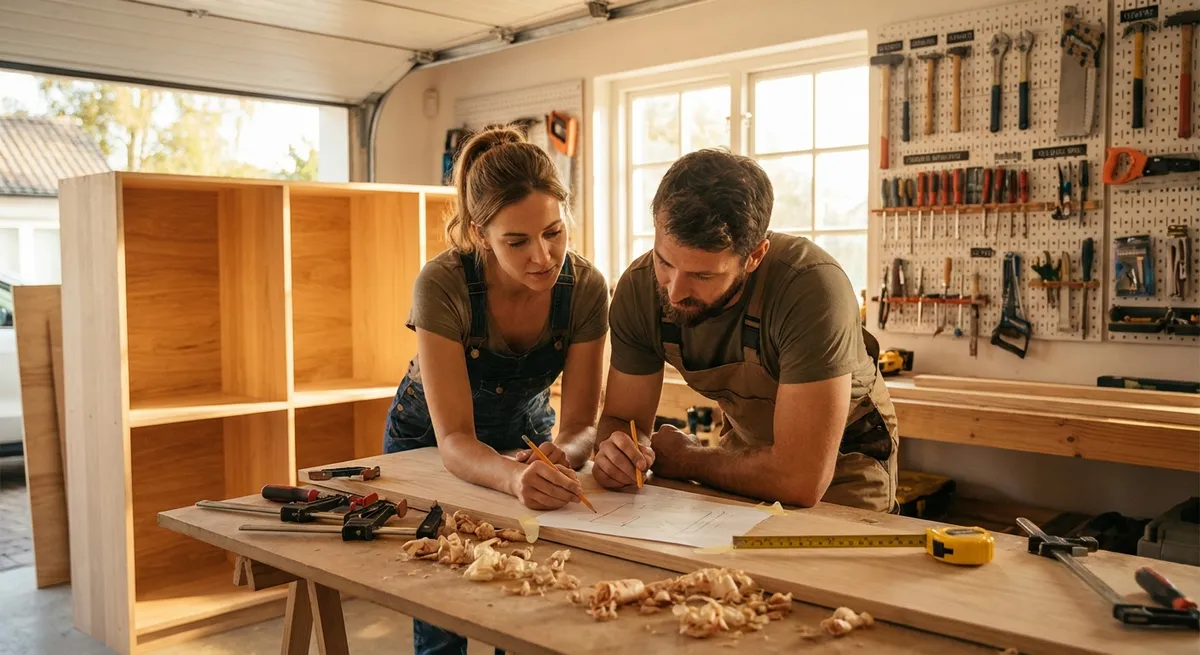
DIY projects can save you money, make your home work better, and give you real satisfaction—if you actually finish them. The hardest part isn’t always the work itself; it’s knowing what to do first, how to stay on track, and when to call it good. This guide walks you step by step through a practical, repeatable process you can use for almost any home DIY project, from building simple storage to updating a room.
Step 1: Define the Project So You Don’t Drift
Before you grab a tool, get clear on exactly what you’re doing and why.
Start by writing a one-sentence goal, like: “Build a wall-mounted shelf above the washer for detergents and cleaning supplies” or “Replace the broken bathroom faucet with a modern, water-saving model.” Be specific about location, purpose, and outcome.
Next, decide your limits: how much you’re willing to spend, how many hours you can reasonably put in this week, and any must-have features (for example, “must support 40 pounds” or “must match existing hardware finish”). This helps you make decisions later when you’re choosing materials or changing the plan.
Sketch a rough drawing, even if it’s just boxes and lines. Add basic measurements: height, width, depth, and clearances (like door swing or walkway space). The point isn’t art—it’s catching obvious issues before they become expensive.
Finally, check any constraints: Are there electrical, plumbing, or load-bearing questions? Will this project affect a shared wall or HOA rules? If the answer is yes or you’re not sure, mark those as “research first” items or plan to ask a pro before you proceed.
Step 2: Break the Work Into Clear, Doable Tasks
Big projects feel overwhelming because “Build a deck” or “Update the entryway” is too vague. Smaller tasks are easier to start and finish.
List out the major phases of your project, such as: plan, buy materials, prep area, build/install, finish, clean up. Under each phase, write tasks that can be done in 15–60 minutes. For example, under “prep area” you might have: clear the room, protect floors with drop cloths, remove outlet covers, and set up a trash bag.
Order your tasks logically from least disruptive to most disruptive, and from irreversible to easily reversible. Try to avoid starting multiple disruptive steps at once; it’s easier to live with a half-done project if the mess is contained to one area.
Estimate time for each task and double it if you’re new to this type of work. It’s better to finish early than to have a sink half-disassembled when you need to cook dinner. Mark any task that must be done in one session (like shutting off water and installing a new valve) so you can schedule it when you have a clear block of time.
If something feels too big or vague (“Frame wall”), break it again into smaller steps (“Cut studs,” “Check they’re square,” “Fasten bottom plate,” etc.). When a task is small enough that you can imagine doing it after work on a weeknight, you’re on the right track.
Step 3: Choose Materials and Tools That Match Your Skill Level
Using the right materials and tools makes DIY work safer, faster, and more satisfying.
Start with your goal and constraints from Step 1. If you’re building shelving in a damp basement, for instance, lean toward moisture-resistant materials like pressure-treated lumber or metal brackets, and avoid products that require flawless finishing if you’re just starting out.
When picking materials, check labels for indoor/outdoor use, load ratings, and compatibility (for example, some fasteners can corrode when used with certain treated lumber). If you’re not sure, look for manufacturer guides on their websites; many have simple selection charts for things like anchors, fasteners, and finishes.
For tools, look for the simplest setup that can safely do the job. If you only need a tool once or twice, renting from a local tool library, home center, or borrowing from a neighbor often makes more sense than buying. If you’re investing in core tools (like a drill/driver or a sander), prioritize safety features, comfort in your hand, and clear instructions over extra modes you may never use.
Lay everything out before you start: fasteners, adhesives, shims, blades, batteries, and safety gear (glasses, ear protection, dust mask as needed). A missing part at the wrong moment leads to rushed decisions and mistakes. Do a “dry run” with your tools—plug them in, check cords, make sure batteries are charged.
Finally, read the instructions for any products that cure, set, or bond (like concrete patch, wood filler, or construction adhesive). Note working time, cure time, and temperature limits. These details often dictate the order of your steps.
Step 4: Work in Controlled Stages and Check Your Progress
Once you’re ready to build or install, aim for steady progress instead of speed.
Set up a clean, safe work area with good lighting and enough space to move. Keep tools you’re actively using within reach and everything else off the floor. If you’re cutting, drilling, or sanding, think about dust control and ventilation—open windows, set up a fan blowing out, and wear a mask when needed.
Follow your task list, not your mood. It’s tempting to jump to the “fun” steps, but many DIY problems start when prep is skipped: uncleaned surfaces, unprimed walls, un-leveled cabinets. Treat prep as part of the project, not something extra.
As you go, stop regularly to check level, plumb (vertical), and square. For shelves, use a level and test with a few heavy items before finalizing all fasteners. For anything that needs to line up—hardware, hinges, electrical boxes—measure from a consistent reference (like the floor or a wall corner) and mark before drilling or cutting.
If something looks off, fix it before moving on. Filling an extra screw hole or re-cutting a board is usually easier now than later. Don’t be afraid to undo a step that doesn’t feel right; that’s part of how skills build.
Take short breaks, especially when doing repetitive or detailed work like painting trims or cutting multiple pieces. Tired hands and eyes make mistakes that cost more time than a five-minute reset.
Step 5: Finish, Inspect, and Store for Next Time
A DIY project isn’t really done until the space is usable, safe, and cleaned up.
Start by finishing surfaces according to product instructions—paint, stain, sealant, caulk, or protective pads. Respect dry and cure times; using a surface too early (sitting on a freshly painted bench, loading shelves before adhesive cures) can undo hours of work. If you’re unsure, plan on waiting at least 24 hours unless the label clearly says otherwise.
Inspect your work like you’re a picky future buyer of your home. Look for safety issues first: sharp edges, loose fasteners, unstable pieces, exposed wires, or tripping hazards. Then check function: do doors close smoothly, do shelves feel solid, does water flow correctly, does anything wobble?
Take photos and simple notes: what you did, materials used, colors or product codes, and any measurements you’d want if you revisited the project. Store these digitally in a folder for your home projects. It may feel unnecessary now, but it’s extremely useful when you need to repair, touch up, or duplicate the work later.
Clean tools properly before putting them away—remove dust, wipe off glue or paint from handles, oil moving parts when recommended. Store them dry and organized by type. A clean, working tool saves you time and money on the next project.
Finally, walk the space like a regular user, not the builder. Can you reach what you need? Is there enough clearance? Does the project actually solve the problem you wrote down in Step 1? If not, adjust now while the details are fresh in your mind.
Conclusion
Consistent DIY success comes from a solid process more than from special skills. When you define your project clearly, break it into manageable tasks, choose the right materials and tools, work in controlled stages, and finish with a careful inspection and cleanup, you give yourself a much better shot at projects that look good, work well, and actually get finished.
Use these five steps as a template every time you tackle something new. Over time, you’ll spend less energy figuring out “what now?” and more time actually improving your home in ways you can see and use every day.
Sources
- [U.S. Consumer Product Safety Commission – Home Improvement Safety Tips](https://www.cpsc.gov/Safety-Education/Safety-Guides/home-improvement-and-tools) – Guidance on safe use of tools and general home improvement precautions
- [The Home Depot – Project How-To Library](https://www.homedepot.com/c/ah) – Step-by-step instructions and planning tips for a wide range of DIY projects
- [Lowe’s – DIY Projects & Ideas](https://www.lowes.com/diy-projects-and-ideas) – Practical project breakdowns, material guidance, and tool recommendations
- [OSHA – Hand and Power Tools Safety](https://www.osha.gov/hand-power-tools) – Official safety considerations for selecting and using tools correctly
- [Fine Homebuilding – Project Planning Basics](https://www.finehomebuilding.com/project-guides) – In-depth articles on planning and executing home projects with professional methods
Key Takeaway
The most important thing to remember from this article is that following these steps can lead to great results.