A good power tool can last for years—if you treat it right. But too many DIYers leave drills, saws, and sanders dusty on a shelf or tossed in a bin with tangled cords and dead batteries. Then when a project finally comes up, nothing works the way it should. This guide walks you through practical, step‑by‑step habits to store and maintain your tools so they’re safe, reliable, and ready to go whenever you are.
Understand What Your Tools Actually Need
Not every tool should be treated the same way. A corded circular saw, a cordless drill, and a random-orbit sander all have different weak points, and understanding those makes maintenance a lot easier.
Most power tools share a few basic needs: a clean housing so dust doesn’t choke vents, protected cords or batteries so you’re not dealing with shorts or dead packs, and dry, stable storage so rust and moisture don’t slowly ruin metal parts. Check the manual once—seriously, just once—for each tool to note specific care instructions such as lubrication points, blade or bit types, and any warnings about temperature or humidity. If you’ve lost the paper manuals, almost every manufacturer posts them on their website as PDFs.
After that, think of your tools the way you would think of a car: they’ll usually keep working if you ignore them, but they’ll work better, last longer, and be safer if you invest a small bit of upkeep along the way.
Step 1: Clean Tools After Every Project (Without Overdoing It)
A quick clean after use is the easiest way to extend tool life and keep performance consistent.
- Unplug or remove batteries first. Before you touch anything, disconnect power. For corded tools, unplug from the outlet. For cordless, remove the battery pack completely.
- Brush off loose dust and debris. Use a soft brush, old paintbrush, or compressed air to remove sawdust, drywall dust, and metal shavings. Focus on vents, moving parts, and around switches. Avoid forcing dust deeper into vents with high-pressure air; short bursts from a bit farther away are safer.
- Wipe surfaces with a dry or slightly damp cloth. Wipe the tool body, handle, and cord with a dry microfiber cloth. If there’s stubborn grime, lightly dampen the cloth with water and a drop of mild dish soap. Never soak tools, and avoid getting moisture into vents, switches, or motor housings.
- Clean metal parts carefully. For blades, bits, and metal bases, wipe them down to remove residue. If there’s built-up sap or adhesive (common on saw blades), use a dedicated blade cleaner or a household degreaser designed for tools. Dry completely to prevent rust.
- Let everything dry before storage. If you used any moisture at all, set the tool aside for 10–15 minutes to fully dry before it goes back into its case or onto a shelf. Storing even slightly damp tools is a common cause of rust and internal corrosion.
The goal isn’t a showroom shine; it’s removing dust and moisture so moving parts can do their job and electrical components stay cool and safe.
Step 2: Treat Cords and Batteries Like the Critical Parts They Are
Power cords and batteries are usually the first thing to fail on household tools—and often the easiest to protect with a few simple habits.
- Inspect cords and plugs regularly. Before and after each use, run your hand along the cord (while it’s unplugged) to check for cuts, crushed areas, and exposed wires. Look at the plug for bent prongs or melted plastic. If you see any damage, stop using the tool until the cord is replaced or professionally repaired.
- Wrap cords without tight bends. When you’re done, coil cords loosely in large loops—about the size of a dinner plate. Avoid tight wraps around the tool body, which can stress the cord where it enters the housing. Use a Velcro strap or reusable twist tie instead of tying knots.
- Keep batteries out of extreme temperatures. Store lithium-ion batteries (the most common type in cordless tools) in a cool, dry place—ideally between about 40°F and 80°F. Don’t leave them in a hot vehicle, in direct sun, or next to heaters; heat shortens battery life and can be a safety risk.
- Store batteries partially charged if not used often. For long-term storage, aim for roughly 40–60% charge. Check every few months and top up if needed. Completely drained batteries left for months are more likely to fail and may not recharge properly.
- Use the right charger and don’t “trickle” forever. Always use the charger made for your battery system. Most modern chargers stop charging automatically, but it’s still a good habit to remove packs once they’re full instead of leaving them parked for weeks.
By protecting cords and batteries, you avoid one of the most frustrating DIY experiences: a tool that works mechanically but won’t power on when you need it.
Step 3: Store Tools So You Can See and Reach Them Easily
Good storage is about more than neat shelves—it’s about making your tools easy to grab and easy to put away, which keeps you more likely to use and maintain them.
- Choose a dry, stable environment. Aim for a climate-controlled space when possible: a basement, utility room, or interior closet is better than a damp shed. If the garage is your only option, keep tools off the floor and away from exterior walls that get condensation.
- Group tools by how you use them. Keep frequently used tools (drill, impact driver, sander) at eye or waist level. Less-frequent tools (like specialty sanders or routers) can go higher or lower. Group by task—woodworking, painting, electrical—so you can grab what you need in one trip.
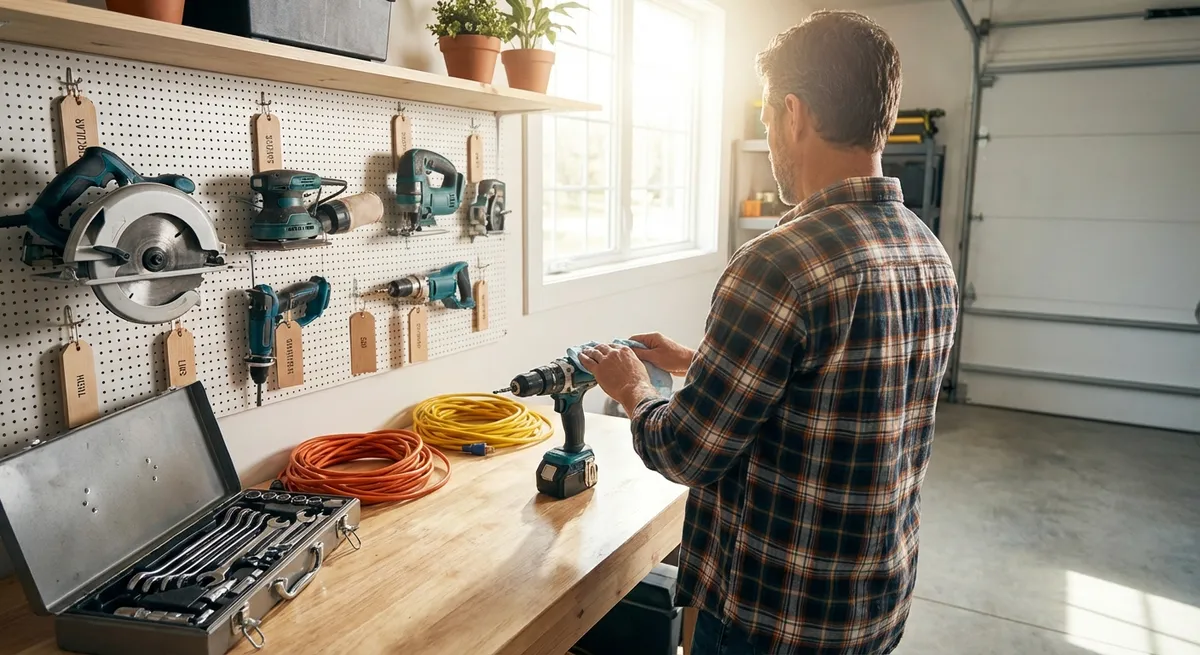
- Use racks, shelves, and hooks for visibility. Pegboards, wall-mounted rails, or simple shelves keep tools visible, which makes it less likely you’ll buy duplicates or forget what you own. Cordless tools can rest on shelves with their batteries removed and stored nearby.
- Keep small parts and accessories contained. Store drill bits, driver bits, and blades in labeled bins or organizer cases. Put them near the tool they belong with, not in a random “miscellaneous hardware” box.
- Label storage spots. Even simple printed labels—“Drill + Bits,” “Sanding,” “Cutting”—help you and anyone else in your home know where things go. When putting tools away is easy and obvious, you’ll actually do it.
A storage system you can realistically maintain beats a perfect system that’s too fussy. Aim for simple, visible, and accessible.
Step 4: Build a Basic Maintenance Routine (Monthly and Yearly)
A little scheduled maintenance keeps small issues from becoming big failures. You don’t need a complex checklist; just a few repeating habits.
- Once a month: quick visual and functional check. Pick one day (for example, the first Saturday of the month) and spend 10–15 minutes:
- Check vents for dust buildup and clean if needed.
- Look for loose screws on housings, guards, and handles.
- Test switches to make sure they move smoothly and don’t stick.
- Spin or run the tool briefly (safely) to listen for unusual noises.
- Lubricate where specified. Some tools (like jigsaws, routers, or planers) have lubrication points. Use the lubricant recommended in the manual—often light machine oil or a specific grease. Don’t guess; too much or the wrong type can collect dust and cause problems.
- Sharpen or replace cutting edges. Dull blades and bits make tools work harder, heat up faster, and are more likely to bind or kick back.
- Replace or sharpen circular saw blades that burn wood, wander from the cut line, or make the motor strain.
- Sharpen or replace drill bits that squeal, smoke, or leave ragged holes.
- Swap sander pads or paper once they stop removing material efficiently.
- Check safety features. Confirm blade guards move freely and return to the closed position. Make sure safety switches and trigger locks still function correctly. Never bypass a safety feature to “make things easier.”
- Yearly: deeper clean and inspection. Once a year, set aside an hour for a more thorough look:
- Open accessible covers per the manual to blow out internal dust (carefully, with power disconnected).
- Check brushes on older brushed-motor tools if they’re accessible; replace if heavily worn.
- Inspect cases or storage boxes for moisture, mold, or pests.
Treat this like an annual checkup for your tools: short, predictable, and focused on catching problems early.
Step 5: Use Tools Correctly to Avoid Premature Wear and Damage
The way you use a tool has as much impact on its lifespan as how you store it. Smart use is part of maintenance.
- Match the tool to the job. Don’t use a small trim saw to rip thick hardwood all day or a light-duty drill for heavy masonry. Overloading tools generates heat, strains motors, and shortens life. If you frequently push a tool beyond its comfort zone, consider renting or upgrading.
- Let the tool do the work. Apply steady, moderate pressure instead of forcing it. If you have to push hard for a cut or a hole, the blade or bit is likely dull, or the tool is underpowered for the material. Forcing tools increases the risk of kickback and burnout.
- Respect duty cycles and cooling. Continuous use generates heat. If a tool, battery, or motor housing feels very hot, pause and let it cool. This is especially important with lower-cost or compact tools not designed for long, uninterrupted use.
- Use appropriate accessories. Stick to blades, bits, and attachments rated for your tool’s speed and type. Mismatched accessories can vibrate excessively, overheat, or break apart during use. Check packaging for RPM ratings and material compatibility.
- Stop at the first sign of trouble. If you smell burning plastic, feel sudden vibration, hear grinding, or see visible sparking where you haven’t before, stop immediately. Unplug or remove the battery and inspect. A quick pause can prevent permanent damage—or an accident.
Using tools within their limits not only keeps them alive longer, it makes your projects easier and safer.
Conclusion
Keeping your power tools ready isn’t about complicated routines or expensive storage systems. It comes down to a few consistent habits: clean them after use, protect cords and batteries, store them where you can actually see and reach them, check them once in a while, and avoid pushing them beyond what they’re built to handle. Set up these basics now and you’ll spend less time fighting with your tools and more time actually finishing projects—confident that your gear will turn on, cut straight, and work the way you expect every time.
Sources
- [OSHA – Hand and Power Tools](https://www.osha.gov/hand-power-tools) – Official U.S. government guidance on safe use and basic care of hand and power tools
- [Occupational Safety and Health Administration: Electrical Safety](https://www.osha.gov/sites/default/files/publications/osha3075.pdf) – PDF covering safe handling of cords, plugs, and electrical components
- [DeWalt – Battery Care and Maintenance Tips](https://support.dewalt.com/s/article/Battery-Care-and-Maintenance-Tips) – Manufacturer advice on extending the life of cordless tool batteries
- [Makita – Power Tool Maintenance Guide](https://www.makitatools.com/support/faqs/power-tools) – FAQ and recommendations on cleaning, inspection, and general tool upkeep
- [Family Handyman – How to Organize Tools](https://www.familyhandyman.com/list/tool-storage-ideas/) – Practical ideas for storing and organizing tools in home workshops
Key Takeaway
The most important thing to remember from this article is that this information can change how you think about Tools & Equipment.