If your tools are scattered, dull, or missing when you actually need them, every project takes longer and feels more stressful than it should. A simple tool routine can change that. This guide walks through a practical, repeatable process to keep your tools ready, safe, and easy to find—so you can focus on actually building and fixing things instead of hunting for a tape measure.
Step 1: Map Your “Work Zones” Before You Buy Another Tool
Before you reorganize or add new equipment, get clear on where and how you actually work. This helps you set up tools so they’re always near the jobs you do most often, instead of buried in a random box.
Start by identifying your main work zones: for many DIYers that’s usually a garage or shed, an indoor “clean” space like a desk or table for small repairs, and an outdoor zone for yard work or messy projects. Walk each area and note what you’ve done there in the last 6–12 months—painting, basic carpentry, hanging shelves, fixing bikes, or lawn maintenance.
Next, write down which tools you reach for most in each zone. For example, in a garage: drill/driver, impact driver, socket set, stud finder, tape measure, utility knife, clamps. At a kitchen table: small screwdrivers, pliers, glue, measuring tape, batteries, and a small light. In the yard: hand pruners, loppers, rake, shovel, extension cord (if you use corded tools), or charged batteries.
Once you see patterns, assign a primary “home” for those tools in or near each zone. The rule: tools live closest to where they’re actually used, not where there’s random shelf space. Even in a small apartment, you can still think in zones—one bin for “wall stuff” (anchors, drill bits, stud finder, level), another for “fix-it” (pliers, screwdrivers, tape, glue). When your space matches your habits, setup time drops and projects feel easier from the start.
Step 2: Build a Core Tool Set You Can Grab in One Move
Instead of spreading your most-used tools across multiple drawers, build a compact “core kit” you can grab in one motion for 80% of your jobs. This saves time and reduces the chance that you’ll abandon a task because something simple is missing.
Choose a toolbox, open-top tote, or sturdy organizer that’s easy to carry with one hand. Fill it with workhorse tools, not specialty gear. For most DIYers, that core kit should include:
- Measuring: tape measure (at least 16 ft), small torpedo level, pencil
- Cutting & marking: utility knife with extra blades, scissors or snips, permanent marker
- Driving & fastening: multi-bit screwdriver, set of screwdriver bits for your drill, a basic set of wood screws and wall anchors
- Gripping & holding: adjustable wrench, combination pliers, needle-nose pliers, small clamp or two
- Power: cordless drill/driver, spare battery, and matching charger stored nearby
Lay everything out on a table before you commit to the layout. Group tools by what they do: cutting together, measuring together, fastening together. Use small containers or divided sections to keep screws, bits, and anchors separated so you’re not digging for the right piece mid-project. Label the container or toolbox clearly—“Core Tools – Grab First”—so even future-you on a rushed weekend remembers where to start.
Finally, make one rule: if a tool belongs in the core kit and you use it, it must go back there before you call the project done. That single habit keeps your main kit reliable and stops it from turning into a half-empty mystery box.
Step 3: Set Up a Simple Storage System You’ll Actually Maintain
An elaborate pegboard that looks great on social media is useless if you never keep up with it. Your storage system should be obvious, low-effort, and easy to reset after each project.
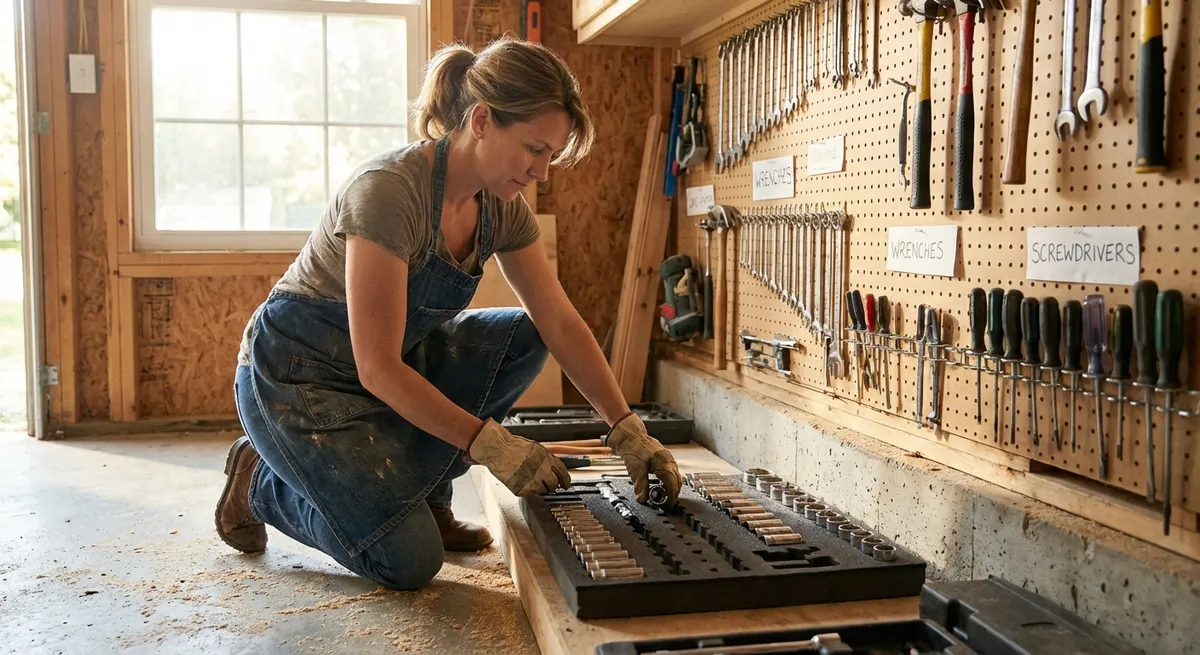
Start with visibility. Wherever possible, store frequently used tools where you can see them: pegboard, wall rails, open shelves, or magnetic strips for metal hand tools. Reserve closed cabinets, drawers, and bins for things you don’t use every week—specialty tools, seasonal gear, or duplicates. Aim for “one glance, one reach” access to the tools you use most.
Next, pick a clear organizing logic and stick with it. You can sort by:
- Task (electrical, plumbing, painting, yard, bike repair)
- Tool type (cutting, measuring, drilling, clamping)
- Project frequency (daily/weekly use vs. rare/specialty)
Label everything: drawer fronts, clear bins, shelves, and even the edges of tool racks. Simple text like “Drilling & Bits,” “Painting Gear,” or “Plumbing Fixes” is enough. The goal is that someone else in your home could find what they need without asking you.
For small parts—screws, anchors, nails, washers—use divided organizers with lids that snap shut, or small drawers sorted by size and type. Write specific labels: “#8 Wood Screws – 1 1/4 in,” “Drywall Anchors – Medium.” This saves time and also helps you avoid overbuying when you already have what you need.
Finally, decide on a reset point. Maybe it’s the last 5–10 minutes of every project, or a weekly “reset” on Sunday night. During that time, tools go back to their homes, dead batteries head to the charger, and empty consumables (like blades or sandpaper) get added to a running restock list. Consistent small resets are what keep your system working.
Step 4: Create a Quick Maintenance Routine for Reliable Tools
A tool that doesn’t work when you need it wastes time and can be unsafe. You don’t need to be a mechanic to keep your tools reliable; a short, recurring routine is enough.
Choose a simple schedule: monthly for heavy use, quarterly for casual DIY. Set a reminder in your phone titled “Tool Check” so you actually do it. During that check, focus on three things: clean, inspect, and test.
For hand tools, wipe off dirt, dust, and any residue. Tighten loose screws on handles, check for cracks, and make sure moving parts operate smoothly. Lightly oil metal tools (like pliers, wrenches, and hinges) with an appropriate lubricant to prevent rust. For cutting tools—utility knives, saws, pruning shears—replace or sharpen dull blades. Dull tools slip more easily and force you to work harder, which increases accident risk.
For power tools, unplug them or remove batteries before inspecting. Blow out dust from vents using compressed air or a soft brush, especially on drills, sanders, and saws. Check cords for cracks or exposed wires; if you see damage, stop using the tool until it’s repaired or replaced. Inspect battery contacts for corrosion or dirt and clean them gently if needed. Confirm that safety features (like blade guards and switches) move freely and return to their locked positions properly.
Finish your routine by charging any depleted batteries and checking that your chargers are working. Store batteries in a cool, dry place, away from direct heat sources and out of direct sunlight. A few minutes of regular care can easily add years to a tool’s life and keep your projects safer and smoother.
Step 5: Standardize How You Use Battery-Powered Tools
Battery-powered tools are incredibly convenient—but only if the batteries are ready and the tools match your actual needs. A little planning turns a scattered collection into a dependable system.
First, pick one main battery platform for most of your cordless tools whenever possible. That means sticking with a single voltage and brand across your drill/driver, impact driver, circular saw, and other compatible tools. This lets you swap batteries between tools and reduces how many chargers clutter your outlets. If you already own mixed brands, decide which platform you’ll prioritize as you replace or upgrade.
Next, choose a single location for charging and storing batteries—a “charging station.” Mount or place chargers together on a shelf, bench, or wall-mounted board near an outlet. Label each charger, and if you have multiple battery sizes, label storage bins or slots (“Drill Batteries,” “Yard Tools”). Keep the area ventilated and clear of flammable materials.
Create a simple battery-use rule: rotate through your batteries so the same one doesn’t always get drained first. For example, number your batteries with a permanent marker—1, 2, 3—and always grab the next number in order. Put dead batteries directly into a “Needs Charge” spot near your chargers so they don’t end up forgotten in tool cases.
Finally, match the tool to the job to avoid overworking your equipment. Use a drill/driver for driving screws and drilling most holes; reserve heavy-duty tools (like hammer drills or rotary hammers) for masonry or really tough material. Don’t force a small, low-voltage tool through dense lumber or concrete just because it’s nearby. When you use the right tool on a charged battery, your work goes faster and your tools last longer.
Conclusion
A well-thought-out tool and equipment routine doesn’t have to be complicated or expensive. By mapping your work zones, building a core kit, creating simple storage, maintaining your tools, and standardizing your battery system, you remove a lot of the hidden friction that slows DIY projects down. The result: less searching, less frustration, and more projects that actually get finished—without upgrading your entire workshop.
Sources
- U.S. Consumer Product Safety Commission – Power Tool Safety - Overview of safe operation and maintenance practices for power tools
- Occupational Safety and Health Administration (OSHA) – Hand and Power Tools - Authoritative guidance on safe use, inspection, and care of tools
- Family Handyman – Workshop Storage Ideas - Practical examples of tool storage and organization solutions
- Fine Homebuilding – Maintain Your Power Tools - Detailed tips on cleaning, inspecting, and prolonging the life of power tools
- University of Missouri Extension – Preventing Rust and Corrosion - Guidance on protecting metal tools from rust and moisture damage
Key Takeaway
The most important thing to remember from this article is that this information can change how you think about Tools & Equipment.