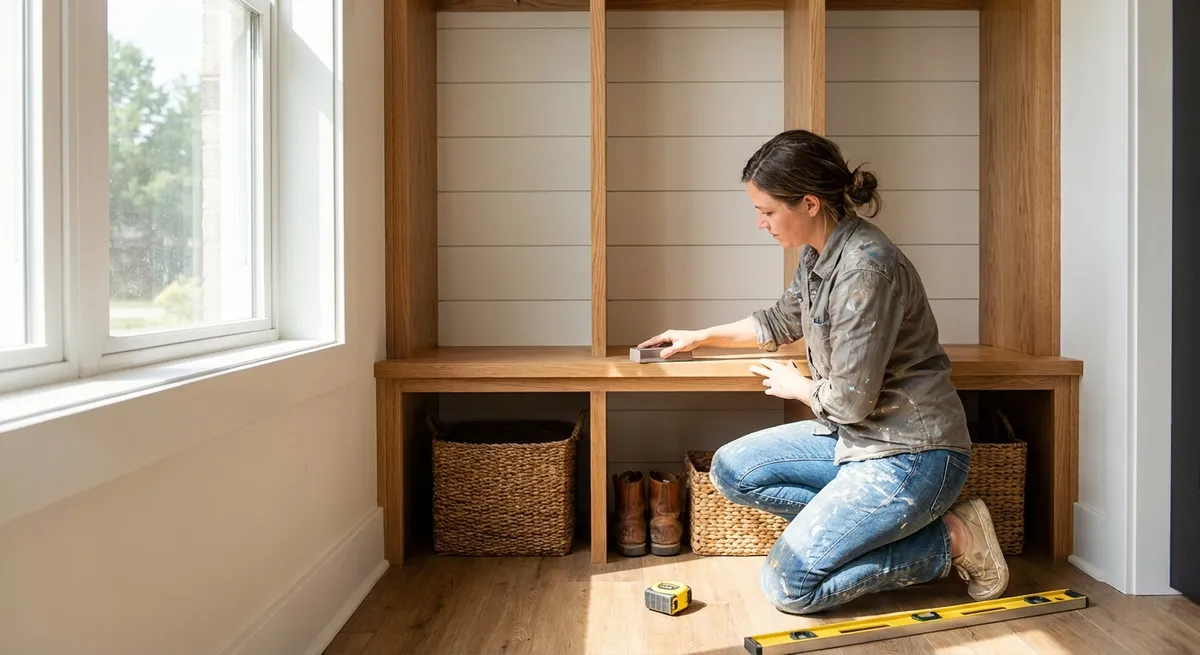
A blank wall is wasted space—especially in small homes. With some basic tools and a weekend of focused work, you can turn an empty stretch of wall into a custom, built-in-style storage nook that actually fits your life. This project adds function and character without needing full-scale renovation or custom cabinetry prices.
Below is a practical, step-by-step guide to planning, building, and finishing a wall storage nook that looks intentional, not improvised.
Plan Your Storage Nook (So You Don’t Regret It Later)
Before you buy a single board, get specific about what this nook needs to do. The more clearly you define the purpose, the better your final result will be.
Think about what you want this wall to handle: books, baskets, shoes, tools, kids’ gear, decor, or a mix. Decide whether you want open shelves only, a bench with storage below, cubbies with doors, or a combination. Take clear measurements of the wall: width, floor-to-ceiling height, and depth available without crowding walkways or doors.
Sketch a simple layout on paper: mark where you’d like shelves, a bench, hooks, or a top shelf near the ceiling. Note any outlets, switches, baseboard heaters, or vents you’ll need to work around. This planning phase also helps you choose materials: plywood for strength and stability, 1x boards for trim, and basic brackets if you want removable shelves. Don’t skip this step—changing your mind after cutting wood is where DIY gets expensive.
Gather Tools and Materials with a Clear Cut List
Once you have a simple sketch and measurements, build a clear cut list and shopping list. This keeps you from making “just one more” trip to the store and helps you avoid overbuying.
At minimum, you’ll want:
- Tape measure, pencil, and notepad
- Stud finder and level (a 24" or longer level is ideal)
- Drill/driver and wood screws
- Circular saw or miter saw (or have lumber cut at the store)
- Sandpaper (120–220 grit) or sanding sponge
- Construction adhesive (optional but helpful for stability)
- Primer and paint or clear finish
- Safety gear: eye protection, hearing protection, dust mask
For materials, a common combo is 3/4" plywood for shelves and bench tops, plus 1x2 or 1x3 boards for front edges and trim. This gives you a sturdy structure and a clean, finished look. If you’re building a bench, consider using a deeper piece of plywood (14"–18" deep) and reinforcing it with cleats or supports fastened into wall studs.
Create a cut list broken down by piece: “(3) shelves at 34" x 12", (1) bench at 48" x 16", (4) vertical supports at 16" deep x 15" tall,” etc. Label everything clearly. If you’re new to power tools, ask the home center to make straight cuts for you; many will do this for a small fee or per-cut charge.
Step 1: Map and Secure Your Wall Anchors
Every solid DIY storage project starts with what you can’t see—what’s behind the wall. Find and mark your studs before you think about shelves or bench tops.
Use a stud finder to locate each stud across the width of your planned nook. Mark them lightly with painter’s tape or pencil at several heights: near the floor, mid-wall, and eye level. Verify by tapping the wall (a hollow sound means you’re between studs; a duller sound means you’re on one) or driving a small test nail in an inconspicuous spot.
Decide where your bench or lowest shelf will sit. A comfortable bench height is around 17"–19" from the floor. For a storage-only nook without seating, the lowest shelf can start higher, around 12"–16" off the floor to leave space for baskets or bins underneath. Mark a level line for that first support cleat across your wall using a level, making sure it crosses at least two studs.
Fasten a support cleat (a straight 1x2 or 1x3 board cut to length) to this line with wood screws, driving into studs wherever possible. Pre-drill your holes to avoid splitting. This cleat will carry much of the load of your bench or shelf, so take the time to get it straight and solid. Repeat this process higher on the wall wherever you plan fixed, load-bearing shelves.
Step 2: Build and Install the Base (Bench or Lower Shelf)
With your wall cleat in place, you can build the base structure—the bench or lower shelf that anchors the whole nook visually and structurally.
Cut your bench or shelf panel from 3/4" plywood to the width of your wall area and desired depth. Dry-fit it on top of your cleat. If you’re creating a bench, make sure it doesn’t stick out so far that it blocks door swings or walking paths. For pure storage shelving, 10"–12" deep is usually enough for books and most baskets.
Add vertical supports under the front edge: either simple 2x2 or 2x4 legs, or short plywood panels at each end and possibly one in the middle. These supports should sit directly on the floor and under the edge of the bench or shelf, with the back edge resting on the wall cleat. Attach the supports to the underside of the plywood with screws, then fasten them to the floor if needed (or to side walls) for extra stability.
Once you’re happy with the fit, fasten the bench or shelf down: drive screws down through the top into the cleat along the back edge and into the vertical supports along the front. Check for level front-to-back and side-to-side. If your floor is uneven, you may need to add shims under supports and trim them later for a neat look.
Step 3: Install Upper Shelves and Vertical Dividers
With a solid base in place, you can start building upward. This is where your nook becomes real storage instead of just a low ledge.
Decide how many upper shelves you want and how tall the vertical spaces between them should be. Leave at least 10"–12" of height for books and most baskets, more if you’re storing tall items. Mark these heights on the wall using a level and transfer stud locations up to each line.
Attach additional wall cleats at each shelf height, just like you did for the base: level, into studs, securely screwed. Cut your shelves to length and depth. If you want a built-in look, keep side edges tight to the adjacent walls; if your walls aren’t perfectly square (most aren’t), cut and test-fit gradually, trimming a bit at a time.
Vertical dividers help stop shelves from sagging and create useful “zones” for storage. Cut dividers from the same plywood as your shelves, running from one shelf to the next or from bench to top shelf. Pre-drill and screw these dividers into the shelves from above and below, then into the base or bench as needed. A small bead of construction adhesive between shelf and divider adds stiffness and prevents squeaks.
Dry-fit everything before you commit with screws. Once you’re happy with alignment and spacing, fasten shelves down into cleats and dividers. Check for level as you go—small corrections now are much easier than trying to hide a crooked shelf later with decor.
Step 4: Add Trim, Sanding, and Finish for a Built-In Look
The structure might be solid, but the finishing details are what make it look custom rather than cobbled together. Trim, caulk, and paint are where you pull the project together.
Start by adding front edge trim to all exposed plywood edges. Cut 1x2 or 1x3 boards to match the shelf and bench widths. Attach them to the front edge with wood glue and brad nails or screws, keeping them flush with the top surface. This hides plywood layers and thickens the visual edge, making shelves look more substantial.
If there are gaps where shelves meet the wall (there usually are), decide which to fill and which to live with. Small gaps can be caulked; larger ones may need thin filler strips of wood. Use painter’s caulk for joints between trim and wall or trim and shelves—this makes paint edges crisp and hides tiny imperfections. Avoid caulking joints where movement is likely, like between the bench top and floor.
Sand all surfaces with 120–220 grit paper, rounding any sharp corners slightly. Wipe off dust with a damp cloth. Apply primer suited to your material—wood, plywood, or MDF—then lightly sand again for a smooth finish. Follow with two coats of your chosen paint, letting each coat dry fully. A semi-gloss or satin finish is easier to wipe clean than flat paint, which matters if you’re storing shoes, bags, or kids’ items.
If you prefer a natural wood look, skip paint and use a clear polyurethane or water-based topcoat instead, but be sure to use quality plywood with good veneers and fill any visible voids first.
Step 5: Dial In the Details and Organize Intentionally
Once the paint or finish cures, the fun part starts: turning your new nook into a space that works hard every day.
Install hooks, small peg rails, or hardware under a top shelf for jackets, bags, or headphones if this nook is near an entry or in a hallway. Add labeled baskets or bins on lower shelves to collect shoes, toys, cables, or cleaning supplies. Reserve eye-level shelves for things you use often and higher shelves for seasonal or decorative items.
If you have a bench, consider adding a removable cushion or simple pad cut to size, plus a couple of pillows if the nook will double as a reading spot. Use felt pads or rubber bumpers under baskets or bins to protect your finish. Run small cable clips along the back if you’re storing devices or chargers in this space, keeping cords controlled.
Step back and evaluate after a week of use. Are certain items always piled in one spot? Adjust basket sizes, shelf contents, or hook locations until the nook matches your habits. The goal isn’t to create a perfect showpiece—it’s to make a wall that used to do nothing now quietly keep your home running smoother.
Conclusion
Transforming a bare wall into a built-in-style storage nook is a realistic DIY project for most homeowners with basic tools and some patience. By planning your layout carefully, anchoring into studs, building a solid base, adding supportive shelving, and finishing with thoughtful trim and paint, you can create storage that feels like it’s always belonged in your home.
This kind of project pays you back every day in function and clutter control—and every time you walk past it, you’ll know you built it yourself.
Sources
- [U.S. Department of Energy – Building Envelope Basics](https://www.energy.gov/energysaver/weatherize/air-sealing-your-home) - General guidance on walls, studs, and construction basics that help when fastening built-ins safely
- [Lowe’s DIY Projects & Ideas – How to Install Shelving](https://www.lowes.com/n/how-to/install-shelving) - Practical instructions and visuals for shelf installation, brackets, and anchoring into studs
- [Family Handyman – Built-In Storage Ideas](https://www.familyhandyman.com/list/built-in-storage-solutions/) - Examples and tips for turning unused spaces into storage, useful for planning your own nook layout
- [This Old House – How to Paint Trim](https://www.thisoldhouse.com/painting/21015113/how-to-paint-trim) - Detailed walkthrough on prepping, caulking, and painting trim for a clean, professional-looking finish
- [Fine Woodworking – Basics of Plywood Selection](https://www.finewoodworking.com/2008/03/01/plywood-choosing-the-right-grade-and-type) - Guidance on choosing the right plywood grade and thickness for shelves and built-in projects
Key Takeaway
The most important thing to remember from this article is that this information can change how you think about DIY Projects.