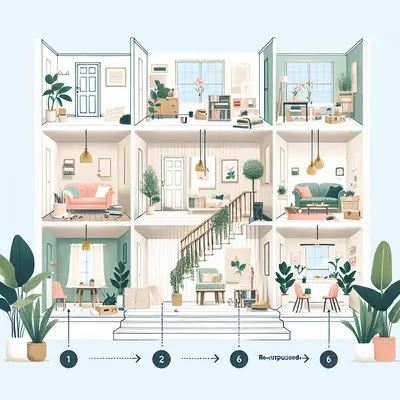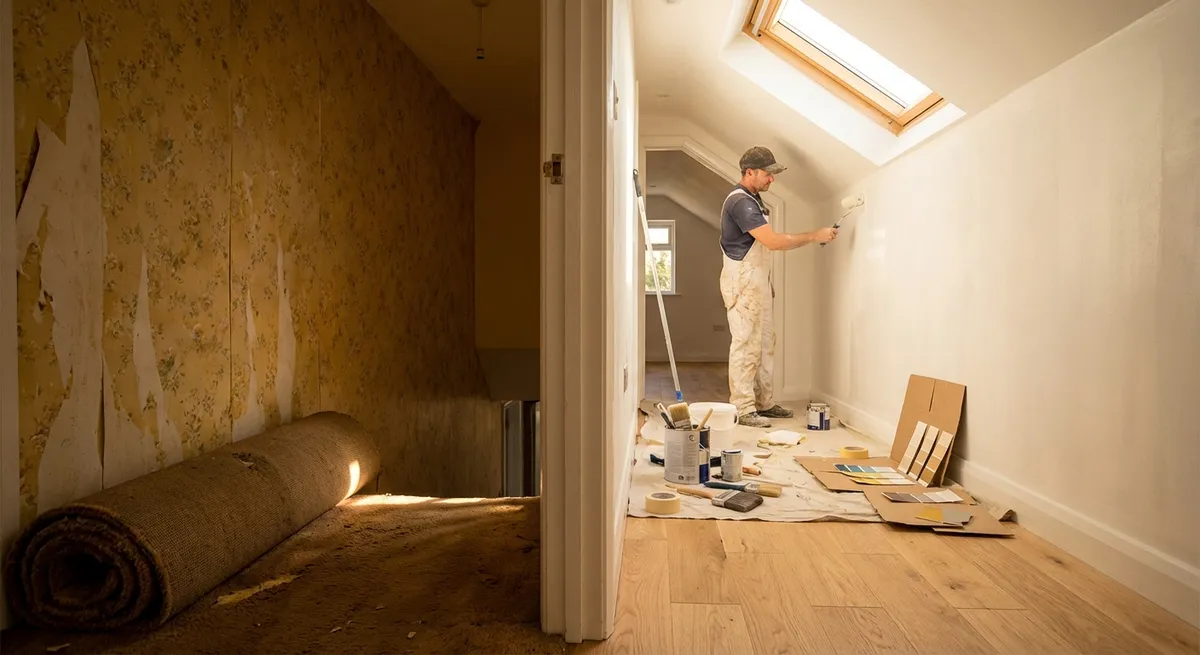
Most homes have one: a gloomy hallway that feels more like a tunnel than part of your living space. You don’t need to knock down walls or hire a designer to fix it. With a clear plan and a few smart upgrades, you can turn a dark, dated hallway into a bright, modern passage that actually feels good to walk through.
This guide walks you through a focused mini-renovation with five practical, DIY‑friendly steps. You can tackle them over a couple of weekends, adjust for your budget, and transform one of the most overlooked parts of your home.
Step 1: Plan the Upgrade and Assess the Existing Space
Before you start buying paint and light fixtures, take 20–30 minutes to really look at your hallway and write down what’s wrong with it.
Walk it a few times at different times of day and note:
- Light: Is it dark even during the day? Are bulbs too yellow or too dim? Any natural light at all?
- Surfaces: Are walls scuffed, glossy, or textured? Is the ceiling low? Any cracks or nail pops?
- Flooring: Carpet, vinyl, tile, or wood? Are there squeaks, stains, or transitions that trip you?
- Function: Do you need coat hooks, shoe storage, a landing spot for keys, or better access to attic/closets?
- Safety: Any loose handrails, wobbly light switches, or slippery rugs?
Then:
- Set a realistic goal and budget. Decide whether this is a cosmetic refresh (paint, lights, hardware) or a deeper upgrade (flooring, minor electrical). Write down a max budget and keep a 10–15% cushion for surprises.
- Measure everything. Measure hallway length, width, ceiling height, and door locations. Note existing light fixture locations and switch placement. These numbers matter for lighting layout, trim, and flooring.
- Check what you can DIY safely. Painting, basic trim work, and installing surface‑mounted light fixtures are realistic for most homeowners. Moving electrical, removing walls, or dealing with suspected asbestos/lead should be left to pros.
- Choose a simple design direction. For narrow hallways, lighter walls and consistent flooring help them feel bigger. Pick one “mood” word (bright, calm, minimal, warm, etc.) and let that guide colors and finishes so you don’t over‑complicate decisions.
A short planning session avoids wasted trips to the store and helps you sequence the next four steps efficiently.
Step 2: Brighten with Paint and Simple Wall Upgrades
Paint is the fastest, most cost‑effective way to change how a hallway feels. Done right, it also helps your lighting work better.
- Pick the right sheen and color.
- Use eggshell or satin on walls—easier to clean than flat, but not too shiny.
- For most hallways, choose a light neutral (soft white, warm gray, or beige) with a slight warm undertone to avoid a cold, sterile look.
- Paint ceilings a true white or 10–20% lighter version of your wall color to visually lift the space.
- Prep walls thoroughly.
- Wash grimy spots with a mild detergent; rinse and let dry.
- Fill nail holes and small dents with lightweight spackle; once dry, sand smooth with 120–220‑grit sandpaper.
- Spot‑prime patched areas and any stains (water marks, smoke) with a stain‑blocking primer.
- Deal with texture and imperfections smartly.
- For minor orange‑peel or roller marks, a quality roller (3/8" nap for smooth walls, 1/2" for slight texture) and consistent technique often hide more than you’d expect.
- Deep cracks or peeling paint should be scraped, patched, and primed before you touch them with finish paint.
- Use visual tricks to open the space.
- Paint doors and trim in a slightly different sheen (semi‑gloss) but the same color family for a clean look.
- In a very narrow hallway, keep one continuous wall color instead of accent walls, which can visually chop up the space.
- Cut in carefully and work in sections.
- Start by “cutting in” along ceilings, corners, and trim with a 2–2.5" angled brush.
- Immediately roll the adjacent wall while the cut‑in is still wet to avoid visible lines.
- Apply two coats, allowing proper dry time as listed on the can.
Painting right away sets a clean backdrop for everything else you’ll do and often reveals where lighting and storage will make the biggest difference.
Step 3: Upgrade Hallway Lighting for Even, Shadow‑Free Brightness
A single dim ceiling light in a long hallway will always feel like a cave. Upgrading lighting boosts both appearance and safety.
- Evaluate your existing wiring layout.
- Count your fixtures and note their spacing. If you have one ceiling light in a long hallway, consider adding more fixtures—this part may require an electrician if new wiring is needed.
- If you already have several boxes, you can often swap old fixtures for modern, low‑profile LED units yourself.
- Choose the right fixtures and color temperature.
- For low ceilings, look for low‑profile LED flush mounts or canless recessed lights rated for direct contact with insulation where needed.
- Aim for 3000K–3500K color temperature for a warm‑neutral look—bright but not harsh.
- Use fixtures with at least 80+ CRI (Color Rendering Index) so colors on your freshly painted walls look accurate.
- Size and space fixtures properly.
- A rough starting point for recessed or small flush fixtures is 4–6 feet apart in a standard hallway, centered down the length.
- For a decorative touch (like a small lantern or semi‑flush) in a short hallway, keep the fixture small enough that doors can open fully beneath it.
- Add switching that matches real use.
- Three‑way switching (a switch at each end of the hallway) is more than a luxury—it’s safety and convenience. If it’s missing, consider having an electrician add it.
- If re‑wiring isn’t in the cards, smart bulbs or smart switches that can be controlled via phone or voice can partially make up for poor switch placement.
- Install fixtures safely.
- Turn off power at the breaker, not just the switch. Test with a non‑contact voltage tester before touching any wires.
- Match wire colors (black to hot, white to neutral, bare/green to ground) and use proper wire connectors and box covers.
- Support heavier fixtures as specified by the manufacturer; don’t rely on old or damaged ceiling boxes.
Done well, upgraded lighting alone can make your hallway feel like a new part of the house—even before you change flooring or storage.
Step 4: Refresh Flooring and Transitions for a Cleaner Look
Hallways take a beating: foot traffic, pet claws, dropped bags, and grit from shoes. A flooring refresh not only looks better but can make cleaning easier.
- Decide whether to repair or replace.
- If you have hardwood in decent shape, sanding and refinishing or even a simple screen and recoat may be all you need.
- If you have worn carpet, curling vinyl, or mismatched patches, plan for a full replacement for a consistent, modern look.
- Choose a durable, hallway‑friendly material.
- Luxury vinyl plank (LVP): Water‑resistant, tough, and DIY‑friendly with click‑lock installation. Good for families and pets.
- Engineered wood: Warmer and more natural than vinyl, but pick a durable finish and be mindful of moisture.
- Tile: Very durable but harder underfoot; best where mud and water are frequent (entry hallways).
- Prep the subfloor properly.
- Remove old flooring and inspect the subfloor for soft spots, squeaks, or water damage. Tighten loose subfloor panels with screws.
- Use a leveling compound where needed; most click‑lock systems require a pretty flat surface to avoid gaps and movement.
- Plan plank direction and transitions.
- Running planks lengthwise down the hallway usually looks best and makes the space seem longer.
- Use proper transition strips where the hallway meets other flooring types. Keep heights as close as possible to reduce trip hazards.
- Install with attention to expansion and details.
- Leave recommended expansion gaps at walls and around fixed objects (usually 1/4"–3/8", check manufacturer instructions). Cover gaps later with baseboards or shoe molding.
- Stagger joints and avoid repeating plank patterns too closely—it’s more noticeable in a narrow hallway.
- Cut carefully around door jambs; consider undercutting jambs so planks can slide underneath for a cleaner finish.
A clean, consistent floor that runs the full length of your hallway ties the space together and instantly updates an older home.
Step 5: Add Smart Storage and Finishing Touches
Once the big elements are in place, finish your renovation with storage and details that make the hallway more functional and inviting.
- Use vertical space for storage.
- Install a shallow wall‑mounted shelf with hooks near entries for coats, bags, and keys.
- Consider slim shoe cabinets that fit close to the wall, especially in narrow hallways where depth matters.
- Choose the right wall decor.
- Opt for a small number of larger frames or mirrors rather than a busy gallery wall in very tight spaces.
- A well‑placed mirror across from a light source or doorway can bounce light and visually widen the hall.
- Update hardware and trim.
- Swap yellowed switch plates and outlet covers for clean white or a finish that matches your fixtures.
- Replace battered baseboards or add simple, taller trim for a subtle modern upgrade. Caulk gaps and seams before painting for a finished look.
- Add practical runners and mats.
- Use a non‑slip rug pad under runners to prevent shifting. Look for low‑pile options that won’t catch under doors.
- Choose patterns that hide dirt but stick with a color palette that matches your new walls and flooring.
- Dial in the ambiance.
- Install dimmer switches where code and fixture ratings allow so you can change the mood (bright during the day, softer at night).
- Consider low‑profile nightlights or plug‑in motion lights for safe nighttime navigation without blinding brightness.
These finishing touches are where the hallway changes from “updated” to “a place I actually like walking through.”
Conclusion
You don’t have to take on a whole‑house remodel to make your home feel more modern and comfortable. Focusing on a single, high‑traffic area like a hallway can deliver a big daily payoff for a manageable amount of work and money.
By planning clearly, brightening with paint, upgrading lighting, refreshing flooring, and adding smart storage and finishes, you turn a dark, dated passage into a bright, practical, and cohesive part of your home. Tackle each step at your own pace, and treat your hallway as a test run—once you see what’s possible here, it’s much easier to take on the next space with confidence.
Sources
- [U.S. Department of Energy – Lighting Choices to Save You Money](https://www.energy.gov/energysaver/lighting-choices-save-you-money) - Explains efficient lighting options, color temperature, and how to choose bulbs for home spaces
- [Consumer Reports – Choosing the Best Interior Paint](https://www.consumerreports.org/paints-stains/how-to-choose-the-right-paint-finish-a6456811148/) - Covers paint finishes, durability, and selection tips for different rooms and surfaces
- [National Wood Flooring Association – Repair or Replace Wood Flooring](https://www.woodfloors.org/repair-or-replace-wood-floors.aspx) - Guidance on evaluating existing wood floors and deciding whether to refinish or replace
- [U.S. Consumer Product Safety Commission – Home Electrical Safety Checklist](https://www.cpsc.gov/s3fs-public/electrical_safety.pdf) - Outlines basic electrical safety practices for homeowners working around wiring and fixtures
- [Harvard Joint Center for Housing Studies – Improving America’s Housing](https://www.jchs.harvard.edu/research-areas/reports/improving-americas-housing-2023) - Provides context on home improvement trends, spending, and areas where homeowners see the most impact
Key Takeaway
The most important thing to remember from this article is that this information can change how you think about Renovation.