Most homes have at least one room that feels dark, cramped, or just plain dated. The good news: you don’t need a full gut renovation to make it brighter and more inviting. With a focused weekend plan and the right upgrades, you can completely change how a room looks and feels—without tearing down walls.
This guide walks you through a practical, step-by-step approach to brightening a tired space using upgrades almost any DIYer can handle.
Step 1: Diagnose Why the Room Feels Dark or Dated
Before you start buying paint or fixtures, take time to really look at the room. You’ll make better decisions and avoid wasting money on changes that don’t move the needle.
Ask yourself:
- Where is the natural light coming from?
- What’s blocking light inside?
- What’s the color story?
- How’s the lighting layout?
- What visual details date the space?
Note window size, direction (north, south, etc.), and any obstructions outside (trees, overhangs, fences).
Heavy curtains, bulky furniture, tall bookcases, dark decor, or large TV units can all make a room feel heavier.
Dark walls, dark floors, and dark furniture compound each other. Even mid-tone paints can feel gloomy with limited light.
Many rooms rely on a single overhead fixture, which creates harsh shadows and makes corners feel cave-like.
Popcorn ceilings, yellowed trim, builder-grade brass fixtures, orange-toned wood, and busy patterns are common culprits.
Write down what you see, then prioritize issues in this order:
Light flow and brightness
Color and surfaces (walls, trim, floors)
Fixtures and hardware
Furniture layout and scale
This gives you a clear roadmap instead of guessing as you go.
Step 2: Plan a Light-Boosting Color and Finish Update
You don’t have to repaint every surface, but strategic color changes can transform a room more than almost anything else.
Choose a wall color that works with your light
- North-facing rooms (cool light):
- South-facing rooms (warm light):
- East-facing rooms:
- West-facing rooms:
Use warm neutrals with a hint of yellow, beige, or greige to avoid a cold, gray feel.
Slightly cooler neutrals (soft gray, greige, off-white) help balance the warmth.
Morning light is warm, evenings are cooler—light neutrals or soft colors handle the shift well.
Afternoon light is intense and warm—off-whites or colors with a bit of gray help tone down the orange glow.
Look for paints specifically marketed as “light reflecting” or check the Light Reflectance Value (LRV)—aim for LRV 60–80 for walls in darker spaces.
Upgrade trim and ceilings
- Paint trim and doors a crisp white or slightly off-white in semi-gloss for better light bounce.
- Use flat or matte white for ceilings; it hides imperfections and reflects light without glare.
- If you have popcorn ceilings and are comfortable with the work, consider removing or smoothing them for a cleaner, more modern look (test for asbestos in older homes before disturbing any texture).
Practical DIY tips
- Always test large paint swatches on at least two walls and check them at different times of day.
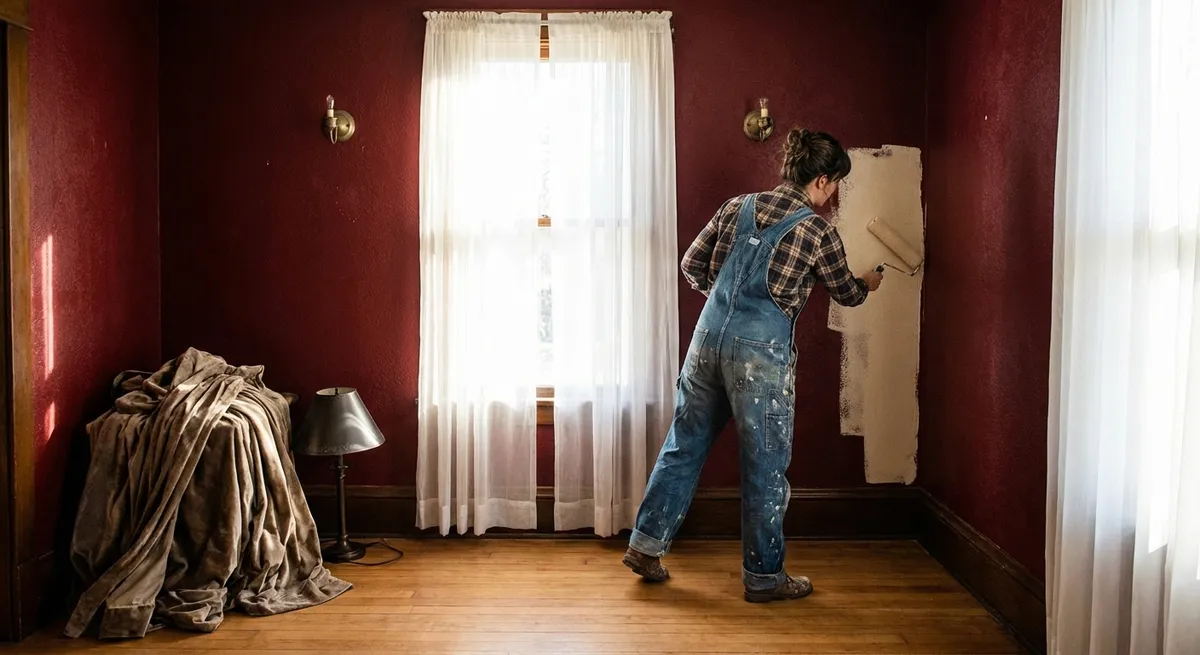
- Use primer when going from dark to light to avoid needing extra coats.
- Cut in carefully along edges, then roll in a “W” pattern to avoid lap marks and streaks.
A well-chosen color palette alone can make a room feel larger, cleaner, and more current.
Step 3: Layer Lighting So the Whole Room Actually Works
Most “dark” rooms don’t just lack brightness—they lack layers of light. One overhead fixture rarely does the job.
Think in three layers:
Ambient lighting (overall glow)
- Ceiling fixtures, recessed lights, or a central pendant. - For a quick DIY upgrade, replace a small flush-mount “boob light” with a larger, brighter LED fixture. - Choose LED bulbs with a Color Temperature around 2700K–3000K for warm, inviting light in living areas.
Task lighting (where you do things)
- Desk lamps, floor lamps by a reading chair, under-cabinet lights in a work area. - Use brighter bulbs (but within the fixture’s rating) for work zones like desks or hobby corners.
Accent lighting (for depth and character)
- Wall sconces, picture lights, LED strip lighting on shelves, or small table lamps. - These remove harsh shadows and make rooms feel layered instead of flat.
DIY-friendly lighting upgrades
- Swap existing fixtures:
- Turn off power at the breaker.
- Verify with a non-contact voltage tester.
- Support the new fixture while wiring, match wire colors (black to black, white to white, ground to ground), secure with wire nuts, and attach the fixture to the mounting bracket.
- Use plug-in options where hardwiring is tricky:
- Plug-in sconces can be mounted on walls with screws and run cords neatly down to outlets using cord covers.
- Plug-in floor and table lamps fill dark corners without electrical work.
Make a simple lighting plan: draw your room, mark dark corners, and assign at least three light sources in an average-sized living room or bedroom.
Step 4: Rearrange and Edit Furniture to Unlock Space
Even a freshly painted, well-lit room can feel cramped if the furniture is working against you.
Clear and reset the room
- Remove small items first (decor, side tables, extra chairs).
- Slide big pieces away from walls if possible to see the floor area clearly.
- Vacuum or clean the floors—you’ll never have easier access than right now.
Rethink layout with light in mind
- Avoid blocking windows with tall backs of sofas or massive cabinets. If furniture must go near a window, use lower-profile pieces.
- Pull big pieces slightly off the wall (even 3–6 inches) to create shadow lines and make the room feel less cramped.
- Create clear pathways at least 30–36 inches wide for walking.
- Group seating so people can talk easily without shouting across the room—this often means pulling furniture closer together, not pushing everything to the edges.
Edit and swap wisely
- Remove one “extra” piece if the room feels stuffed (an unused chair, side table, or bulky shelf).
- If a piece is necessary but visually heavy, consider:
- Lighter slipcovers on dark sofas or chairs.
- Glass or open-leg tables instead of solid boxy ones.
- Floating shelves in place of deep bookcases.
Your goal is to see more floor and more wall—both signal openness and help light bounce around.
Step 5: Use Windows, Mirrors, and Textiles to Maximize Brightness
Once the basics are handled, small upgrades help you squeeze every bit of brightness and comfort out of the room.
Make windows work harder
- Replace heavy, dark curtains with:
- Sheer panels paired with light-blocking roller shades if privacy or light control is needed.
- Light-colored linen or cotton drapes instead of thick, dark fabrics.
- Mount curtain rods higher and wider than the window frame:
- Higher rods (closer to the ceiling) make windows look taller.
- Wider rods (extending 6–12 inches past the window) let you stack curtains off the glass, maximizing natural light.
- Clean glass inside and out—dirty windows can noticeably cut light levels.
Add mirrors strategically
- Place a large mirror opposite or adjacent to a window to bounce light deeper into the room.
- Use mirrors where they’ll reflect something pleasant: a view, artwork, or open space—avoid reflecting clutter.
- Think beyond one big mirror:
- Mirrored fronts on small cabinets.
- A group of smaller mirrors arranged gallery-style.
Brighten with textiles and finishes
- Use a light-colored area rug if floors are dark—it visually breaks up heaviness.
- Choose lighter pillow covers, throws, and bedding to soften dark upholstery.
- Swap yellowed lampshades for fresh white or off-white versions for cleaner light.
- Add a few plants (real or high-quality faux) to bring life and contrast; place them where they catch natural or artificial light.
Combining brighter windows, reflective surfaces, and light textiles gives you a room that not only looks newer, but also feels more comfortable and intentional.
Conclusion
Transforming a dark, dated room doesn’t require a demolition crew or a huge budget. When you:
Diagnose what’s really wrong with the space,
Update color and finishes to reflect more light,
Layer your lighting thoughtfully,
Rethink furniture layout and scale, and
Maximize windows, mirrors, and textiles,
you get a room that feels brighter, larger, and more modern—often in a single weekend.
Start with one or two changes from this list, then build from there. Each improvement compounds the next, and before long, that “problem room” becomes one of your favorite places in the house.
Sources
- U.S. Department of Energy – Energy-Efficient Lighting - Explains LED lighting options, color temperature, and efficiency, useful for planning layered lighting
- Benjamin Moore – Understanding Light Reflectance Value (LRV) - Details how LRV works and why it matters when choosing wall colors for darker rooms
- Sherwin-Williams – Paint Sheen Guide - Breaks down sheen types and where to use them on walls, ceilings, and trim
- Harvard Graduate School of Design – The Impact of Light on Spatial Perception - Discusses how light influences how we perceive space and comfort
- U.S. Consumer Product Safety Commission – Electrical Safety in the Home - Covers essential safety guidelines for DIY electrical work like changing fixtures
Key Takeaway
The most important thing to remember from this article is that this information can change how you think about Renovation.